Christendom and the Monarchies
Christendom and the Monarchies: civilization shaped by the reign of Christ.
Gate of Christendom
37 published entries
The gate of Christian order in history: rulers, nations, and public life under Christ.
Published entries are listed below in reading order.
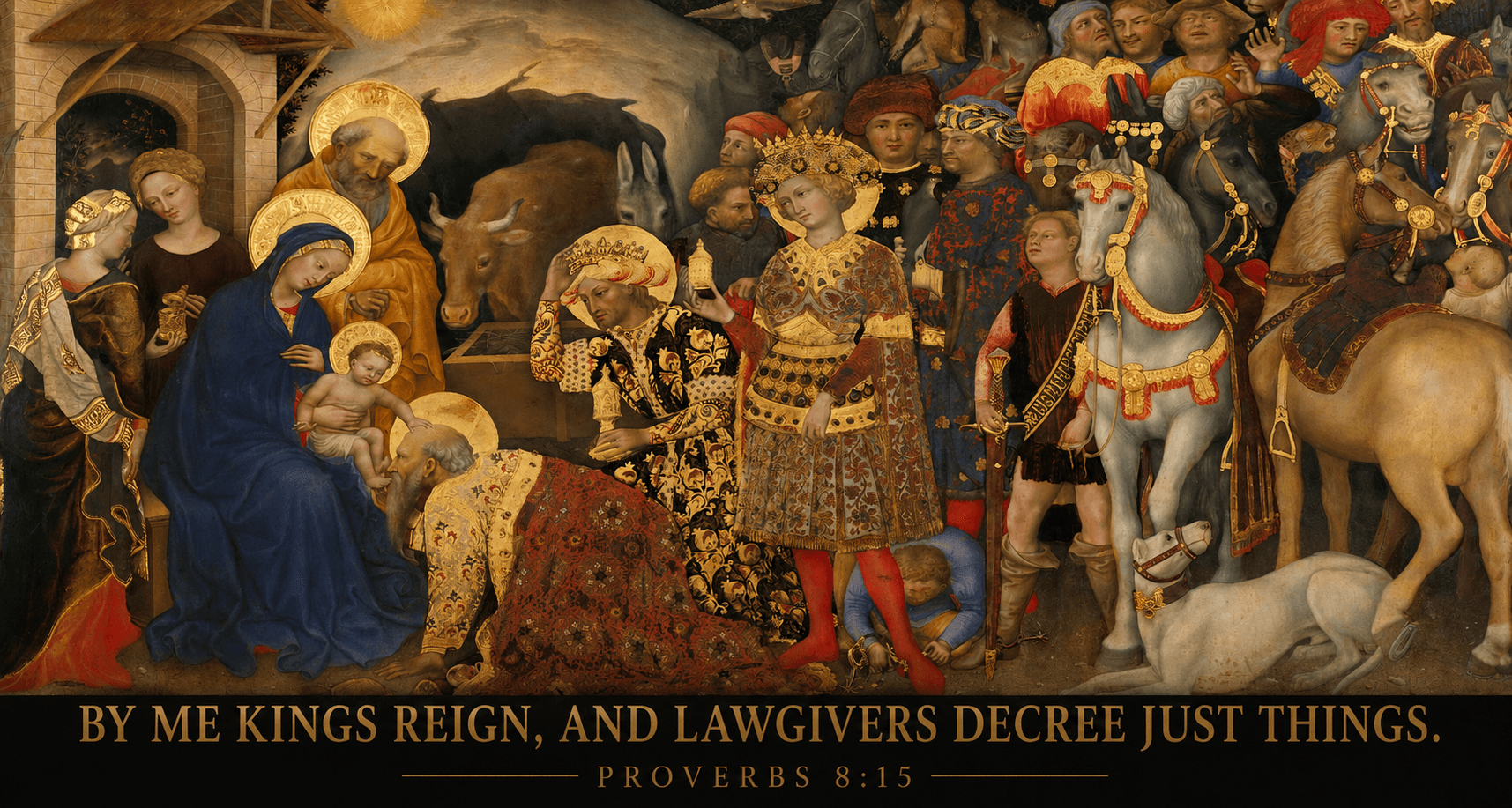
The Ordered World
Christ does not reign only in the private soul. His truth bears consequences for peoples, laws, and the visible ordering of society.
This gate considers the outward form of a world arranged beneath the Kingship of Christ. It asks what becomes of public life when authority, worship, law, and custom are not severed from the divine order.
To pass through this gate is to reject the lie that religion is complete when confined to the interior. Grace perfects persons, but it also judges civilizations.
If Christian order can be known, the forces that rose to destroy it must also be named.
This gate shows the historical embodiment of the City of God in society. It is for souls taught to think of religion as private, politics as morally neutral, and public order as necessarily from Christ.
This is not a romantic museum of vanished courts. It is a study of how Christendom actually took public form: rulers judged by divine truth, law ordered to the common good, worship at the center of social life, hierarchy under God, and nations taught to belong publicly to Christ. It does not ask the reader to adore dead pageantry. It asks him to recover the Catholic principle that Christ did not die only for private , but for peoples, laws, customs, and public life.
Recommended First Street
Do not read these chapters as nostalgia for vanished courts. Read them as a study of how Christendom actually took public form: in rulers, law, worship, education, hierarchy, and the social body ordered under Christ.
Stage One: Begin With the Foundations of Christian Civilization
Begin here:
- Christian Civilization and the Social Kingship of Christ
- The Baptism of Nations and the Duties of Rulers
- The Fall of the Monarchies and Lessons for Exile
- Charlemagne and the Question of Christian Kingship
- The Holy Roman Empire and Ecclesial-Civil Order
- Papacy and Crown: Cooperation, Conflict, and Principle
This opening band establishes the first political theology of the subject: nations are not outside Christ's command, rulers are accountable to divine truth, and Christendom was a real attempt to embody public order under God rather than alone. The social reign of Christ is treated here not as metaphor, but as duty.
Stage Two: Read the Historical Witnesses That Made Christendom Concrete
Then continue here:
- The Dark Ages Were Not So Dark
- The Crusades Vindicated
- Sacred Defense, Just War, and Charity in Arms
- Malta, Bulwark of Christendom
- The Knights of St. John and the Great Siege of 1565
- The Condemnation of the Knights Templar
- Templar Mythmaking, Baphomet, and the Catholic Answer
This second band gives concrete historical witness: Christendom was defended, judged, corrected, and sometimes bloodied, but it was not a myth or a merely private mood. The City of God did not cease to be public simply because it was fought publicly.
Stage Three: Learn the Spiritual Conditions That Sustain a Christian Social Order
Then continue here:
- Counterfeit Peace and Authentic Unity
- Sacrifice, Authority, and the Life of Grace
- Saintly Strategy in Times of Confusion
- Persecution, Patience, and Public Witness
- The Remnant and the Universal Mission
- Reparation, Devotion, and Final Perseverance
- From Exile to Triumph: Closing Synthesis
This third band shows that Christendom was never sustained by institutions alone. Public order lived or died by sacrifice, , public witness, devotion, and the perseverance of souls formed under God. Where worship decays, social order decays after it.
Stage Four: Finish With the Later Direct Political Theology of Christendom
Then finish here:
- Christendom Is the Social Form of the City of God
- The Social Reign of Christ and the Public Order of Nations
- Monarchy as Office Under God, Not Autonomous Power
- Catholic Kingship Versus Worldly Absolutism
- Catholic Law and the Common Good
- Why False Religious Liberty Dissolves Christendom
- The Alliance and Distinction of Throne and Altar
- Catholic Education Under Christendom
- Why Liberal Democracy Cannot Be the Final Norm
- The Feast, Procession, and Public Square Under Catholic Rule
- Monarchies and the Last Monarchs: Prophecy, Restraint, and Catholic Hope
- The Consecration of Rulers and Public Oath Under God
- Guilds, Estates, and the Ordered Body of Christian Society
- Why Egalitarianism Dissolves Hierarchy and Inheritance
- The Holy Roman Empire and the Ideal of a Christian Commonwealth
- How Revolutions Broke Christendom
- The Peasant, the Noble, and the King Under One Altar
This final band draws the political and social conclusions openly: kingship under God, law under Christ, public worship, Catholic education, social hierarchy, the breaking of Christendom by revolution, and the visible unity of a people gathered under one altar. It teaches that the city of man is not overcome by sentimental spirituality, but by real public submission to Christ.
Read the chapters that way and Christendom appears in its right proportion: not as nostalgia, but as the social order that follows when worship, law, fatherhood, sacrifice, and public life are actually subjected to Christ.
All Entries in Christendom and the Monarchies
- Christian Civilization and the Social Kingship of Christ
- The Baptism of Nations and the Duties of Rulers
- The Fall of the Monarchies and Lessons for Exile
- Charlemagne and the Question of Christian Kingship
- The Holy Roman Empire and Ecclesial-Civil Order
- Papacy and Crown: Cooperation, Conflict, and Principle
- The Dark Ages Were Not So Dark
- The Crusades Vindicated
- Sacred Defense, Just War, and Charity in Arms
- Malta, Bulwark of Christendom
- The Knights of St. John and the Great Siege of 1565
- The Condemnation of the Knights Templar
- Templar Mythmaking, Baphomet, and the Catholic Answer
- Counterfeit Peace and Authentic Unity
- Sacrifice, Authority, and the Life of Grace
- Saintly Strategy in Times of Confusion
- Persecution, Patience, and Public Witness
- The Remnant and the Universal Mission
- Reparation, Devotion, and Final Perseverance
- From Exile to Triumph: Closing Synthesis
- Christendom Is the Social Form of the City of God
- The Social Reign of Christ and the Public Order of Nations
- Monarchy as Office Under God, Not Autonomous Power
- Catholic Kingship Versus Worldly Absolutism
- Catholic Law and the Common Good
- Why False Religious Liberty Dissolves Christendom
- The Alliance and Distinction of Throne and Altar
- Catholic Education Under Christendom
- Why Liberal Democracy Cannot Be the Final Norm
- The Feast, Procession, and Public Square Under Catholic Rule
- Monarchies and the Last Monarchs: Prophecy, Restraint, and Catholic Hope
- The Consecration of Rulers and Public Oath Under God
- Guilds, Estates, and the Ordered Body of Christian Society
- Why Egalitarianism Dissolves Hierarchy and Inheritance
- The Holy Roman Empire and the Ideal of a Christian Commonwealth
- How Revolutions Broke Christendom
- The Peasant, the Noble, and the King Under One Altar
Web design by Patrick Kearney