How the True Church Is Known
How the True Church Is Known: the Four Marks and the visibility of Christ's Church.
Gate of Recognition
53 published entries
The gate of recognition: the objective marks by which the true Church is known.
Published entries are listed below in reading order.
The Marks
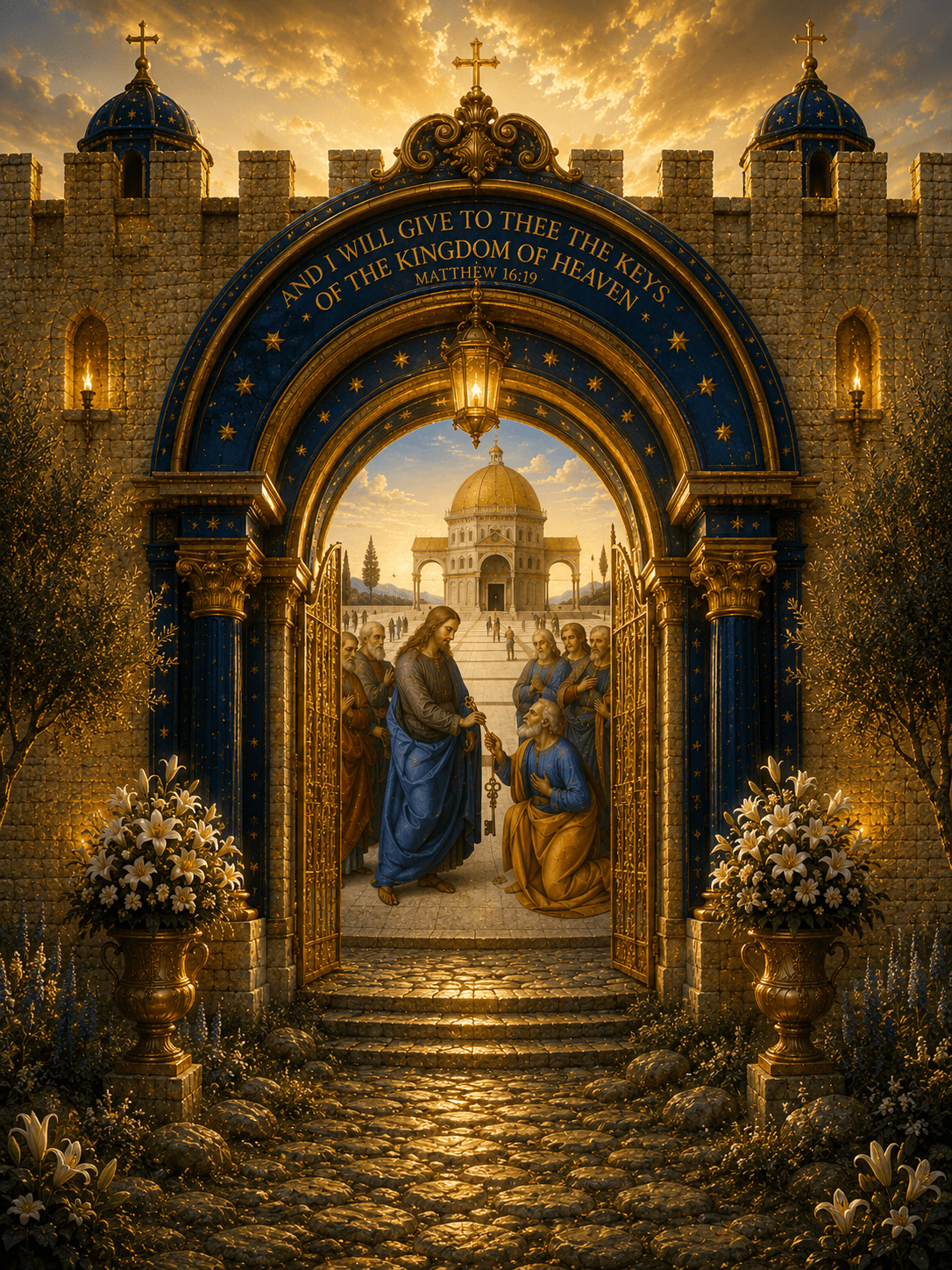
The search for truth must arrive at recognition. What is true must be knowable, visible, and able to be distinguished from all that imitates it.
God has not left the soul to uncertainty in the matter of His Church. He has provided objective means by which the true Church may be known: one, holy, catholic, and apostolic. These are not human labels, but divine marks placed by Christ upon what He founded.
To pass through this gate is to reject the claim that all communions are equally plausible or that certainty is impossible. It is to accept that the Church of Christ is not a theory to be imagined, but a reality to be identified.
Once the truth is recognized, the soul must learn what cannot be kept beside it.
This gate answers one of the hardest and most necessary questions in the whole work: how of Jesus Christ is known when appearances are occupied, institutions are confused, and souls are to mistake shell for substance.
Many readers will approach this gate with fear. They do not want to be deceived, but neither do they want to separate themselves rashly. It must therefore be read . It teaches : how the one, holy, catholic, and apostolic remains knowable even when public appearances are under strain. is necessary, not optional, and that is why this question cannot be postponed safely.
Read this gate as a movement from moral readiness to doctrinal , then from doctrinal to endurance. can only be judged rightly after has been known by her marks, her continuity, her worship, and her divine constitution.
For souls trying to discern the crisis in relation to orders, , true priests, and lawful Catholic worship, read also Street of Fidelity.
Stage One: Prepare the Soul for Recognition
Begin with the chapters that dispose the reader morally and intellectually:
- A Warning to the Reader: The Duty to Love Truth More Than Comfort
- A Reader's Orientation: How to Enter, Understand, and Use This Work
These opening chapters do not yet establish the . They prepare the soul to receive them without cowardice, impatience, or self-protective vagueness. Before can be clear, the soul must decide that comfort is not its first law.
Stage Two: The Core Recognition Block
Then move into the core doctrinal foundation. This is the heart of the gate and should be read as one continuous argument:
- The Church as Received, Not Invented
- What the Catholic Church Is: The Divine Society Founded by Christ for the Salvation of Souls
- How the Church Teaches: Divine Revelation, Tradition, and the Infallible Magisterium
- The Four Marks of the Church: One, Holy, Catholic, and Apostolic
- The Unity of the Church: One Faith, One Sacrifice, One Authority
- The Holiness of the Church: Sanctity, Sacrifice, and Separation from Error
- The Catholicity of the Church: Universality of Truth, Not Universality of Error
- The Apostolicity of the Church: Continuity of Faith, Mission, and Authority
- The Visibility of the Church: The Light That Cannot Be Hidden
- The Indefectibility of the Church: Why the True Church Cannot Fail Even When Almost All Fall Away
- Authority Cannot Contradict Truth: Why a True Pope Can Never Teach Error
- Visibility and Deception: Why Appearances Cannot Define the True Church
- How the Church Gave Us the Bible, and Why Antiquity Alone Does Not Prove Purity
This is the central line. It gives the reader 's own grammar for knowing her: what she is, how she teaches, how the unfold, why she remains visible and indefectible, why contradiction cannot be excused by office, scale, or public occupation, and why even Scripture itself is received through 's public custody rather than by private antiquarianism.
Stage Three: Strengthen the Rule With the Supporting Doctrinal Chapters
Then continue with the supporting chapters that sharpen the same rule in particular cases:
- Perpetuity, Visibility, and Apostolic Continuity
- St. Robert Bellarmine and the Definition of the Church: Called Out of False Assemblies and Into Visible Unity
- Pope Paul IV and Cum Ex Apostolatus Officio: Why a Heretic Cannot Hold the Papacy
- The Four Marks Applied: A Practical Rule for Souls in Time of Usurpation
- The Chair of St. Peter: Divine Office, Sede Vacante, and Obedience in Exile
- Doctrinal Continuity and the Test of Time
- Sacramental Fidelity Under Pressure
- Saintly Witness in Times of Trial
- Perseverance, Reparation, and Hope
- The Cost of Fidelity in an Age of Compromise
- Doctrinal Clarity and Pastoral Charity Together
- The Pattern of Trial and Preservation
- Counterfeit Peace and Authentic Unity
- Sacrifice, Authority, and the Life of Grace
- Saintly Strategy in Times of Confusion
- Persecution, Patience, and Public Witness
- The Remnant and the Universal Mission
- Reparation, Devotion, and Final Perseverance
- From Exile to Triumph: Closing Synthesis
These supporting chapters reinforce the governing rule by applying it to succession, papal claim, the practical use of the marks, life under pressure, saintly witness, and the perseverance required in exile.
That is also why the and the anti-marks must be kept together. is known by the marks Christ gave her. is unmasked by the contrary signs it cannot cease to produce: contradiction, novelty, diffusion, and rupture.
Stage Four: See the Pattern Across Sacred History
After the principle is secure, move into the broader historical line:
- The City of God and the City of Man
- The Fall of Man and the Two Seeds
- The War of the Two Cities Across Sacred History
- The True Israel: The People Formed for Fidelity
- Divine Providence and the Mystery of Human Freedom
- The Silence of God and the Faith of the Saints
These chapters prevent the reader from thinking the present crisis is unprecedented or unintelligible. The same war has always run between fidelity and , promise and revolt, preservation and collapse.
Here the City of God and the city of man become especially important. The crisis is not merely administrative failure. It belongs to the perennial war between the society formed by and the society formed by .
Stage Five: Watch the Restoration and the Remaining Warnings
Finish with the chapters that show restoration, mission, and the direct modern assault on :
- Sollemnis Conventus: The Last Magisterial Light Before the Eclipse
- Christ Stands in the Midst: The Restoration of the Apostolic College and the Reconstitution of the Church After Devastation
- The Confession of Thomas: Faith Purified, Unbelief Rebuked, and the Triumph of Truth Over Sight
- The Emmaus Mystery: Christ Reveals Himself to the Faithful Who Walk in the Truth
- The Miraculous Catch: The Apostolic Mission, the Unbroken Net of the True Church, and the Futility of Labor Apart from Christ
- The Birth of the Church's Mission: The Fire That Cannot Be Extinguished
- Leave Behind Theological Controversies: The Discord and Apostasy of In Unitate Fidei
- Dogma: The Modernist War Against the Binding Truth
These closing chapters show how is recognized not only in definition but in restoration, mission, purified faith, and direct resistance to the modern hatred of . must end in fidelity, not in sterile analysis.
For the scriptural treatment of emptied sanctuaries and departed glory, see 1 Kings (1 Samuel) 4:21: Ichabod, the Glory Has Departed, and the Judgment of an Emptied Sanctuary.
All Entries in How the True Church Is Known
- A Warning to the Reader: The Duty to Love Truth More Than Comfort
- A Reader's Orientation: How to Enter, Understand, and Use This Work
- The Church as Received, Not Invented
- Perpetuity, Visibility, and Apostolic Continuity
- St. Robert Bellarmine and the Definition of the Church: Called Out of False Assemblies and Into Visible Unity
- Paul IV and Cum Ex Apostolatus Officio: Why a Heretic Cannot Hold the Papacy
- The Four Marks Applied: A Practical Rule for Souls in Time of Usurpation
- The Chair of St. Peter: Divine Office, Sede Vacante, and Obedience in Exile
- Doctrinal Continuity and the Test of Time
- Sacramental Fidelity Under Pressure
- Saintly Witness in Times of Trial
- Perseverance, Reparation, and Hope
- The Cost of Fidelity in an Age of Compromise
- Doctrinal Clarity and Pastoral Charity Together
- The Pattern of Trial and Preservation
- Counterfeit Peace and Authentic Unity
- Sacrifice, Authority, and the Life of Grace
- Saintly Strategy in Times of Confusion
- Persecution, Patience, and Public Witness
- The Remnant and the Universal Mission
- Reparation, Devotion, and Final Perseverance
- From Exile to Triumph: Closing Synthesis
- The City of God and the City of Man
- The Fall of Man and the Two Seeds
- The War of the Two Cities Across Sacred History
- The True Israel: The People Formed for Fidelity
- Divine Providence and the Mystery of Human Freedom
- The Silence of God and the Faith of the Saints
- What the Catholic Church Is: The Divine Society Founded by Christ for the Salvation of Souls
- How the Church Teaches: Divine Revelation, Tradition, and the Infallible Magisterium
- The Four Marks of the Church: One, Holy, Catholic, and Apostolic
- The Unity of the Church: One Faith, One Sacrifice, One Authority
- The Visibility of the Church: The Light That Cannot Be Hidden
- The Visibility and Perpetuity of the Church
- The Authority of the Church: Divine Constitution and Jurisdiction
- The Holiness of the Church: Sanctity, Sacrifice, and Separation from Error
- The Catholicity of the Church: Universality of Truth, Not Universality of Error
- The Apostolicity of the Church: Continuity of Faith, Mission, and Authority
- The Indefectibility of the Church: Why the True Church Cannot Fail Even When Almost All Fall Away
- The Indefectibility of the Church: Why the Church Cannot Become False
- Authority Cannot Contradict Truth: Why a True Pope Can Never Teach Error
- Obedience and Discernment: Why Blind Submission Is Not Catholic
- Visibility and Deception: Why Appearances Cannot Define the True Church
- Sollemnis Conventus: The Last Magisterial Light Before the Eclipse
- Christ Stands in the Midst: The Restoration of the Apostolic College and the Reconstitution of the Church After Devastation
- The Confession of Thomas: Faith Purified, Unbelief Rebuked, and the Triumph of Truth Over Sight
- The Emmaus Mystery: Christ Reveals Himself to the Faithful Who Walk in the Truth
- The Miraculous Catch: The Apostolic Mission, the Unbroken Net of the True Church, and the Futility of Labor Apart from Christ
- The Birth of the Church's Mission: The Fire That Cannot Be Extinguished
- Leave Behind Theological Controversies: The Discord and Apostasy of In Unitate Fidei
- Dogma: The Modernist War Against the Binding Truth
- How the Church Gave Us the Bible, and Why Antiquity Alone Does Not Prove Purity
- Why Sincerity Cannot Replace The One True Church
Web design by Patrick Kearney