The Apocalypse of St. John
A gate in the exiled city.
Gate of Scripture
36 published entries
A necessary gate in the life of the City of God.
Published entries are listed below in reading order.
The Divine Pattern
God's justice is not absent from history. It runs through prophecy, through chastisement, and through the fall of all that opposes Him.
This gate teaches the soul to read history under divine judgment rather than under appearances alone. Nations rise and collapse, false powers flourish for a time, and persecutions intensify, yet none of this falls outside the government of God.
To pass through this gate is to learn sobriety. The world is not governed by accident, and rebellion never escapes its appointed end. Judgment is not chaos; it is order revealed under pressure.
Where divine judgment is seen clearly, divine order must also be recognized.
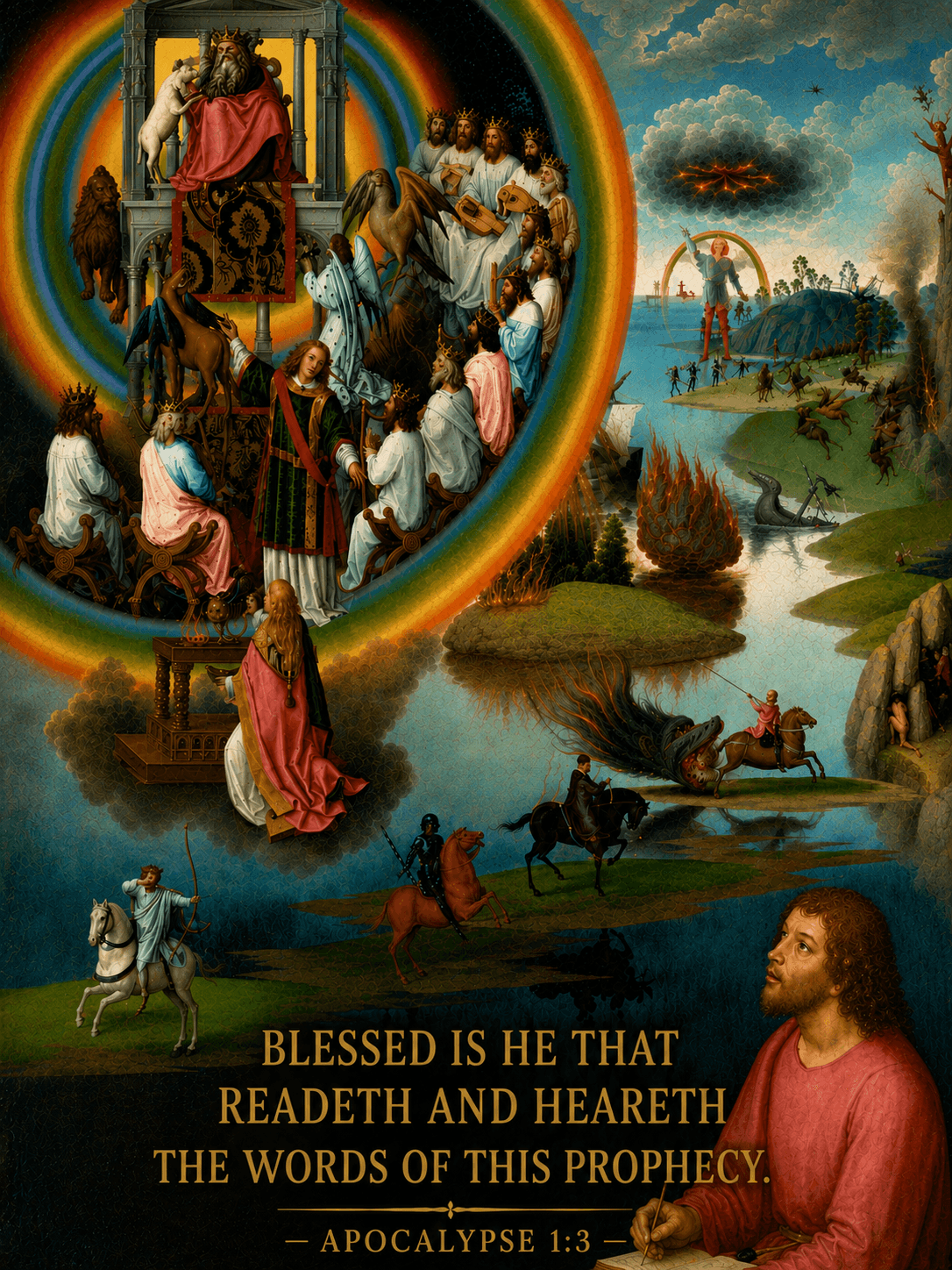
The Apocalypse of St. John is read here as revelation of Jesus Christ to His : a warning, an unveiling, and a judgment upon false worship, the Vatican II antichurch, adulterous religion, false shepherds, and the enemies of . This gate is for souls taught either to fear the book as obscure terror or to misuse it as a field of private speculation. reads it neither way.
It is not offered as a playground for end-of-the-world speculation. It belongs to . It reveals Christ's enemies, the trials of the faithful, the Vatican II antichurch that gathers sects into false unity, the chastisement of the false city, and the final triumph of the holy city. Read rightly, it does not feed curiosity. It teaches worship, vigilance, hatred of falsehood, perseverance in exile, and confidence that the City of God will outlast every city.
Core Scope
- the Apocalypse as warning to rather than sensational prophecy
- the seven churches as perpetual examination and judgment
- the heavenly liturgy as the true measure of worship on earth
- the woman, the dragon, and the assault upon 's visible fruitfulness
- Babylon, adulterous religion, the Vatican II antichurch, , and the fall of the false city
- the New Jerusalem as and the end of exile
Recommended First Street
Begin here:
- The Apocalypse as Revelation of Christ and Warning to the Church
- The Seven Churches and the Judgment That Begins at the House of God
- The Throne, the Lamb, and the Heavenly Liturgy
- The Woman Clothed with the Sun: The Church, the Man Child, and the Threatened Birth of True Authority
- The Dragon and the Remnant of Her Seed
- Babylon the Great, Adulterous Religion, and the Vatican II Antichurch
- The Holy City, the Bride, and the End of Exile
This opening path follows the governing line of the book: Christ unveils the combat around His , judges corruption within and without, exposes false worship, preserves a under assault, and leads His to visible triumph. The reader should come away seeing that the Apocalypse is not a detour from , but one of the sharpest places where learns to recognize herself and her enemies.
From the Seals to the New Creation
After the foundational street, continue through the principal visions in this order:
- The Seals, the Trumpets, and the Divine Sifting of the Church and the World
- The Measured Temple, Enoch and Elias, and the Two Witnesses
- The Beast, the False Prophet, and Counterfeit Spiritual Authority
- The Thousand Years, the First Resurrection, and the Final Revolt
- The Little Book and the Sweet-Bitter Burden of Prophecy
- Armageddon and the Gathering of the Kings
- The Marriage Supper of the Lamb and the Defeat of the Beast
- The New Heaven and the New Earth: The End of Defilement and Exile
This sequence passes from divine judgment and preservation through the witnesses, the final , the limits of millennial interpretation, Armageddon, the triumph of , the general judgment, and the Beatific Vision. The chapters distinguish revealed certainty, authoritative doctrinal limits, traditional interpretation, historical correspondence, and conjecture.
Cardinal Manning Bridge: 2 Thessalonians 2 and the Holy See Crisis
For the Pauline- line that stands beside these chapters and helps interpret the present around the Holy See, then read:
- Cardinal Manning, 2 Thessalonians 2, and the Great Apostasy
- The Present Crisis of the Holy See Tested by Prophecy: Cardinal Manning on the Falling Away
- The Mystery of Iniquity, the Restrainer, and the Eclipse of Public Order
- Lying Wonders, Strong Delusion, and the Judgment on Those Who Love Not the Truth
This bridge stands naturally beside the Apocalypse because it gives the faithful another apostolic lens on the falling away, the mystery of iniquity, false signs, delusion, and the trial of beneath occupied structures.
The Roman Division And The Final Counterfeit
After the opening path, follow this connected prophetic sequence:
- The Four Kingdoms and the Roman Restraint
- The Ten Kings and the Eleventh Horn
- They Shall Deliver Their Power to the Beast
- He Shall Think Himself Able to Change Times and Laws
- Paul VI and the Preparation of Religious-Political Universalism
- The Seven Claimants, the Seven Heads, and the Duty of Watchfulness
- Assisi, Antiochus, and the Profanation That Prepares Apostasy
- Alcimus, the Silenced High Priest, and the Last Days of John Paul II
- The Abomination of Desolation and the Taking Away of the Continual Sacrifice
The first four chapters establish the scriptural and traditional framework before the sequence examines modern history and the liturgical desolation. The order is deliberate. Revealed prophecy and the received commentators govern the judgment; modern correspondences are then considered without being elevated into revealed identifications.
Verified Prophetic Witnesses
Continue with Voices Before the Storm: A Verified Treasury of Catholic Prophecy. This treasury begins with passages traced to identified pre-1955 Catholic sources, distinguishes a witness's actual record from later additions, and explains why doubtful, composite, anonymous, or prohibited texts are withheld. The quotations are not offered as a timetable. They are ordered toward repentance, vigilance, perseverance, and hope in the triumph of Christ and His .
The Ancient Witnesses Behind The Prophecy
The later prophecies must not be read before their scriptural and patristic foundation. Enter the ancient-witness sequence here:
- Before the Private Prophecies: Scripture, the Didache, the Fathers, and the Order of Witness
- The Didache and the World-Deceiver: How the Early Christians Prepared for the Final Trial
- The Antichrist: Catholic Doctrine, St. Irenaeus, and the Remnant's Vigilance
- St. Hippolytus and the Counterfeit Christ: False Apostles, Coerced Worship, and the Persecuted Church
- Tertullian and St. Cyprian: Heresy Within, Persecution Without, and the Making of Apostates or Martyrs
- St. Bridget and the Lovers of Heresy: A Verified Warning Without a False Date
- St. Cyril of Jerusalem: Heretics in Disguise, the Mild Counterfeit, and the Duty to Warn the Household
- St. John Chrysostom, St. Jerome, and St. Augustine: The Apostasy, the Temple, and the Limits of Conjecture
- St. Bede the Venerable: Scripture Studied on the Knees and the Apocalypse Read With the Fathers
- Pope St. Gregory the Great: The Preachers of Antichrist, Fearful Silence, and the Church Without Wonders
- St. Thomas Aquinas: The Head of the Wicked, Demonic Wonders, and the Victory of Truth
- St. Victorinus of Pettau: The Lamb-Like Deceiver, Heretical Dogma, and Coerced Worship
This sequence distinguishes inspired Scripture from apocrypha, corrects the confusion of canonical Baruch with II Baruch, restores two passages wrongly placed under St. Clement of Alexandria to their actual author, St. Irenaeus, and lets the early Christian witnesses speak before later private revelations are considered. It traces St. Bridget's warning to Revelations VI.67 while rejecting the unsupported and failed 1980 prediction printed under her name in a later compilation. It then gives St. Cyril's full catechetical warning; allows St. John Chrysostom, St. Jerome, and St. Augustine to agree where they agree and differ where the surviving texts preserve different interpretations; and continues through St. Bede, Pope St. Gregory the Great, St. Thomas Aquinas, and St. Victorinus of Pettau on sanctity, false teachers, lying wonders, coerced worship, introduced into churches, the headship of the final enemy, and 's last trial.
The Ancient Quotation Treasury
For the verified texts gathered in the same clean reading form as the Wisdom Treasury, read The Ancient Voices on Antichrist. This is the separate quotation section for the scriptural and patristic witnesses; the chapters above supply their doctrinal explanation and application.
Method
These chapters should be read with Scripture, the Fathers, pre-1958 Catholic commentators, liturgical witness, and 's fixed doctrine. They should not be read through modern prophecy hobbyism, newspaper excitement, or speculative timelines. is the interpreter here, not the private enthusiast.
Every page here is ordered toward the salvation of souls through doctrinal clarity, holy fear, perseverance in exile, and fidelity to under trial. It stands here as a book of liturgical and ecclesial realism, not religious sensationalism.
All Entries in The Apocalypse of St. John
- The Apocalypse as Revelation of Christ and Warning to the Church
- The Seven Churches and the Judgment That Begins at the House of God
- The Throne, the Lamb, and the Heavenly Liturgy
- The Woman Clothed with the Sun: The Church, the Man Child, and the Threatened Birth of True Authority
- The Dragon and the Remnant of Her Seed
- Babylon the Great, Adulterous Religion, and the Vatican II Antichurch
- The Holy City, the Bride, and the End of Exile
- The Seals, the Trumpets, and the Divine Sifting of the Church and the World
- The Measured Temple, Enoch and Elias, and the Two Witnesses
- The Beast, the False Prophet, and Counterfeit Spiritual Authority
- The Thousand Years, the First Resurrection, and the Final Revolt
- The Little Book and the Sweet-Bitter Burden of Prophecy
- Armageddon and the Gathering of the Kings
- The Marriage Supper of the Lamb and the Defeat of the Beast
- The New Heaven and the New Earth: The End of Defilement and Exile
- The Four Kingdoms and the Roman Restraint
- The Ten Kings and the Eleventh Horn
- They Shall Deliver Their Power to the Beast
- He Shall Think Himself Able to Change Times and Laws
- Paul VI and the Preparation of Religious-Political Universalism
- The Seven Claimants, the Seven Heads, and the Duty of Watchfulness
- Assisi, Antiochus, and the Profanation That Prepares Apostasy
- Alcimus, the Silenced High Priest, and the Last Days of John Paul II
- The Abomination of Desolation and the Taking Away of the Continual Sacrifice
- Voices Before the Storm: A Verified Treasury of Catholic Prophecy
- Before the Private Prophecies: Scripture, the Didache, the Fathers, and the Order of Witness
- The Didache and the World-Deceiver: How the Early Christians Prepared for the Final Trial
- St. Hippolytus and the Counterfeit Christ: False Apostles, Coerced Worship, and the Persecuted Church
- Tertullian and St. Cyprian: Heresy Within, Persecution Without, and the Making of Apostates or Martyrs
- St. Bridget and the Lovers of Heresy: A Verified Warning Without a False Date
- St. Cyril of Jerusalem: Heretics in Disguise, the Mild Counterfeit, and the Duty to Warn the Household
- St. John Chrysostom, St. Jerome, and St. Augustine: The Apostasy, the Temple, and the Limits of Conjecture
- The Strange God and the Signs in Heaven: Antichrist, the Giants, and Alien Deception
- Pope St. Gregory the Great: The Preachers of Antichrist, Fearful Silence, and the Church Without Wonders
- St. Thomas Aquinas: The Head of the Wicked, Demonic Wonders, and the Victory of Truth
- St. Victorinus of Pettau: The Lamb-Like Deceiver, Heretical Dogma, and Coerced Worship
Web design by Patrick Kearney