Mary and the Typologies of the Church
Mary and the Typologies of the Church: Marian light for ecclesial fidelity in crisis.
Gate of Mary
49 published entries
The gate of Marian light: Our Lady, the saints, and fidelity beneath the Cross.
Published entries are listed below in reading order.
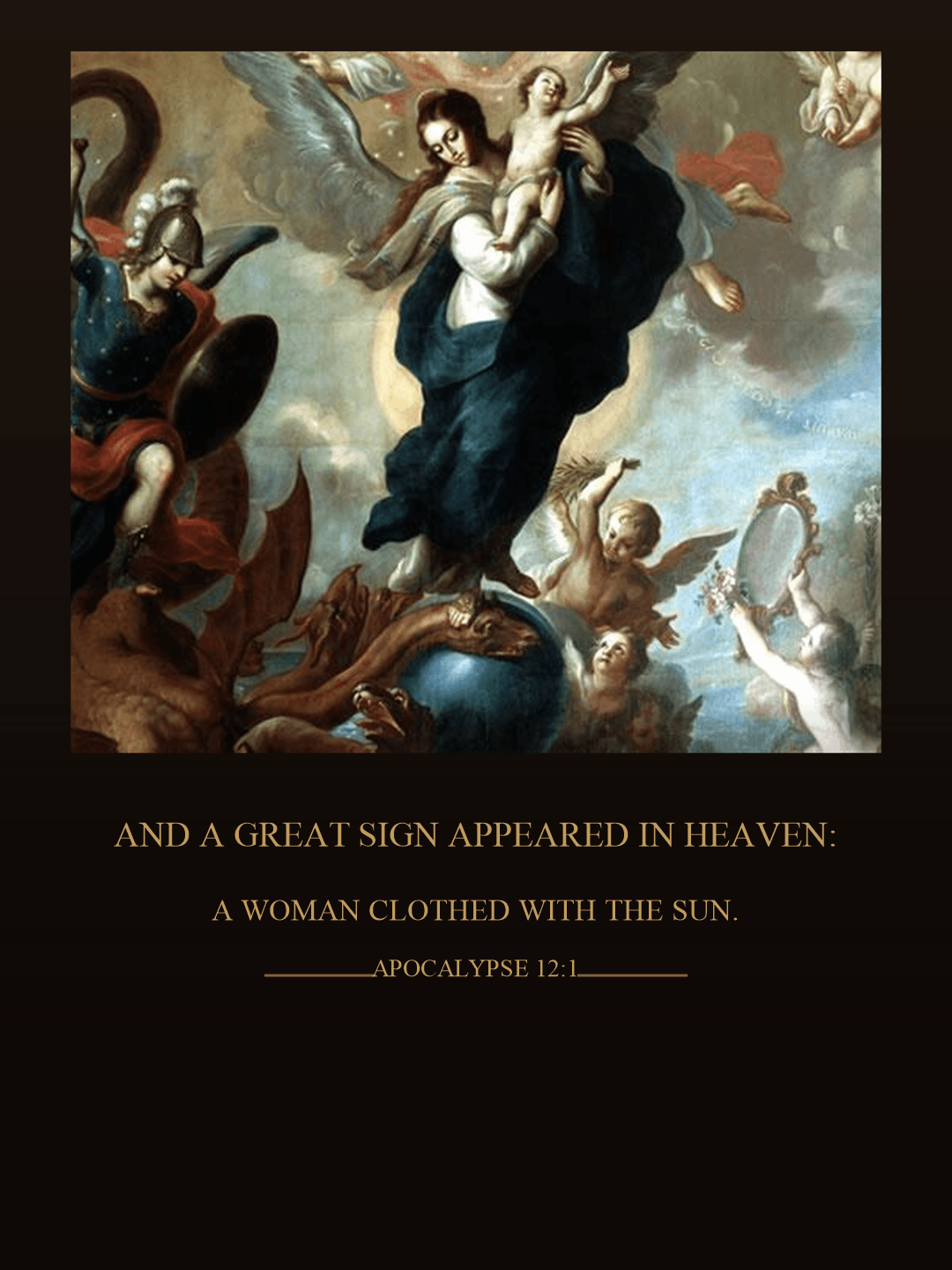
The Divine Pattern Revealed
Scripture, the Church, and Our Lady are not isolated subjects. They are seen together in one ordered work of God.
This gate teaches the soul to see according to divine pattern rather than according to fragments. What is promised in figure is fulfilled in reality; what is hidden becomes luminous when read in the light of Christ and His Church.
Here typology is not embellishment, but recognition of God's consistency. The same wisdom that governs covenant, sanctuary, virgin, Church, and sacrifice governs the whole history of salvation.
From inward and scriptural order, the soul can then look outward to the order of Christian civilization.
These chapters gather the Marian patterns by which learns how to remain faithful, sorrowful, fruitful, and victorious in times of . Their governing principle is simple and decisive: what is said of is seen most purely in Our Lady, and what is seen in Our Lady is unfolded historically and mystically in . Our Lady is the personal type and exemplar of .
That also means Mary is not optional. She is not an accessory added to Christianity after the fact, but a mother in the order God Himself established. As is necessary for salvation, so Mary's maternity belongs necessarily to the order of in which Christ chose to save and form souls. Souls taught to treat Marian doctrine as secondary should read this gate slowly and let the Catholic order reassemble itself.
Readers who want the focused arc on Marian combat, St. Louis de Montfort, the two standards, and the little flock beneath the Cross may follow Standard of Jesus and Mary.
Why Typology Matters
Typology is not pious embellishment. It is the way divine providence teaches the unity of revelation. God forms patterns in Scripture, fulfills them in Christ, and continues to illuminate the life of by them. When typology is handled faithfully, it protects readers from novelty by showing how later realities were already prepared by God. It also protects souls from , because it teaches them to read revelation with rather than by isolated cleverness.
In these chapters, typology serves two aims at once: doctrinal clarity and spiritual endurance. Mary is not added to the mystery from the outside. She belongs to the mystery of Christ and therefore to the mystery of . That is why the same mysteries can be spoken of personally in Our Lady and historically in without confusion. The aim is to teach not only Marian affection, but Marian intelligence: the ability to see 's life, trials, , and enemies more clearly because they are first seen in Mary.
Main Street
- Chapters 1-5 establish the Marian form of through fidelity, sorrow, companion figures, and the classic Marian masters. Begin with Mary as Image of the Church in Fidelity and Sorrow, Our Lady of Sorrows as Image of the Church Beneath the Cross, St. Joseph, St. John, and St. Mary Magdalene: Protection, Fidelity, and Penitent Love, St. Louis de Montfort and the Apostles of the Last Times, and Mary of Agreda and the Mysteries of Divine Omnipotence.
- Chapters 6-10 unfold the scriptural figures that prepare Marian and ecclesial life: Mary and the Church as Ark of Fidelity, Sarah, the Mother of Promise, and the Church Bearing Children by Grace, The Burning Bush and the Virginal Dwelling of God, The Closed Gate and the Guarded Sanctuary, and Esther, Judith, Ruth, and Bathsheba: Royal Women and the Church's Marian Queenship.
- Chapters 11-15 move through the Gospel mysteries in Marian and ecclesial sequence: The Annunciation and the Church's Fiat, The Visitation and the Ark in Motion, The Presentation and the Sword of Contradiction, Cana and the Rule of Marian Obedience, and Holy Saturday and the Hidden Church.
- Chapters 16-24 carry the sharper later line: bridal fidelity against , without spot, Pentecost, the dragon, the holy city, anti- force, repentant restoration, waiting, and the Cenacle. Continue with Mary, the Faithful Bride, and the Adulterous Counterfeit, The Immaculate Conception and the Church Without Spot, Pentecost and the Church Gathered Around Mary, Apocalypse 12 and the Woman Against the Dragon, Mary, the Bride, and the Holy City, Our Lady and the Church as Hammers of Heretics: The Divine Mandate to Strike Error and Defend Truth, Christ's Appearance to St. Mary Magdalene: The First Visible Triumph of Grace and the Restoration of Repentant Souls in the Church's Exile, The Novena of the Church: The Remnant Waits With Our Lady for the Coming Fire, and The Cenacle and the First Catholic Church in Seed.
- Chapters 25-29 gather Marian speech, , womanhood, and the distinction between true and false devotion: Our Lady Spoke Little and Perfectly: The Seven Words and the Voice of the Church, The Valiant Woman, Marian Fortitude, and the Church's Holy Strength, Marian Womanhood, Holy Modesty, and the Guarded Distinction of Sex, True Devotion to Mary: Not Sentiment, But Formation in Christ, and False Devotion to Mary: Sentimentality, Ambiguity, and the Marian Image Falsified.
- Chapters 30-34 open the standard of Jesus and Mary in an age of public rebellion: The Standard of Jesus and Mary, The Apostles of the Latter Times and the Public Doctrine of Rebellion, The Heel of the Woman: Humility Crushing Pride, The Rage of Satan Against the Woman, and The Rosary as a Weapon of the Remnant.
- Chapters 35-44 show the standard forming a whole life and hope: Holy Slavery to Jesus Through Mary Against the Slavery of Sin, True and False Devotion Beneath the Standard, The Poverty of Mary and the Luxury of Babylon, Mary and the Restoration of Holy Order, The Mark of the Servants of God and the Sign of Mary, Banners, Standards, and the Visible Allegiance of the Soul, The Mold of Mary and the Formation of Christ in the Soul, The Army of Mary and the Discipline of the Little Flock, The Triumph of Mary and the Defeat of the Revolutionary Spirit, and Mary-like Modesty and the Visible Rule of Feminine Reserve.
- Chapter 45 gathers the first five mysteries of the Rosary into one contemplative portrait of ecclesial life: Our Lady in the Joyful Mysteries: The Virgin Mother as the Figure of the Church.
- Chapter 46 follows the Marian form of through the Passion: Our Lady in the Sorrowful Mysteries: The Mother and the Church in the Passion of Christ.
- Chapter 47 completes the Rosary trilogy by contemplating 's life and destiny in Christ's victory: Our Lady in the Glorious Mysteries: The Church in Victory From the Empty Tomb to the Heavenly Crown.
- Chapter 48 carries the same Marian and ecclesial mystery along the traditional Way of the Cross in a devotion written to be prayed: The Stations with Our Mother of Fair Love.
- Chapter 49 looks above the waters of exile to the ancient Marian light that gives the soul a fixed course toward Christ: Our Lady, Star of the Sea: The Light Above the Waters and the Way Home.
Nearby Streets
- Marian beginnings and divine initiative: Mary as Image of the Church in Fidelity and Sorrow, The Annunciation and the Church's Fiat, The Immaculate Conception and the Church Without Spot
- The Joyful Mysteries as one portrait of : Our Lady in the Joyful Mysteries: The Virgin Mother as the Figure of the Church
- The Sorrowful Mysteries as the Passion of in union with Christ: Our Lady in the Sorrowful Mysteries: The Mother and the Church in the Passion of Christ
- The Glorious Mysteries as 's life and final perfection in Christ: Our Lady in the Glorious Mysteries: The Church in Victory From the Empty Tomb to the Heavenly Crown
- The traditional Way of the Cross with the Mother who remains beside Christ and reveals in her Passion: The Stations with Our Mother of Fair Love
- The Holy Name of Mary and her guidance through , confusion, and exile: Our Lady, Star of the Sea: The Light Above the Waters and the Way Home, The Holy Name of Mary and the Victory of Filial Invocation
- Marian speech and ecclesial voice: Our Lady Spoke Little and Perfectly: The Seven Words and the Voice of the Church, Mary of Agreda and the Mysteries of Divine Omnipotence, The Annunciation and the Church's Fiat
- Old Testament figures opening into Marian and ecclesial mystery: Mary and the Church as Ark of Fidelity, Sarah, the Mother of Promise, and the Church Bearing Children by Grace, The Burning Bush and the Virginal Dwelling of God, The Closed Gate and the Guarded Sanctuary, Esther, Judith, Ruth, and Bathsheba: Royal Women and the Church's Marian Queenship
- Cross, contradiction, and hidden fidelity: Our Lady of Sorrows as Image of the Church Beneath the Cross, The Presentation and the Sword of Contradiction, Holy Saturday and the Hidden Church, Christ's Appearance to St. Mary Magdalene: The First Visible Triumph of Grace and the Restoration of Repentant Souls in the Church's Exile
- Mission, Upper Room, and waiting: The Visitation and the Ark in Motion, Pentecost and the Church Gathered Around Mary, The Cenacle and the First Catholic Church in Seed, The Novena of the Church: The Remnant Waits With Our Lady for the Coming Fire
- Triumph, combat, and the holy city: Our Lady and the Church as Hammers of Heretics: The Divine Mandate to Strike Error and Defend Truth, Apocalypse 12 and the Woman Against the Dragon, Mary, the Bride, and the Holy City, Mary, the Faithful Bride, and the Adulterous Counterfeit
- Marian and holy womanhood: The Valiant Woman, Marian Fortitude, and the Church's Holy Strength, Marian Womanhood, Holy Modesty, and the Guarded Distinction of Sex, Mary-like Modesty and the Visible Rule of Feminine Reserve, The Closed Gate and the Guarded Sanctuary, Our Lady of Sorrows as Image of the Church Beneath the Cross
- The standard of Jesus and Mary: The Standard of Jesus and Mary, The Apostles of the Latter Times and the Public Doctrine of Rebellion, The Heel of the Woman: Humility Crushing Pride, The Rage of Satan Against the Woman, The Rosary as a Weapon of the Remnant
- Marian formation against Babylon: Holy Slavery to Jesus Through Mary Against the Slavery of Sin, True and False Devotion Beneath the Standard, The Poverty of Mary and the Luxury of Babylon, Mary and the Restoration of Holy Order, The Mark of the Servants of God and the Sign of Mary, Banners, Standards, and the Visible Allegiance of the Soul, The Mold of Mary and the Formation of Christ in the Soul, The Army of Mary and the Discipline of the Little Flock, The Triumph of Mary and the Defeat of the Revolutionary Spirit, Mary-like Modesty and the Visible Rule of Feminine Reserve
Companion Sections
- Scriptural line: Scripture Treasury
- Saintly witnesses: Champions of Orthodoxy
- Spiritual formation and reparation: Devotional Treasury
Read the whole sequence with this expectation: Mary will not shrink Christ or His , but reveal both more perfectly. Her does not weaken doctrine. Her tenderness does not abolish combat. Her motherhood does not bypass . It teaches souls how to live within her.
All Entries in Mary and the Typologies of the Church
- Mary as Image of the Church in Fidelity and Sorrow
- Our Lady of Sorrows as Image of the Church Beneath the Cross
- St. Joseph, St. John, and Mary Magdalene: Protection, Fidelity, and Penitent Love
- St. Louis de Montfort and the Apostles of the Last Times
- Mary of Agreda and the Mysteries of Divine Omnipotence
- Mary and the Church as Ark of Fidelity
- Sarah, the Mother of Promise, and the Church Bearing Children by Grace
- The Burning Bush and the Virginal Dwelling of God
- The Closed Gate and the Guarded Sanctuary
- Esther, Judith, Ruth, and Bathsheba: Royal Women and the Church's Marian Queenship
- The Annunciation and the Church's Fiat
- The Visitation and the Ark in Motion
- The Presentation and the Sword of Contradiction
- Cana and the Rule of Marian Obedience
- Holy Saturday and the Hidden Church
- Mary, the Faithful Bride, and the Adulterous Counterfeit
- The Immaculate Conception and the Church Without Spot
- Pentecost and the Church Gathered Around Mary
- Apocalypse 12 and the Woman Against the Dragon
- Mary, the Bride, and the Holy City
- Our Lady and the Church as Hammers of Heretics: The Divine Mandate to Strike Error and Defend Truth
- Christ's Appearance to Mary Magdalene: The First Visible Triumph of Grace and the Restoration of Repentant Souls in the Church's Exile
- The Novena of the Church: The Remnant Waits With Our Lady for the Coming Fire
- The Cenacle and the First Catholic Church in Seed
- Our Lady Spoke Little and Perfectly: The Seven Words and the Voice of the Church
- The Valiant Woman, Marian Fortitude, and the Church's Holy Strength
- Marian Womanhood, Holy Modesty, and the Guarded Distinction of Sex
- True Devotion to Mary: Not Sentiment, But Formation in Christ
- False Devotion to Mary: Sentimentality, Ambiguity, and the Marian Image Falsified
- The Standard of Jesus and Mary
- The Apostles of the Latter Times and the Public Doctrine of Rebellion
- The Heel of the Woman: Humility Crushing Pride
- The Rage of Satan Against the Woman
- The Rosary as a Weapon of the Remnant
- Holy Slavery to Jesus Through Mary Against the Slavery of Sin
- True and False Devotion Beneath the Standard
- The Poverty of Mary and the Luxury of Babylon
- Mary and the Restoration of Holy Order
- The Mark of the Servants of God and the Sign of Mary
- Banners, Standards, and the Visible Allegiance of the Soul
- The Mold of Mary and the Formation of Christ in the Soul
- The Army of Mary and the Discipline of the Little Flock
- The Triumph of Mary and the Defeat of the Revolutionary Spirit
- Mary-like Modesty and the Visible Rule of Feminine Reserve
- Our Lady in the Joyful Mysteries: The Virgin Mother as the Figure of the Church
- Our Lady in the Sorrowful Mysteries: The Mother and the Church in the Passion of Christ
- Our Lady in the Glorious Mysteries: The Church in Victory From the Empty Tomb to the Heavenly Crown
- The Stations with Our Mother of Fair Love
- Our Lady, Star of the Sea: The Light Above the Waters and the Way Home
Web design by Patrick Kearney