Scripture Treasury
Scripture Treasury: Old Testament, New Testament, and Church in one divine unity.
Gate of Scripture
359 published entries
The gate of scriptural unity: covenant, typology, fulfillment, and the mind of God in history.
Published entries are listed below in reading order.
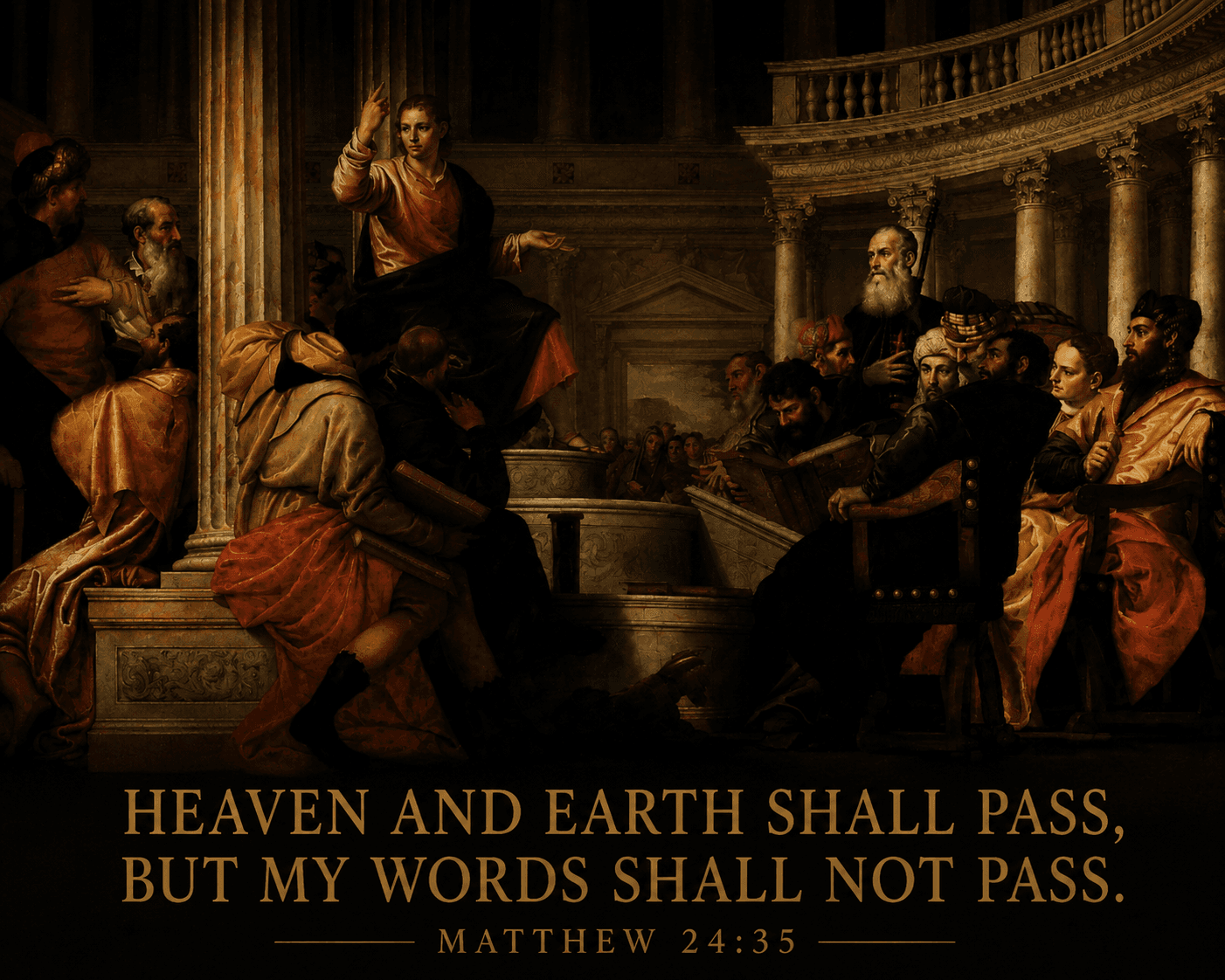
Scripture is one revelation from God: Old Testament preparation, New Testament fulfillment, Marian and ecclesial typology, exile and , judgment and vindication, and the one divine wisdom moving through sacred history. This treasury is meant especially for readers who were trained to read Scripture as isolated verses, private inspiration, or denominational proof texts.
Each chapter serves the salvation of souls through doctrinal clarity, fidelity, and persevering hope. Scripture here is not treated as raw material for , but as 's own book, read with the Fathers, with typology, and with the fixed mind of Catholic doctrine.
The chapters are listed below in the order of Scripture, under the books themselves, so you can move through them book by book. The point is not merely to collect biblical themes, but to teach readers how reads: Christ at the center, Mary and in typological relation, the City of God against the city of man, and the same divine wisdom governing promise, fulfillment, exile, chastisement, and restoration.
Readers who need the basic grammar of scriptural figures should begin with How Scripture Speaks: Sea, Sion, Desert, Mountain, City, and Bride. That chapter explains how Catholic typology works, why the literal event remains first, and how recurring biblical images such as the sea, Sion, Babylon, Egypt, the desert, the mountain, the ark, the temple, the lamb, , and the holy city teach Christ and .
This section also carries thematic internal runs where Scripture itself presents a family of related warnings or mysteries. One of these is The Woes of Scripture: Judgment, Warning, and Mercy, beginning with Isaiah 5: The Six Woes, Moral Inversion, and the Ripening of Judgment and read best alongside The Woes of Scripture and the Mercy That Warns in Discernment.
This treasury also includes the Ten Commandments chapters, so readers looking for a direct treatment of the Decalogue can find that line here within the larger reading of Scripture.
For the scriptural anatomy of intellectual and the progressive darkening that follows refused truth, read Romans 1:18-25: Saying Themselves to Be Wise, They Became Fools—Pride, Darkened Reason, and the Judgment of Refused Truth. The chapter follows St. Paul from the testimony of creation through ingratitude, vain reasoning, idolatry, and permitted blindness, then places Pharaoh, the operation of error, scientism, and the of Our Lady's Magnificat within that patristic pattern.
For the scriptural rule governing possessions, almsgiving, and the account every steward must render, read Luke 16:1-13: The Unjust Steward, Almsgiving, St. Lazarus, and the Account of Mammon. It keeps the parable joined to the covetous Pharisees and to Dives refusing mercy to St. Lazarus at his gate.
For the account of every natural and supernatural gift entrusted by God, read Matthew 25:14-30: The Talents, the Account of Grace, and the Sin of Burying What Belongs to God. It gives the complete Gospel appointed in part for St. Remigius, follows the Fathers on unequal gifts and equal fidelity, and examines sins of , , household duty, fear, buried doctrine, and the promised entrance into the Master's joy.
One strong internal line in this treasury is the scriptural architecture of entrance, exile, refuge, and the holy city. Readers who want to follow that family of texts can move from Genesis 3:23-24: Exile from Paradise and the Church's School of Descent through Exodus 12 and the Passover: Blood, Household Authority, and the Judgment of the Firstborn, Psalm 147:12-13: The Strengthened Gates of Jerusalem and the Blessing Within, John 10:7-9: I Am the Door, Christ the One Entrance and the Safety of the Fold, Luke 13:23-24: Strive to Enter by the Narrow Gate and the Danger of Arriving Too Late, Matthew 25:10: The Door Was Shut, the Wise Virgins, and Preparedness for the Bridegroom, and onward to Apocalypse 21: The Holy City, the Bride, and the End of Exile and Apocalypse 22: The Water of Life, the Tree of Life, and Entrance by the Gates.
Another important bridge for the new prophecy material is 1 Thessalonians 5:20-21: Despise Not Prophecies, Prove All Things, and the Catholic Rule of Discernment. That chapter gives the apostolic rule by which later Marian warnings, saintly prophetic witnesses, and all claims to extraordinary light must be judged: do not despise, do not swallow everything, prove all things, and hold fast to what is truly good.
Read beside it, Amos 3:7: The Lord Reveals to His Servants the Prophets, Warning Before Chastisement, and Mercy Before the Blow shows why prophecy is given at all: not to feed curiosity, but to warn before judgment ripens and to call souls back while mercy still speaks.
And Ezechiel 33:7-11: The Watchman, the Blood of Souls, and the Mercy That Still Calls the Wicked to Turn adds the shepherd's side of that same law: if God warns before chastisement, the watchman is answerable for sounding the warning faithfully.
Then Jeremias 28: Hananiah, False Prophecy, and the Peace That God Did Not Send shows the sharp counterpoint: false prophecy often promises quick peace and easy reversal where God has in fact sent a yoke for repentance and purification.
And Amos 7:10-17: Amazias the Priest, Prophetic Suppression, and the Hatred of Unwelcome Truth shows what often follows when true warning is actually delivered: not conversion, but pressure to relocate, soften, or silence the prophet so the compromised sanctuary may remain undisturbed.
Finally, Jeremias 1:9-10: The Prophet's Mouth, Uprooting Falsehood, and Planting Truth Under Divine Commission shows the whole shape of the prophetic office itself: God gives the word, the word tears down lies, and only then does it securely build and plant.
Read in that order, these chapters teach a full Catholic grammar of prophecy: the rule for testing, the mercy of warning, the watchman's duty, the lies of , the suppression of unwelcome truth, and the divine commission to uproot falsehood and plant truth.
For the directory note explaining why the old separate alphabetical list has been retired, use:
To begin with the front-of-site study on emptied sanctuaries and departed glory, begin here:
Keep one rule in view from the start: Scripture belongs to and is fulfilled in . That is why its types matter, why Mary matters, why the matter, and why the reader must resist every modern habit of reading the sacred page as from liturgy, doctrine, and apostolic interpretation.
All Entries in Scripture Treasury
Studies are listed once, under the books and scriptural themes they belong to.
Foundational Studies6 entries
- Old Testament, New Testament, and Church in One Divine Unity
- The Remnant in Scripture: From Exodus to Apocalypse
- Genesis 3:15 to Apocalypse 12: Marian and Ecclesial Continuity
- Pharaoh, Korah, and Pilate: Scriptural Patterns of Resistance to God
- Passover, Calvary, and the One Sacrifice
- Matthew 16, John 10, and the Shepherding Church
Genesis8 entries
- Genesis 3:15: Enmity, the Two Seeds, and the War That Never Ceases
- Genesis 3:23-24: Exile from Paradise and the Church's School of Descent
- Genesis 7:16: The Lord Shut Him In, the Ark, One Refuge Under Judgment, and the Door of Mercy
- Genesis 11:1-9: Babel, False Unity, Pride, and the Confusion of Self-Made Religion
- Genesis 12:1-3: Abraham Called Out, Promise, Separation, and the Beginning of a Holy People
- Genesis 14:18-20; Psalm 109:4; Hebrews 7: Melchisedech, Bread and Wine, and the Priesthood of Christ
- Genesis 41:55: Go to Joseph, Famine, Stewardship, and Refuge in Need
- Genesis 50:7-10: The Burial of Jacob, Company in Mourning, and the Public Journey to the Grave
Exodus13 entries
- Exodus 3:2-5: The Burning Bush, Divine Indwelling, and the Virginal Dwelling of God
- Exodus 12 and the Passover: Blood, Household Authority, and the Judgment of the Firstborn
- Exodus 19:4-6: Borne on Eagles' Wings, Covenant Separation, and the Formation of a Holy Nation
- Exodus 20:3-5: The First Commandment, False Worship, and the Jealousy of God
- Exodus 20:7: The Second Commandment, the Holy Name of God, and the Sin of Blasphemy
- Exodus 20:12: The Fourth Commandment, Honor, Authority, and the Order of the Household
- Exodus 20:13: The Fifth Commandment, Life, Hatred, and the Sin of Murder
- Exodus 20:14: The Sixth Commandment, Chastity, Marriage, and the Holiness of the Body
- Exodus 20:15: The Seventh Commandment, Theft, Property, and the Duty of Restitution
- Exodus 20:16: The Eighth Commandment, False Witness, Lying, and the Justice of Truth
- Exodus 20:17: The Tenth Commandment, Covetousness, Envy, and the Desire for Another Man's Goods
- Exodus 20:17: The Ninth Commandment, Interior Chastity, and the Government of Desire
- Exodus 27:20-21: Light Before the Lord and the Marking of Holy Worship
Leviticus2 entries
Numbers1 entry
Deuteronomy2 entries
Joshua2 entries
1 Kings (1 Samuel)1 entry
1 Kings1 entry
2 Kings1 entry
3 Kings4 entries
- 3 Kings 2:19: The Queen Mother at the King's Right Hand and the Marian Shape of Queenship
- 3 Kings 19:7-8: Arise and Eat, for Thou Hast Yet a Great Way to Go, and the Final Road of the Christian
- 3 Kings 19:11-13: The Still Small Voice, Recollection, and Discernment Under God
- 3 Kings 19:18: Seven Thousand Preserved, Hidden Fidelity, and the Remnant of Grace
Tobias2 entries
Judith1 entry
Esther1 entry
Job1 entry
Psalms8 entries
- Psalm 21 (22): The Cry of Dereliction and the Worship That Follows the Cross
- Psalm 26:8: My Face Hath Sought Thee, the Search for the Lord's Face, and Reparative Love
- Psalm 50: Have Mercy on Me, O God, Contrition, Cleansing, and the Remnant's Prayer Under Chastisement
- Psalm 94:6: Come, Let Us Adore and Fall Down, Kneeling Before the Lord
- Psalm 104:21: Lord of His House, Stewardship, and Josephine Guardianship
- Psalm 129: Out of the Depths, the Cry for Mercy, and the Church's Prayer for the Dead
- Psalm 136: By the Rivers of Babylon, Exile, and the Silence of Alleluia
- Psalm 147:12-13: The Strengthened Gates of Jerusalem and the Blessing Within
Proverbs2 entries
Ecclesiastes1 entry
Canticles2 entries
Wisdom2 entries
Ecclesiasticus4 entries
- Ecclesiasticus 7:40: Remember Thy Last End and the Church's School of Holy Sobriety
- Ecclesiasticus 24: Wisdom’s Dwelling, the Mother’s Table, and the River of Doctrine
- Ecclesiasticus 36:1-10, 17-19: Have Mercy Upon Us, Visitation, Gathering, and the Prayer of a Chastened People
- Ecclesiasticus 38:16-24: Mourning for the Dead, Measure in Sorrow, and the Duties of the Living
Isaiah3 entries
Jeremias7 entries
- Jeremias 1:9-10: The Prophet's Mouth, Uprooting Falsehood, and Planting Truth Under Divine Commission
- Jeremias 6:14: Peace, Peace, False Reassurance, and the Healing That Is No Healing
- Jeremias 6:16: The Old Paths, Rest for Souls, and Fidelity to the Way of God
- Jeremias 7:4: The Temple of the Lord, Occupied Sanctuaries, and False Confidence
- Jeremy 9:10: Lamentation Over the Mountains and the Desolation of a Judged Land
- Jeremias 23:1-4: Woe to the Shepherds That Destroy and Scatter the Sheep
- Jeremias 28: Hananiah, False Prophecy, and the Peace That God Did Not Send
Lamentations1 entry
Ezechiel5 entries
- Ezechiel 2:5: Whether They Hear or Forbear, the Prophet Must Still Speak
- Ezekiel 3:19: Warning, Responsibility, and the Duty to Speak Before God
- Ezechiel 13:10-16: Woe to the False Prophets That Daub With Untempered Mortar
- Ezechiel 33:7-11: The Watchman, the Blood of Souls, and the Mercy That Still Calls the Wicked to Turn
- Ezechiel 44:1-3: The Closed Gate, Perpetual Virginity, and the Guarded Sanctuary
Osee2 entries
Joel1 entry
Habacuc2 entries
Sophonias1 entry
Malachias2 entries
2 Machabees2 entries
St. Matthew45 entries
- Matthew 1:20-25: Joseph Receives the Child and His Mother, Fatherhood as Trust and Obedience
- Matthew 2:13-15: The Flight Into Egypt, Christ in Exile, and the Church Carrying Him Under Persecution
- Matthew 2:19-23: Joseph Returns When God Appoints the Hour, Hidden Rule and Fatherhood Under Guidance
- Matthew 3:7: Brood of Vipers, False Repentance, and the Exposure of Hidden Malice
- Matthew 4:8-10 and John 12:31: The Offered Kingdoms, the Prince of This World, and Christ's Refusal of Counterfeit Rule
- Matthew 5:8: The Pure of Heart Shall See God, Vision, Purity, and the Holy Face
- Matthew 5:14-15: The City on a Mountain, Public Light, and the Visibility of the Church
- Matthew 6:16-18: Fast Not as the Hypocrites, and the Hidden Discipline of Penance
- Matthew 6:24: No Man Can Serve Two Masters and the End of Double-Minded Religion
- Matthew 7:14: The Narrow Way, Fewness, and the Discipline of Fidelity
- Matthew 7:15-20: False Prophets, Fruits, and the Duty of Recognition
- Matthew 8:21-22, Luke 12:47, and Hebrews 3:7-8: "I Am Not Ready Yet," Delayed Obedience, and the Hardening of the Heart
- Matthew 9:15: Then They Shall Fast, the Bridegroom Taken Away, and the Laws of Lent
- Matthew 9:35-38: The Harvest, the Laborers, and the Compassion of Christ for Scattered Souls
- Matthew 9:37-38 and Luke 10:2: The Harvest, the Laborers, and Prayer for Sent Men
- Matthew 10:22: Endurance Under Hatred and the Perseverance That Saves
- Matthew 10:28: Fear Not Them That Kill the Body and the Formation of Souls for Holy Witness
- Matthew 10:34-36: Not Peace but the Sword, Division for the Sake of Truth
- Matthew 10:34-39: The Sword, Household Division, and the Love That Must Not Displace Christ
- Matthew 11:21 and Luke 10:13: Woe to Thee, Chorazin and Bethsaida, and the Judgment on Refused Grace
- Matthew 11:28-30: Learn of Me, Meekness, Humility, and the Heart of Christ
- Matthew 13:45-46: The Pearl of Great Price, Total Renunciation, and the One Thing Necessary
- Matthew 16:18: The Rock, Indefectibility, and the Church in Exile
- Matthew 16:19: The Keys, Binding and Loosing, and Real Authority in the Church
- Matthew 16:24: Self-Denial, the Cross, and the Rule of Discipleship
- Matthew 16:26: The Soul Above the World, and the Cost of Compromise
- Matthew 18:7 and Luke 17:1: Woe Because of Scandals and the Ruin of Little Ones
- Matthew 18:10 and Psalm 90:11: Guardian Angels and the Care of Souls
- Matthew 18:17: Hear the Church, Judgment, and the Visibility of Ecclesial Authority
- Matthew 19:6: What God Hath Joined Together, Divine Bond and the Indissolubility of Marriage
- Matthew 19:23-24, Mark 10:23-25, and Luke 18:24-25: How Hard It Is for the Rich and the Narrow Way of Detachment
- Matthew 22:32: God of the Living, and the Life of the Saints in Him
- Matthew 23: The Woes Against the Scribes and Pharisees and the Unmasking of Religious Hypocrisy
- Matthew 24: Deception, Perseverance, and the Trial of the Elect
- Matthew 24:2 and Luke 12:2: Not One Stone Upon Another, Nothing Covered, and the Judgments of God
- Matthew 24:13: He That Shall Persevere unto the End, and the Long Obedience of the Faithful
- Matthew 25:10: The Door Was Shut, the Wise Virgins, and Preparedness for the Bridegroom
- Matthew 25:14-30: The Talents, the Account of Grace, and the Sin of Burying What Belongs to God
- Matthew 26:24, Mark 14:21, and Luke 22:22: Woe to That Man by Whom the Son of Man Is Betrayed
- Matthew 26:40-41: Watch and Pray One Hour and the Church's Vigil With the Dead
- Matthew 27:27-31: The Crowning with Thorns, Mock Kingship, and the Public Parody of Truth
- Matthew 27:62-66: The Sealed Tomb, Borrowed Authority, and the Futile Attempt to Make Falsehood Final
- Matthew 28:2-4: The Earthquake, the Rolled Stone, and Divine Judgment Against False Security
- Matthew 28:5-6: Fear Not, He Is Risen, and the First Public Proclamation of Victory
- Matthew 28:19-20: Teach All Nations, Baptism, and the Public Mission of the Church
St. Luke38 entries
- Luke 1:17: The Hearts of Fathers, the Wisdom of the Just, and a People Prepared for the Lord
- Luke 1:28: Full of Grace, Marian Privilege, and the Beginning of the New Creation
- Luke 1:34: I Know Not Man, Virginal Fidelity, and the Church Knowing God Before Men
- Luke 1:38: The Fiat of Mary, Obedience, Reception, and the Church's Yes to God
- Luke 1:39-40: The Hidden Salutation, Charity Without Display, and the Church Bearing Christ Quietly
- Luke 1:39-56: The Visitation, the Ark in Motion, and the Church Bearing Christ Into Households
- Luke 1:43: The Mother of My Lord, and the Marian Guard of Christological Truth
- Luke 1:46-49: The Magnificat, Divine Omnipotence, and the Humility That Magnifies God
- Luke 2:22-35: The Purification, Candlemas, and the Church Offered in Light and Contradiction
- Luke 2:29: Now Thou Dost Dismiss Thy Servant in Peace and the Church's Final Commendation
- Luke 2:41-52: The Finding in the Temple, Sorrowing Search, and the Church Returning to the Father's House
- Luke 2:48: Son, Why Hast Thou Done So to Us? Sorrowing Search and the Church's Faithful Quest
- Luke 6:24-26: The Four Woes, Comfortable Religion, and the Judgment of Satisfied Souls
- Luke 7:11-15: The Funeral Procession at Naim and Christ's Encounter With Public Mourning
- Luke 9:23: Deny Thyself, Take Up Thy Cross Daily, and the Standard of Christ
- Luke 10:16: He That Heareth You Heareth Me, Ecclesial Mission, and Divine Authority
- Luke 11: The Woes Against Pharisees and Lawyers and the Exposure of Burdening Religion
- Luke 11:9-13: Ask, Seek, Knock, Filial Prayer, and the Father's Gift of the Holy Ghost
- Luke 12:32: The Little Flock, Holy Fear, and Confidence in Providence
- Luke 13:23-24: Strive to Enter by the Narrow Gate and the Danger of Arriving Too Late
- Luke 14:16-24: The Great Supper, Worldly Excuses, and the Refusal of the Divine Invitation
- Luke 16:1-13: The Unjust Steward, Almsgiving, St. Lazarus, and the Account of Mammon
- Luke 17:11-19: The Grateful Leper, Eucharistic Thanksgiving, and the Soul That Returns
- Luke 21:12-19: Persecution, Endurance, and Public Witness Before the World
- Luke 21:36 and Matthew 25:1-13: Watchfulness, Prayer, Oil, and the Perseverance of the Vigilant Soul
- Luke 22:19: Do This for a Commemoration of Me, Sacrifice, Memory, and Sacramental Fidelity
- Luke 22:19 and 1 Corinthians 11:27-29: "Do This," Eucharistic Judgment, and the Objectivity of the Holy Sacrifice
- Luke 22:32: Confirm Thy Brethren, Petrine Strengthening, and the Office That Serves the Faith
- Luke 22:47-48: The Kiss of Judas, False Peace, and Betrayal from Within
- Luke 23:27-31: The Women of Jerusalem, Ordered Tears, and Judgment Upon a Fallen People
- Luke 23:39-43: The Good Thief, Late Repentance, and the Church's Refusal to Despair at the Hour of Death
- Luke 23:46: Father, Into Thy Hands I Commend My Spirit and the Christian Art of Dying
- Luke 24:11 and John 20:3-7: The Witness Received Slowly and the Tomb Investigated
- Luke 24:13-35: Emmaus, Doctrinal Restoration, and the Recognition of Christ in the Breaking of Bread
- Luke 24:27: Christ in All Scripture and the Unity of Revelation
- Luke 24:30-31: Known in the Breaking of Bread and Recognition at the True Sacrifice
- Luke 24:34 and 1 Corinthians 15:5: Christ Appears to Simon, the Healing of the Shepherd, and the Restoration of Apostolic Authority
- Luke 24:50-52: The Final Blessing, Joy, and Preparation for Hidden Reign
St. John41 entries
- John 1:1-14: The Word Made Flesh, the Last Gospel, and the Church's Final Return to the Incarnation
- John 1:14: The Word Made Flesh, Divine Nearness, and Omnipotence Hidden in Humility
- John 2:1-11: Cana, Marian Intercession, and Obedience Before the Sign
- John 2:3: They Have No Wine, Marian Intercession, and the Church Naming the Famine
- John 2:5: Do Whatever He Shall Say to You, Marian Command and the Church's Rule of Obedience
- John 2:19-21: Destroy This Temple, the True Sanctuary, and the Rebuilding in Three Days
- John 3:5: Born of Water and the Holy Ghost, Regeneration and the Necessity of Baptism
- John 6: The Bread of Life, Eucharistic Realism, and the Blood of the New Covenant
- John 6:54-55: The Bread of Life and the Church's Gift of Viaticum
- John 8:44: The Devil a Liar From the Beginning and the Line of Falsehood
- John 8:46-59: Christ Hidden in Passiontide and the Narrowing Toward the Cross
- John 10: The Good Shepherd, the Hireling, and the Mark of True Pastors
- John 10:7-9: I Am the Door, Christ the One Entrance and the Safety of the Fold
- John 10:27: My Sheep Hear My Voice, Recognition, Fidelity, and the Refusal of Strangers
- John 12:24: The Grain of Wheat, Burial, and Fruit Through Apparent Defeat
- John 14:6: Christ the Way, the Truth, and the Life Against Rationalist Fragmentation
- John 15:5: Without Me You Can Do Nothing, Abiding Grace, and the End of Religious Self-Sufficiency
- John 15:18-20: Hated by the World, Contradiction, and Perseverance in Christ
- John 15:19: Chosen Out of the World, Contradiction, and Belonging to Christ
- John 16:2: False Service to God, Sincerity in Persecution, and the Cruelty of Religious Error
- John 16:13: The Spirit of Truth, Guidance, and the Impossibility of a False Church
- John 16:20: Sorrow Turned Into Joy and the Church's Passage Through Liturgical Loss
- John 17:1, 11-23: The High-Priestly Prayer, Consecrated Unity, and the Keeping of the Church
- John 17:21-23: One as We Are One, Unity in Truth, and the Prayer of Christ
- John 18:37-38: For This Was I Born, Truth Before Pilate, and the Cowardice That Will Not Listen
- John 18:39-40 and Matthew 27:21-26: Barabbas or Christ, the Counterfeit Chosen Over the King
- John 19: Calvary, the Mother, and the Faithful Beneath the Cross
- John 19:1: The Scourging, Cowardly Compromise, and Truth Handed Over to Cruelty
- John 19:11: Power From Above, Pilate, and the Accountability of Office
- John 19:23-24: The Seamless Garment, the Church's Unity, and the Exposure of Christ Before the World
- John 19:25-27: St. John at the Foot of the Cross, Priestly Fidelity, and the Church in Exile
- John 19:28-30 and Matthew 27:48: The Vinegar of False Consolation and the Bitter Mercy of the World
- John 19:38-42: The Burial of Christ, Reverence for the Dead, and the Sanctification of the Grave
- John 20: The Empty Tomb, Ecclesial Mission, and the Return of Joy Through Obedience
- John 20:11-18: Mary Magdalene, Tears, Recognition, and the First Visible Triumph of Grace
- John 20:19-22: Peace, Mission, and the Breath of the Holy Ghost
- John 20:23: The Power to Forgive Sins, the Keys of Mercy, and the Reality of Absolution
- John 20:24-29: Thomas, Doubt Healed, and the Blessing of Those Who Believe
- John 20:26: After Eight Days, the Return of the Lord, and the Church's Holy Lingering
- John 21:1-14: The Miraculous Catch, the Unbroken Net, and Fruit Only Through Christ
- John 21:15-17: Feed My Sheep, Petrine Restoration, and the Rule of True Shepherds
Acts11 entries
- Acts 1:8: Witness to the Ends of the Earth, Public Mission, and the Church's Visibility
- Acts 1:9-11: The Ascension, Hidden Reign, and the Promise of Return
- Acts 1:12-14; 2:1-11: The Upper Room, Pentecost, and the Church Gathered Around Mary
- Acts 2:2-4, 41: Wind, Fire, Tongues, and Souls Added in the Public Birth of the Church
- Acts 2:42-47: Added to the Church, Apostolic Communion, and Visible Catholic Life
- Acts 4:19-20 and 5:29: We Ought to Obey God Rather Than Men, and the First Law of Catholic Resistance
- Acts 5:29: We Ought to Obey God Rather Than Men, Divine Priority, and Catholic Obedience
- Acts 8:14-17: The Laying On of Hands, the Gift of the Holy Ghost, and the Reality of Confirmation
- Acts 8:26-39: Philip and the Eunuch, Scripture Read Rightly, and Entry Into the Church
- Acts 12: Peter in Chains, the Chair Under Persecution, and the Office Not Destroyed by Bondage
- Acts 15:28: It Hath Seemed Good to the Holy Ghost and to Us, Truth, and Apostolic Judgment
Romans10 entries
- Romans 1:18-25: Saying Themselves to Be Wise, They Became Fools—Pride, Darkened Reason, and the Judgment of Refused Truth
- Romans 8:28, Genesis 50:20, and Acts 2:23: Providence, Permission, and God Bringing Good Out of Evil
- Romans 9:27 and Isaiah 10:22: The Remnant, Judgment, and Preservation Through Fewness
- Romans 10:2: Zeal Without Knowledge, Sincerity, and the Need for Truth
- Romans 10:15: How Shall They Preach Unless They Be Sent? Mission, Jurisdiction, and Ecclesial Authority
- Romans 11:5: The Remnant According to Election and the Preservation of God's People
- Romans 12:1: A Living Sacrifice, Worship, Offering, and the Order of Grace
- Romans 12:15: Weep With Them That Weep and the Church's Law of Honest Sorrow
- Romans 13:1-4: Authority From God, Order, Judgment, and the Limits of Earthly Power
- Romans 16:17: Mark and Avoid Those Who Cause Dissensions, Doctrinal Boundary, and Catholic Discernment
1 Corinthians11 entries
- 1 Corinthians 3:13-15: Saved as by Fire, Purification, and the Testing of Works
- 1 Corinthians 4:1-2: Ministers of Christ, Dispensers of the Mysteries, and the Standard of Fidelity
- 1 Corinthians 4:5: Judge Not Before the Time and the Limits of Human Judgment Over the Dead
- 1 Corinthians 6:19-20: The Body as Temple and the Church's Reverence for the Baptized Dead
- 1 Corinthians 7:10-15: Marriage, Desertion, and Peace When One Spouse Falls Away
- 1 Corinthians 10:13: Temptation, Limits, and the Faithfulness of God in Trial
- 1 Corinthians 10:17: One Bread, One Body, Sacrificial Unity, and Catholic Communion
- 1 Corinthians 11:1: Follow Me as I Follow Christ, and the Pattern of Holy Imitation
- 1 Corinthians 11:2-16: Apostolic Order, Veiling, and Reverence in Worship
- 1 Corinthians 11:3: Household Order, Headship, and Obedience Under Christ
- 1 Corinthians 14:33: God Is Not the Author of Confusion, Order, and the Mark of the Spirit
2 Corinthians4 entries
- 2 Corinthians 4:7: Treasure in Earthen Vessels, Priestly Frailty, and the Glory of Divine Power
- 2 Corinthians 6:17: Go Out From Among Them, Separation from False Worship and Entry into Holiness
- 2 Corinthians 10:5: Bringing Every Understanding Into Captivity Unto Christ
- 2 Corinthians 11:13-15: False Apostles, Disguise, and the Appearance of Justice
Galatians3 entries
Ephesians15 entries
- Ephesians 2:8-10: Saved by Grace, and Formed for Good Works in Christ
- Ephesians 3:17-19: Rooted in Charity, and the Love of Christ That Surpasseth Knowledge
- Ephesians 4:1-7, 13-16: The Unity of the Spirit and the Church's Epistle Against Schism
- Ephesians 4:5: One Faith, One Baptism, and the Unity That Excludes Contradiction
- Ephesians 4:15: Speaking the Truth in Charity, Doctrinal Clarity and Pastoral Mercy
- Ephesians 4:22-24: Put Off the Old Man and Put On the New
- Ephesians 4:25: Put Away Lying and Speak Truth as Members One of Another
- Ephesians 4:26-27: Be Angry and Sin Not and Give No Place to the Devil
- Ephesians 4:29-30: Let No Evil Speech Proceed and Grieve Not the Holy Ghost
- Ephesians 4:31-32: Put Away Bitterness and Learn Merciful Forgiveness
- Ephesians 5:4: Filthiness, Foolish Talking, and Scurrility Are Not Fitting for Saints
- Ephesians 5:8-11: Walk as Children of Light and Have No Fellowship With Darkness
- Ephesians 5:15-16: Walk Circumspectly and Redeem the Time
- Ephesians 5:25-27: The Spotless Bride and the Church's Marian Form
- Ephesians 6:4 and Colossians 3:20-21: Fatherhood, Correction, and the Government of the House
Philippians5 entries
- Philippians 1:23: To Be Dissolved and Be With Christ and the Christian Passage Through Death
- Philippians 2:5-11: Obedience Unto Death, Exaltation, and the Mind of Christ Under the Cross
- Philippians 2:6-11: The Humiliation and Exaltation of Christ, Confessed Whole
- Philippians 2:13: God Worketh in You Both to Will and to Accomplish, Grace First, and Obedience
- Philippians 3:10: The Fellowship of Christ's Sufferings and Conformity to His Passion
Colossians6 entries
- Colossians 1:15-20: Christ's Primacy and the Order of All Things in Him
- Colossians 1:16 and Ephesians 1:21: Thrones, Dominations, Principalities, Powers, and the Order of Heaven
- Colossians 3:5-10: Mortify Your Members and the Stripping of the Old Man
- Colossians 3:9-10: Lie Not One to Another and the Stripping of the Old Man
- Colossians 3:12-15: Put On Mercy and Charity, the Bond of Perfection
- Colossians 3:16-17: Let the Word of Christ Dwell Richly and Rule the Household
1 Thessalonians4 entries
- 1 Thessalonians 4:3 and 1 Peter 1:15-16: Sanctification, Be Ye Holy, and the Call of All the Faithful to Be Saints
- 1 Thessalonians 5:17: Pray Without Ceasing, Vigilance, Devotion, and Final Perseverance
- 1 Thessalonians 5:20-21: Despise Not Prophecies, Prove All Things, and the Catholic Rule of Discernment
- 1 Thessalonians 5:21: Prove All Things, Discernment, and Catholic Fidelity
2 Thessalonians5 entries
- 2 Thessalonians 2:3-4: The Falling Away, the Man of Sin, and the Revolt Against God
- 2 Thessalonians 2:6-8: The Restrainer, the Mystery of Iniquity, and the Eclipse of Public Order
- 2 Thessalonians 2:9-12: Lying Wonders, Strong Delusion, and the Judgment on Those Who Love Not the Truth
- 2 Thessalonians 2:14: Called by the Gospel, Tradition, and Perseverance in What Was Handed Down
- 2 Thessalonians 2:14-15: Hold the Traditions and Refuse the Innovators
1 Timothy2 entries
2 Timothy6 entries
- 2 Timothy 1:12: I Know Whom I Have Believed, Confidence, Tradition, and Final Fidelity
- 2 Timothy 1:13 and Matthew 15:3-9: Hold the Form of Sound Words and the Judgment on Traditions of Men
- 2 Timothy 1:16-18: Mercy for Onesiphorus, Apostolic Prayer, and the Church's Suffrage for the Dead
- 2 Timothy 3:1-5: Lovers of Themselves, the Form of Godliness, and the Last Days
- 2 Timothy 4:3: Itching Ears, False Teachers, and the Apostasy of Preference
- 2 Timothy 4:7: The Good Fight, Perseverance, and Fidelity Unto the End
Titus1 entry
Hebrews10 entries
- Hebrews 1:13-14: Ministering Spirits and the Service of the Holy Angels
- Hebrews 3:7-8, Acts 24:25, Luke 9:62, and James 4:17: Today, Hardness of Heart, and the Sin of Delayed Obedience
- Hebrews 5:4: No Man Taketh the Honor to Himself, Divine Calling and the Gift of Priesthood
- Hebrews 9: True Sanctuary, True Priesthood, and the Blood That Cleanses Conscience
- Hebrews 9:27: Death Once, Then Judgment, and the End of Religious Sentimentality
- Hebrews 12:1: A Cloud of Witnesses, Surrounding the Faithful in the Race
- Hebrews 12:22-24: The Heavenly Jerusalem, and the One Church Beyond Earthly Sight
- Hebrews 13:4 and 1 Thessalonians 4:3-5: Marriage Honorable, Fornication Judged, and the Holiness of the Body
- Hebrews 13:7: Remember Your Prelates, and the Imitation of Faithful Shepherds
- Hebrews 13:8: Christ Unchanging and the Permanence of Catholic Doctrine
James3 entries
1 Peter3 entries
1 John2 entries
2 John1 entry
Apocalypse15 entries
- Apocalypse 1:1-3, 9-11: The Revelation of Jesus Christ, and the Book Given to the Church
- Apocalypse 1:12-13, 20; 2:5: Christ Among the Candlesticks, Removed Light, and the Church Under Judgment
- Apocalypse 2-3: The Seven Churches, Rebuke, Perseverance, and Judgment Within the House of God
- Revelation 2:10: Be Faithful Unto Death and the Crown of Life
- Apocalypse 2:10: Be Thou Faithful Unto Death and the Crown Promised to the Victorious
- Apocalypse 4-5: The Throne, the Slain Lamb, and the Heavenly Liturgy That Judges Earth
- Apocalypse 6:9-11; 7:9-17; and 21:1-4: The Saints, the Heavenly Liturgy, and the Holy City
- Apocalypse 8:1: Silence in Heaven and the Church's Awe Before Divine Action
- Apocalypse 8:3-4: Incense, Prayer, and the Church's Honor Around the Dead
- Apocalypse 8-12: The Three Woes, Spiritual Hardening, and the Earth Under Judgment
- Apocalypse 12: The Woman, the Dragon, and the Remnant Under Siege
- Apocalypse 14:13: Blessed Are the Dead Who Die in the Lord, Rest, and Final Fidelity
- Apocalypse 17: The Great Whore, Adulterous Religion, and the Counterfeit Church
- Apocalypse 21: The Holy City, the Bride, and the End of Exile
- Apocalypse 22: The Water of Life, the Tree of Life, and Entrance by the Gates
Studies and Syntheses27 entries
- The Exodus and the Pattern of All Deliverance
- The Church Appears to the Remnant: Recognition in Scripture and Tradition
- Moses and Pharaoh: Hardness, Judgment, and Deliverance
- Jacob and Esau: Election, Birthright, and the War of Two Loves
- Isaac and Ishmael: Promise, Flesh, and Inheritance
- David and Saul: Lawful Office, Lost Spirit, and the Trial of Fidelity
- Elijah and the Prophets of Baal: Fire, False Worship, and the Remnant
- Samuel and the Sons of Eli: Priestly Corruption, Domestic Failure, and Judgment at the Altar
- Cain and Abel: True Sacrifice, Murderous Envy, and the First Persecution
- Korah's Rebellion: False Equality, Rejected Priesthood, and Judgment Against Usurpation
- Tenebrae in Lamentations: Holy Grief, Ruined Jerusalem, and the Prayer of the Remnant
- Holy Saturday: Silence, Descent, and Fidelity When Nothing Seems to Move
- Scripture as One Perfect Revelation: Typology, Fulfillment, and the Unity of the Divine Economy
- Typology as Divine Pedagogy: Figures, Fulfillment, and the Mind of God in History
- Nadab and Abiu: Strange Fire, Holy Fear, and the Judgment Against Invented Worship
- Jeroboam: The Golden Calves, Counterfeit Priesthood, and the Sin That Made Israel Sin
- Jude 3: Contend Earnestly for the Faith Once Delivered to the Saints
- Preaching Without a Word: The Quiet Apostolate of the Faithful Wife
- What Scripture Means by 'Avoid' Heretics: Boundary, Prayer, and the Refusal of False Unity
- Amos 3:7: The Lord Reveals to His Servants the Prophets, Warning Before Chastisement, and Mercy Before the Blow
- Amos 7:10-17: Amazias the Priest, Prophetic Suppression, and the Hatred of Unwelcome Truth
- How Scripture Speaks: Sea, Sion, Desert, Mountain, City, and Bride
- The Liturgical Gospels of Sundays and Feasts
- How Scripture Speaks: Brother, Neighbor, Friend, Stranger, and Enemy
- The Virgin Shall Conceive: Mary Ever Virgin, Her Divine Maternity, and the Virgin Church
- My Lord and My God: The Whole Scriptural Witness That Jesus Christ Is True God and True Man
- Commanded, Permitted, or Merely Recorded? Divine Judgment and the Difficult Wars of Scripture
Web design by Patrick Kearney