The Life of the True Church
The Life of the True Church: sacramental and supernatural life in full Catholic order.
Gate of Worship
101 published entries
The gate of sacramental life: baptism, grace, priesthood, marriage, penance, and Mass.
Published entries are listed below in reading order.
The Altar
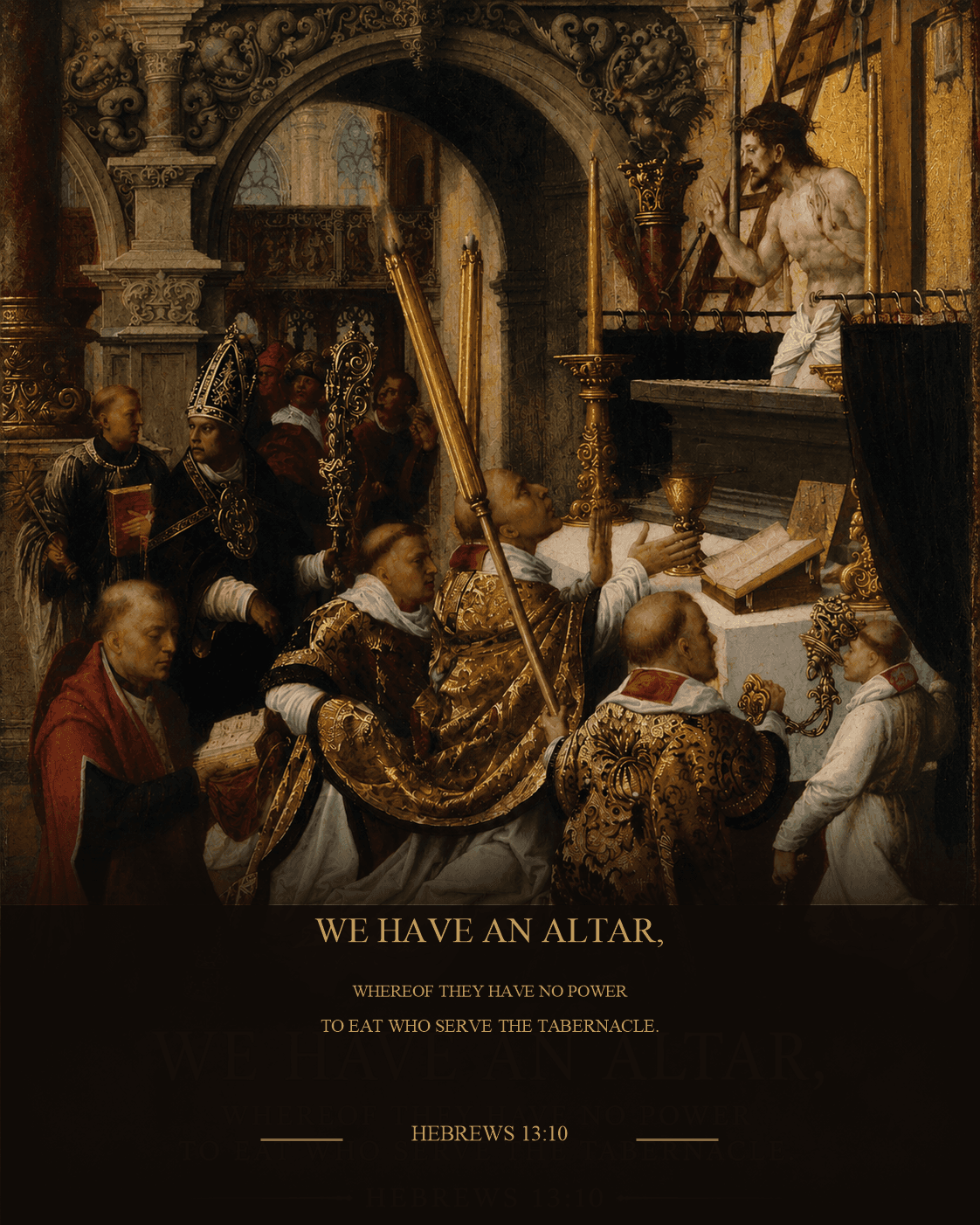
The Church is not first a discussion, but a sacrifice. Her deepest life is found at the altar, where God is worshiped and grace is given.
This gate turns the soul from abstraction to liturgical reality. Doctrine exists for worship, and worship reveals doctrine in act. Here the Church is known as priestly, sacramental, and ordered toward offering rather than opinion.
To pass through this gate is to understand that Catholic life cannot be reduced to ideas, affiliations, or debates. It is a life received from God in sacred rites, sustained by grace, and centered on the Holy Sacrifice.
From the altar, the soul must also be formed inwardly.
This gate traces the and supernatural life of when the age is darkened, sanctuaries are occupied, and souls must relearn where true , true sacrifice, and true ecclesial life remain. It speaks to souls who may have been taught to think of as a set of vague feelings, private devotions, or religious options. It teaches instead that is necessary, visible, , maternal, and public, even when her enemies try to strip her of her ordinary appearance.
Read it as a return to Catholic life in full: altar, priesthood, , , the household, the dying, and the endurance of souls after rupture has been recognized. The underlying line is the same one heard in Exodus: "Let my people go, that they may worship me in the desert." does not merely seek survival. She seeks the liberty to worship God rightly, receive His truly, and remain His people even when driven into a wilderness.
For a focused path through priesthood, orders, true sacrifice, discernment, and false shepherds, read Street of Fidelity.
Stage One: Priesthood, Rite, and the Public Memory of the Church
Begin with the chapters that establish the altar, the rite, and the visible order by which Catholic life is preserved:
- The True Priesthood and Apostolic Succession: The Golden Chain That Cannot Be Broken
- How to Use the Pre-1955 Missal: A Beginner's Guide to the True Mass
- Why Priests Use the Pre-1955 Liturgy: The Case for the Immutable Roman Rite
- Did Pope Pius XII Apostatize? A Clear Theological Judgment on the 1955 Holy Week Reforms
- The Calendar Reforms and the Erasure of Catholic Memory
- The Finding of the Holy Cross and the Church's Recovery of Buried Truth
- The Apparition of St. Michael and the Defense of Contested Ground
- The Finding of the Body of St. Stephen and the Recovery of Buried Witness
- The Exaltation of the Holy Cross and the Public Triumph of Redemptive Shame
- The Chair of St. Peter at Rome and the Roman Form of Apostolic Fatherhood
- St. Peter at Antioch and the Apostolic Mission Before Rome
- The Holy Innocents and the War Against Christ at the Beginning
- The Roman Year and the Formation of Catholic Memory
- Ember Days, Rogations, and the Sanctification of Time, Land, and Labor
- Vigils, Octaves, and the Church's Refusal to Let Holy Things Pass Quickly
- Septuagesima, Passiontide, and the Church's Pedagogy of Descent
- The Silence of Alleluia and the Church's School of Liturgical Deprivation
- The Bugia, the Sanctus Candle, and the Refusal to Learn the Mass from the Usurpers
- Veiling, Holy Reserve, and the Church's Refusal to Expose Everything
- The Silent Canon and the Church's Refusal to Chatter Through the Sacrifice
- How to Assist at Benediction: A Beginner's Guide to Eucharistic Adoration and Blessing
- All Souls, Public Suffrage, and the Church's Refusal to Canonize the Dead
- The Dies Irae, Judgment, and the Church's Refusal of Easy Consolation
- Black Vestments, Catholic Mourning, and the Church's Refusal of Bright Consolation
- Cemetery Prayer, Graves, and the Church's Refusal to Hide Death
- The Catafalque, Absolution Over the Dead, and the Church's Public Pleading for Mercy
- The Office of the Dead and the Church's Refusal to Let Prayer End at the Funeral
- The Tolling Bell, Public Death, and the Church's Refusal to Privatize the Grave
- The Baptized Body, Holy Water, Incense, and the Church's Refusal to Treat the Dead as Empty Matter
- The Funeral Procession, Public Mourning, and the Church's Refusal to Carry the Dead Out of Sight
- The Wake, Watching With the Dead, and the Church's Refusal to Leave the Body Unprayed Over
- Suicide, Deliberate Counsel, and Requiem Mercy: The 1917 Code on Burial, Repentance, and Mental Illness
- How to Prepare for a Holy Death in the Home: A Beginner's Guide for Catholic Families
- The Catholic Deathbed, the Blessed Candle, and the Church's Refusal to Let a Soul Die Unprepared
- The Commendation of the Dying and the Church's Refusal to Let the Last Hour Fall Silent
- Viaticum, the Bread for the Last Road, and the Church's Refusal to Let the Dying Go Unfed
- Priests, Bishops, and Jurisdiction in Apostasy: How the Church Governs When the Shepherd Is Struck
- Cardinal Manning and the Eternal Priesthood: Why the Priest Is Not a Religious Functionary
- St. John at the Foot of the Cross: The Priesthood Remaining With the Victim in Exile
- The Eternal Priesthood and the Temporal Mission of the Holy Ghost: Christ Sends, the Spirit Forms, and the Church Continues
This opening band restores the public shape of Catholic life: priesthood, rite, sacred time, requiem memory, and the last offices of mercy. It teaches that what the city of man tries to bury, silence, or privatize, the City of God keeps alive by rite, memory, and sacrifice.
Stage Two: The Altar and the Mass at the Center
Then read the chapters that gather the whole section around sacrifice:
- In the Mass God Offers and Man Receives: The Holy Sacrifice Against Man-Centered Worship
- The Holy Sacrifice: The Heart of the Church
- The Holy Sacrifice of the Mass and the Four Ends of Worship: Adoration, Thanksgiving, Propitiation, and Impetration
- "I Have Bought a Farm": Worldly Excuses, the Great Supper, and Flight from the Holy Sacrifice
- The Priest as Minister and Victim: Why the Altar Requires the Death of Self
- The Offertory, Oblation, and the Ascent of the Church With Christ
- Earthen Vessels, Holy Office, and the Fearful Judgment of Priests
- The Roman Canon and the Church's Refusal to Forget How to Offer
- The Last Gospel and the Church's Refusal to Leave the Altar Without Returning to the Word Made Flesh
- Thanksgiving After Mass and the Church's Refusal to Leave the Gift Unanswered
- The Infinite Value of One Holy Mass for the Souls in Purgatory
These chapters answer the crisis at the deepest point: where the true altar remains, where the sacrifice is truly offered, and where souls are still fed by Christ's own act rather than religious performance. Here 's own center is recovered, not a religious mood.
Stage Three: Rebirth, Healing, and Sacramental Certainty
After the altar is , move through the themselves:
- Valid Sacraments: Matter, Form, Minister, Intention, and Jurisdiction
- When a Priest Is Wrong: The True Mass, Doctrinal Error, and Sacramental Need in Exile
- When Error Becomes Heresy: Dogma, Pertinacity, and the Limits of Priestly Judgment
- Born of Water and the Holy Ghost
- The Church as a Living Organism
- Extreme Unction and Christian Dying in Hope
- In Confirmation God Strengthens and Man Is Sealed: Christian Fortitude Against Symbolic Maturity
- In Jurisdiction God Governs and Man Does Not Mission Himself: Ecclesial Sending Against Private Ministry
- The Error of Baptism of Desire: Why Desire Does Not Replace Rebirth
- From the Upper Room to Trent: The Unbroken Mass of the Church and the Nullity of Modernist Rites
- Father Leonard Feeney and the Punishment of Doctrinal Exactness
- Bishop George Hay and the Consistent Catholic Clarity on Salvation
- The Road to Emmaus: The Restoration of Doctrine, the Burning of the Heart, and the Recognition of Christ in the True Mass
- The Baptism of Blood Objection: Martyrs, Catechumens, and the Limits of Historical Silence
- "Lovest Thou Me?" The Restoration of Peter, the Proof of True Shepherds, and the Rejection of the Hireling Priesthood
- When Sacramental Ambiguity Spreads: How Softness in Baptism Corrupts the Whole Order of Grace
- The Piercing of the Church's Heart: The Wounding of the Sacraments
- How to Examine Your Conscience: A Practical Guide Under the Law of God
- How to Make a True Confession: A Beginner's Guide for Returning Catholics
- How to Prepare for Holy Communion: A Beginner's Guide to Receiving Our Lord Well
- How to Make Thanksgiving After Mass: A Beginner's Guide to Remaining With Our Lord
- How to Pray the Rosary Well: A Beginner's Guide to Marian Meditation and Perseverance
- Confession and the Eucharist: The Rhythm of Restoration
- Doctrinal Excursus: On Ministerial Sin, Secret Affiliations, and Sacramental Validity
This band shows how Catholic life actually begins and returns: rebirth, strengthening, , nourishment, certainty, and the refusal to live on managed ambiguity. The point is not simply that exists, but that God attached to a real , real , and a real order that man may not redesign.
Stage Four: Marriage, Households, and Authority Under Trial
Then take the chapters where life reaches family order and the crisis:
- Marriage, Grace, and the Domestic Church: Why Families Need a Real Sacramental Order
- Obedience Without Recognition: The Orthodox Bishop in Exile and the False Appeal to Lineage as Delay
- How False Traditionalism Uses Sacramental Language to Soothe Souls Inside Contradiction
- Virtue Without Salvation: How the SSPX and FSSP Imitate the Error of "Good" Protestants Through False Obedience and Doctrinal Silence
- How Children Are Formed by Sacramental Life or Sacramental Illusion
- Authority, Allegiance, and Grace: Why Sacraments Offered in Communion with the Counterfeit Church Cannot Bear Salvific Fruit
- Casti Connubii, the Primary End of Marriage, and Fidelity When One Spouse Falls Away
Here the gate turns from principles to the way those principles govern the household, the children, and the when is offered as peace. It also makes clear that no household remains healthy for long when it is cut loose from 's true worship and true .
Stage Five: Souls Returning, Persevering, and Being Tested
Then read the chapters that show what happens after is renounced:
- From Desolation to Restoration: Why Souls Experience Dryness After Leaving the Vatican II Antichurch and How Grace Is Recovered Through Fidelity
- God Acts First and the Creature Responds: Grace, Receptivity, and the Refutation of Man-Centered Religion
- The Faith Made Accessible: How God Preserves Truth for the Humble, the Simple, and the Childlike in Times of Apostasy
- In Marriage God Joins and Man Does Not Invent the Bond: Covenant Against Romantic Self-Creation
- The Veil of Pride: Why Intellectual and Clerical Pride Blind Souls to the True Church in Times of Apostasy
- In Holy Orders God Ordains and Man Does Not Appoint Himself: Priesthood Against Religious Self-Authorization
- When Children Cry Out: God's Use of the Young as Instruments of Conviction When Authority Fails
- In Confession God Absolves and the Sinner Accuses Himself: Mercy Against Therapeutic Religion
- Home Aloners and the Domestic Church: How Private Religion Without Obedience Destroys Families
- In Baptism God Regenerates and Man Is Reborn: New Birth Against Symbolic Religion
- "You Think You Know Better": How Insults Replace Argument When Truth Is Rejected
- False Charity and Weaponized Humility: How Silence Is Used to Protect Error and Condemn the Faithful
- Cohabitation, the Counterfeit Household, and the Loss of Shame Before God
- From Delay to Obstinacy: How Refused Grace Hardens the Heart and Withdraws Light
- Mercy After Hardening: How God Restores the Penitent Even After Light Has Been Withdrawn
- St. Monica: Tears, Warfare, and Fidelity in a Divided Household
- When Fidelity Is Called Pride: Why the Prophets Are Hated in Times of Apostasy
- Faithful Spouses in Times of Crisis: Patience, Truth, and Refusal of Domestic Indifferentism
This closing run shows what fidelity costs after clarity is received: hunger, family strain, the purging of , the testing of , the hardening of opponents, and the endurance required to remain under God. It strengthens souls for a long , not a brief burst of indignation.
All Entries in The Life of the True Church
- The True Priesthood and Apostolic Succession: The Golden Chain That Cannot Be Broken
- Why Priests Use the Pre-1955 Liturgy: The Case for the Immutable Roman Rite
- Did Pius XII Apostatize? A Clear Theological Judgment on the 1955 Holy Week Reforms
- The Calendar Reforms and the Erasure of Catholic Memory
- The Roman Year and the Formation of Catholic Memory
- Ember Days, Rogations, and the Sanctification of Time, Land, and Labor
- Vigils, Octaves, and the Church's Refusal to Let Holy Things Pass Quickly
- Septuagesima, Passiontide, and the Church's Pedagogy of Descent
- The Silence of Alleluia and the Church's School of Liturgical Deprivation
- The Bugia, the Sanctus Candle, and the Refusal to Learn the Mass from the Usurpers
- Veiling, Holy Reserve, and the Church's Refusal to Expose Everything
- The Silent Canon and the Church's Refusal to Chatter Through the Sacrifice
- All Souls, Public Suffrage, and the Church's Refusal to Canonize the Dead
- The Dies Irae, Judgment, and the Church's Refusal of Easy Consolation
- Black Vestments, Catholic Mourning, and the Church's Refusal of Bright Consolation
- Cemetery Prayer, Graves, and the Church's Refusal to Hide Death
- The Catafalque, Absolution Over the Dead, and the Church's Public Pleading for Mercy
- The Office of the Dead and the Church's Refusal to Let Prayer End at the Funeral
- The Tolling Bell, Public Death, and the Church's Refusal to Privatize the Grave
- The Baptized Body, Holy Water, Incense, and the Church's Refusal to Treat the Dead as Empty Matter
- The Funeral Procession, Public Mourning, and the Church's Refusal to Carry the Dead Out of Sight
- The Wake, Watching With the Dead, and the Church's Refusal to Leave the Body Unprayed Over
- Suicide, Deliberate Counsel, and Requiem Mercy: The 1917 Code on Burial, Repentance, and Mental Illness
- The Catholic Deathbed, the Blessed Candle, and the Church's Refusal to Let a Soul Die Unprepared
- The Commendation of the Dying and the Church's Refusal to Let the Last Hour Fall Silent
- Viaticum, the Bread for the Last Road, and the Church's Refusal to Let the Dying Go Unfed
- Priests, Bishops, and Jurisdiction in Apostasy: How the Church Governs When the Shepherd Is Struck
- Cardinal Manning and the Eternal Priesthood: Why the Priest Is Not a Religious Functionary
- St. John at the Foot of the Cross: The Priesthood Remaining With the Victim in Exile
- The Eternal Priesthood and the Temporal Mission of the Holy Ghost: Christ Sends, the Spirit Forms, and the Church Continues
- In the Mass God Offers and Man Receives: The Holy Sacrifice Against Man-Centered Worship
- The Holy Sacrifice: The Heart of the Church
- The Holy Sacrifice of the Mass and the Four Ends of Worship: Adoration, Thanksgiving, Propitiation, and Impetration
- "I Have Bought a Farm": Worldly Excuses, the Great Supper, and Flight from the Holy Sacrifice
- The Priest as Minister and Victim: Why the Altar Requires the Death of Self
- The Offertory, Oblation, and the Ascent of the Church With Christ
- Earthen Vessels, Holy Office, and the Fearful Judgment of Priests
- The Roman Canon and the Church's Refusal to Forget How to Offer
- The Last Gospel and the Church's Refusal to Leave the Altar Without Returning to the Word Made Flesh
- Thanksgiving After Mass and the Church's Refusal to Leave the Gift Unanswered
- The Infinite Value of One Holy Mass for the Souls in Purgatory
- Born of Water and the Holy Ghost
- The Church as a Living Organism
- Extreme Unction and Christian Dying in Hope
- In Confirmation God Strengthens and Man Is Sealed: Christian Fortitude Against Symbolic Maturity
- In Jurisdiction God Governs and Man Does Not Mission Himself: Ecclesial Sending Against Private Ministry
- The Error of Baptism of Desire: Why Desire Does Not Replace Rebirth
- From the Upper Room to Trent: The Unbroken Mass of the Church and the Nullity of Modernist Rites
- Father Leonard Feeney and the Punishment of Doctrinal Exactness
- Bishop George Hay and Consistent Catholic Clarity on Salvation
- The Road to Emmaus: The Restoration of Doctrine, the Burning of the Heart, and the Recognition of Christ in the True Mass
- The Baptism of Blood Objection: Martyrs, Catechumens, and the Limits of Historical Silence
- "Lovest Thou Me?" The Restoration of Peter, the Proof of True Shepherds, and the Rejection of the Hireling Priesthood
- When Sacramental Ambiguity Spreads: How Softness in Baptism Corrupts the Whole Order of Grace
- The Piercing of the Church's Heart: The Wounding of the Sacraments
- Confession and Eucharist: The Rhythm of Restoration
- Doctrinal Excursus: On Ministerial Sin, Secret Affiliations, and Sacramental Validity
- Marriage, Grace, and the Domestic Church: Why Families Need a Real Sacramental Order
- Obedience Without Recognition: The Orthodox Bishop in Exile and the False Appeal to Lineage as Delay
- How False Traditionalism Uses Sacramental Language to Soothe Souls Inside Contradiction
- Virtue Without Salvation: How the SSPX and FSSP Imitate the Error of "Good" Protestants Through False Obedience and Doctrinal Silence
- How Children Are Formed by Sacramental Life or Sacramental Illusion
- Authority, Allegiance, and Grace: Why Sacraments Offered in Communion with the Counterfeit Church Cannot Bear Salvific Fruit
- Casti Connubii, the Primary End of Marriage, and Fidelity When One Spouse Falls Away
- From Desolation to Restoration: Why Souls Experience Dryness After Leaving the Vatican II Antichurch and How Grace Is Recovered Through Fidelity
- God Acts First and the Creature Responds: Grace, Receptivity, and the Refutation of Man-Centered Religion
- The Faith Made Accessible: How God Preserves Truth for the Humble, the Simple, and the Childlike in Times of Apostasy
- In Marriage God Joins and Man Does Not Invent the Bond: Covenant Against Romantic Self-Creation
- The Veil of Pride: Why Intellectual and Clerical Pride Blind Souls to the True Church in Times of Apostasy
- In Holy Orders God Ordains and Man Does Not Appoint Himself: Priesthood Against Religious Self-Authorization
- When Children Cry Out: God's Use of the Young as Instruments of Conviction When Authority Fails
- In Confession God Absolves and the Sinner Accuses Himself: Mercy Against Therapeutic Religion
- Home Aloners and the Domestic Church: How Private Religion Without Obedience Destroys Families
- In Baptism God Regenerates and Man Is Reborn: New Birth Against Symbolic Religion
- "You Think You Know Better": How Insults Replace Argument When Truth Is Rejected
- False Charity and Weaponized Humility: How Silence Is Used to Protect Error and Condemn the Faithful
- Cohabitation, the Counterfeit Household, and the Loss of Shame Before God
- From Delay to Obstinacy: How Refused Grace Hardens the Heart and Withdraws Light
- Mercy After Hardening: How God Restores the Penitent Even After Light Has Been Withdrawn
- St. Monica: Tears, Warfare, and Fidelity in a Divided Household
- When Fidelity Is Called Pride: Why the Prophets Are Hated in Times of Apostasy
- Faithful Spouses in Times of Crisis: Patience, Truth, and Refusal of Domestic Indifferentism
- The Finding of the Holy Cross and the Church's Recovery of Buried Truth
- The Apparition of St. Michael and the Defense of Contested Ground
- The Finding of the Body of St. Stephen and the Recovery of Buried Witness
- The Exaltation of the Holy Cross and the Public Triumph of Redemptive Shame
- The Chair of St. Peter at Rome and the Roman Form of Apostolic Fatherhood
- St. Peter at Antioch and the Apostolic Mission Before Rome
- The Holy Innocents and the War Against Christ at the Beginning
- Constantine, the Sign of the Cross, and "By This Sign Thou Shalt Conquer"
- How to Pray the Rosary Well: A Beginner's Guide to Marian Meditation and Perseverance
- How to Assist at Benediction: A Beginner's Guide to Eucharistic Adoration and Blessing
- How to Make Thanksgiving After Mass: A Beginner's Guide to Remaining With Our Lord
- How to Prepare for a Holy Death in the Home: A Beginner's Guide for Catholic Families
- How to Examine Your Conscience: A Practical Guide Under the Law of God
- How to Prepare for Holy Communion: A Beginner's Guide to Receiving Our Lord Well
- How to Make a True Confession: A Beginner's Guide for Returning Catholics
- How to Use the Pre-1955 Missal: A Beginner's Guide to the True Mass
- Valid Sacraments: Matter, Form, Minister, Intention, and Jurisdiction
- When a Priest Is Wrong: The True Mass, Doctrinal Error, and Sacramental Need in Exile
- When Error Becomes Heresy: Dogma, Pertinacity, and the Limits of Priestly Judgment
Web design by Patrick Kearney