The Daily Pilgrimage
“Now therefore, ye children, hear me: Blessed are they that keep my ways.” — Proverbs 8:32
Daily formation
2026-01-15
Receive the day as a child of Holy Mother Church. Beneath Our Lady's care, magnify Christ, obey God's commandments, fulfill the duties of your state in life, die to self, trust divine Providence, resist error, and return the whole day to God.
Holy Mother Church gathers her children around the Sacred Calendar, feeds them with truth, warns them against what wounds the soul, and teaches them to walk faithfully toward their heavenly home.
“Fear not, little flock, for it hath pleased your Father to give you a kingdom. […] For where your treasure is, there will your heart be also.”
Choose a date
Daily navigation
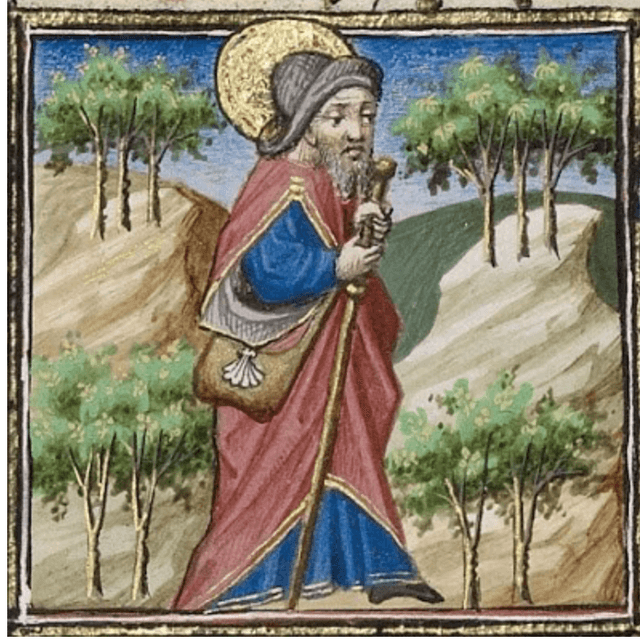
St. Paul, First Hermit
City of God in Exile
St. Paul, First Hermit
2026-01-15 - Time after Epiphany - Double - white
Today
St. Paul, First Hermit
Apostolic Fidelity
Truth
Christ Is King Over Public Life
Our Lord's kingship is not confined to private devotion. Men, families, laws, and nations are subject to His authority.
Practice
Hidden penance and poverty of spirit.
Pray for family members and friends. Love them sincerely, but do not pretend the truth is less serious just to keep peace.
Offering
To Jesus through Mary
Desire the sanctity God wills, not greatness before men, and ask Our Lady to form you for whatever service His providence appoints.
The Pilgrim's Devotional Rhythm
Keep this month and this weekday in prayer.
The month's intention and the weekday remembrance gather the pilgrim's prayer into the devotional rhythm of the Church. In harmony with today's Mass, feast, and duties, they teach him to receive ordinary time from God and return it to Him in honor and intercession.
January intention
The Most Holy Name of Jesus
Let the first month of the civil year be placed beneath the saving Name given to the Divine Child. The pilgrim begins again not in self-reliance, but in the Name before which every knee must bow.
Intention
For reverence toward the Holy Name, reparation for blasphemy and careless speech, and the conversion of those who do not yet confess Jesus Christ.
A faithful act
Invoke the Holy Name slowly in temptation, discouragement, or thanksgiving, and refuse every irreverent use of it.
Prayer
Jesus, be Thou my strength, my refuge, and the end of all that I undertake.
Thursday remembrance
The Most Blessed Sacrament
Thursday recalls the institution of the Holy Eucharist and the priesthood at the Last Supper. Adore Our Lord in the Blessed Sacrament and pray for priests, through whose consecrated ministry the Holy Sacrifice is offered.
Intention
For holy priests, worthy Communions, vocations, and reparation for neglect and sacrilege toward the Blessed Sacrament.
A faithful act
Make a visit or spiritual Communion and pray especially for priests by name.
Prayer
Jesus in the Most Blessed Sacrament, increase our faith, receive our reparation, and sanctify Thy priests.
Good Morning, Pilgrim
Receive this day as a child of Holy Mother Church.
Today the Church recalls that Christ entrusted His doctrine, sacraments, and authority to the apostles and commanded them to hand these gifts on. Catholics therefore receive the Faith from the Church rather than inventing it privately. They must also remember that sacred office is meant to serve revealed truth: holding an office and remaining faithful to its duties are related, but they are not identical.
Ask for the full sanctity God wills in your actual state of life, without comparison, vanity, or dreams of an unassigned mission.
Formation in True Devotion - Day 47: The Latter-Day Combat beneath Our Lady
“The Most High with His holy Mother has to form for Himself great Saints, who shall surpass most of the other Saints in sanctity, as much as the cedars of Lebanon outgrow the little shrubs.”
St. Louis de Montfort directs attention to what God and His holy Mother will form, not to self-appointed heroes. No soul may presume to number itself among extraordinary saints, assign dates to the latter times, or neglect present duty for imagined future missions. Great sanctity is God's work in creatures who cooperate humbly with grace.
The desire to be a cedar can conceal ambition. Desire instead to belong entirely to God, even if He keeps you hidden like a little shrub. Submit to the formation actually given: doctrine, prayer, sacraments, duties of state, correction, mortification, trials, works of mercy, and perseverance. Heaven measures greatness by charity and fidelity.
Ora — Begin with Prayer
Offer the day before spending it
Prayer gives the day its right beginning and its right end. Before work, conversation, news, or distraction claims the mind, adore the Blessed Trinity and offer every prayer, work, joy, suffering, and temptation to Jesus through Mary. Ask your Guardian Angel for help, and place the souls and needs entrusted to you beneath God's will.
Begin simply. Make the Morning Offering through the hands of Our Lady. Pray the Three Hail Marys for purity and final perseverance, ask your Guardian Angel to govern the senses and imagination, and name the soul or intention for which today's prayers and sacrifices will be offered. Do not rush these acts merely because they are familiar; let them place the whole day beneath God before the world begins to claim it.
O Lord, make me patient in household division, firm without cruelty, and charitable without compromise. Let peace be made beneath truth, not against it.
Quote of the Day
“But to the called Jews and Greeks, Christ the power of God and the wisdom of God.”
Plain-language help for today - 3 unfamiliar terms
- Commemoration
- a shorter liturgical remembrance of another saint or observance occurring on the same day.
- Apostolic
- belonging to the faith, mission, teaching, or authority handed down from Christ through the apostles.
- Abbot
- the spiritual father and superior of a monastery.
Today's Full Breviary Sermon or Proper Lesson
The first hermit fed in the desert and buried in prayer.
Matins - Second Nocturn - St. Paul, First Hermit
The verified Breviary witness for this observance is identified below. A complete English transcription has not yet been admitted, so no excerpt or summary is presented as though it were the full appointed text.
Roman Breviary, Proper lessons for St. Paul, First Hermit
“Christ giveth His soldiers double rations.”
- The Breviary remembers St. Paul withdrawing during persecution to serve God in quietness, where long solitude became a school of providence rather than self-sufficiency.
- His meeting with St. Antony joins desert asceticism to communion: the two speak of the kingdom of God, receive their bread with thanksgiving, and spend the night praising God.
- Paul's death in a posture of prayer and his burial by Antony show a hidden life completed within Christian worship, friendship, and hope of resurrection.
Let solitude become prayer rather than isolation. St. Paul teaches confidence in Providence, gratitude for daily bread, and readiness to die facing God.
Walk with Holy Mother Church
Holy Mother Church has already begun praying. Enter her prayer.
Today the Roman year keeps St. Paul, First Hermit. Receive the observance from the Church's hands: first understand what is commemorated, then let its doctrine and worship shape the day.
Roman Martyrology
January 15
ST. PAUL, the first hermit, who was carried to the home of the blessed on the tenth of this month. — In the diocese of Angers, St. Maur, abbot and disciple of St. Benedict. He made great progress with so able a master, for while he was still under the Saint's instruction he miraculously walked upon the water — a prodigy unheard of since the days of St. Peter. Sent later to France by St. Benedict, he built a famous monastery, which he governed for forty years, and after performing striking miracles, he rested in peace. — In Judaea, the holy prophets Habacue and Michaeas, whose bodies were found by divine revelation in the days of Theodosius the Elder. — At Anagni, St. Secundina, virgin and martyr, who suffered under the emperor Decius. — At Cagliari, in Sardinia, St. Ephisius, martyr, who, in the persecution of Diocletian and under the judge Flavian, having, by the assistance of God, overcome many torments, was beheaded and ascended to heaven. — At Nola, in Campania, St. Maximus, bishop. — At Clermont, in Auvergne, St. Bonitus, bishop and confessor. — In Egypt, St. Macarius, abbot, disciple of St. Anthony, very celebrated for his life and miracles. — Also, blessed Isidore, renowned for holiness of life, faith and miracles. — At Rome, St. John Calybita. For some time living unknown to his parents in a corner of their house, and later in a hut on an island in the Tiber, he was recognized by them only at his death. Being renowned for miracles, he was buried where he had died, and a church was subsequently erected in his honor in the same place.
Gospel of the Day
You who have followed me.
St. Paul, First Hermit - Matthew 19:27-29
“Every one that hath left house... for my name's sake, shall receive an hundredfold.”
The desert is not empty when Christ is there. Let St. Paul teach you to be content with God as witness.
Receive the Gospel with Holy Mother Church
The hermit leaves visible security because Christ Himself is worth more than the world.
St. Paul's hidden desert life shows the fruitfulness of abandonment when it is governed by prayer and penance.
This Gospel corrects a danger that can quietly deform Catholic judgment: The fear that hidden sacrifice is wasted because men do not see it. Ask where that danger seeks your consent today, and answer it with the act Our Lord requires.
Learn from Today's Saint or Feast
St. Paul, First Hermit
Hidden poverty in the desert.
St. Paul the First Hermit is remembered as a solitary of the Egyptian desert, living hidden from the world in prayer, poverty, and penance.
The tradition of his meeting with St. Antony shows the honor due to hidden sanctity: God sees the soul unknown to men and nourishes fidelity in silence.
Let St. Paul teach the worth of being unknown. In exile, hidden fidelity may be one of the purest ways to belong wholly to God.
Breviary Witness for the Day
The first hermit hidden with God.
Matins - St. Paul, First Hermit
- The Breviary remembers St. Paul the First Hermit as a hidden solitary of the desert, preserved by God in poverty, prayer, and penance.
- His witness teaches that the unknown life can be great before Heaven when it is surrendered wholly to God.
Let hiddenness become offering, not bitterness. God sees the cave, the silence, and the sacrifice.
Instruction from the Breviary
The Breviary witness for St. Paul, First Hermit is part of the Church's daily teaching. It should not be read as a list of isolated facts. In the Divine Office, Scripture, the lives of the saints, doctrine, and the Church's prayer are placed together so that the mind learns what the Church remembers and the heart learns how a Catholic ought to judge and live.
Today's witness is gathered under The first hermit hidden with God.. Its first point is this: The Breviary remembers St. Paul the First Hermit as a hidden solitary of the desert, preserved by God in poverty, prayer, and penance. Its next point develops the lesson: His witness teaches that the unknown life can be great before Heaven when it is surrendered wholly to God.
The practical instruction is: Let hiddenness become offering, not bitterness. God sees the cave, the silence, and the sacrifice. Ask what truth is being guarded, what virtue is being praised, and what danger or forgetfulness is being corrected. In this way the Breviary becomes instruction for the present day rather than information that is quickly passed over.
- What truth does this Breviary witness teach or defend?
- What virtue does the Church place before me through it?
- What judgment or action should change because I have received this lesson?
The Pilgrim's Spiritual Conference
Christ Is King Over Public Life
Remain here for a little while. Receive today's Catholic truth as a child of Holy Mother Church; let it judge the heart, strengthen the will, and become an act offered to God.
The Church places this truth before you today: Our Lord's kingship is not confined to private devotion. Men, families, laws, and nations are subject to His authority. Do not hurry past it as though doctrine belonged only to books and controversies. A revealed truth is also a light by which the soul must judge its loyalties, its fears, its habits, and the duties immediately before it. The Church's Catholicity includes the public claim of Christ over all peoples, not merely the private consolation of believers.
The grace to be practiced is Hidden penance and poverty of spirit, drawn from today's saintly witness. Ask God for more than the natural appearance of this virtue. Temperament may make an action seem easy for a time, but supernatural virtue remains faithful because God is worthy of obedience, even when feeling offers no assistance and no one notices the cost. Practice magnanimous humility: aspire to complete holiness while accepting obscurity, dependence, correction, and ordinary means.
There is also an enemy to recognize: Resist secular liberalism, which treats society as though it could be rightly ordered without Christ. Do not study this danger only in other people. Look quietly for the door by which it seeks entrance into your own soul - perhaps through delay, curiosity, resentment, human respect, attachment to comfort, or the desire to control the outcome. Dying to self today means choosing hidden penance and poverty of spirit when pride, comfort, fear, resentment, or human respect asks for control.
Do the faithful act and entrust its fruit to divine Providence, God's wise and loving governance of all things. Place effort and outcome into Our Lady's hands so that the whole offering may be presented to her Divine Son. Confidence in God is not passivity: obey, pray, work, and accept that visible success, consolation, or immediate relief may not be given. God remains faithful when the duty is hidden and the outcome uncertain. Therefore, perform the duty that belongs to you, use the lawful means God has provided, and then surrender the fruit. Receive the long pruning by which God removes vanity and makes spiritual fruit belong to Him rather than to your reputation. Use all the means of sanctification present today and complete every duty as material placed in the hands of Jesus and Mary.
The Church's witness
This truth manifests the Church's mark of catholic. The witness placed beside it today is Pope Pius XI.
Your resolution before God
Pray for family members and friends. Love them sincerely, but do not pretend the truth is less serious just to keep peace.
Family peace cannot be purchased by surrendering the Faith.
Carry this word quietly. Return to it when distraction, temptation, or discouragement begins to scatter the soul.
The Little Rule of Fidelity
Keep the day within prayer.
These anchors do not change because the soul needs a stable rule more than a daily novelty. Open them when you are learning the rule or when your ordinary prayer has begun to loosen.
Show today's prayer and duty anchors
Begin with morning prayer
Adore the Blessed Trinity and offer the whole day to Jesus through Mary before other duties claim the mind.
Keep the Angelus
Pause morning, noon, and evening to remember the Incarnation.
Seek Our Lord in the Blessed Sacrament
Attend Holy Mass when duty permits; otherwise make a Spiritual Communion and renew desire for Jesus in the Blessed Sacrament.
Return to Jesus and Mary
Use frequent holy aspirations during work, waiting, suffering, and temptation.
Pray the Rosary
Keep the mysteries of Christ before the mind with Our Lady and learn to imitate what they contain.
End with night prayer and examen
Give thanks, confess faults, forgive injuries, make a practical amendment, and entrust the night to Our Lady.
The Pilgrim's Mirror
How shall I imitate Christ today?
“It behoveth thee to break thine own will in many things, if thou wilt have peace and concord with others.”
Concord bought by surrendering truth is false, but many quarrels arise from preference rather than principle. Yield what belongs to self-will while holding fast what belongs to God.
Learn to distinguish the two before the moment of conflict. Doctrine, purity, justice, and necessary duty may require firmness. Your preferred method, timing, recognition, or last word usually does not. The soul becomes strong when it stops spending zeal upon the defense of self.
Today's Practice
Yield harmless preferences cheerfully whenever truth and duty do not require firmness.
Before Night Falls
Return the completed day to God.
Give thanks before measuring the day by feeling or visible success. Ask light to see faults without discouragement, make an Act of Contrition, forgive injuries, and place tomorrow beneath divine Providence.
Examine whether you desired holiness for God's glory or spiritual distinction for yourself, and renounce every proud comparison.
- For what grace or mercy should I thank God today?
- What sin, fault, neglected duty, or resistance to grace must I confess?
- What definite amendment will I carry into tomorrow?
Go Now, Pilgrim
Walk faithfully. Pray attentively. Bear your cross willingly. Love God above all things.
Holy Mother Church has gathered you around her prayer and truth; now carry what you have received into the duties of your state.
When this day is finished, may you have laid one more stone in the City of God.
You do not walk alone: remain beneath Our Lady's care as she leads you toward her Divine Son and the Heavenly Jerusalem.
God willing, we shall meet again at tomorrow's pilgrimage.
Source notes for this pilgrimage
Martyrology: The Roman Martyrology, Baltimore, 1916, John Murphy Company; local raw text lines 867-905.
- Gospel: Matthew 19:27-29, Douay-Rheims.
- Gospel: Traditional Roman Gospel from the common of abbots.
- Saint witness: St. Andrew Daily Missal, January 15.
- Saint witness: Roman Martyrology, 1916 Baltimore edition, January 15.
- Breviary witness: Roman Breviary, Matins lessons for January 15, St. Paul the First Hermit.
- Breviary witness: St. Andrew Daily Missal, January 15.
- Matins lesson: The Roman Breviary, translated by John, Marquess of Bute, 1908, vol. I, Winter, Second Nocturn for St. Paul, First Hermit, lessons iv-vi, printed pp. 683-684.
- Matins lesson: Bute 1908 is used here as an accessible pre-Pius X Breviary witness and is cited distinctly from the 1936-1937 Benziger / Burns Oates edition.
Pilgrim's Mirror: Thomas à Kempis, The Imitation of Christ, translated by Richard Whitford, edited by Wilfrid Raynal, O.S.B. (Mount Vernon, N.Y.: Peter Pauper Press, c. 1947). Today's passage is at Book I, chapter 17, p. 27.
Marian formation: St. Louis-Marie de Montfort, True Devotion to the Blessed Virgin, translated by Fr. Frederick William Faber, 1941 Company of Mary edition, imprimatur September 26, 1949. Today's passage is at True Devotion to the Blessed Virgin, no. 47. The supplied 2010 PDF is used only as a digital transcription of that pre-1955 edition.
- Devotional rhythm: St. Andrew Daily Missal, Dom Gaspar Lefebvre, O.S.B., 1953 edition; proper Mass or devotion named in this entry.
- Devotional rhythm: Philippians 2:9-11, Douay-Rheims.
- Devotional rhythm: 1 Corinthians 11:23-29, Douay-Rheims.
- Faith point: Pope Pius XI, Quas Primas.
- Faith point: Psalm 2, Douay-Rheims.
- Marian atmosphere and imitation: Luke 1:38, 46-49; Luke 2:19; John 2:5; John 19:25-27; and John 3:30, Douay-Rheims.
- Authority and revolt: Exodus 5:2, Douay-Rheims.
- Daily examen: St. Ignatius of Loyola, Spiritual Exercises, Particular and Daily Examen.