The Daily Pilgrimage
“Now therefore, ye children, hear me: Blessed are they that keep my ways.” — Proverbs 8:32
Daily formation
2026-08-17
Receive the day as a child of Holy Mother Church. Beneath Our Lady's care, magnify Christ, obey God's commandments, fulfill the duties of your state in life, die to self, trust divine Providence, resist error, and return the whole day to God.
Holy Mother Church gathers her children around the Sacred Calendar, feeds them with truth, warns them against what wounds the soul, and teaches them to walk faithfully toward their heavenly home.
“Fear not, little flock, for it hath pleased your Father to give you a kingdom. […] For where your treasure is, there will your heart be also.”
Choose a date
Daily navigation
St. Hyacinth, Confessor
City of God in Exile
St. Hyacinth, Confessor
2026-08-17 - Time after Pentecost - Double - white
Today
St. Hyacinth, Confessor
Growth After Pentecost
Truth
True Devotion to Mary Forms the Soul in Christ
True Marian devotion is not sentiment detached from obedience. It brings the soul more deeply under Christ's rule.
Practice
Apostolic perseverance.
Practice every virtue the day requires, giving particular attention to the virtue most opposed by your habitual fault.
Offering
To Jesus through Mary
Ask the Holy Ghost to make this teaching form you into a true client of Mary and a true disciple of Jesus Christ.
The Pilgrim's Devotional Rhythm
Keep this month and this weekday in prayer.
The month's intention and the weekday remembrance gather the pilgrim's prayer into the devotional rhythm of the Church. In harmony with today's Mass, feast, and duties, they teach him to receive ordinary time from God and return it to Him in honor and intercession.
August intention
The Immaculate Heart of Mary
The Immaculate Heart of Mary is wholly ordered to God: pure, recollected, obedient, and steadfast beneath the Cross. Entrust this month to Our Lady and ask her to teach you to keep the words of Christ, hate sin, and remain faithful when fidelity costs you.
Intention
In reparation for offenses against Our Lady; for the conversion of sinners; and for purity, recollection, fidelity to Catholic truth, and perseverance beneath the Cross.
A faithful act
Offer all your daily duties to God through Mary before beginning them, and guard a short period of silence in imitation of her recollection.
Prayer
Immaculate Heart of Mary, take this month's prayer, work, and suffering into thy hands and lead us faithfully to Jesus.
Monday remembrance
The Holy Souls in Purgatory
Begin the working week with an act of mercy toward the faithful departed. Their helplessness calls forth charity, while their purification reminds the living to repent before death.
Intention
For the most abandoned soul in Purgatory and for deceased relatives, benefactors, priests, and those who have no one to pray for them.
A faithful act
Offer the first difficulty of the week for the Holy Souls and pray the De profundis.
Prayer
Eternal rest give unto them, O Lord; and let perpetual light shine upon them.
Good Morning, Pilgrim
Receive this day as a child of Holy Mother Church.
In the Time after Pentecost, the Church sends the faithful back into daily labor under the light of the Holy Ghost. The soul must not seek fire as excitement only. It must seek the fire that purifies speech, strengthens duty, exposes false peace, and keeps the Church's received worship dear.
Ask the Holy Ghost to turn every truth learned about Our Lady into deeper discipleship, obedience, imitation, and union with Jesus.
Formation in True Devotion - Day 261: Review and Deepening: Formation of the Servants of Jesus and Mary
“I have now said many things about the most holy Virgin; but I have many more to say, and there are infinitely more which I shall omit, whether from ignorance, inability, or want of time, in the design which I have to form a true client of Mary, and a true disciple of Jesus Christ.”
St. Louis de Montfort's purpose is formation, not accumulation. Knowledge about Our Lady must produce a true client of Mary, and that client must be a true disciple of Jesus Christ. Reading that increases vocabulary while leaving faith, worship, repentance, obedience, prayer, sacrifice, and charity unchanged has not yet fulfilled the design.
His admission that infinitely more remains unsaid teaches humility before the mystery of grace. Do not seek novelty as if devotion were mastered by information. Receive verified doctrine gratefully, meditate upon it, translate it into the whole rule of life, and return repeatedly until truth becomes stable conviction and embodied virtue.
Ora — Begin with Prayer
Offer the day before spending it
Prayer gives the day its right beginning and its right end. Before work, conversation, news, or distraction claims the mind, adore the Blessed Trinity and offer every prayer, work, joy, suffering, and temptation to Jesus through Mary. Ask your Guardian Angel for help, and place the souls and needs entrusted to you beneath God's will.
Begin simply. Make the Morning Offering through the hands of Our Lady. Pray the Three Hail Marys for purity and final perseverance, ask your Guardian Angel to govern the senses and imagination, and name the soul or intention for which today's prayers and sacrifices will be offered. Do not rush these acts merely because they are familiar; let them place the whole day beneath God before the world begins to claim it.
O Lord, make doctrine fruitful in habit. Let truth become patience, courage, purity, recollection, penance, charity, and perseverance.
Quote of the Day
“Prayer places our mind in the brightness and light of God, and exposes our will to the heat of heavenly love.”
Plain-language help for today - 3 unfamiliar terms
- Confessor
- in the traditional calendar, a male saint who openly professed the Faith by a holy life but was not killed as a martyr.
- Apostolic
- belonging to the faith, mission, teaching, or authority handed down from Christ through the apostles.
- Penance
- repentance expressed through prayer, self-denial, reparation, and a real turning away from sin.
The full Breviary lessons preserve an older English translation. Read the modern explanation first; it identifies the people, event, and doctrine before the historical wording appears.
Today's Full Breviary Sermon or Proper Lesson
The preacher who carried the rule into exile and mission.
Matins - Second Nocturn - St. Hyacinth, Confessor
The complete appointed Breviary sermon or proper lessons verified for this observance are printed below. Where a Common supplies additional material, it is identified distinctly rather than presented as the proper text.
Roman Breviary, Proper lessons for St. Hyacinth
“Preaching and innocent life.”
- The Breviary presents St. Hyacinth as a Polish canon received by St. Dominic into the Order of Preachers and formed in exact observance of the rule.
- His apostolate joined preaching, prayer, penance, chastity, humility, and missionary foundation, showing that reform of souls begins with the preacher's own conversion.
- His reverent reception of the Sacraments at death and his final entrusting of his soul to God teach perseverance under the Church's prayer until the end.
Let St. Hyacinth steady apostolic zeal. A soul sent into confused lands must carry doctrine, prayer, penance, and sacramental reverence together, or the mission loses its Catholic form.
Complete Breviary Text
Fourth Lesson - The Life of St. Hyacinth
Hyacinth was a Pole, and was born [in the year 1185] of the noble and Christian family [of the Counts of Odrowatz,] in the town of Camien, in the diocese of Wratislaw. He was trained up in learning from his youth, and after studying law and theology, became a Canon of Crakow, where he was eminent above his fellows by the singular godliness of his life and the depth of his learning. Being at Rome, [in 1218,] he was received into the Order of Friars Preachers by the Founder, St Dominick, himself, and kept in holiness to the end of his life the rule of perfect living which he had learnt from him. He remained always a virgin, and loved modesty, long-suffering, lowliness, self-restraint, and all other good graces as his heritage in the life of a Friar.
Fifth Lesson - Prayer, Penance, and Preaching
In the heat of his love for God, he sometimes passed whole nights in pouring forth prayers and chastising his body, to which he never gave rest but in leaning against a stone or lying upon the ground. He was sent back to his own country, and, on the way, founded a very large house of his Order at Friesach; and soon afterwards another at Crakow. In other provinces of the kingdom of Poland he founded four others, and it passeth belief what success he had with all kinds of men, by his preaching of the Word of God, and the innocency of his life. Not a day passed wherein he did not display some bright gift of faith, godliness, or innocency.
Sixth Lesson - Perseverance unto Death
The zeal of this most holy man for the salvation of his neighbours was that which God marked by His greatest miracles. Among these is famous the time when coming to the River Vistula near Wisgrade, and finding it in flood, he crossed it without a boat, drawing over also his three companions standing upon the waves upon his outspread mantle. He led a wonderful life for nearly forty years after his profession, and then foretold to his brethren the day of his death. Upon the very day of the Feast of the Assumption of the Virgin, he finished the recitation of the Office of the Church, received the Sacraments with the utmost reverence, and then with the words, "Into Thy hands, O Lord," gave up his soul to God in the year of salvation 1257. He was illustrious for miracles even after his death, and Pope Clement VIII. numbered him among the saints.
Walk with Holy Mother Church
Holy Mother Church has already begun praying. Enter her prayer.
Today the Roman year keeps St. Hyacinth, Confessor. Receive the observance from the Church's hands: first understand what is commemorated, then let its doctrine and worship shape the day.
Octave context
Within the Common Octave of the Assumption - Common Octave
Octave context
Octave of St. Laurence, Martyr - Simple Octave (commemorated)
Roman Martyrology
August 17
The Octave of St. Lawrence, martyr. — At Cracow, in Poland, St. Hyacinth, confessor, of the Order of Preachers, who slept in the Lord on the 16th of this month. — At Carthage, in Africa, the holy martyrs Liberatus, abbot, Boniface, deacon, Servus and Kusticus, subdeacons, Rogatus and Septimus, monks, and Maximus, a young child. In the persecution of the Vandals, under king Hunneric, they were subjected to various unheard-of torments for the confession of the Catholic faith and the defense of one baptism. Finally, being nailed to the wood wherewith they were to be burned, as the fire was always put out miraculously whenever kindled, they wrere struck with iron bars by order of the tyrant until their brains were dashed out. Thus they terminated the glorious series of their combats, and were crowned by our Lord. — At Caesarea, in Cappadocia, the birthday of St. Mamas, martyr, who, from childhood to old age, endured a long martyrdom, and at length ended it happily in the reign of Aurelian, under the governor Alexander. He has been highly praised by the holy fathers Basil and Gregory Nazianzen. — In Achaia, St. Myron, priest and martyr, who was beheaded at Cyzicum, after undergoing many torments, in the time of the emperor Decius and the governor Antipater. — At Nicomedia, the holy martyrs Straton, Philip and Eutychian, who were condemned to the beasts, but being uninjured by them, ended their martyrdom by fire. — At Teramo, St. Anastasius, bishop and confessor. — At Ptolemais, in Palestine, the holy martyrs Paul, and his sister Juliana, who suffered under Valerian.
Learn from Today's Saint or Feast
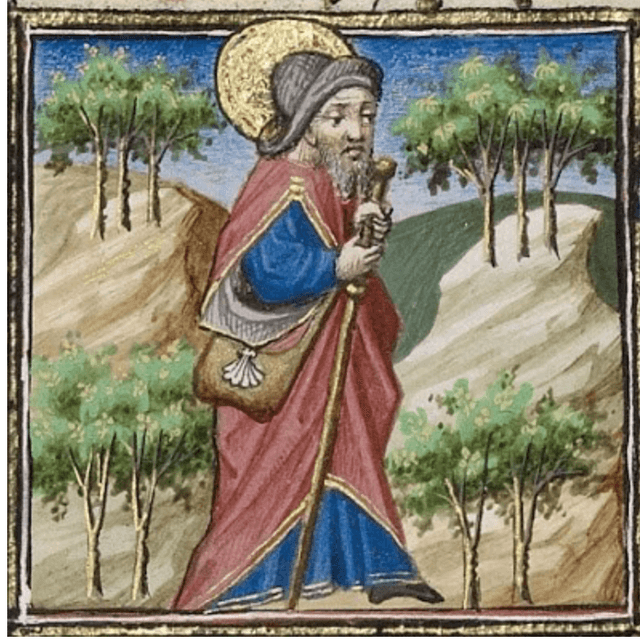
St. Hyacinth
Confessor and preacher formed in the school of St. Dominic.
St. Hyacinth, a son of St. Dominic, carried Dominican preaching into the lands of the north and east, and is remembered in the Martyrology at Cracow in Poland.
His feast teaches apostolic movement governed by doctrine, prayer, and religious obedience. The preacher does not carry himself; he carries the faith received from Christ and His Church.
Ask St. Hyacinth for Dominican steadiness. The faithful in exile need preaching that travels far without leaving truth behind.
The Pilgrim's Spiritual Conference
True Devotion to Mary Forms the Soul in Christ
Remain here for a little while. Receive today's Catholic truth as a child of Holy Mother Church; let it judge the heart, strengthen the will, and become an act offered to God.
The Church places this truth before you today: True Marian devotion is not sentiment detached from obedience. It brings the soul more deeply under Christ's rule. Do not hurry past it as though doctrine belonged only to books and controversies. A revealed truth is also a light by which the soul must judge its loyalties, its fears, its habits, and the duties immediately before it. Our Lady does not compete with her Son. She forms servants who hear Him, believe Him, and remain beneath His Cross.
The grace to be practiced is Apostolic perseverance, drawn from today's saintly witness. Ask God for more than the natural appearance of this virtue. Temperament may make an action seem easy for a time, but supernatural virtue remains faithful because God is worthy of obedience, even when feeling offers no assistance and no one notices the cost. Practice docility by receiving Catholic teaching humbly and carrying its full demands into prayer, conduct, duty, and sacrifice.
There is also an enemy to recognize: Resist false Marian devotion that seeks comfort, novelty, or emotion without conversion. Do not study this danger only in other people. Look quietly for the door by which it seeks entrance into your own soul - perhaps through delay, curiosity, resentment, human respect, attachment to comfort, or the desire to control the outcome. Dying to self today means choosing apostolic perseverance when pride, comfort, fear, resentment, or human respect asks for control.
Do the faithful act and entrust its fruit to divine Providence, God's wise and loving governance of all things. Place effort and outcome into Our Lady's hands so that the whole offering may be presented to her Divine Son. Confidence in God is not passivity: obey, pray, work, and accept that visible success, consolation, or immediate relief may not be given. God remains faithful when the duty is hidden and the outcome uncertain. Therefore, perform the duty that belongs to you, use the lawful means God has provided, and then surrender the fruit. Accept the slow work by which knowledge must descend into habits, resisting vanity, novelty-seeking, and impatience with formation. Translate Marian doctrine into concrete discipleship through complete duty, resistance to sin, prayer, mortification, and works of charity.
The Church's witness
This truth manifests the Church's mark of holy. The witness placed beside it today is St. Louis-Marie de Montfort.
Your resolution before God
Practice every virtue the day requires, giving particular attention to the virtue most opposed by your habitual fault.
Virtue grows by repeated acts under grace.
Carry this word quietly. Return to it when distraction, temptation, or discouragement begins to scatter the soul.
The Little Rule of Fidelity
Keep the day within prayer.
These anchors do not change because the soul needs a stable rule more than a daily novelty. Open them when you are learning the rule or when your ordinary prayer has begun to loosen.
Show today's prayer and duty anchors
Begin with morning prayer
Adore the Blessed Trinity and offer the whole day to Jesus through Mary before other duties claim the mind.
Keep the Angelus
Pause morning, noon, and evening to remember the Incarnation.
Seek Our Lord in the Blessed Sacrament
Attend Holy Mass when duty permits; otherwise make a Spiritual Communion and renew desire for Jesus in the Blessed Sacrament.
Return to Jesus and Mary
Use frequent holy aspirations during work, waiting, suffering, and temptation.
Pray the Rosary
Keep the mysteries of Christ before the mind with Our Lady and learn to imitate what they contain.
End with night prayer and examen
Give thanks, confess faults, forgive injuries, make a practical amendment, and entrust the night to Our Lady.
The Pilgrim's Mirror
How shall I imitate Christ today?
“Thou hast here no place of long abiding, for wheresoever thou be, thou art but a stranger and a pilgrim.”
The citizen of Heaven uses earthly goods faithfully without building his final home in them. Receive the day's joys and sorrows as provisions for the road.
Exile becomes bitter when the soul demands permanence from what must pass. Let today's change, disappointment, or small loss remind you gently of your destination. Fulfill earthly duties well precisely because they are the road appointed by God, but keep the heart free for the City that does not pass away.
Today's Practice
When something passes away today, say: My home is with God.
Before Night Falls
Return the completed day to God.
Give thanks before measuring the day by feeling or visible success. Ask light to see faults without discouragement, make an Act of Contrition, forgive injuries, and place tomorrow beneath divine Providence.
Ask whether today's study formed a truer client of Mary and disciple of Jesus, and amend every gap between knowledge and life.
- For what grace or mercy should I thank God today?
- What sin, fault, neglected duty, or resistance to grace must I confess?
- What definite amendment will I carry into tomorrow?
Go Now, Pilgrim
Walk faithfully. Pray attentively. Bear your cross willingly. Love God above all things.
Holy Mother Church has gathered you around her prayer and truth; now carry what you have received into the duties of your state.
When this day is finished, may you have laid one more stone in the City of God.
You do not walk alone: remain beneath Our Lady's care as she leads you toward her Divine Son and the Heavenly Jerusalem.
God willing, we shall meet again at tomorrow's pilgrimage.
Source notes for this pilgrimage
Martyrology: The Roman Martyrology, Baltimore, 1916, John Murphy Company; local raw text lines 8460-8499.
- Saint witness: St. Andrew Daily Missal, August 17.
- Saint witness: Roman Martyrology, 1916 Baltimore edition, August 17.
- Breviary witness: Roman Breviary, Matins lessons for August 17, St. Hyacinth.
- Breviary witness: Roman Martyrology, 1916 Baltimore edition, August 17.
- Matins lesson: The Roman Breviary, translated by John, Marquess of Bute, 1908, vol. III, Summer, Second Nocturn for St. Hyacinth, lessons iv-vi, printed pp. 833-835.
- Matins lesson: Bute 1908 is used here as an accessible pre-Pius X Breviary witness and is cited distinctly from the 1936-1937 Benziger / Burns Oates edition.
Pilgrim's Mirror: Thomas à Kempis, The Imitation of Christ, translated by Richard Whitford, edited by Wilfrid Raynal, O.S.B. (Mount Vernon, N.Y.: Peter Pauper Press, c. 1947). Today's passage is at Book II, chapter 1, p. 53.
Marian formation: St. Louis-Marie de Montfort, True Devotion to the Blessed Virgin, translated by Fr. Frederick William Faber, 1941 Company of Mary edition, imprimatur September 26, 1949. Today's passage is at True Devotion to the Blessed Virgin, no. 111. The supplied 2010 PDF is used only as a digital transcription of that pre-1955 edition.
- Octave context: St. Andrew Daily Missal, Liturgical Calendar, p. xxiv.
- Octave context: St. Andrew Daily Missal, Liturgical Calendar, p. xxiv.
- Octave context: St. Andrew Daily Missal, Division of the Ecclesiastical Year, p. x: a simple octave is commemorated only on the eighth day under the rite of a simple.
- Devotional rhythm: St. Andrew Daily Missal, Dom Gaspar Lefebvre, O.S.B., 1953 edition, Mass of the Immaculate Heart of the Blessed Virgin Mary, pp. 1520-1524.
- Devotional rhythm: Luke 2:19 and 2:35, Douay-Rheims.
- Devotional rhythm: St. Andrew Daily Missal, Dom Gaspar Lefebvre, O.S.B., 1953 edition; proper Mass or devotion named in this entry.
- Devotional rhythm: Psalm 129 and 2 Machabees 12:43-46, Douay-Rheims.
- Faith point: St. Louis-Marie de Montfort, True Devotion to Mary.
- Faith point: Gospel of St. John 19:25-27, Douay-Rheims.
- Marian atmosphere and imitation: Luke 1:38, 46-49; Luke 2:19; John 2:5; John 19:25-27; and John 3:30, Douay-Rheims.
- Authority and revolt: Exodus 5:2, Douay-Rheims.
- Daily examen: St. Ignatius of Loyola, Spiritual Exercises, Particular and Daily Examen.