The Daily Pilgrimage
“Now therefore, ye children, hear me: Blessed are they that keep my ways.” — Proverbs 8:32
Daily formation
2026-08-20
Receive the day as a child of Holy Mother Church. Beneath Our Lady's care, magnify Christ, obey God's commandments, fulfill the duties of your state in life, die to self, trust divine Providence, resist error, and return the whole day to God.
Holy Mother Church gathers her children around the Sacred Calendar, feeds them with truth, warns them against what wounds the soul, and teaches them to walk faithfully toward their heavenly home.
“Fear not, little flock, for it hath pleased your Father to give you a kingdom. […] For where your treasure is, there will your heart be also.”
Choose a date
Daily navigation
St. Bernard, Abbot and Doctor
City of God in Exile
St. Bernard, Abbot and Doctor
2026-08-20 - Time after Pentecost - Double - white
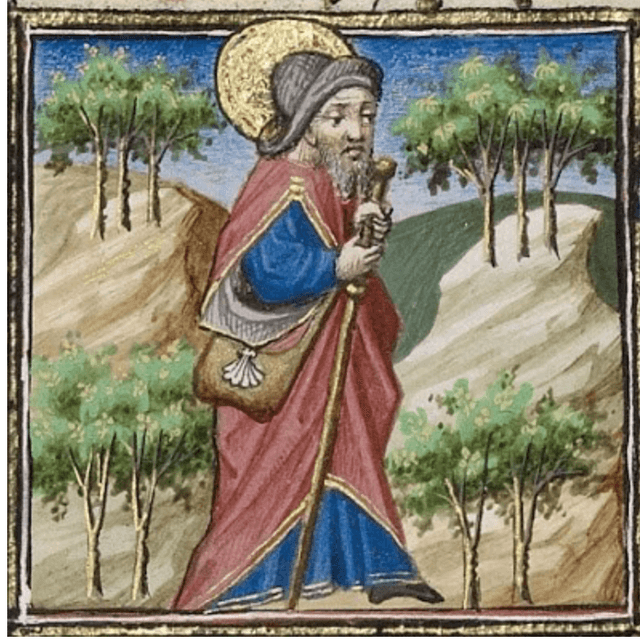
Today
St. Bernard, Abbot and Doctor
Growth After Pentecost
Truth
Obedience Serves Truth
Catholic obedience is a virtue ordered to God and His truth. It is not servility before contradiction or unlawful command.
Practice
Contemplative charity.
Stand with difficult Catholic truths today even when silence would be easier.
Offering
To Jesus through Mary
Ask for the brave and valiant fidelity St. Louis de Montfort foresaw in servants of Jesus and Mary amid persecution and peril.
The Pilgrim's Devotional Rhythm
Keep this month and this weekday in prayer.
The month's intention and the weekday remembrance gather the pilgrim's prayer into the devotional rhythm of the Church. In harmony with today's Mass, feast, and duties, they teach him to receive ordinary time from God and return it to Him in honor and intercession.
August intention
The Immaculate Heart of Mary
The Immaculate Heart of Mary is wholly ordered to God: pure, recollected, obedient, and steadfast beneath the Cross. Entrust this month to Our Lady and ask her to teach you to keep the words of Christ, hate sin, and remain faithful when fidelity costs you.
Intention
In reparation for offenses against Our Lady; for the conversion of sinners; and for purity, recollection, fidelity to Catholic truth, and perseverance beneath the Cross.
A faithful act
Offer all your daily duties to God through Mary before beginning them, and guard a short period of silence in imitation of her recollection.
Prayer
Immaculate Heart of Mary, take this month's prayer, work, and suffering into thy hands and lead us faithfully to Jesus.
Thursday remembrance
The Most Blessed Sacrament
Thursday recalls the institution of the Holy Eucharist and the priesthood at the Last Supper. Adore Our Lord in the Blessed Sacrament and pray for priests, through whose consecrated ministry the Holy Sacrifice is offered.
Intention
For holy priests, worthy Communions, vocations, and reparation for neglect and sacrilege toward the Blessed Sacrament.
A faithful act
Make a visit or spiritual Communion and pray especially for priests by name.
Prayer
Jesus in the Most Blessed Sacrament, increase our faith, receive our reparation, and sanctify Thy priests.
Good Morning, Pilgrim
Receive this day as a child of Holy Mother Church.
Pentecost does not end when the octave passes. Its fruit must remain in the soul: public confession of truth, docility to apostolic doctrine, courage before false authority, and charity strong enough to resist error without bitterness.
Ask Jesus and Mary for brave fidelity against the world, the devil, and corrupted nature throughout every trial and duty.
Formation in True Devotion - Day 264: Review and Deepening: Formation of the Servants of Jesus and Mary
“This very foresight encourages me, and makes me hope for a great success; that is to say, for a great squadron of brave and valiant soldiers of Jesus and Mary, of both sexes, to combat the world, the devil, and corrupted nature in those more than ever perilous times which are about to come!”
St. Louis de Montfort foresaw rage against his writing and persecution of those who would carry its teaching into practice. He answered neither with fear nor theatrical self-importance, but with hope for courageous servants of both sexes who would combat the world, the devil, and corrupted nature under Jesus and Mary.
The combat begins within. Corrupted nature must not be excused while external enemies are denounced. Reject worldly maxims, heresy, false worship, impurity, pride, compromise, cowardice, and self-will; obey the whole Catholic rule; persevere under opposition; and fight for souls with truth, prayer, penance, charity, and patient sacrifice rather than hatred or cruelty toward persons.
Ora — Begin with Prayer
Offer the day before spending it
Prayer gives the day its right beginning and its right end. Before work, conversation, news, or distraction claims the mind, adore the Blessed Trinity and offer every prayer, work, joy, suffering, and temptation to Jesus through Mary. Ask your Guardian Angel for help, and place the souls and needs entrusted to you beneath God's will.
Begin simply. Make the Morning Offering through the hands of Our Lady. Pray the Three Hail Marys for purity and final perseverance, ask your Guardian Angel to govern the senses and imagination, and name the soul or intention for which today's prayers and sacrifices will be offered. Do not rush these acts merely because they are familiar; let them place the whole day beneath God before the world begins to claim it.
O Lord, keep me near Thy Cross when comfort, acceptance, and ease invite me elsewhere. Let fidelity be stronger than the desire to belong.
Quote of the Day
“We are to love God for Himself, because nothing is more reasonable, nothing more profitable.”
Plain-language help for today - 3 unfamiliar terms
- Octave
- an eight-day extension of a major feast, allowing the Church to continue praying over the same mystery.
- Ecclesiastical or ecclesial
- belonging or relating to the Church; the words refer to her life, law, worship, ministers, or common mission.
- Confessor
- in the traditional calendar, a male saint who openly professed the Faith by a holy life but was not killed as a martyr.
The full Breviary lessons preserve an older English translation. Read the modern explanation first; it identifies the people, event, and doctrine before the historical wording appears.
Today's Full Breviary Sermon or Proper Lesson
The Doctor whose learning was kindled by God.
Matins - Second Nocturn - St. Bernard, Abbot, Confessor, and Doctor of the Church
The complete appointed Breviary sermon or proper lessons verified for this observance are printed below. Where a Common supplies additional material, it is identified distinctly rather than presented as the proper text.
Roman Breviary, Proper lessons for St. Bernard
“His teaching was rather given him of God.”
- The Breviary honors St. Bernard as abbot of Clairvaux, Doctor, preacher, writer, and servant of the Church in times of public difficulty.
- His lessons join contemplation and action: he governed monastic life, wrote with extraordinary light, counseled rulers, assisted Pope Innocent II, and labored against schism—the public rupture of ecclesiastical unity.
- St. Bernard shows that doctrine becomes fruitful when it is joined to prayer, humility, reform of life, and obedient service to the Church.
Let St. Bernard correct both cold study and restless action. Catholic speech should rise from prayer, and public zeal should be purified by humility before God.
Complete Breviary Text
Fourth Lesson - The Youth and Monastic Life of St. Bernard
Bernard was born [in the year of salvation 1091] at a decent place in Burgundy called Fontaines. On account of extraordinary good looks, he was as a boy very much sought after by women, but he could never be turned aside from his resolution to keep chaste. To fly from these temptations of the devil, he determined at two-and-twenty years of age to enter the Monastery of Citeaux, whence the Cistercian Order took its rise. When this resolution of Bernard's became known, his brothers did all their diligence to change his purpose, but he only became the more eloquent and happy about it. Them and others he so brought over to his mind, that thirty young men entered the same Order along with him. As a monk he was so given to fasting, that as often as he had to eat, so often he seemed to be in pain. He exercised himself wonderfully in watching and prayer, and was a great lover of Christian poverty. Thus he led on earth an heavenly life, purged of all care and desire for transitory things.
Fifth Lesson - Abbot of Clairvaux
He was a burning and shining light of lowliness, mercifulness, and kindness. His concentration of thought was such, that he hardly used his senses except to do good works, in which latter he acted with admirable wisdom. Thus occupied, he refused the Bishoprics of Genoa, Milan, and others, which were offered to him, declaring that he was unworthy of so high a sphere of duty. Being made Abbat of Clairvaux [in 1115,] he built monasteries in many places, wherein the excellent rules and discipline of Bernard long flourished. When Pope Innocent II., [in 1138,] restored the monastery of St Vincent and St Anastasius at Rome, Bernard set over it the Abbat who was afterwards the Supreme Pontiff Eugene III., and who is also the same to whom he addressed his book upon "Consideration."
Sixth Lesson - Doctor and Defender of the Church
He was the author of many writings, in which it is manifest that his teaching was rather given him of God, than gained by hard work. In consequence of his high reputation for excellence, he was called by the most exalted Princes to act as arbiter of their disputes, and for this end, and to settle affairs of the Church, he often went to Italy. He was an eminent helper to Pope Innocent II., in putting down the schism of Peter Leoni, and worked to this end, both at the Courts of the Emperor and of Henry King of England, and in the Council of Pisa. He fell asleep in the Lord, [at Clairvaux, on the 20th day of August,] in the [year 1153, the] sixty-third year of his age. He was famous for miracles, and Pope Alexander III. numbered him among the Saints. Pope Pius VIII., acting on the advice of the Congregation of Sacred Rites, declared and confirmed St Bernard a Doctor of the Universal Church. He also commanded that all should use the Mass and Office for him as for a Doctor, and granted perpetual yearly plenary indulgences to all who should visit Churches of the Cistercian Order upon the Feast-day of this Saint.
Walk with Holy Mother Church
Holy Mother Church has already begun praying. Enter her prayer.
Today the Roman year keeps St. Bernard, Abbot and Doctor. Receive the observance from the Church's hands: first understand what is commemorated, then let its doctrine and worship shape the day.
Octave context
Within the Common Octave of the Assumption - Common Octave
Roman Martyrology
August 20
In the territory of Langres, the demise of St. Bernard, first abbot of Clairvaux, illustrious for virtues, learning, and miracles. He was declared Doctor of the universal church by the Sovereign Pontiff, Pius VIII. — In Judea, the holy prophet Samuel, whose sacred relics (as is related by St. Jerome), were taken to Constantinople by the emperor Arcadius, and deposited near Septimus. — The same day, St. Lucius, senator, who was converted to the faith, on seeing the constancy of Theodore, bishop of Gyrene, during his martyrdom. He also converted the governor Dignian, with whom he set out for Cyprus, where, seeing other Christians crowned for the confession of the Lord, he offered himself voluntarily, and merited the same crown of martyrdom, by having his head struck off. — In Thrace, in the time of the governor Apellian, thirtyseven holy martyrs, who had their hands and feet cut off for the faith of Christ, and were cast into a burning furnace. — Also, the holy martyrs Severus, and the centurion Memnon, who, suffering the same kind of death, went victoriously to heaven. — At Cordova, during the persecution of the Arabs, the holy martyrs Leovigildus and Christopher, monks, who were thrust into prison for the defence of the Christian faith, and soon after, by being beheaded and cast into the fire, obtained the palm of martyrdom. — At Rome, blessed Porphyry, a man of God, who instructed the holy martyr Agapitus in the faith and doctrine of Christ. — In the island of Noirmoutiers, St. Philibert, abbot. — At Chinon, St. Maxinms, confessor, disciple of the blessed bishop Martin. — On Mount Senario, in the diocese of Florence, blessed Manetius, confessor, one of the seven founders of the Order of the Servites of the Blessed Virgin Mary, wrho breathed his last whilst reciting hymns in her honor.
Learn from Today's Saint or Feast
St. Bernard
Abbot, Doctor, preacher, and lover of the Word made flesh.
St. Bernard entered Citeaux and became abbot of Clairvaux, giving the Church a luminous witness of monastic reform, preaching, counsel, doctrine, and ardent love for Our Lord and Our Lady.
Princes, bishops, monks, and ordinary souls sought his counsel, yet his strength rose from contemplation. He teaches that holy eloquence must come from prayer and return souls to God.
Let St. Bernard teach you to love doctrine as something sung before God, not merely argued before men.
The Pilgrim's Spiritual Conference
Obedience Serves Truth
Remain here for a little while. Receive today's Catholic truth as a child of Holy Mother Church; let it judge the heart, strengthen the will, and become an act offered to God.
The Church places this truth before you today: Catholic obedience is a virtue ordered to God and His truth. It is not servility before contradiction or unlawful command. Do not hurry past it as though doctrine belonged only to books and controversies. A revealed truth is also a light by which the soul must judge its loyalties, its fears, its habits, and the duties immediately before it. Authority is real because it comes from God, but it remains ministerial. It cannot command against the faith it exists to guard.
The grace to be practiced is Contemplative charity, drawn from today's saintly witness. Ask God for more than the natural appearance of this virtue. Temperament may make an action seem easy for a time, but supernatural virtue remains faithful because God is worthy of obedience, even when feeling offers no assistance and no one notices the cost. Practice courageous perseverance by confessing truth, rejecting error and sin, governing self, fulfilling duty, and laboring charitably for souls.
There is also an enemy to recognize: Resist both rebellion against true authority and false obedience to commands that betray doctrine. Do not study this danger only in other people. Look quietly for the door by which it seeks entrance into your own soul - perhaps through delay, curiosity, resentment, human respect, attachment to comfort, or the desire to control the outcome. Dying to self today means choosing contemplative charity when pride, comfort, fear, resentment, or human respect asks for control.
Do the faithful act and entrust its fruit to divine Providence, God's wise and loving governance of all things. Place effort and outcome into Our Lady's hands so that the whole offering may be presented to her Divine Son. Confidence in God is not passivity: obey, pray, work, and accept that visible success, consolation, or immediate relief may not be given. God remains faithful when the duty is hidden and the outcome uncertain. Therefore, perform the duty that belongs to you, use the lawful means God has provided, and then surrender the fruit. Bear misunderstanding, resistance, ridicule, dryness, and sacrifice without bitterness, self-dramatization, retreat, or compromise. Combat evil first within and then around you through doctrine, prayer, penance, good example, patient correction, and works of mercy.
The Church's witness
This truth manifests the Church's mark of apostolic. The witness placed beside it today is St. Thomas Aquinas.
Your resolution before God
Stand with difficult Catholic truths today even when silence would be easier.
The faithful remain at the Cross when the multitude walks past it.
Carry this word quietly. Return to it when distraction, temptation, or discouragement begins to scatter the soul.
The Little Rule of Fidelity
Keep the day within prayer.
These anchors do not change because the soul needs a stable rule more than a daily novelty. Open them when you are learning the rule or when your ordinary prayer has begun to loosen.
Show today's prayer and duty anchors
Begin with morning prayer
Adore the Blessed Trinity and offer the whole day to Jesus through Mary before other duties claim the mind.
Keep the Angelus
Pause morning, noon, and evening to remember the Incarnation.
Seek Our Lord in the Blessed Sacrament
Attend Holy Mass when duty permits; otherwise make a Spiritual Communion and renew desire for Jesus in the Blessed Sacrament.
Return to Jesus and Mary
Use frequent holy aspirations during work, waiting, suffering, and temptation.
Pray the Rosary
Keep the mysteries of Christ before the mind with Our Lady and learn to imitate what they contain.
End with night prayer and examen
Give thanks, confess faults, forgive injuries, make a practical amendment, and entrust the night to Our Lady.
The Pilgrim's Mirror
How shall I imitate Christ today?
“The most noble and the most perfect victory is for a man to have the victory of himself.”
Victory over others can feed pride; victory over self-will makes room for Christ. Ask for the grace to conquer the fault that most often conquers you.
Choose the fault by its frequency, not by how dramatic it appears. The repeated impatient tone, indulgent thought, delayed prayer, or unnecessary complaint may govern more of life than a rare great trial. Meet it today at its first small demand, while grace makes refusal possible.
Today's Practice
Choose the harder faithful act once, quietly and at once.
Before Night Falls
Return the completed day to God.
Give thanks before measuring the day by feeling or visible success. Ask light to see faults without discouragement, make an Act of Contrition, forgive injuries, and place tomorrow beneath divine Providence.
Review the threefold combat, repent of cowardice and self-will, forgive persons, and renew valiant service beneath Jesus and Mary.
- For what grace or mercy should I thank God today?
- What sin, fault, neglected duty, or resistance to grace must I confess?
- What definite amendment will I carry into tomorrow?
Go Now, Pilgrim
Walk faithfully. Pray attentively. Bear your cross willingly. Love God above all things.
Holy Mother Church has gathered you around her prayer and truth; now carry what you have received into the duties of your state.
When this day is finished, may you have laid one more stone in the City of God.
You do not walk alone: remain beneath Our Lady's care as she leads you toward her Divine Son and the Heavenly Jerusalem.
God willing, we shall meet again at tomorrow's pilgrimage.
Source notes for this pilgrimage
Martyrology: The Roman Martyrology, Baltimore, 1916, John Murphy Company; local raw text lines 8595-8639.
- Saint witness: St. Andrew Daily Missal, August 20.
- Saint witness: Roman Martyrology, 1916 Baltimore edition, August 20.
- Breviary witness: Roman Breviary, Matins lessons for August 20, St. Bernard.
- Breviary witness: Roman Martyrology, 1916 Baltimore edition, August 20.
- Matins lesson: The Roman Breviary, translated by John, Marquess of Bute, 1908, vol. III, Summer, Second Nocturn for St. Bernard, lessons iv-vi, printed pp. 842-843.
- Matins lesson: Bute 1908 is used here as an accessible pre-Pius X Breviary witness and is cited distinctly from the 1936-1937 Benziger / Burns Oates edition.
Pilgrim's Mirror: Thomas à Kempis, The Imitation of Christ, translated by Richard Whitford, edited by Wilfrid Raynal, O.S.B. (Mount Vernon, N.Y.: Peter Pauper Press, c. 1947). Today's passage is at Book III, chapter 53, p. 159.
Marian formation: St. Louis-Marie de Montfort, True Devotion to the Blessed Virgin, translated by Fr. Frederick William Faber, 1941 Company of Mary edition, imprimatur September 26, 1949. Today's passage is at True Devotion to the Blessed Virgin, no. 114. The supplied 2010 PDF is used only as a digital transcription of that pre-1955 edition.
- Octave context: St. Andrew Daily Missal, Liturgical Calendar, p. xxiv.
- Devotional rhythm: St. Andrew Daily Missal, Dom Gaspar Lefebvre, O.S.B., 1953 edition, Mass of the Immaculate Heart of the Blessed Virgin Mary, pp. 1520-1524.
- Devotional rhythm: Luke 2:19 and 2:35, Douay-Rheims.
- Devotional rhythm: St. Andrew Daily Missal, Dom Gaspar Lefebvre, O.S.B., 1953 edition; proper Mass or devotion named in this entry.
- Devotional rhythm: 1 Corinthians 11:23-29, Douay-Rheims.
- Faith point: St. Thomas Aquinas, Summa Theologiae, on obedience.
- Faith point: Acts 5:29, Douay-Rheims.
- Marian atmosphere and imitation: Luke 1:38, 46-49; Luke 2:19; John 2:5; John 19:25-27; and John 3:30, Douay-Rheims.
- Authority and revolt: Exodus 5:2, Douay-Rheims.
- Daily examen: St. Ignatius of Loyola, Spiritual Exercises, Particular and Daily Examen.