The Daily Pilgrimage
“Now therefore, ye children, hear me: Blessed are they that keep my ways.” — Proverbs 8:32
Daily formation
2026-09-21
Receive the day as a child of Holy Mother Church. Beneath Our Lady's care, magnify Christ, obey God's commandments, fulfill the duties of your state in life, die to self, trust divine Providence, resist error, and return the whole day to God.
Holy Mother Church gathers her children around the Sacred Calendar, feeds them with truth, warns them against what wounds the soul, and teaches them to walk faithfully toward their heavenly home.
“Fear not, little flock, for it hath pleased your Father to give you a kingdom. […] For where your treasure is, there will your heart be also.”
Choose a date
Daily navigation
St. Matthew, Apostle and Evangelist
City of God in Exile
St. Matthew, Apostle and Evangelist
2026-09-21 - Time after Pentecost - Double of the Second Class - red
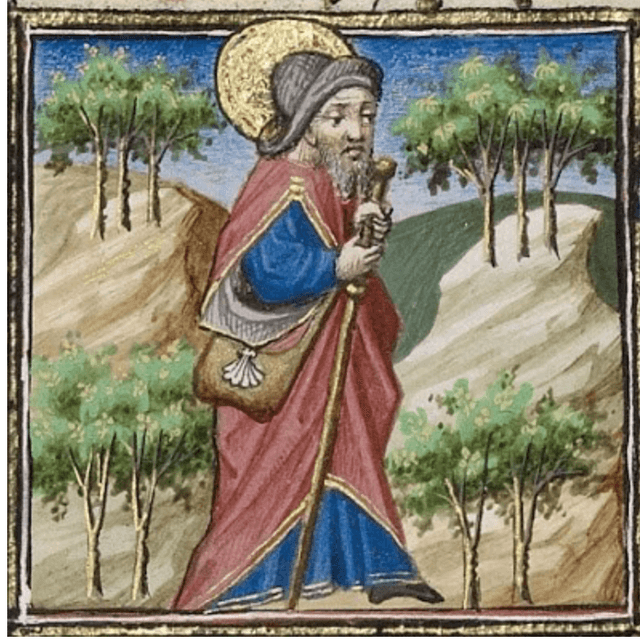
Today
St. Matthew, Apostle and Evangelist
Apostolic Fidelity
Truth
The Church Is Visible and Founded by Christ
The true Church is not an invisible collection of private opinions, but the society founded by Our Lord, teaching, sanctifying, and governing in His name.
Practice
Prompt obedience to mercy.
Let Catholic beauty move you toward concrete duty, prayer, and repentance.
Offering
To Jesus through Mary
Under Our Lady's mantle, guard purity of faith, heart, intention, and conduct.
The Pilgrim's Devotional Rhythm
Keep this month and this weekday in prayer.
The month's intention and the weekday remembrance gather the pilgrim's prayer into the devotional rhythm of the Church. In harmony with today's Mass, feast, and duties, they teach him to receive ordinary time from God and return it to Him in honor and intercession.
September intention
The Seven Sorrows of the Blessed Virgin Mary
Our Lady did not flee the Cross. By remembering her sorrows, the pilgrim learns compassion for the Passion of Christ, patience in affliction, and fidelity when consolation is withdrawn.
Intention
For those crushed by grief, for sinners at the hour of death, and for the grace to carry every cross without abandoning Christ.
A faithful act
Accept sorrows without murmuring and offer them with Our Lady for dying souls.
Prayer
Sorrowful and Immaculate Heart of Mary, keep us faithful beside the Cross of Jesus.
Monday remembrance
The Holy Souls in Purgatory
Begin the working week with an act of mercy toward the faithful departed. Their helplessness calls forth charity, while their purification reminds the living to repent before death.
Intention
For the most abandoned soul in Purgatory and for deceased relatives, benefactors, priests, and those who have no one to pray for them.
A faithful act
Offer the first difficulty of the week for the Holy Souls and pray the De profundis.
Prayer
Eternal rest give unto them, O Lord; and let perpetual light shine upon them.
Good Morning, Pilgrim
Receive this day as a child of Holy Mother Church.
Today the Church recalls that Christ entrusted His doctrine, sacraments, and authority to the apostles and commanded them to hand these gifts on. Catholics therefore receive the Faith from the Church rather than inventing it privately. They must also remember that sacred office is meant to serve revealed truth: holding an office and remaining faithful to its duties are related, but they are not identical.
Consecrate the senses and imagination to Jesus through Mary. Ask her to guard what you permit the eyes, ears, and memory to receive.
Formation in True Devotion - Day 296: Review and Deepening: Consecrated Life through Mary to Jesus
“We must put ourselves and leave ourselves in her virginal hands, like a tool in the grasp of a workman, like a lute in the hands of a skillful player.”
The instrument does not select the song, and the tool does not direct the craftsman. This image reaches the place where self-will hides beneath religious activity: we are often willing to serve God provided that we may choose the task, the hour, the consolation, and the result.
To remain in Mary's hands is to become teachable. Ask her to quiet the inward argument by which you resist the form of today's duty. Then give yourself peacefully to what God actually asks, without imagining a more flattering obedience elsewhere.
Ora — Begin with Prayer
Offer the day before spending it
Prayer gives the day its right beginning and its right end. Before work, conversation, news, or distraction claims the mind, adore the Blessed Trinity and offer every prayer, work, joy, suffering, and temptation to Jesus through Mary. Ask your Guardian Angel for help, and place the souls and needs entrusted to you beneath God's will.
Begin simply. Make the Morning Offering through the hands of Our Lady. Pray the Three Hail Marys for purity and final perseverance, ask your Guardian Angel to govern the senses and imagination, and name the soul or intention for which today's prayers and sacrifices will be offered. Do not rush these acts merely because they are familiar; let them place the whole day beneath God before the world begins to claim it.
O Lord, purify my love for Catholic beauty. Let it lead me to obedience, reverence, valid worship, and sanctity rather than taste alone.
Quote of the Day
“Follow me. And he rose up and followed him.”
Plain-language help for today - 3 unfamiliar terms
- Martyr
- a Christian who was killed rather than deny Christ or abandon the Faith.
- Apostle
- one sent by Christ with authority to preach and establish the Church; the title especially names the Twelve and St. Paul.
- Apostolic
- belonging to the faith, mission, teaching, or authority handed down from Christ through the apostles.
The full Breviary lessons preserve an older English translation. Read the modern explanation first; it identifies the people, event, and doctrine before the historical wording appears.
Today's Full Breviary Sermon or Proper Lesson
The publican who rose, followed, preached, and wrote.
Matins - Second Nocturn - St. Matthew, Apostle and Evangelist
The complete appointed Breviary sermon or proper lessons verified for this observance are printed below. Where a Common supplies additional material, it is identified distinctly rather than presented as the proper text.
Roman Breviary and St. Jerome, Proper apostolic lessons and homily on Matthew 9
“He arose, and followed Him.”
- The Breviary honors St. Matthew as a publican called by Christ, an Apostle sent to preach, an Evangelist who preserved the Gospel, and a martyr.
- St. Jerome explains that the Lord's table fellowship with publicans is medicinal mercy: Christ approaches sinners to call them to repentance.
- Matthew's prompt rising shows grace producing conversion, mission, doctrine, and sacrifice rather than leaving the sinner seated in his former life.
When Christ calls, rise. St. Matthew teaches the presence of the Physician summoning sinners into repentance, apostolic service, and witness.
Complete Breviary Text
Fourth Lesson - St. Matthew Called and Sent
It came to pass one day at Capernaum, that Christ "went forth, and saw a publican, named Levi, sitting at the receipt of custom; and He said unto him: Follow Me. And he left all, rose up, and followed Him. And Levi made Him a great feast in his own house." This Levi is the Apostle and Evangelist Matthew. After that Christ was risen again from the dead, and while he was yet in Judea, before he set forth for that land which had fallen to the lot of his preaching, he wrote the Gospel of JESUS Christ in the Hebrew tongue, for the sake of them of the circumcision who had believed. His was the first written of the four Gospels. Thereafter he went to Ethiopia, and there preached the Gospel, confirming his preaching with many miracles.
Fifth Lesson - The Apostle Crowned with Martyrdom
Of his miracles, the most notable was that he raised the King's daughter from the dead, and thereby brought to believe in Christ the King her father, his wife, and all that region. After that the King was dead, Hirtacus, who came after him, was fain to take his daughter Iphigenia to wife, but by the exhortation of Matthew she had made vow of her maidenhood to God, and stood firm to that holy resolution, for which cause Hirtacus commanded to slay the Apostle at the Altar while he was performing the mystery. He crowned the dignity of the Apostleship with the glory of martyrdom upon the 21st day of September. His body had been brought to Salerno, where it was afterwards buried in a Church dedicated in his name during the Popedom of Gregory VII., and there it is held in great worship and sought to by great gatherings of people.
Sixth Lesson - From the Common of Apostles and Evangelists
"And every one had four wings." For they do all with one accord preach Our Lord JESUS Christ, the Son of Almighty God: toward Whose Godhead lifting up the eyes of their mind, they do lift the wings of contemplation, and do fly. In the Evangelists, the face pertaineth to the Lord's Manhood, and the wings to His Godhead: for they turn their face toward Him Whom they see in bodily shape: but when they say that He is, as touching His Godhead, Incomprehensible, and Incorporeal, the wings of their contemplation do, in a manner, carry them in flight heavenward. Because, then, they have all one faith in the Incarnation, and all equally look by contemplation toward the Godhead: it is well written of them, "Every one had four faces, and every one had four wings."
Walk with Holy Mother Church
Holy Mother Church has already begun praying. Enter her prayer.
Today the Roman year keeps St. Matthew, Apostle and Evangelist. Receive the observance from the Church's hands: first understand what is commemorated, then let its doctrine and worship shape the day.
Roman Martyrology
September 21
The birthday of St. Matthew, apostle and evan- - gelist, who suffered martyrdom in Ethiopia, while engaged in preaching. The Gospel written by him in Hebrew was, by his own revelation, found in the time of the emperor Zeno, together with the relics of the blessed apostle Barnabas. — In the land of Saar, the holy prophet Jonas, who was buried in Geth. — At Rome, St. Pamphilus, martyr. — At twenty miles from Rome, on the Claudian way, the martyrdom of St. Alexander, bishop, in the time of the emperor Antoninus. For the faith of Christ he was loaded with fetters scourged, tortured, burned with torches, torn with iron hooks, exposed to the beasts and cast into the flames, but having overcome all these torments, he was finally beheaded, and so attained the glory of eternal life. His body was afterwards carried into the city by the blessed pope Damasus, on the 26th of November, on which day his feast is to be celebrated by order of the same Pontiff. — In Phoenicia, St. Eusebius, martyr, who, of his own accord, went to the prefect, and declaring himself a Christian, was subjected by him to many torments, and finally beheaded. — In Cyprus, St. Isacius, bishop and martyr. — In the same place, St. Meletius, bishop and confessor. — In Ethiopia, St. Iphigenia, virgin, who being baptized and consecrated to God by the blessed apostle Matthew, ended her holy life in peace.
Gospel of the Day
Follow me.
St. Matthew, Apostle and Evangelist - Matthew 9:9-13
“Follow me. And he rose up and followed him.”
Rise when He calls. St. Matthew did not become worthy first; he became obedient first.
Receive the Gospel with Holy Mother Church
Christ calls the publican, a tax collector, away from his tax station into apostolic discipleship.
Mercy does not deny sin; it calls sinners to rise and follow.
This Gospel corrects a danger that can quietly deform Catholic judgment: The false mercy that keeps the sinner seated where Christ found him. Ask where that danger seeks your consent today, and answer it with the act Our Lord requires.
Learn from Today's Saint or Feast
St. Matthew
Apostle, Evangelist, and publican called by mercy.
St. Matthew was called by Christ from the receipt of custom—the station where he collected taxes—and became an apostle and evangelist.
His feast teaches that mercy does not leave the sinner seated in the old life. Christ calls, and the forgiven soul rises to follow.
Do not negotiate with the old table. When Christ says follow Me, obedience begins before every difficulty is solved.
The Pilgrim's Spiritual Conference
The Church Is Visible and Founded by Christ
Remain here for a little while. Receive today's Catholic truth as a child of Holy Mother Church; let it judge the heart, strengthen the will, and become an act offered to God.
The Church places this truth before you today: The true Church is not an invisible collection of private opinions, but the society founded by Our Lord, teaching, sanctifying, and governing in His name. Do not hurry past it as though doctrine belonged only to books and controversies. A revealed truth is also a light by which the soul must judge its loyalties, its fears, its habits, and the duties immediately before it. Apostolicity guards continuity of doctrine, worship, mission, and authority. The faithful do not invent the Church; they receive her from Christ through the Apostles.
The grace to be practiced is Prompt obedience to mercy, drawn from today's saintly witness. Ask God for more than the natural appearance of this virtue. Temperament may make an action seem easy for a time, but supernatural virtue remains faithful because God is worthy of obedience, even when feeling offers no assistance and no one notices the cost. Imitate Mary's purity: not merely freedom from grave stain, but an undivided heart that refuses whatever competes with God.
There is also an enemy to recognize: Resist the claim that a self-made religious fellowship can replace the Church Christ visibly founded. Do not study this danger only in other people. Look quietly for the door by which it seeks entrance into your own soul - perhaps through delay, curiosity, resentment, human respect, attachment to comfort, or the desire to control the outcome. Dying to self today means choosing prompt obedience to mercy when pride, comfort, fear, resentment, or human respect asks for control.
Do the faithful act and entrust its fruit to divine Providence, God's wise and loving governance of all things. Place effort and outcome into Our Lady's hands so that the whole offering may be presented to her Divine Son. Confidence in God is not passivity: obey, pray, work, and accept that visible success, consolation, or immediate relief may not be given. God remains faithful when the duty is hidden and the outcome uncertain. Therefore, perform the duty that belongs to you, use the lawful means God has provided, and then surrender the fruit. In temptation, do not debate with the tempter. Call upon Jesus and Mary, turn from the occasion, and perform the next duty. Keep this act pure in intention: for God's glory and the good of souls, not for praise, control, or appearance.
The Church's witness
This truth manifests the Church's mark of apostolic. The witness placed beside it today is St. Robert Bellarmine.
Your resolution before God
Let Catholic beauty move you toward concrete duty, prayer, and repentance.
The Church's beauty is order, truth, sacrifice, and holiness.
Carry this word quietly. Return to it when distraction, temptation, or discouragement begins to scatter the soul.
The Little Rule of Fidelity
Keep the day within prayer.
These anchors do not change because the soul needs a stable rule more than a daily novelty. Open them when you are learning the rule or when your ordinary prayer has begun to loosen.
Show today's prayer and duty anchors
Begin with morning prayer
Adore the Blessed Trinity and offer the whole day to Jesus through Mary before other duties claim the mind.
Keep the Angelus
Pause morning, noon, and evening to remember the Incarnation.
Seek Our Lord in the Blessed Sacrament
Attend Holy Mass when duty permits; otherwise make a Spiritual Communion and renew desire for Jesus in the Blessed Sacrament.
Return to Jesus and Mary
Use frequent holy aspirations during work, waiting, suffering, and temptation.
Pray the Rosary
Keep the mysteries of Christ before the mind with Our Lady and learn to imitate what they contain.
End with night prayer and examen
Give thanks, confess faults, forgive injuries, make a practical amendment, and entrust the night to Our Lady.
The Pilgrim's Mirror
How shall I imitate Christ today?
“We be all frail: but thou shalt judge no man more frail than thyself.”
Catholic judgment rejects error without forgetting one's own need of mercy. Let vigilance begin with the disorder nearest at hand: your own.
You need not call falsehood harmless in order to be humble. Humility simply refuses to use another person's fault as shelter from repentance. Condemn what God condemns, pray for the soul in danger, and then ask whether the same root - pride, fear, sensuality, or human respect - has found a quieter form in you.
Today's Practice
When another's fault irritates you, pray for that soul and examine the same root in yourself.
Before Night Falls
Return the completed day to God.
Give thanks before measuring the day by feeling or visible success. Ask light to see faults without discouragement, make an Act of Contrition, forgive injuries, and place tomorrow beneath divine Providence.
Ask where curiosity, vanity, or impurity entered today. Place the fault beneath Christ's mercy and make a definite guard for tomorrow.
- For what grace or mercy should I thank God today?
- What sin, fault, neglected duty, or resistance to grace must I confess?
- What definite amendment will I carry into tomorrow?
Go Now, Pilgrim
Walk faithfully. Pray attentively. Bear your cross willingly. Love God above all things.
Holy Mother Church has gathered you around her prayer and truth; now carry what you have received into the duties of your state.
When this day is finished, may you have laid one more stone in the City of God.
You do not walk alone: remain beneath Our Lady's care as she leads you toward her Divine Son and the Heavenly Jerusalem.
God willing, we shall meet again at tomorrow's pilgrimage.
Source notes for this pilgrimage
Martyrology: The Roman Martyrology, Baltimore, 1916, John Murphy Company; local raw text lines 9974-10009.
- Gospel: Matthew 9:9-13, Douay-Rheims.
- Gospel: Traditional Roman Gospel for St. Matthew.
- Saint witness: Matthew 9:9-13, Douay-Rheims.
- Saint witness: Roman Martyrology, 1916 Baltimore edition, September 21.
- Breviary witness: Roman Breviary, Matins lessons for September 21, St. Matthew.
- Breviary witness: Matthew 9:9-13, Douay-Rheims.
- Matins lesson: The Roman Breviary, translated by John, Marquess of Bute, 1908, vol. IV, Autumn, Second Nocturn for St. Matthew, lessons iv-v, printed pp. 575-576, with lesson vi from the Common of Apostles and Evangelists, printed pp. 364-365.
- Matins lesson: Bute 1908 is used here as an accessible pre-Pius X Breviary witness and is cited distinctly from the 1936-1937 Benziger / Burns Oates edition.
Pilgrim's Mirror: Thomas à Kempis, The Imitation of Christ, translated by Richard Whitford, edited by Wilfrid Raynal, O.S.B. (Mount Vernon, N.Y.: Peter Pauper Press, c. 1947). Today's passage is at Book I, chapter 2, p. 11.
Marian formation: St. Louis-Marie de Montfort, True Devotion to the Blessed Virgin, translated by Fr. Frederick William Faber, 1941 Company of Mary edition, imprimatur September 26, 1949. Today's passage is at True Devotion to the Blessed Virgin, no. 259. The supplied 2010 PDF is used only as a digital transcription of that pre-1955 edition.
- Devotional rhythm: St. Andrew Daily Missal, Dom Gaspar Lefebvre, O.S.B., 1953 edition; proper Mass or devotion named in this entry.
- Devotional rhythm: Luke 2:34-35 and John 19:25-27, Douay-Rheims.
- Devotional rhythm: Psalm 129 and 2 Machabees 12:43-46, Douay-Rheims.
- Faith point: Baltimore Catechism, lessons on the Church and her marks.
- Faith point: St. Robert Bellarmine, De Controversiis, treatises on the Church.
- Marian atmosphere and imitation: Luke 1:38, 46-49; Luke 2:19; John 2:5; John 19:25-27; and John 3:30, Douay-Rheims.
- Authority and revolt: Exodus 5:2, Douay-Rheims.
- Daily examen: St. Ignatius of Loyola, Spiritual Exercises, Particular and Daily Examen.