The Daily Pilgrimage
“Now therefore, ye children, hear me: Blessed are they that keep my ways.” — Proverbs 8:32
Daily formation
2026-10-13
Receive the day as a child of Holy Mother Church. Beneath Our Lady's care, magnify Christ, obey God's commandments, fulfill the duties of your state in life, die to self, trust divine Providence, resist error, and return the whole day to God.
Holy Mother Church gathers her children around the Sacred Calendar, feeds them with truth, warns them against what wounds the soul, and teaches them to walk faithfully toward their heavenly home.
“Fear not, little flock, for it hath pleased your Father to give you a kingdom. […] For where your treasure is, there will your heart be also.”
Choose a date
Daily navigation
St. Edward, King of England and Confessor
City of God in Exile
St. Edward, King of England and Confessor
2026-10-13 - Time after Pentecost - Semi-Double - white
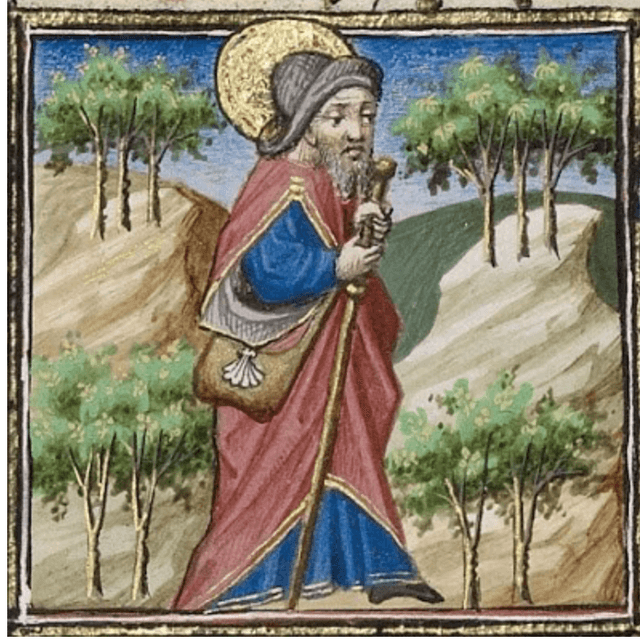
Today
St. Edward, King of England and Confessor
Authority Beneath the King of Kings
Truth
The Holy Ghost Does Not Author Contradiction
The Holy Ghost guides the Church into truth; He does not lead her to contradict the faith once delivered.
Practice
Chaste stewardship of authority.
Exercise and receive rightful authority today with humility, clarity, and obedience to God.
Offering
To Jesus through Mary
Enter with reverence into the hidden life of Jesus in the virginal sanctuary of His Mother.
The Pilgrim's Devotional Rhythm
Keep this month and this weekday in prayer.
The month's intention and the weekday remembrance gather the pilgrim's prayer into the devotional rhythm of the Church. In harmony with today's Mass, feast, and duties, they teach him to receive ordinary time from God and return it to Him in honor and intercession.
October intention
The Most Holy Rosary
The Rosary places the mysteries of Jesus Christ before the soul in the company of His Mother. Pray it as a school of faith and contemplation, not as hurried words.
Intention
For the defense of the Catholic Faith, peace in Christian homes, the conversion of sinners, and perseverance in mental prayer.
A faithful act
Pray five decades with attention, pausing briefly to place yourself within each mystery before beginning it.
Prayer
Queen of the Most Holy Rosary, keep the mysteries of thy Divine Son living in our minds and fruitful in our conduct.
Tuesday remembrance
The Holy Angels
God has appointed His angels as ministers of His providence. Honor them by greater purity, recollection, and prompt obedience to grace, never forgetting that their whole service leads the soul to God.
Intention
For protection against temptation, guidance in duty, and the defense of children, travelers, and souls in spiritual danger.
A faithful act
Before a difficult duty or conversation, ask your Guardian Angel to help you act without sin and for God's glory.
Prayer
Holy Angel, my guardian, keep me from sin and direct me in the faithful accomplishment of today's duties.
Good Morning, Pilgrim
Receive this day as a child of Holy Mother Church.
St. Edward's crown did not release him from God's judgment; it increased the duties for which he would answer. Every lesser authority in a home, parish, or nation becomes safe only when it serves truth and the common good beneath Christ. Exercise what has been entrusted to you without vanity, and obey lawful authority without servility or sin.
Place the unseen hours of this day within the hidden life of Jesus and Mary.
Formation in True Devotion - Day 318: Review and Deepening: The Trinity's Order of Grace through Mary
“God the Son has descended into her virginal womb, as the new Adam into the terrestrial paradise, to take His pleasure there, and to work in secret the marvels of His grace.”
The Eternal Son chose enclosure, dependence, silence, and obscurity. His hidden life overturns the demand of self-love to be seen, consulted, praised, and immediately effective. The greatest work of God began where the world could neither observe nor applaud it.
Let Jesus living in Mary judge your impatience with hidden duties. Grace may be working most deeply where there is little sensible reward. Remain exact in prayer, family obligations, honest labor, purity, and sacrifice when only God sees their cost.
Ora — Begin with Prayer
Offer the day before spending it
Prayer gives the day its right beginning and its right end. Before work, conversation, news, or distraction claims the mind, adore the Blessed Trinity and offer every prayer, work, joy, suffering, and temptation to Jesus through Mary. Ask your Guardian Angel for help, and place the souls and needs entrusted to you beneath God's will.
Begin simply. Make the Morning Offering through the hands of Our Lady. Pray the Three Hail Marys for purity and final perseverance, ask your Guardian Angel to govern the senses and imagination, and name the soul or intention for which today's prayers and sacrifices will be offered. Do not rush these acts merely because they are familiar; let them place the whole day beneath God before the world begins to claim it.
O Lord, teach fathers, mothers, pastors, rulers, and children to receive authority as service beneath Thee, not as power against Thee.
Quote of the Day
“In this is charity: not as though we have loved him, but because he hath loved us, and sent his Son a propitiation for our sins.”
Plain-language help for today - 2 unfamiliar terms
- Confessor
- in the traditional calendar, a male saint who openly professed the Faith by a holy life but was not killed as a martyr.
- Chastity
- the virtue that orders sexuality according to one's state of life and treats the body as belonging to God.
The full Breviary lessons preserve an older English translation. Read the modern explanation first; it identifies the people, event, and doctrine before the historical wording appears.
Today's Full Breviary Sermon or Proper Lesson
A king who preferred innocence to power won by blood.
Matins - Second Nocturn - St. Edward, King and Confessor
The complete appointed Breviary sermon or proper lessons verified for this observance are printed below. Where a Common supplies additional material, it is identified distinctly rather than presented as the proper text.
Roman Breviary, Proper lessons for St. Edward
“He would liefer not be a King than win a kingdom through slaughter and blood.”
- The Breviary remembers St. Edward preserving innocence amid exile and courtly temptation, without cultivating a lust for power.
- Called to rule, he repaired the wounds of war by beginning with the things of God, restoring churches and honoring Christian worship.
- His kingship was restrained by chastity, gentleness, care for the poor, and the conviction that dominion purchased by wickedness is not worth possessing.
Govern without worshipping power. Whether the entrusted realm is a household, office, or nation, rule first by innocence, self-command, justice, and reverence for God.
Complete Breviary Text
Fourth Lesson - Innocence Preferred to Power Won by Blood
Edward, surnamed the Confessor, was the nephew of the holy King Edward the Martyr, and himself the last Anglo-Saxon King. That he should succeed to the Kingdom was shown by the Lord in a trance to a most holy man named Brithwald. When he was ten years old the Danes, who were ravaging England, sought him, to put him to death, and he was driven into exile to dwell with his mother's brother, [Richard II.] Duke of Normandy, at whose Court [and that of his successors, Richard III., Robert surnamed "the Devil," and William the Bastard] he lived among all the allurements of vice a life of such uprightness and innocency as made all men to marvel. He was a burning and shining light for love of God and the things of God, very gentle-hearted, and quite free from any lust for power. Of him the saying is preserved, That he would liefer not be a King than win a kingdom through slaughter and blood.
Fifth Lesson - The Kingdom Repaired Beginning with God
When the [Danish] tyrants, who had robbed his brothers Edmund and Alfred of life and kingdom, were passed away, Edward was called back into his own country and with the hearty good-will and rejoicing of all, took the kingdom [in the year 1042, being then about forty years old.] He set himself to repair the breaches which wars had made, and began with the things of God. Of the Churches of the Saints, he built some altogether, and renewed others and gifted them with incomes and privileges, being chiefly fain that religion should rise from the low estate whereinto it had fallen. He was brought by the nobles of his Court to marry, but it is constantly said by all writers that in matrimony he remained a virgin with a virgin bride. So great was his love toward Christ, and so strong his faith, that somewhiles when the Mass was in saying, he won to see Him, with countenance full of grace, and glory of God's light. By reason of the abundance of his charity he was styled everywhere the father of orphans and of the poor, and he was never happier than when he had spent upon the needy the whole of his kingly treasures.
Sixth Lesson - Charity, Prophecy, and a Holy Death
He was famous for the gift of prophecy, and foretold by inspiration from heaven many things that were to befall England. Of this gift the following is a remarkable instance. Sweyn, King of the Danes, was embarking on ship-board with the mind to invade England, when he fell into the sea and was drowned, and God made known his death to Edward at the very same moment that it happened. He had a wonderful love toward John the Evangelist, so that he was used never to refuse anything for the which he was asked in his name. The Evangelist appeared to him one while in tattered raiment, and, in his own name, asked him for an alms. It befell that the King had no money, wherefore he took a ring from off his finger and gifted him therewith. Not long afterward, the Evangelist sent the same ring back to him by a pilgrim, with a message concerning his death, which was then at hand. The King therefore commanded that prayers should be made for him, and then fell blessedly asleep in the Lord, upon the very day which had been foretold to him by the Evangelist, that is to say, upon the 5th day of January, in the year of salvation 1066. He was famous for miracles, and in 1161 Pope Alexander III. numbered him among the Saints. But Innocent XI. commanded that his memory should be celebrated with a public Office throughout the whole Church, upon the 13th day of October, being that day whereon in the year 1102 his body had been lifted, and found uncorrupt and sweet-savoured.
Walk with Holy Mother Church
Holy Mother Church has already begun praying. Enter her prayer.
Today the Roman year keeps St. Edward, King of England and Confessor. Receive the observance from the Church's hands: first understand what is commemorated, then let its doctrine and worship shape the day.
Roman Martyrology
October 13
In England, St. Edward, king, who died on the 5th of January. He is specially honored on this day, on account of the translation of his body. — At Troas, in Asia Minor, the birthday of St. Carpus, disciple of the blessed apostle Paul. — At Cordova, in Spain, the birthday of the holy martyrs Faustus, Januarius, and Martial. First tortured on the rack, then having their eyelashes shaven, their teeth plucked out, their ears and nosefe cut off, they finished their martyrdom by fire. — At Thessalonica, St. Florentius, a martyr, who, after enduring various torments, was burned alive. — In Austria, St. Colman, martyr. — At Ceuta, in Morocco, seven martyrs of the Order of Friars Minor, Daniel, Samuel, Angelus, Domnus, Leo, Nicholas, and Hugolinus. For preaching the Gospel and refuting the errors of Mahomet, they were reviled, bound, and scourged by the Saracens, and finally won the palm of martyrdom by being beheaded. — At Antioch, the holy bishop Theophilus, who held the pontificate in that church, the sixth after the blessed apostle Peter. — At Tours, St. Venantius, abbot, and confessor. — At Subiaco, in Italy, St. Chelidonia, virgin.
Learn from Today's Saint or Feast
St. Edward
King and confessor honored for chastity and holy rule.
The Martyrology honors St. Edward, king of England, specially on this day because of the translation of his sacred body.
His feast teaches that royal dignity must be governed by chastity, justice, prayer, and reverence for God. Christian rule begins with self-rule under grace.
Ask St. Edward for purity in responsibility. Authority becomes safer when the ruler first consents to be ruled by Christ.
The Pilgrim's Spiritual Conference
The Holy Ghost Does Not Author Contradiction
Remain here for a little while. Receive today's Catholic truth as a child of Holy Mother Church; let it judge the heart, strengthen the will, and become an act offered to God.
The Church places this truth before you today: The Holy Ghost guides the Church into truth; He does not lead her to contradict the faith once delivered. Do not hurry past it as though doctrine belonged only to books and controversies. A revealed truth is also a light by which the soul must judge its loyalties, its fears, its habits, and the duties immediately before it. Appeals to the Spirit must be judged by apostolic doctrine, not by enthusiasm, novelty, or institutional pressure.
The grace to be practiced is Chaste stewardship of authority, drawn from today's saintly witness. Ask God for more than the natural appearance of this virtue. Temperament may make an action seem easy for a time, but supernatural virtue remains faithful because God is worthy of obedience, even when feeling offers no assistance and no one notices the cost. Practice hidden fidelity by doing every duty well without requiring recognition or visible fruit.
There is also an enemy to recognize: Resist invoking the Holy Ghost to justify rupture from received doctrine. Do not study this danger only in other people. Look quietly for the door by which it seeks entrance into your own soul - perhaps through delay, curiosity, resentment, human respect, attachment to comfort, or the desire to control the outcome. Dying to self today means choosing chaste stewardship of authority when pride, comfort, fear, resentment, or human respect asks for control.
Do the faithful act and entrust its fruit to divine Providence, God's wise and loving governance of all things. Place effort and outcome into Our Lady's hands so that the whole offering may be presented to her Divine Son. Confidence in God is not passivity: obey, pray, work, and accept that visible success, consolation, or immediate relief may not be given. God remains faithful when the duty is hidden and the outcome uncertain. Therefore, perform the duty that belongs to you, use the lawful means God has provided, and then surrender the fruit. Receive obscurity, delay, and enclosure as occasions for union with the hidden Jesus rather than reasons for complaint. Perform all unnoticed duties with recollection, care, and purity of intention beneath the eyes of Jesus and Mary.
The Church's witness
This truth manifests the Church's mark of apostolic. The witness placed beside it today is St. Irenaeus.
Your resolution before God
Exercise and receive rightful authority today with humility, clarity, and obedience to God.
Authority is healed only when it submits to God.
Carry this word quietly. Return to it when distraction, temptation, or discouragement begins to scatter the soul.
The Little Rule of Fidelity
Keep the day within prayer.
These anchors do not change because the soul needs a stable rule more than a daily novelty. Open them when you are learning the rule or when your ordinary prayer has begun to loosen.
Show today's prayer and duty anchors
Begin with morning prayer
Adore the Blessed Trinity and offer the whole day to Jesus through Mary before other duties claim the mind.
Keep the Angelus
Pause morning, noon, and evening to remember the Incarnation.
Seek Our Lord in the Blessed Sacrament
Attend Holy Mass when duty permits; otherwise make a Spiritual Communion and renew desire for Jesus in the Blessed Sacrament.
Return to Jesus and Mary
Use frequent holy aspirations during work, waiting, suffering, and temptation.
Pray the Rosary
Keep the mysteries of Christ before the mind with Our Lady and learn to imitate what they contain.
End with night prayer and examen
Give thanks, confess faults, forgive injuries, make a practical amendment, and entrust the night to Our Lady.
The Pilgrim's Mirror
How shall I imitate Christ today?
“Thou alone art the true refection of the soul, and he that worthily eateth Thee shall be partaker and heir of eternal glory.”
The Blessed Sacrament is not one devotion among many: it is Jesus Christ, the soul's true food. Let every Marian offering lead you more faithfully to her Eucharistic Son.
If you can assist at Mass and receive worthily, approach with recollection and hunger rather than habit. If you cannot, do not allow absence to become forgetfulness. Turn toward the tabernacle, confess your desire, and ask Our Lady to prepare in you a more faithful welcome for Jesus.
Today's Practice
Make a reverent Spiritual Communion, or prepare carefully for Holy Communion if you will receive today.
Before Night Falls
Return the completed day to God.
Give thanks before measuring the day by feeling or visible success. Ask light to see faults without discouragement, make an Act of Contrition, forgive injuries, and place tomorrow beneath divine Providence.
Return the hidden work of the day to God without measuring its worth by human notice or immediate results.
- For what grace or mercy should I thank God today?
- What sin, fault, neglected duty, or resistance to grace must I confess?
- What definite amendment will I carry into tomorrow?
Go Now, Pilgrim
Walk faithfully. Pray attentively. Bear your cross willingly. Love God above all things.
Holy Mother Church has gathered you around her prayer and truth; now carry what you have received into the duties of your state.
When this day is finished, may you have laid one more stone in the City of God.
You do not walk alone: remain beneath Our Lady's care as she leads you toward her Divine Son and the Heavenly Jerusalem.
God willing, we shall meet again at tomorrow's pilgrimage.
Source notes for this pilgrimage
Martyrology: The Roman Martyrology, Baltimore, 1916, John Murphy Company; local raw text lines 10792-10822.
- Saint witness: St. Andrew Daily Missal, October 13.
- Saint witness: Roman Martyrology, 1916 Baltimore edition, October 13.
- Breviary witness: The Roman Breviary, translated by John, Marquess of Bute, 1908, vol. IV, Autumn, Matins for St. Edward, printed pp. 644-646.
- Breviary witness: Roman Martyrology, 1916 Baltimore edition, October 13.
- Matins lesson: The Roman Breviary, translated by John, Marquess of Bute, 1908, vol. IV, Autumn, Second Nocturn for St. Edward, lessons iv-vi, printed pp. 644-646.
- Matins lesson: Bute's printed note explains that the biographer appears to reckon Harold II as a mere usurper when the Fourth Lesson calls St. Edward the last Anglo-Saxon King.
- Matins lesson: Bute 1908 is used here as an accessible pre-Pius X Breviary witness and is cited distinctly from the 1936-1937 Benziger / Burns Oates edition.
Pilgrim's Mirror: Thomas à Kempis, The Imitation of Christ, translated by Richard Whitford, edited by Wilfrid Raynal, O.S.B. (Mount Vernon, N.Y.: Peter Pauper Press, c. 1947). Today's passage is at Book IV, chapter 14, p. 203.
Marian formation: St. Louis-Marie de Montfort, True Devotion to the Blessed Virgin, translated by Fr. Frederick William Faber, 1941 Company of Mary edition, imprimatur September 26, 1949. Today's passage is at True Devotion to the Blessed Virgin, no. 18. The supplied 2010 PDF is used only as a digital transcription of that pre-1955 edition.
- Devotional rhythm: St. Andrew Daily Missal, Dom Gaspar Lefebvre, O.S.B., 1953 edition; proper Mass or devotion named in this entry.
- Devotional rhythm: Pope Leo XIII, Supremi Apostolatus Officio, September 1, 1883.
- Devotional rhythm: Psalm 90:11 and Matthew 18:10, Douay-Rheims.
- Faith point: John 16:13, Douay-Rheims.
- Faith point: St. Irenaeus, Against Heresies.
- Marian atmosphere and imitation: Luke 1:38, 46-49; Luke 2:19; John 2:5; John 19:25-27; and John 3:30, Douay-Rheims.
- Authority and revolt: Exodus 5:2, Douay-Rheims.
- Daily examen: St. Ignatius of Loyola, Spiritual Exercises, Particular and Daily Examen.