The Daily Pilgrimage
“Now therefore, ye children, hear me: Blessed are they that keep my ways.” — Proverbs 8:32
Daily formation
2026-10-28
Receive the day as a child of Holy Mother Church. Beneath Our Lady's care, magnify Christ, obey God's commandments, fulfill the duties of your state in life, die to self, trust divine Providence, resist error, and return the whole day to God.
Holy Mother Church gathers her children around the Sacred Calendar, feeds them with truth, warns them against what wounds the soul, and teaches them to walk faithfully toward their heavenly home.
“Fear not, little flock, for it hath pleased your Father to give you a kingdom. […] For where your treasure is, there will your heart be also.”
Choose a date
Daily navigation
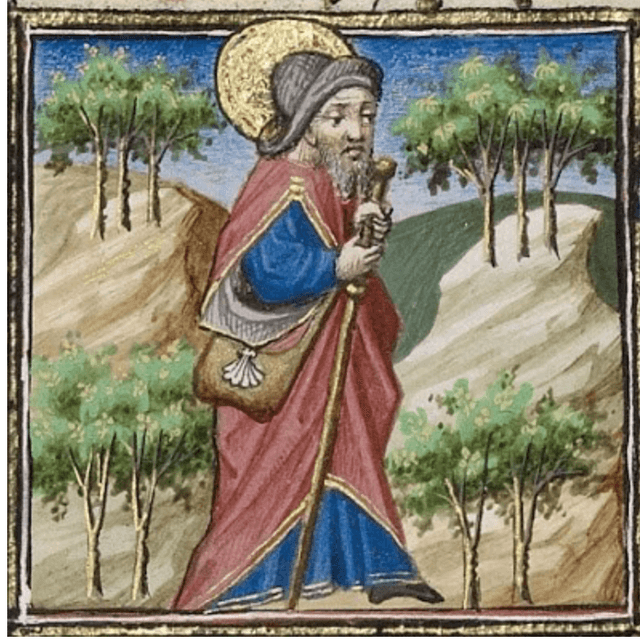
Ss. Simon and Jude, Apostles
City of God in Exile
Ss. Simon and Jude, Apostles
2026-10-28 - Time after Pentecost - Double of the Second Class - red
Today
Ss. Simon and Jude, Apostles
The Faith Once Delivered
Truth
True Devotion to Mary Forms the Soul in Christ
True Marian devotion is not sentiment detached from obedience. It brings the soul more deeply under Christ's rule.
Practice
Apostolic perseverance under contradiction.
Fulfill your ordinary duties promptly and offer them for the glory of God.
Offering
To Jesus through Mary
Receive Jesus anew as the blessed Fruit of Mary's womb and ask that He be formed fully in your heart.
The Pilgrim's Devotional Rhythm
Keep this month and this weekday in prayer.
The month's intention and the weekday remembrance gather the pilgrim's prayer into the devotional rhythm of the Church. In harmony with today's Mass, feast, and duties, they teach him to receive ordinary time from God and return it to Him in honor and intercession.
October intention
The Most Holy Rosary
The Rosary places the mysteries of Jesus Christ before the soul in the company of His Mother. Pray it as a school of faith and contemplation, not as hurried words.
Intention
For the defense of the Catholic Faith, peace in Christian homes, the conversion of sinners, and perseverance in mental prayer.
A faithful act
Pray five decades with attention, pausing briefly to place yourself within each mystery before beginning it.
Prayer
Queen of the Most Holy Rosary, keep the mysteries of thy Divine Son living in our minds and fruitful in our conduct.
Wednesday remembrance
St. Joseph
Midweek, turn to St. Joseph, whose hidden labor guarded Jesus and Mary. He teaches authority without self-importance, work without complaint, and silence joined to decisive obedience.
Intention
For fathers, laborers, families, the protection of the Church, and those approaching death.
A faithful act
Do necessary tasks thoroughly without seeking notice or praise.
Prayer
St. Joseph, patron of the universal Church, guard our homes and obtain for us purity, courage, and a holy death.
Good Morning, Pilgrim
Receive this day as a child of Holy Mother Church.
Ss. Simon and Jude belonged to the apostolic company from which the Church received doctrine, authority, sacraments, and mission. We honor them badly if we praise their courage while treating their Faith as material for revision. Hold fast one Catholic truth that the age finds difficult, and ask for the charity to hand it on unchanged.
Greet Our Lady with the Angelic Salutation and ask her to give you Jesus more fully in faith, grace, obedience, and love.
Formation in True Devotion - Day 333: Review and Deepening: Mary's Maternal Formation of Christ's Members
“If any one of the faithful has Jesus Christ formed in his heart, he can say boldly, All thanks be to Mary! what I possess is her effect and her fruit, and without her I should never have had it.”
Every ‘Blessed is the Fruit of thy womb, Jesus’ confesses the inseparable order of genuine Marian devotion: Mary gives us her Fruit. She does not terminate the soul in herself. Her maternal labor is fulfilled when Jesus Christ lives and reigns in the heart by sanctifying grace, true doctrine, virtue, and charity.
Pray the Angelus, the Hail Mary, and the Rosary with this Christ-centered attention. Ask not only for protection or temporal favors but for the full age of Christ in the soul. Let every mystery teach His life, every petition oppose sin, and every thanksgiving return through Mary to God.
Ora — Begin with Prayer
Offer the day before spending it
Prayer gives the day its right beginning and its right end. Before work, conversation, news, or distraction claims the mind, adore the Blessed Trinity and offer every prayer, work, joy, suffering, and temptation to Jesus through Mary. Ask your Guardian Angel for help, and place the souls and needs entrusted to you beneath God's will.
Begin simply. Make the Morning Offering through the hands of Our Lady. Pray the Three Hail Marys for purity and final perseverance, ask your Guardian Angel to govern the senses and imagination, and name the soul or intention for which today's prayers and sacrifices will be offered. Do not rush these acts merely because they are familiar; let them place the whole day beneath God before the world begins to claim it.
O Lord, strengthen the little duties of this day with Thy grace, that nothing entrusted to me may be wasted through negligence or vanity.
Quote of the Day
“Earnestly contend for the faith once delivered to the saints.”
Plain-language help for today - 3 unfamiliar terms
- Martyr
- a Christian who was killed rather than deny Christ or abandon the Faith.
- Apostolic
- belonging to the faith, mission, teaching, or authority handed down from Christ through the apostles.
- Spiritual consolation
- encouragement, peace, light, or strength permitted by God in prayer; it is a help toward fidelity, not the purpose of the spiritual life.
The full Breviary lessons preserve an older English translation. Read the modern explanation first; it identifies the people, event, and doctrine before the historical wording appears.
Today's Full Breviary Sermon or Proper Lesson
Contend for the faith once delivered.
Matins - Second Nocturn - Ss. Simon and Jude, Apostles
The complete appointed Breviary sermon or proper lessons verified for this observance are printed below. Where a Common supplies additional material, it is identified distinctly rather than presented as the proper text.
Roman Breviary, Proper lessons for Ss. Simon and Jude
“The faith which was once delivered unto the Saints.”
- The Breviary remembers St. Simon preaching in Egypt and St. Jude in Mesopotamia before they met in Persia, preached Christ there together, and died for the Faith.
- The feast sets before the Church St. Jude's warning against corrupt teachers and his exhortation to contend for the faith once delivered to the saints.
- Their martyrdom teaches that apostolic charity is missionary, doctrinal, and public: they glorified the name of Jesus Christ by preaching, miracles, and blood.
Let the apostles make fidelity firm without making charity harsh. Contend for the received Faith because souls are loved and because Christ's name must not be surrendered.
Complete Breviary Text
Fourth Lesson - Apostolic Mission and Martyrdom
Simon the Canaanite, called also Zelotes, went through Egypt preaching the Gospel, while the same was done in Mesopotamia by Thaddaeus, called also in the Gospel Judas the brother of James, and the writer of one of the Catholic Epistles. They met together afterwards in Persia, where they begat countless children in Jesus Christ, spread the faith far and wide in those lands, amid raging heathens, and glorified together by their teaching and miracles, and, in the end, by a glorious martyrdom, the most holy name of Jesus Christ.
Fifth Lesson - The Apostles Strengthened by the Holy Ghost
So much power then as have preachers, so much garniture have the heavens. Wherefore again it is written: "By the word of the Lord were the heavens made." For the Word of the Lord is the Son of the Father. But, to the end that all the Holy Trinity may be made manifest as the Maker of the heavens, that is, of the Apostles, it is straightway added touching God the Holy Ghost: "and all the host of them by the Breath of His mouth." Therefore the might of the same heavens is the might of the Spirit, for they had not braved the powers of this world, unless the strength of the Holy Ghost had comforted them. For we know what manner of men the Teachers of the Holy Church were before the coming of this Spirit: and since He came we see in Whose strength they are made strong.
Sixth Lesson - Obedience to God above Men
Verily, if we ask of the damsel that kept the door, she will tell us what was the measure of weakness and of strength in that Shepherd of the Church nigh to whose most holy body we are now sitting, before that the Spirit came. He was so stricken by the words of one woman, that for fear of death, he denied Life. And we may well remember that Peter denied in captivity Him, Whom the thief confessed, even when He was lifted up upon the Cross. But let us hear what that craven was after that the Spirit came. When the rulers and elders were gathered together, the Apostles were beaten, and commanded not to speak at all nor teach in the name of Jesus. And Peter answered with great boldness, "We ought to obey God rather than men."
Walk with Holy Mother Church
Holy Mother Church has already begun praying. Enter her prayer.
Today the Roman year keeps Ss. Simon and Jude, Apostles. Receive the observance from the Church's hands: first understand what is commemorated, then let its doctrine and worship shape the day.
Roman Martyrology
October 28
The birthday of the blessed apostles Simon the Cananean, and Thaddeus, who is called Jude. Simon preached the Gospel in Egypt, Thaddeus in Mesopotamia. Afterwards, entering Persia together, they converted to Christ a numberless multitude of the inhabitants, and then underwent martyrdom. — At Rome, in the reign of Claudius, St. Cyrilla, virgin, daughter of St. Tryphonia, who was pierced through the throat for the faith of Christ. — In the same city, the holy martyrs Anastasia the Elder, virgin, and Cyril. In the persecution of Valerian, under the prefect Probus, Anastasia was bound with chains, buffeted, subjected to fire and scourging, and, as she remained immovable in the confession of Christ, her breasts were cut off, her nails plucked out, her teeth broken, and her hands, feet and head severed from her body. Bedecked with her sufferings as with so many jewels, she went to her spouse. At her request, Cyril gave her some water to drink, and for his reward became a martyr. — At Como, St. Fidelis, martyr, under the emperor Maximian. — At Mayence, St. Ferrutius, martyr. — At Meaux, SL Faro, bishop and confessor. — At Naples, St. Gaudiosus, an African bishop, who came to Campania because of the persecution of the Vandals, and closed peacefully his holy career in a monastery near that city. — At Vercelli, St. Honoratus, bishop. I
Gospel of the Day
I have chosen you out of the world.
Ss. Simon and Jude, Apostles - John 15:17-25
“If the world hate you, know ye, that it hath hated me before you.”
Let the apostles make you steady. You need not become hard because the world is hard; you need only remain faithful.
Receive the Gospel with Holy Mother Church
The apostles are chosen out of the world and must not expect the world's approval.
Hatred of Christ continues in hatred of His faithful witnesses.
This Gospel corrects a danger that can quietly deform Catholic judgment: The desire to be loved by the world on terms that betray Christ. Ask where that danger seeks your consent today, and answer it with the act Our Lord requires.
Learn from Today's Saint or Feast
Ss. Simon and Jude
Apostles of perseverance when help seems hidden.
Ss. Simon and Jude are honored among the apostles sent by Christ to preach the Gospel.
Their feast teaches the faithful to remain with apostolic doctrine even when the Church's life seems obscure, difficult, or opposed.
Let these apostles make you steady. Fidelity may cost approval, but it need not make the soul bitter.
The Pilgrim's Spiritual Conference
True Devotion to Mary Forms the Soul in Christ
Remain here for a little while. Receive today's Catholic truth as a child of Holy Mother Church; let it judge the heart, strengthen the will, and become an act offered to God.
The Church places this truth before you today: True Marian devotion is not sentiment detached from obedience. It brings the soul more deeply under Christ's rule. Do not hurry past it as though doctrine belonged only to books and controversies. A revealed truth is also a light by which the soul must judge its loyalties, its fears, its habits, and the duties immediately before it. Our Lady does not compete with her Son. She forms servants who hear Him, believe Him, and remain beneath His Cross.
The grace to be practiced is Apostolic perseverance under contradiction, drawn from today's saintly witness. Ask God for more than the natural appearance of this virtue. Temperament may make an action seem easy for a time, but supernatural virtue remains faithful because God is worthy of obedience, even when feeling offers no assistance and no one notices the cost. Practice grateful recollection by carrying the name, mysteries, teaching, and example of Jesus throughout the entire day.
There is also an enemy to recognize: Resist false Marian devotion that seeks comfort, novelty, or emotion without conversion. Do not study this danger only in other people. Look quietly for the door by which it seeks entrance into your own soul - perhaps through delay, curiosity, resentment, human respect, attachment to comfort, or the desire to control the outcome. Dying to self today means choosing apostolic perseverance under contradiction when pride, comfort, fear, resentment, or human respect asks for control.
Do the faithful act and entrust its fruit to divine Providence, God's wise and loving governance of all things. Place effort and outcome into Our Lady's hands so that the whole offering may be presented to her Divine Son. Confidence in God is not passivity: obey, pray, work, and accept that visible success, consolation, or immediate relief may not be given. God remains faithful when the duty is hidden and the outcome uncertain. Therefore, perform the duty that belongs to you, use the lawful means God has provided, and then surrender the fruit. Unite every suffering to a mystery of the Rosary and accept it as part of Mary's labor that Christ be formed in you. Pray the Rosary with the goal of saying all three traditional groups of mysteries, offering it for an intention and for souls who have no one to pray for them.
The Church's witness
This truth manifests the Church's mark of holy. The witness placed beside it today is St. Louis-Marie de Montfort.
Your resolution before God
Fulfill your ordinary duties promptly and offer them for the glory of God.
Grace is guarded by ordinary fidelity.
Carry this word quietly. Return to it when distraction, temptation, or discouragement begins to scatter the soul.
The Little Rule of Fidelity
Keep the day within prayer.
These anchors do not change because the soul needs a stable rule more than a daily novelty. Open them when you are learning the rule or when your ordinary prayer has begun to loosen.
Show today's prayer and duty anchors
Begin with morning prayer
Adore the Blessed Trinity and offer the whole day to Jesus through Mary before other duties claim the mind.
Keep the Angelus
Pause morning, noon, and evening to remember the Incarnation.
Seek Our Lord in the Blessed Sacrament
Attend Holy Mass when duty permits; otherwise make a Spiritual Communion and renew desire for Jesus in the Blessed Sacrament.
Return to Jesus and Mary
Use frequent holy aspirations during work, waiting, suffering, and temptation.
Pray the Rosary
Keep the mysteries of Christ before the mind with Our Lady and learn to imitate what they contain.
End with night prayer and examen
Give thanks, confess faults, forgive injuries, make a practical amendment, and entrust the night to Our Lady.
The Pilgrim's Mirror
How shall I imitate Christ today?
“It behoveth thee to break thine own will in many things, if thou wilt have peace and concord with others.”
Concord bought by surrendering truth is false, but many quarrels arise from preference rather than principle. Yield what belongs to self-will while holding fast what belongs to God.
Learn to distinguish the two before the moment of conflict. Doctrine, purity, justice, and necessary duty may require firmness. Your preferred method, timing, recognition, or last word usually does not. The soul becomes strong when it stops spending zeal upon the defense of self.
Today's Practice
Yield harmless preferences cheerfully whenever truth and duty do not require firmness.
Before Night Falls
Return the completed day to God.
Give thanks before measuring the day by feeling or visible success. Ask light to see faults without discouragement, make an Act of Contrition, forgive injuries, and place tomorrow beneath divine Providence.
Thank Our Lady for every trace of her Son formed in you and ask pardon where sin or negligence drove His likeness from your conduct.
- For what grace or mercy should I thank God today?
- What sin, fault, neglected duty, or resistance to grace must I confess?
- What definite amendment will I carry into tomorrow?
Go Now, Pilgrim
Walk faithfully. Pray attentively. Bear your cross willingly. Love God above all things.
Holy Mother Church has gathered you around her prayer and truth; now carry what you have received into the duties of your state.
When this day is finished, may you have laid one more stone in the City of God.
You do not walk alone: remain beneath Our Lady's care as she leads you toward her Divine Son and the Heavenly Jerusalem.
God willing, we shall meet again at tomorrow's pilgrimage.
Source notes for this pilgrimage
Martyrology: The Roman Martyrology, Baltimore, 1916, John Murphy Company; local raw text lines 11316-11352.
- Gospel: John 15:17-25, Douay-Rheims.
- Gospel: Traditional Roman Gospel for apostles.
- Saint witness: Luke 6:13-16; Jude 1:3, Douay-Rheims.
- Saint witness: Roman Martyrology, 1916 Baltimore edition, October 28.
- Breviary witness: The Roman Breviary, translated by John, Marquess of Bute, 1908, vol. IV, Autumn, Matins for Ss. Simon and Jude, printed pp. 695-697.
- Breviary witness: John 15:17-25, Douay-Rheims.
- Matins lesson: The Roman Breviary, translated by John, Marquess of Bute, 1908, vol. IV, Autumn, Second Nocturn for Ss. Simon and Jude, lessons iv-vi, printed pp. 695-697.
- Matins lesson: Lessons v-vi are supplied from the Common of Apostles, printed pp. 352-353, exactly as directed by the proper office on p. 696.
- Matins lesson: Bute 1908 is used here as an accessible pre-Pius X Breviary witness and is cited distinctly from the 1936-1937 Benziger / Burns Oates edition.
Pilgrim's Mirror: Thomas à Kempis, The Imitation of Christ, translated by Richard Whitford, edited by Wilfrid Raynal, O.S.B. (Mount Vernon, N.Y.: Peter Pauper Press, c. 1947). Today's passage is at Book I, chapter 17, p. 27.
Marian formation: St. Louis-Marie de Montfort, True Devotion to the Blessed Virgin, translated by Fr. Frederick William Faber, 1941 Company of Mary edition, imprimatur September 26, 1949. Today's passage is at True Devotion to the Blessed Virgin, no. 33. The supplied 2010 PDF is used only as a digital transcription of that pre-1955 edition.
- Devotional rhythm: St. Andrew Daily Missal, Dom Gaspar Lefebvre, O.S.B., 1953 edition; proper Mass or devotion named in this entry.
- Devotional rhythm: Pope Leo XIII, Supremi Apostolatus Officio, September 1, 1883.
- Devotional rhythm: Matthew 1:19-24, Douay-Rheims.
- Faith point: St. Louis-Marie de Montfort, True Devotion to Mary.
- Faith point: Gospel of St. John 19:25-27, Douay-Rheims.
- Marian atmosphere and imitation: Luke 1:38, 46-49; Luke 2:19; John 2:5; John 19:25-27; and John 3:30, Douay-Rheims.
- Authority and revolt: Exodus 5:2, Douay-Rheims.
- Daily examen: St. Ignatius of Loyola, Spiritual Exercises, Particular and Daily Examen.