The Daily Pilgrimage
“Now therefore, ye children, hear me: Blessed are they that keep my ways.” — Proverbs 8:32
Daily formation
2026-11-11
Receive the day as a child of Holy Mother Church. Beneath Our Lady's care, magnify Christ, obey God's commandments, fulfill the duties of your state in life, die to self, trust divine Providence, resist error, and return the whole day to God.
Holy Mother Church gathers her children around the Sacred Calendar, feeds them with truth, warns them against what wounds the soul, and teaches them to walk faithfully toward their heavenly home.
“Fear not, little flock, for it hath pleased your Father to give you a kingdom. […] For where your treasure is, there will your heart be also.”
Choose a date
Daily navigation
St. Martin, Bishop and Confessor
City of God in Exile
St. Martin, Bishop and Confessor
2026-11-11 - Time after Pentecost - Semi-Double - white
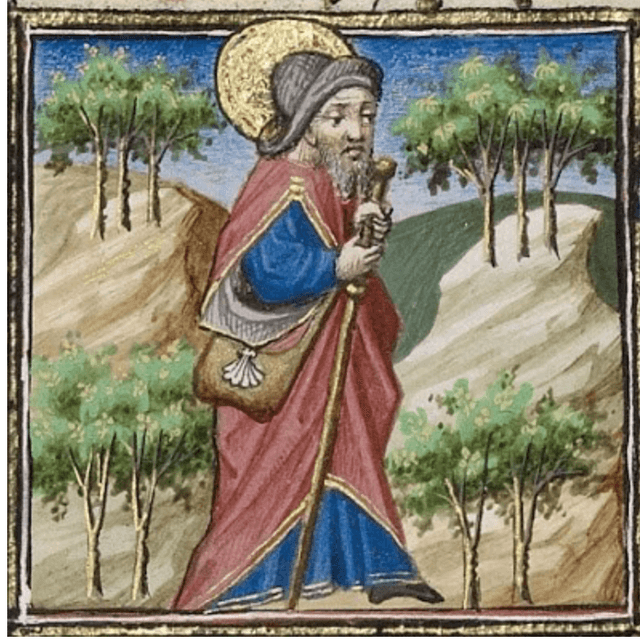
Today
St. Martin, Bishop and Confessor
The Soldier Who Became a Shepherd
Truth
Dogma Binds the Mind Because God Has Spoken
A Catholic dogma is not something the Church says for a while and later replaces. It is a truth revealed by God and taught by the Church. Because God cannot lie, the Church cannot later teach the opposite.
Practice
Merciful pastoral strength.
Give food, clothing, money, or useful help to someone in need and accompany the gift with prayer.
Offering
To Jesus through Mary
Desire the sanctity God wills, not greatness before men, and ask Our Lady to form you for whatever service His providence appoints.
The Pilgrim's Devotional Rhythm
Keep this month and this weekday in prayer.
The month's intention and the weekday remembrance gather the pilgrim's prayer into the devotional rhythm of the Church. In harmony with today's Mass, feast, and duties, they teach him to receive ordinary time from God and return it to Him in honor and intercession.
November intention
The Holy Souls in Purgatory
Christian charity crosses the boundary of death. Remember the faithful departed who can no longer merit for themselves, and let prayer for them keep judgment, mercy, and eternity before your own soul.
Intention
For the relief of the Holy Souls, especially the most forgotten, and for the grace of final perseverance for the living.
A faithful act
Offer a prayer, indulgenced work under the Church's conditions, or sacrifice for a forgotten soul in Purgatory.
Prayer
Eternal rest give unto them, O Lord; and let perpetual light shine upon them. May they rest in peace. Amen.
Wednesday remembrance
St. Joseph
Midweek, turn to St. Joseph, whose hidden labor guarded Jesus and Mary. He teaches authority without self-importance, work without complaint, and silence joined to decisive obedience.
Intention
For fathers, laborers, families, the protection of the Church, and those approaching death.
A faithful act
Do necessary tasks thoroughly without seeking notice or praise.
Prayer
St. Joseph, patron of the universal Church, guard our homes and obtain for us purity, courage, and a holy death.
Good Morning, Pilgrim
Receive this day as a child of Holy Mother Church.
St. Martin divided his cloak with a poor man and later spent himself as bishop for Christ's flock. His mercy was not vague softness; it grew from seeing Christ in the needy and serving Him through disciplined pastoral duty. Give concretely, but also ask whether your charity leads souls toward God.
Ask for the full sanctity God wills in your actual state of life, without comparison, vanity, or dreams of an unassigned mission.
Formation in True Devotion - Day 347: Review and Deepening: The Latter-Day Combat beneath Our Lady
“The Most High with His holy Mother has to form for Himself great Saints, who shall surpass most of the other Saints in sanctity, as much as the cedars of Lebanon outgrow the little shrubs.”
St. Louis de Montfort directs attention to what God and His holy Mother will form, not to self-appointed heroes. No soul may presume to number itself among extraordinary saints, assign dates to the latter times, or neglect present duty for imagined future missions. Great sanctity is God's work in creatures who cooperate humbly with grace.
The desire to be a cedar can conceal ambition. Desire instead to belong entirely to God, even if He keeps you hidden like a little shrub. Submit to the formation actually given: doctrine, prayer, sacraments, duties of state, correction, mortification, trials, works of mercy, and perseverance. Heaven measures greatness by charity and fidelity.
Ora — Begin with Prayer
Offer the day before spending it
Prayer gives the day its right beginning and its right end. Before work, conversation, news, or distraction claims the mind, adore the Blessed Trinity and offer every prayer, work, joy, suffering, and temptation to Jesus through Mary. Ask your Guardian Angel for help, and place the souls and needs entrusted to you beneath God's will.
Begin simply. Make the Morning Offering through the hands of Our Lady. Pray the Three Hail Marys for purity and final perseverance, ask your Guardian Angel to govern the senses and imagination, and name the soul or intention for which today's prayers and sacrifices will be offered. Do not rush these acts merely because they are familiar; let them place the whole day beneath God before the world begins to claim it.
O Lord, through St. Martin, make my charity practical, humble, and ordered toward both bodily need and eternal salvation.
Quote of the Day
“My son, the more thou canst go out of thyself, so much the more wilt thou be able to enter into Me.”
Plain-language help for today - 3 unfamiliar terms
- Commemoration
- a shorter liturgical remembrance of another saint or observance occurring on the same day.
- Martyr
- a Christian who was killed rather than deny Christ or abandon the Faith.
- Confessor
- in the traditional calendar, a male saint who openly professed the Faith by a holy life but was not killed as a martyr.
The full Breviary lessons preserve an older English translation. Read the modern explanation first; it identifies the people, event, and doctrine before the historical wording appears.
Today's Full Breviary Sermon or Proper Lesson
The bishop who clothed Christ and refused to abandon the flock.
Matins - Second Nocturn - St. Martin, Bishop and Confessor
The complete appointed Breviary sermon or proper lessons verified for this observance are printed below. Where a Common supplies additional material, it is identified distinctly rather than presented as the proper text.
Roman Breviary, Proper lessons for St. Martin
“Lord, if I be still needful to Thy people, I refuse not to work.”
- The Breviary remembers St. Martin first as the catechumen who clothed a poor man for Christ's sake and then saw Christ clothed in that mercy.
- After baptism he left military life, followed St. Hilary, became Bishop of Tours, founded monastic life, and lived in holiness with his monks.
- At death he desired to depart to Christ, yet would not refuse labor if still needful to his people, showing pastoral charity purified of self-will.
Let St. Martin teach readiness both to die and to serve. Catholic holiness does not seek escape from duty; it remains available to Christ and His flock.
Complete Breviary Text
Fourth Lesson - Christ Clothed by a Catechumen
Martin was born at Sabaria in Pannonia. When he was ten years old he went to the Church, in the spite of his heathen father and mother, and by his own will was numbered among the Catechumens. At fifteen years of age he joined the army, and served as a soldier first under Constantius and then under Julian. Once at the gate of Amiens a poor man asked him for an alms for Christ's name's sake, and since he had nothing to his hand but his arms and his clothes, he gave him half of his cloak. In the night following Christ appeared to him clad in the half of his cloak, and saying to the angels who bare Him company: "While Martin is yet a Catechumen, he hath clad Me in this garment."
Fifth Lesson - A Shepherd Ready to Remain
At eighteen years of age he was baptized. He gave up thereupon the life of a soldier, and betook himself to Hilary, Bishop of Poictiers, by whom he was placed in the order of Acolytes. Being afterwards made Bishop of Tours, he built a monastery wherein he lived in holiness for a while in company of four-score monks. At the last he fell sick of a grievous fever at Cande, a village in his diocese, and besought God in constant prayer to set him free from the prison of this dying body. His disciples heard him and said: "Father, why wilt thou go away from us? unto whom wilt thou bequeath us in our sorrow?" Their words moved Martin, and he said: "Lord, if I be still needful to Thy people, I refuse not to work."
Sixth Lesson - Looking Heavenward at Death
When his disciples saw him, in the height of the fever, lying upon his back and praying, they entreated him to turn over and take a little rest upon his side while the violence of his sickness would allow him. But Martin answered them: "Suffer me to look heavenward rather than earthward, that my spirit may see the way whereby it is so soon going to the Lord." At the moment of death he saw the enemy of mankind, and cried out: "What are you come here for, you bloody brute? You murderer, you'll find nothing in me." With these words on his lips, he gave up his soul to God, being aged eighty years. He was received by a company of Angels, who were heard praising God by many persons, especially by holy Severinus, Bishop of Cologne.
Walk with Holy Mother Church
Holy Mother Church has already begun praying. Enter her prayer.
Today the Roman year keeps St. Martin, Bishop and Confessor. Receive the observance from the Church's hands: first understand what is commemorated, then let its doctrine and worship shape the day.
Roman Martyrology
November 11
At Tours, in France, the birthday of blessed Martin, bishop and confessor, whose life was so renowned for miracles that he received the power to raise three persons from the dead. — At Cotya3um, in Phrygia, during the persecution of Diocletian, the celebrated martyrdom of St. Mennas, Egyptian soldier, who cast off the military belt and obtained the grace of serving the King of heaven secretly in the desert. Afterwards coming out publicly, and freely declaring himself a Christian, he was first subjected to dire torments; and finally kneeling in prayer, and giving thanks to our Lord Jesus Christ, he was struck with the sword. After his death, he was renowned for many miracles. — At Ravenna, the holy martyrs Valentine, Felician and Victorinus, who were crowned in the persecution of Diocletian. — In Mesopotamia, St. Athenodorus, martyr, who was subjected to fire and other torments under the same Diocletian and the governor Eleusius. He was at length sentenced to capital punishment, but the executioner having fallen down and no other person daring to strike him with the sword, he passed to his repose in the Lord whilst praying. — At Lyons, St. Veranus, bishop, whose life was illustrated by his faith and other virtues. — In the monastery of Crypta-Ferrata, near Frascati, the holy abbot, Bartholomew, companion of blessed Nilus, whose life he wrote. — In the province of Abruzzo, blessed Mennas, solitary, whose virtues and miracles are mentioned by pope St. Gregory.
Learn from Today's Saint or Feast
St. Martin of Tours
Bishop and confessor renowned for miracles.
The Martyrology honors blessed Martin, bishop of Tours, whose life was so renowned for miracles that he received power to raise three persons from the dead.
His feast teaches that episcopal holiness is not ornament. The bishop is called to be father, intercessor, preacher, ascetic, and defender of souls.
Let St. Martin make charity robust. Mercy is most Catholic when it comes from a soul disciplined by Christ and ready to serve.
The Pilgrim's Spiritual Conference
Dogma Binds the Mind Because God Has Spoken
Remain here for a little while. Receive today's Catholic truth as a child of Holy Mother Church; let it judge the heart, strengthen the will, and become an act offered to God.
The Church places this truth before you today: A Catholic dogma is not something the Church says for a while and later replaces. It is a truth revealed by God and taught by the Church. Because God cannot lie, the Church cannot later teach the opposite. Do not hurry past it as though doctrine belonged only to books and controversies. A revealed truth is also a light by which the soul must judge its loyalties, its fears, its habits, and the duties immediately before it. The binding force of dogma protects souls from private invention and keeps charity rooted in truth rather than mood.
The grace to be practiced is Merciful pastoral strength, drawn from today's saintly witness. Ask God for more than the natural appearance of this virtue. Temperament may make an action seem easy for a time, but supernatural virtue remains faithful because God is worthy of obedience, even when feeling offers no assistance and no one notices the cost. Practice magnanimous humility: aspire to complete holiness while accepting obscurity, dependence, correction, and ordinary means.
There is also an enemy to recognize: Resist the modernist habit of treating dogma as a symbol whose meaning may be revised by later experience. Do not study this danger only in other people. Look quietly for the door by which it seeks entrance into your own soul - perhaps through delay, curiosity, resentment, human respect, attachment to comfort, or the desire to control the outcome. Dying to self today means choosing merciful pastoral strength when pride, comfort, fear, resentment, or human respect asks for control.
Do the faithful act and entrust its fruit to divine Providence, God's wise and loving governance of all things. Place effort and outcome into Our Lady's hands so that the whole offering may be presented to her Divine Son. Confidence in God is not passivity: obey, pray, work, and accept that visible success, consolation, or immediate relief may not be given. God remains faithful when the duty is hidden and the outcome uncertain. Therefore, perform the duty that belongs to you, use the lawful means God has provided, and then surrender the fruit. Receive the long pruning by which God removes vanity and makes spiritual fruit belong to Him rather than to your reputation. Use all the means of sanctification present today and complete every duty as material placed in the hands of Jesus and Mary.
The Church's witness
This truth manifests the Church's mark of one. The witness placed beside it today is Pope St. Pius X.
Your resolution before God
Give food, clothing, money, or useful help to someone in need and accompany the gift with prayer.
Mercy serves Christ in the poor without forgetting the poor man's soul.
Carry this word quietly. Return to it when distraction, temptation, or discouragement begins to scatter the soul.
The Little Rule of Fidelity
Keep the day within prayer.
These anchors do not change because the soul needs a stable rule more than a daily novelty. Open them when you are learning the rule or when your ordinary prayer has begun to loosen.
Show today's prayer and duty anchors
Begin with morning prayer
Adore the Blessed Trinity and offer the whole day to Jesus through Mary before other duties claim the mind.
Keep the Angelus
Pause morning, noon, and evening to remember the Incarnation.
Seek Our Lord in the Blessed Sacrament
Attend Holy Mass when duty permits; otherwise make a Spiritual Communion and renew desire for Jesus in the Blessed Sacrament.
Return to Jesus and Mary
Use frequent holy aspirations during work, waiting, suffering, and temptation.
Pray the Rosary
Keep the mysteries of Christ before the mind with Our Lady and learn to imitate what they contain.
End with night prayer and examen
Give thanks, confess faults, forgive injuries, make a practical amendment, and entrust the night to Our Lady.
The Pilgrim's Mirror
How shall I imitate Christ today?
“Words feed not the soul; but a good life refresheth the mind, and a clean conscience bringeth a man to a firm and stable trust in God.”
Pious speech cannot replace obedience. Peace grows where known duty is fulfilled and forgiven sin is honestly confessed.
The soul sometimes speaks about prayer, holiness, or the crisis in the Church because speaking is easier than amendment. Do not despise true words, but require them first of yourself. Let the repair of neglected duties become proof that truth has entered the will.
Today's Practice
Begin completing the neglected duties you have discussed more than performed, ordering them justly and without further excuse.
Before Night Falls
Return the completed day to God.
Give thanks before measuring the day by feeling or visible success. Ask light to see faults without discouragement, make an Act of Contrition, forgive injuries, and place tomorrow beneath divine Providence.
Examine whether you desired holiness for God's glory or spiritual distinction for yourself, and renounce every proud comparison.
- For what grace or mercy should I thank God today?
- What sin, fault, neglected duty, or resistance to grace must I confess?
- What definite amendment will I carry into tomorrow?
Go Now, Pilgrim
Walk faithfully. Pray attentively. Bear your cross willingly. Love God above all things.
Holy Mother Church has gathered you around her prayer and truth; now carry what you have received into the duties of your state.
When this day is finished, may you have laid one more stone in the City of God.
You do not walk alone: remain beneath Our Lady's care as she leads you toward her Divine Son and the Heavenly Jerusalem.
God willing, we shall meet again at tomorrow's pilgrimage.
Source notes for this pilgrimage
Martyrology: The Roman Martyrology, Baltimore, 1916, John Murphy Company; local raw text lines 11817-11857.
- Saint witness: St. Andrew Daily Missal, November 11.
- Saint witness: Roman Martyrology, 1916 Baltimore edition, November 11.
- Breviary witness: Roman Breviary, Matins lessons for November 11, St. Martin.
- Breviary witness: Roman Martyrology, 1916 Baltimore edition, November 11.
- Matins lesson: The Roman Breviary, translated by John, Marquess of Bute, 1908, vol. IV, Autumn, Second Nocturn for St. Martin, lessons iv-vi, printed pp. 733-735.
- Matins lesson: Bute 1908 is used here as an accessible pre-Pius X Breviary witness and is cited distinctly from the 1936-1937 Benziger / Burns Oates edition.
Pilgrim's Mirror: Thomas à Kempis, The Imitation of Christ, translated by Richard Whitford, edited by Wilfrid Raynal, O.S.B. (Mount Vernon, N.Y.: Peter Pauper Press, c. 1947). Today's passage is at Book I, chapter 2, p. 10.
Marian formation: St. Louis-Marie de Montfort, True Devotion to the Blessed Virgin, translated by Fr. Frederick William Faber, 1941 Company of Mary edition, imprimatur September 26, 1949. Today's passage is at True Devotion to the Blessed Virgin, no. 47. The supplied 2010 PDF is used only as a digital transcription of that pre-1955 edition.
- Devotional rhythm: St. Andrew Daily Missal, Dom Gaspar Lefebvre, O.S.B., 1953 edition; proper Mass or devotion named in this entry.
- Devotional rhythm: 2 Machabees 12:43-46, Douay-Rheims.
- Devotional rhythm: Matthew 1:19-24, Douay-Rheims.
- Faith point: Pope St. Pius X, Pascendi Dominici Gregis.
- Faith point: Oath Against Modernism.
- Marian atmosphere and imitation: Luke 1:38, 46-49; Luke 2:19; John 2:5; John 19:25-27; and John 3:30, Douay-Rheims.
- Authority and revolt: Exodus 5:2, Douay-Rheims.
- Daily examen: St. Ignatius of Loyola, Spiritual Exercises, Particular and Daily Examen.