The Daily Pilgrimage
“Now therefore, ye children, hear me: Blessed are they that keep my ways.” — Proverbs 8:32
Daily formation
2026-11-30
Receive the day as a child of Holy Mother Church. Beneath Our Lady's care, magnify Christ, obey God's commandments, fulfill the duties of your state in life, die to self, trust divine Providence, resist error, and return the whole day to God.
Holy Mother Church gathers her children around the Sacred Calendar, feeds them with truth, warns them against what wounds the soul, and teaches them to walk faithfully toward their heavenly home.
“Fear not, little flock, for it hath pleased your Father to give you a kingdom. […] For where your treasure is, there will your heart be also.”
Choose a date
Daily navigation
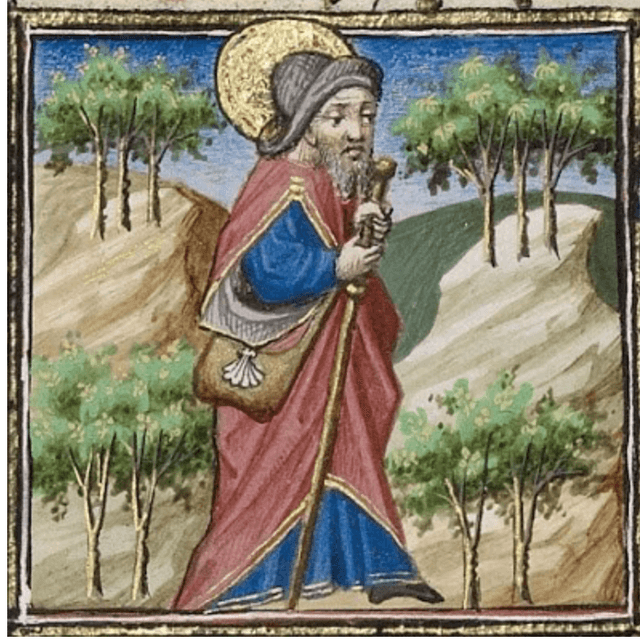
St. Andrew, Apostle
City of God in Exile
St. Andrew, Apostle
2026-11-30 - Advent - Double of the Second Class - red
Today
St. Andrew, Apostle
The Apostle Who Brought His Brother
Truth
The Holy Ghost Does Not Author Contradiction
The Holy Ghost guides the Church into truth; He does not lead her to contradict the faith once delivered.
Practice
Prompt apostolic obedience.
Invite persons within your reach to pray, read Catholic truth, attend the true Mass, or take concrete steps toward Christ.
Offering
To Jesus through Mary
With Mary, enter Advent by choosing the hidden approval of God before the notice of the world.
The Pilgrim's Devotional Rhythm
Keep this month and this weekday in prayer.
The month's intention and the weekday remembrance gather the pilgrim's prayer into the devotional rhythm of the Church. In harmony with today's Mass, feast, and duties, they teach him to receive ordinary time from God and return it to Him in honor and intercession.
November intention
The Holy Souls in Purgatory
Christian charity crosses the boundary of death. Remember the faithful departed who can no longer merit for themselves, and let prayer for them keep judgment, mercy, and eternity before your own soul.
Intention
For the relief of the Holy Souls, especially the most forgotten, and for the grace of final perseverance for the living.
A faithful act
Offer a prayer, indulgenced work under the Church's conditions, or sacrifice for a forgotten soul in Purgatory.
Prayer
Eternal rest give unto them, O Lord; and let perpetual light shine upon them. May they rest in peace. Amen.
Monday remembrance
The Holy Souls in Purgatory
Begin the working week with an act of mercy toward the faithful departed. Their helplessness calls forth charity, while their purification reminds the living to repent before death.
Intention
For the most abandoned soul in Purgatory and for deceased relatives, benefactors, priests, and those who have no one to pray for them.
A faithful act
Offer the first difficulty of the week for the Holy Souls and pray the De profundis.
Prayer
Eternal rest give unto them, O Lord; and let perpetual light shine upon them.
Good Morning, Pilgrim
Receive this day as a child of Holy Mother Church.
St. Andrew heard, followed, and then brought St. Peter to the Messias. His apostolate began with personal adhesion to Christ and ended in faithful endurance upon the cross. Ask for zeal that leads souls to Our Lord and His Church without making your own personality the center.
Ask Our Lady for a hidden beginning. Offer the whole day to God through her, including the parts that no one else will see or praise.
Formation in True Devotion - Day 2: The Hidden Way of Advent
“Mary was singularly hidden during her life.”
St. Louis de Montfort begins by placing Our Lady where the world does not know how to look. Her life is not built around display. The greatest creature God made is content to be known by Him, to receive His will without constructing an audience, and to let the mystery of Christ occupy the place that self-love continually seeks for itself.
A new formation in true devotion must therefore begin with hiddenness. Do not ask first how devotion will make you feel or how it will appear. Ask which faithful act can be performed today for God alone. Our Lady will teach you that a soul loses nothing by disappearing from human notice when Jesus Christ is being formed within it.
Ora — Begin with Prayer
Offer the day before spending it
Prayer gives the day its right beginning and its right end. Before work, conversation, news, or distraction claims the mind, adore the Blessed Trinity and offer every prayer, work, joy, suffering, and temptation to Jesus through Mary. Ask your Guardian Angel for help, and place the souls and needs entrusted to you beneath God's will.
Begin simply. Make the Morning Offering through the hands of Our Lady. Pray the Three Hail Marys for purity and final perseverance, ask your Guardian Angel to govern the senses and imagination, and name the soul or intention for which today's prayers and sacrifices will be offered. Do not rush these acts merely because they are familiar; let them place the whole day beneath God before the world begins to claim it.
O Lord, through St. Andrew, make me prompt in following Thee, humble in serving souls, and steadfast beneath whatever cross fidelity requires.
Quote of the Day
“We have found the Messias.”
Plain-language help for today - 3 unfamiliar terms
- Apostle
- one sent by Christ with authority to preach and establish the Church; the title especially names the Twelve and St. Paul.
- Apostolic
- belonging to the faith, mission, teaching, or authority handed down from Christ through the apostles.
- Idolatry
- giving to a creature, power, pleasure, or false god the worship and absolute allegiance owed to God alone.
The full Breviary lessons preserve an older English translation. Read the modern explanation first; it identifies the people, event, and doctrine before the historical wording appears.
Today's Full Breviary Sermon or Proper Lesson
The apostle who loved the Cross and preached from it.
Matins - Second Nocturn - St. Andrew, Apostle
The complete appointed Breviary sermon or proper lessons verified for this observance are printed below. Where a Common supplies additional material, it is identified distinctly rather than presented as the proper text.
Roman Breviary, Proper lessons for St. Andrew
“They made no delay, but left their nets, and followed Him.”
- The Breviary honors St. Andrew as the disciple of St. John Baptist who heard, Behold the Lamb of God, followed Christ, and brought his brother Peter.
- His apostolic mission took him through Scythia, Epirus, Thrace, and Achaia, where he taught, worked miracles, and brought many to the Gospel truth.
- Before Aegeas he confessed Christ, the altar, the spotless Lamb, and the mystery of the Cross, then preached from the cross for two days before passing to the Lord.
Ask St. Andrew for prompt obedience and love of the Cross. The apostolic soul follows without delay, brings others to Christ, and does not trade the Lamb for idols.
Complete Breviary Text
Fourth Lesson - Called First and Sent to the Nations
The Apostle Andrew was born at Bethsaida, a town of Galilee, and was the brother of Peter. He was a disciple of John the Baptist, and heard him say of Christ, "Behold the Lamb of God," (John i. 35-37, 40.) whereupon he immediately followed Jesus, bringing his brother also with him. Some while after, they were both fishing in the Sea of Galilee, and the Lord Christ, going by, called them both, before any other of the Apostles, in the words, "Follow Me, and I will make you fishers of men." They made no delay, but left their nets, and followed Him. (Matth. iv. 18-20.) After the death and Resurrection of Christ, Andrew was allotted Scythia as the province of his preaching, and, after labouring there, he went through Epirus and Thrace, where he turned vast multitudes to Christ by his teaching and miracles. Finally he went to Patras in Achaia, and there also he brought many to the knowledge of Gospel truth. Aegeas the Pro-consul resisted the preaching of the Gospel, and the Apostle freely rebuked him, bidding him know that while he held himself a judge of his fellow men, he was himself hindered by devils from knowing Christ our God, the Judge of all.
Fifth Lesson - The Altar and the Spotless Lamb
Then Aegeas, being angry, answered him, "Boast no more of this thy Christ. He spake words even such as thine, but they availed Him not, and He was crucified by the Jews." Whereto Andrew boldly answered that Christ had given Himself up to die for man's salvation; but the Pro-consul blasphemously interrupted him, and bade him look to himself, and sacrifice to the gods. Then said Andrew, "We have an altar, whereon day by day I offer up to God, the Almighty, the One, and the True, not the flesh of bulls nor the blood of goats, but a Lamb without spot: and when all they that believe have eaten of the Flesh Thereof, the Lamb That was slain abideth whole and liveth." Then Aegeas being filled with wrath, bound the Apostle in prison. Now, the people would have delivered him, but he himself calmed the multitude, and earnestly besought them not to take away from him the crown of martyrdom, for which he longed and which was now drawing near.
Sixth Lesson - Two Days Preaching from the Cross
Some short while after, he was brought before the judgment-seat, where he extolled the mystery of the cross, and rebuked Aegeas for his ungodliness. Then Aegeas could bear with him no longer, but commanded him to be crucified, in imitation of Christ. Andrew, then, was led to the place of martyrdom, and, as soon as he came in sight of the cross, he cried out, "O precious cross, which the Members of my Lord have made so goodly, how long have I desired thee! how warmly have I loved thee! how constantly have I sought thee! And, now that thou art come to me, how is my soul drawn to thee! Welcome me from among men, and join me again to my Master, that as by thee He redeemed me, so by thee also He may take me unto Himself." So he was fastened to the cross, whereon he hung living for two days, during which time he ceased not to preach the faith of Christ, and, finally, passed into the Presence of Him the likeness of Whose death he had loved so well. All the above particulars of his last sufferings were written by the Priests and Deacons of Achaia, who bear witness to them of their own knowledge. Under the Emperor Constantine the bones of the Apostle were first taken to Constantinople, whence they were afterwards brought to Amalfi. In the Pontificate of Pope Pius II. his head was carried to Rome, where it is kept in the Basilica of St Peter.
Walk with Holy Mother Church
Holy Mother Church has already begun praying. Enter her prayer.
Today the Roman year keeps St. Andrew, Apostle. Receive the observance from the Church's hands: first understand what is commemorated, then let its doctrine and worship shape the day.
Roman Martyrology
November 30
At Patras, in Achaia, the birthday of the apostle St. Andrew, who preached the gospel of Christ in Thrace and Scythia. Being apprehended by the proconsul Egseas, he was shut up in prison, severely scourged, and finally, being suspended on a cross, he lived two days on it, teaching the people. Having besought our Lord not to permit that he should be taken down from the cross, he was surrounded with a great brightness from heaven, and when the light disappeared he breathed his last. — At Rome, the martyrdom of the Saints Castulus and Euprepis. — At Constantinople, St. Maura, virgin and martyr. — Also, St. Justina, virgin and martyr. — At Saintes, the holy bishop Trojanus, a man of great sanctity, who shows by many miracles that he lives in heaven, though buried on earth. — At Rome, St. Constantius, confessor, who strongly opposed the Pelagians, and by enduring many injuries from them, gained a place among holy confessors. — In Palestine, blessed Zosimus, confessor, who was distinguished by sanctity and miracles in the time of the emperor Justin.
Gospel of the Day
They immediately left their nets.
St. Andrew, Apostle - Matthew 4:18-22
“They immediately leaving their nets, followed him.”
Ask St. Andrew for promptness. The first step after Christ is often simple, but it must be taken.
Receive the Gospel with Holy Mother Church
St. Andrew answers Christ promptly and teaches Christians beginning Advent to be equally ready to hear, obey, and bring others to the Lord.
The call of Christ asks for real detachment, not admiration from a distance.
This Gospel corrects a danger that can quietly deform Catholic judgment: The hesitation that wants discipleship after every earthly security is settled. Ask where that danger seeks your consent today, and answer it with the act Our Lord requires.
Learn from Today's Saint or Feast
St. Andrew
Apostle of the Cross and first-called disciple.
St. Andrew followed Christ and brought others to Him, most notably his brother Simon Peter.
As an apostle, he answered Christ promptly, brought others to Christ, preached the Gospel in other lands, and finally gave his life in a death shaped like the Cross.
Ask St. Andrew for the grace to leave the nets. The first step after Christ is often simple, but it must actually be taken.
The Pilgrim's Spiritual Conference
The Holy Ghost Does Not Author Contradiction
Remain here for a little while. Receive today's Catholic truth as a child of Holy Mother Church; let it judge the heart, strengthen the will, and become an act offered to God.
The Church places this truth before you today: The Holy Ghost guides the Church into truth; He does not lead her to contradict the faith once delivered. Do not hurry past it as though doctrine belonged only to books and controversies. A revealed truth is also a light by which the soul must judge its loyalties, its fears, its habits, and the duties immediately before it. Appeals to the Spirit must be judged by apostolic doctrine, not by enthusiasm, novelty, or institutional pressure.
The grace to be practiced is Prompt apostolic obedience, drawn from today's saintly witness. Ask God for more than the natural appearance of this virtue. Temperament may make an action seem easy for a time, but supernatural virtue remains faithful because God is worthy of obedience, even when feeling offers no assistance and no one notices the cost. Imitate Mary's humility by allowing God, rather than human notice, to be the sufficient witness of a good act.
There is also an enemy to recognize: Resist invoking the Holy Ghost to justify rupture from received doctrine. Do not study this danger only in other people. Look quietly for the door by which it seeks entrance into your own soul - perhaps through delay, curiosity, resentment, human respect, attachment to comfort, or the desire to control the outcome. Dying to self today means choosing prompt apostolic obedience when pride, comfort, fear, resentment, or human respect asks for control.
Do the faithful act and entrust its fruit to divine Providence, God's wise and loving governance of all things. Place effort and outcome into Our Lady's hands so that the whole offering may be presented to her Divine Son. Confidence in God is not passivity: obey, pray, work, and accept that visible success, consolation, or immediate relief may not be given. God remains faithful when the duty is hidden and the outcome uncertain. Therefore, perform the duty that belongs to you, use the lawful means God has provided, and then surrender the fruit. Receive obscurity without treating it as rejection. Hidden fidelity is precious before God. Perform the least noticed duty with the same care you would give it under the eyes of the whole household.
The Church's witness
This truth manifests the Church's mark of apostolic. The witness placed beside it today is St. Irenaeus.
Your resolution before God
Invite persons within your reach to pray, read Catholic truth, attend the true Mass, or take concrete steps toward Christ.
The true apostle brings souls to Jesus and is willing to disappear beneath the Cross.
Carry this word quietly. Return to it when distraction, temptation, or discouragement begins to scatter the soul.
Novena in Progress
Prepare before the feast arrives.
The Church teaches souls to prepare. A novena trains desire, steadies intention, and prevents a feast from arriving as a mere date on the calendar.
Day 7 of 9
Preparing for St. Francis Xavier on
Novena to St. Francis Xavier
Petition
Ask for apostolic zeal, hatred of false religion, missionary courage, and perseverance in labor for souls.
A Faithful Act
Pray for the conversion of those outside the Catholic Faith and for courage to confess Christ without human respect.
Day 2 of 9
Preparing for Immaculate Conception of the Blessed Virgin Mary on
Novena for the Immaculate Conception
Petition
Ask for purity of doctrine, purity of heart, and hatred of the sin and error that wound souls.
A Faithful Act
Practice purity throughout thought, speech, dress, reading, and entertainment.
The Little Rule of Fidelity
Keep the day within prayer.
These anchors do not change because the soul needs a stable rule more than a daily novelty. Open them when you are learning the rule or when your ordinary prayer has begun to loosen.
Show today's prayer and duty anchors
Begin with morning prayer
Adore the Blessed Trinity and offer the whole day to Jesus through Mary before other duties claim the mind.
Keep the Angelus
Pause morning, noon, and evening to remember the Incarnation.
Seek Our Lord in the Blessed Sacrament
Attend Holy Mass when duty permits; otherwise make a Spiritual Communion and renew desire for Jesus in the Blessed Sacrament.
Return to Jesus and Mary
Use frequent holy aspirations during work, waiting, suffering, and temptation.
Pray the Rosary
Keep the mysteries of Christ before the mind with Our Lady and learn to imitate what they contain.
End with night prayer and examen
Give thanks, confess faults, forgive injuries, make a practical amendment, and entrust the night to Our Lady.
The Pilgrim's Mirror
How shall I imitate Christ today?
Formation in The Imitation of Christ - Day 2: Book I - Amendment of Life
“All that is in this world is vanity, but to love God and only to serve Him.”
Created things are good when they lead the soul to God and become dangerous when they claim the heart. Put the day's lesser goods beneath the one necessary end.
Vanity does not always announce itself through great ambition. It often appears as a small comfort you believe you cannot surrender, an opinion you must defend, or praise you continue to replay. Ask God to show you the attachment that is quietly asking to be treated as necessary.
Today's Practice
Renounce needless comforts whenever they compete with prayer, duty, or charity, and offer the sacrifices to God through Mary.
Before Night Falls
Return the completed day to God.
Give thanks before measuring the day by feeling or visible success. Ask light to see faults without discouragement, make an Act of Contrition, forgive injuries, and place tomorrow beneath divine Providence.
Ask whether you sought to be seen, thanked, or vindicated. Place that hunger quietly into Mary's hands.
- For what grace or mercy should I thank God today?
- What sin, fault, neglected duty, or resistance to grace must I confess?
- What definite amendment will I carry into tomorrow?
Go Now, Pilgrim
Walk faithfully. Pray attentively. Bear your cross willingly. Love God above all things.
Holy Mother Church has gathered you around her prayer and truth; now carry what you have received into the duties of your state.
When this day is finished, may you have laid one more stone in the City of God.
You do not walk alone: remain beneath Our Lady's care as she leads you toward her Divine Son and the Heavenly Jerusalem.
God willing, we shall meet again at tomorrow's pilgrimage.
Source notes for this pilgrimage
Martyrology: The Roman Martyrology, Baltimore, 1916, John Murphy Company; local raw text lines 12530-12559.
- Gospel: Matthew 4:18-22, Douay-Rheims.
- Gospel: Traditional Roman Gospel for St. Andrew.
- Saint witness: John 1:35-42, Douay-Rheims.
- Saint witness: Roman Martyrology, 1916 Baltimore edition, November 30.
- Breviary witness: Roman Breviary, Matins lessons for November 30, St. Andrew.
- Breviary witness: Matthew 4:18-22, Douay-Rheims.
- Matins lesson: The Roman Breviary, translated by John, Marquess of Bute, 1908, vol. IV, Autumn, Second Nocturn for St. Andrew, lessons iv-vi, printed pp. 783-784.
- Matins lesson: Bute 1908 is used here as an accessible pre-Pius X Breviary witness and is cited distinctly from the 1936-1937 Benziger / Burns Oates edition.
Pilgrim's Mirror: Thomas à Kempis, The Imitation of Christ, translated by Richard Whitford, edited by Wilfrid Raynal, O.S.B. (Mount Vernon, N.Y.: Peter Pauper Press, c. 1947). Today's passage is at Book I, chapter 1, p. 9.
Marian formation: St. Louis-Marie de Montfort, True Devotion to the Blessed Virgin, translated by Fr. Frederick William Faber, 1941 Company of Mary edition, imprimatur September 26, 1949. Today's passage is at True Devotion to the Blessed Virgin, no. 2. The supplied 2010 PDF is used only as a digital transcription of that pre-1955 edition.
- Devotional rhythm: St. Andrew Daily Missal, Dom Gaspar Lefebvre, O.S.B., 1953 edition; proper Mass or devotion named in this entry.
- Devotional rhythm: 2 Machabees 12:43-46, Douay-Rheims.
- Devotional rhythm: Psalm 129 and 2 Machabees 12:43-46, Douay-Rheims.
- Faith point: John 16:13, Douay-Rheims.
- Faith point: St. Irenaeus, Against Heresies.
- Marian atmosphere and imitation: Luke 1:38, 46-49; Luke 2:19; John 2:5; John 19:25-27; and John 3:30, Douay-Rheims.
- Authority and revolt: Exodus 5:2, Douay-Rheims.
- Daily examen: St. Ignatius of Loyola, Spiritual Exercises, Particular and Daily Examen.