The Daily Pilgrimage
“Now therefore, ye children, hear me: Blessed are they that keep my ways.” — Proverbs 8:32
Daily formation
2027-09-22
Receive the day as a child of Holy Mother Church. Beneath Our Lady's care, magnify Christ, obey God's commandments, fulfill the duties of your state in life, die to self, trust divine Providence, resist error, and return the whole day to God.
Holy Mother Church gathers her children around the Sacred Calendar, feeds them with truth, warns them against what wounds the soul, and teaches them to walk faithfully toward their heavenly home.
“Fear not, little flock, for it hath pleased your Father to give you a kingdom. […] For where your treasure is, there will your heart be also.”
Choose a date
Daily navigation
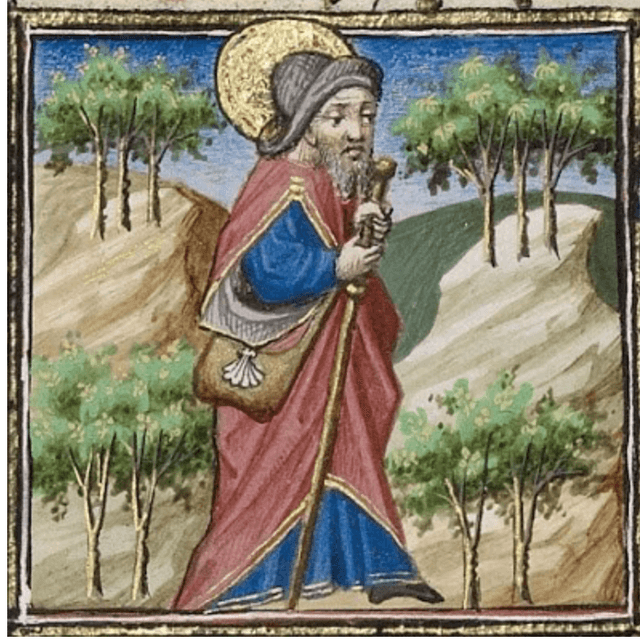
St. Thomas of Villanova, Bishop and Confessor
City of God in Exile
St. Thomas of Villanova, Bishop and Confessor
2027-09-22 - Time after Pentecost - Double - white
Today
St. Thomas of Villanova, Bishop and Confessor
Growth After Pentecost
Truth
The Four Marks Are Not Decorative
The Church must be one, holy, Catholic, and apostolic because she bears the identity Christ gave her, not because men assign those titles by preference.
Practice
Pastoral charity for the poor.
Show reverence for the Holy Sacrifice in thought, word, and conduct, and pray for souls misled by false worship.
Offering
To Jesus through Mary
With Mary, ponder the mysteries of Christ and let revealed truth govern the day.
The Pilgrim's Devotional Rhythm
Keep this month and this weekday in prayer.
The month's intention and the weekday remembrance gather the pilgrim's prayer into the devotional rhythm of the Church. In harmony with today's Mass, feast, and duties, they teach him to receive ordinary time from God and return it to Him in honor and intercession.
September intention
The Seven Sorrows of the Blessed Virgin Mary
Our Lady did not flee the Cross. By remembering her sorrows, the pilgrim learns compassion for the Passion of Christ, patience in affliction, and fidelity when consolation is withdrawn.
Intention
For those crushed by grief, for sinners at the hour of death, and for the grace to carry every cross without abandoning Christ.
A faithful act
Accept sorrows without murmuring and offer them with Our Lady for dying souls.
Prayer
Sorrowful and Immaculate Heart of Mary, keep us faithful beside the Cross of Jesus.
Wednesday remembrance
St. Joseph
Midweek, turn to St. Joseph, whose hidden labor guarded Jesus and Mary. He teaches authority without self-importance, work without complaint, and silence joined to decisive obedience.
Intention
For fathers, laborers, families, the protection of the Church, and those approaching death.
A faithful act
Do necessary tasks thoroughly without seeking notice or praise.
Prayer
St. Joseph, patron of the universal Church, guard our homes and obtain for us purity, courage, and a holy death.
Good Morning, Pilgrim
Receive this day as a child of Holy Mother Church.
The Time after Pentecost teaches perseverance after the great feasts. Many souls receive light and then return to forgetfulness. The pilgrim must instead turn light into rule: morning prayer, the Angelus, Rosary, examination, custody of speech, and fidelity to the duty before him.
Keep the mysteries of the Rosary near the mind today. Ask Our Lady to teach what they demand of faith, worship, and conduct.
Formation in True Devotion - Day 298: Review and Deepening: Consecrated Life through Mary to Jesus
“We must do all our actions with Mary; that is to say, we must in all our actions regard Mary as an accomplished model of every virtue and perfection which the Holy Ghost has formed in a pure creature for us to imitate according to our little measure.”
To walk with Mary is first to look steadily at what God made her: humble under praise, recollected amid great mysteries, obedient without bargaining, pure in intention, and faithful when fidelity led beneath the Cross. Admiration that never becomes imitation remains unfinished devotion.
Ask which of these dispositions is most absent from your conduct today. Strive for every virtue that duty requires, while giving particular attention to the one most opposed by your usual fault. Beg for it through Our Lady and practice it in the very circumstance where that fault ordinarily appears.
Ora — Begin with Prayer
Offer the day before spending it
Prayer gives the day its right beginning and its right end. Before work, conversation, news, or distraction claims the mind, adore the Blessed Trinity and offer every prayer, work, joy, suffering, and temptation to Jesus through Mary. Ask your Guardian Angel for help, and place the souls and needs entrusted to you beneath God's will.
Begin simply. Make the Morning Offering through the hands of Our Lady. Pray the Three Hail Marys for purity and final perseverance, ask your Guardian Angel to govern the senses and imagination, and name the soul or intention for which today's prayers and sacrifices will be offered. Do not rush these acts merely because they are familiar; let them place the whole day beneath God before the world begins to claim it.
O Lord, give me holy fear before Thy altar. Preserve me from casualness, invention, and every worship that weakens faith in Thy sacrifice.
Quote of the Day
“Follow me. And he rose up and followed him.”
Plain-language help for today - 3 unfamiliar terms
- Ecclesiastical or ecclesial
- belonging or relating to the Church; the words refer to her life, law, worship, ministers, or common mission.
- Commemoration
- a shorter liturgical remembrance of another saint or observance occurring on the same day.
- Martyr
- a Christian who was killed rather than deny Christ or abandon the Faith.
The full Breviary lessons preserve an older English translation. Read the modern explanation first; it identifies the people, event, and doctrine before the historical wording appears.
Today's Full Breviary Sermon or Proper Lesson
A bishop whose revenues became the patrimony of the poor.
Matins - Second Nocturn - St. Thomas of Villanova, Bishop and Confessor
The complete appointed Breviary sermon or proper lessons verified for this observance are printed below. Where a Common supplies additional material, it is identified distinctly rather than presented as the proper text.
Roman Breviary, Proper lessons for St. Thomas of Villanova
“He was a father to the poor.”
- The Breviary honors St. Thomas as an Augustinian preacher and reluctant archbishop whose simplicity survived elevation to office.
- He treated episcopal revenues, the income and goods entrusted to him as archbishop, as resources for the poor, joining almsgiving to preaching, discipline, and care for souls.
- His charity remains ecclesiastical rather than merely social because bodily relief is given within a bishop's work of doctrine, worship, and salvation.
Make charity concrete and Catholic. St. Thomas teaches simplicity under dignity, generous stewardship, truth preached to souls, and practical care for Christ in His poor.
Complete Breviary Text
Fourth Lesson - Learning Joined to Mercy
Thomas of Villanueva was born of excellent parentage, in the town of Fuenlana, in the Diocese of Toledo in Spain, in the year of our Lord 1488, and was early taught godliness, and an especial pitifulness towards the needy. Of this grace he gave many ensamples while he was still a lad, whereof it is an eminent one that he more than once stripped himself of raiment of his own, in order to clothe the naked. He was become a man when the death of his father called him from Alcala, whither he had been sent to work as a student in the great College of St Alonzo. He gave all the inheritance which fell to him to feed poor unmarried women, and forthwith returned to Alcala, and finished his course in Theology. He was so eminent in learning that he was commended to take a Professorship in that University, and delivered remarkable Lectures upon Philosophy and Theology. Meanwhile he ceased not earnestly to entreat of the Lord in prayer the knowledge of the Saints, and to know what was the path of life whereunto he was called. In course of time, by the inspiration of God, he entered the Institute of Hermits of St. Augustine.
Fifth Lesson - Preaching and Government of Souls
In the Order wherein he had professed, he was marked for all that maketh a good and edifying Friar, for lowliness, for long-suffering, for cleanness-of-heart, but, above all, for the warmth of his charity. Amid divers and hard works, he let his spirit never faint from prayer and study of the things of God. On account of his holiness and learning he was bidden to undertake the work of preaching, and, by the help of God's grace, was the means of drawing countless souls out of the slough of sin into the way that leadeth unto life. Being raised to rule over his brethren, he so joined wisdom, justice, and gentleness with watchfulness and firmness, that he either established or restored in many places the original discipline of his Order.
Sixth Lesson - A Father to the Poor
He was named to the Archbishoprick of Granada, but, with excellent lowliness and firmness, he refused to take so high a place. However, not long after, he was forced by the commands of his superiors to accept the government of the Church of Valencia, which he discharged for nearly eleven years with the reputation of a most holy and watchful shepherd of souls. His elevation changed nowise his way of life, except to give greater scope to his wonderful charity by placing the revenues of a wealthy Church at his disposal to distribute to the poor. He did not leave himself even a bed; that on which he was lying when he was called to heaven, he had only on loan from a person to whom he had shortly before given it as an alms. He fell asleep in the Lord upon the 8th day of September, in the 69th year of his own age, [and of our Lord 1555.] God was pleased to approve the holiness of His servant by miracles, both during his life and after his death, whereof are specially remarked that when he had utterly emptied his barn by giving away all his corn to the poor, it was suddenly found full again, and that a dead boy was raised to life at his grave. Finding him famous for these signs, and not a few others, Pope Alexander VII. enrolled him in the list of the Saints, and ordered that his memory should be held in remembrance upon the 18th day of September.
Walk with Holy Mother Church
Holy Mother Church has already begun praying. Enter her prayer.
Today the Roman year keeps St. Thomas of Villanova, Bishop and Confessor. Receive the observance from the Church's hands: first understand what is commemorated, then let its doctrine and worship shape the day.
Roman Martyrology
September 22
At Valencia, in Spain, St. Thomas, of Villanova, archbishop and confessor, whose birthday is the 8th of September. — At St. Maurice, near Sion, in Switzerland, the birthday of the holy Theban martyrs Maurice, Exuperius, Candidus, Victor, Innocent, and Yitalis, with their companions of the same legion, whose martyrdom for the faith, in the time of Maximian, filled the world with the glory of their sufferings. — At Rome, the martyrdom of the holy virgins and martyrs Digna and Emerita, under Valerian and Gallienus. Their relics are kept in the church of St. Marcellus. — At Arpajon, near Paris, St. Jonas, priest and martyr, who went to France with St. Denis, and after being scourged by order of the prefect Julian, ended his martyrdom by the sword. — At Ratisbon, in Bavaria, St. Emmeramus, bishop and martyr, who, to deliver others, endured patiently a most cruel death for the sake of our Lord. — At Antinoopolis, in Egypt, the holy martyrs Irais, an Alexandrian virgin, and her companions. Having gone out to draw water at a fountain near by, aand seeing a boat loaded with Christian confessors, she immediately left her vessel and joined them. Being conducted to the city with them, after many torments, she was the first to have her head struck off; and after her, priests, deacons, virgins, and all others underwent the same kind of death. — At Meaux, blessed Sanctinus, bishop, disciple of St. Denis, the Areopagite, who, being consecrated by him bishop of that city, was the first to preach the Gospel there. — In the territory of Coutances, St. Lauto, bishop. — In Poitou, the holy priest Florentius. — In the territory of Bourges, St. Sylvanus, confessor. — At Laon, St. Salaberga, abbess.
Learn from Today's Saint or Feast
St. Thomas of Villanova
Bishop, confessor, and father of the poor.
The Martyrology honors St. Thomas of Villanova, archbishop and confessor, and remembers his ardent charity for the poor.
His witness teaches that episcopal dignity must bend toward mercy. The poor are not a theme for speeches, but members of Christ to be served with sacrifice and truth.
Ask St. Thomas of Villanova for charity with a bishop's heart: generous, truthful, and ordered to the whole person.
The Pilgrim's Spiritual Conference
The Four Marks Are Not Decorative
Remain here for a little while. Receive today's Catholic truth as a child of Holy Mother Church; let it judge the heart, strengthen the will, and become an act offered to God.
The Church places this truth before you today: The Church must be one, holy, Catholic, and apostolic because she bears the identity Christ gave her, not because men assign those titles by preference. Do not hurry past it as though doctrine belonged only to books and controversies. A revealed truth is also a light by which the soul must judge its loyalties, its fears, its habits, and the duties immediately before it. The marks are tests of recognition. They prevent the faithful from confusing religious intensity, social size, antiquarian taste, or institutional claims with the true Church.
The grace to be practiced is Pastoral charity for the poor, drawn from today's saintly witness. Ask God for more than the natural appearance of this virtue. Temperament may make an action seem easy for a time, but supernatural virtue remains faithful because God is worthy of obedience, even when feeling offers no assistance and no one notices the cost. Imitate Mary's faith. She did not make private feeling the measure of God's word; she believed, obeyed, and persevered in darkness.
There is also an enemy to recognize: Resist treating the marks as poetic language detached from visible doctrine, worship, and apostolic continuity. Do not study this danger only in other people. Look quietly for the door by which it seeks entrance into your own soul - perhaps through delay, curiosity, resentment, human respect, attachment to comfort, or the desire to control the outcome. Dying to self today means choosing pastoral charity for the poor when pride, comfort, fear, resentment, or human respect asks for control.
Do the faithful act and entrust its fruit to divine Providence, God's wise and loving governance of all things. Place effort and outcome into Our Lady's hands so that the whole offering may be presented to her Divine Son. Confidence in God is not passivity: obey, pray, work, and accept that visible success, consolation, or immediate relief may not be given. God remains faithful when the duty is hidden and the outcome uncertain. Therefore, perform the duty that belongs to you, use the lawful means God has provided, and then surrender the fruit. When understanding is limited, do not abandon what God has revealed. Trust Him, hold the Catholic Faith, and fulfill the known duty. Carry your acts into the mysteries of Christ's life and offer them with the corresponding decades of the Rosary.
The Church's witness
This truth manifests the Church's mark of one. The witness placed beside it today is St. Robert Bellarmine.
Your resolution before God
Show reverence for the Holy Sacrifice in thought, word, and conduct, and pray for souls misled by false worship.
False worship wounds souls because worship forms belief.
Carry this word quietly. Return to it when distraction, temptation, or discouragement begins to scatter the soul.
The Little Rule of Fidelity
Keep the day within prayer.
These anchors do not change because the soul needs a stable rule more than a daily novelty. Open them when you are learning the rule or when your ordinary prayer has begun to loosen.
Show today's prayer and duty anchors
Begin with morning prayer
Adore the Blessed Trinity and offer the whole day to Jesus through Mary before other duties claim the mind.
Keep the Angelus
Pause morning, noon, and evening to remember the Incarnation.
Seek Our Lord in the Blessed Sacrament
Attend Holy Mass when duty permits; otherwise make a Spiritual Communion and renew desire for Jesus in the Blessed Sacrament.
Return to Jesus and Mary
Use frequent holy aspirations during work, waiting, suffering, and temptation.
Pray the Rosary
Keep the mysteries of Christ before the mind with Our Lady and learn to imitate what they contain.
End with night prayer and examen
Give thanks, confess faults, forgive injuries, make a practical amendment, and entrust the night to Our Lady.
The Pilgrim's Mirror
How shall I imitate Christ today?
“Who hath a stronger battle than he that laboureth to overcome himself?”
The decisive field of combat is within. Heresy must be hated, and so must the pride, curiosity, compromise, and self-will by which falsehood finds lodging in the soul.
Many souls desire victory in the Church while making peace with the tyrant within. Begin the restoration where grace has placed authority in your hands: over your next thought, word, appetite, and decision. A hidden victory over self-will is no small service to the City of God.
Today's Practice
Refuse the demands of self-will promptly and without complaint.
Before Night Falls
Return the completed day to God.
Give thanks before measuring the day by feeling or visible success. Ask light to see faults without discouragement, make an Act of Contrition, forgive injuries, and place tomorrow beneath divine Providence.
Ponder the day with Mary: where was Christ present, where did you resist grace, and what truth must be kept more faithfully tomorrow?
- For what grace or mercy should I thank God today?
- What sin, fault, neglected duty, or resistance to grace must I confess?
- What definite amendment will I carry into tomorrow?
Go Now, Pilgrim
Walk faithfully. Pray attentively. Bear your cross willingly. Love God above all things.
Holy Mother Church has gathered you around her prayer and truth; now carry what you have received into the duties of your state.
When this day is finished, may you have laid one more stone in the City of God.
You do not walk alone: remain beneath Our Lady's care as she leads you toward her Divine Son and the Heavenly Jerusalem.
God willing, we shall meet again at tomorrow's pilgrimage.
Source notes for this pilgrimage
Martyrology: The Roman Martyrology, Baltimore, 1916, John Murphy Company; local raw text lines 10010-10054.
- Saint witness: St. Andrew Daily Missal, September 22.
- Saint witness: Roman Martyrology, 1916 Baltimore edition, September 22.
- Breviary witness: Roman Breviary, Matins lessons for September 22, St. Thomas of Villanova.
- Breviary witness: Roman Martyrology, 1916 Baltimore edition, September 22.
- Matins lesson: The Roman Breviary, translated by John, Marquess of Bute, 1908, vol. IV, Autumn, Second Nocturn for St. Thomas of Villanova, lessons iv-vi, printed pp. 578-579.
- Matins lesson: Bute 1908 is used here as an accessible pre-Pius X Breviary witness and is cited distinctly from the 1936-1937 Benziger / Burns Oates edition.
Pilgrim's Mirror: Thomas à Kempis, The Imitation of Christ, translated by Richard Whitford, edited by Wilfrid Raynal, O.S.B. (Mount Vernon, N.Y.: Peter Pauper Press, c. 1947). Today's passage is at Book I, chapter 3, p. 12.
Marian formation: St. Louis-Marie de Montfort, True Devotion to the Blessed Virgin, translated by Fr. Frederick William Faber, 1941 Company of Mary edition, imprimatur September 26, 1949. Today's passage is at True Devotion to the Blessed Virgin, no. 260. The supplied 2010 PDF is used only as a digital transcription of that pre-1955 edition.
- Devotional rhythm: St. Andrew Daily Missal, Dom Gaspar Lefebvre, O.S.B., 1953 edition; proper Mass or devotion named in this entry.
- Devotional rhythm: Luke 2:34-35 and John 19:25-27, Douay-Rheims.
- Devotional rhythm: Matthew 1:19-24, Douay-Rheims.
- Faith point: Nicene Creed.
- Faith point: Baltimore Catechism, lessons on the four marks of the Church.
- Marian atmosphere and imitation: Luke 1:38, 46-49; Luke 2:19; John 2:5; John 19:25-27; and John 3:30, Douay-Rheims.
- Authority and revolt: Exodus 5:2, Douay-Rheims.
- Daily examen: St. Ignatius of Loyola, Spiritual Exercises, Particular and Daily Examen.