The Daily Pilgrimage
“Now therefore, ye children, hear me: Blessed are they that keep my ways.” — Proverbs 8:32
Daily formation
2028-10-08
Receive the day as a child of Holy Mother Church. Beneath Our Lady's care, magnify Christ, obey God's commandments, fulfill the duties of your state in life, die to self, trust divine Providence, resist error, and return the whole day to God.
Holy Mother Church gathers her children around the Sacred Calendar, feeds them with truth, warns them against what wounds the soul, and teaches them to walk faithfully toward their heavenly home.
“Fear not, little flock, for it hath pleased your Father to give you a kingdom. […] For where your treasure is, there will your heart be also.”
Choose a date
Daily navigation
18th Sunday after Pentecost
City of God in Exile
18th Sunday after Pentecost
2028-10-08 - Time after Pentecost - Semi-Double Sunday - green
Today
18th Sunday after Pentecost
A Pilgrimage That Changes the Soul
Truth
Truth and Charity Cannot Be Divided
Charity loves the real good of the soul, and therefore cannot ask truth to be hidden, softened into falsehood, or traded for comfort.
Practice
Pilgrim obedience.
Refuse every compromise with comfort when duty, prayer, or truth asks for fidelity.
Offering
To Jesus through Mary
With Our Lady, contemplate the Eternal Son given to the world for our salvation.
The Pilgrim's Devotional Rhythm
Keep this month and this weekday in prayer.
The month's intention and the weekday remembrance gather the pilgrim's prayer into the devotional rhythm of the Church. In harmony with today's Mass, feast, and duties, they teach him to receive ordinary time from God and return it to Him in honor and intercession.
October intention
The Most Holy Rosary
The Rosary places the mysteries of Jesus Christ before the soul in the company of His Mother. Pray it as a school of faith and contemplation, not as hurried words.
Intention
For the defense of the Catholic Faith, peace in Christian homes, the conversion of sinners, and perseverance in mental prayer.
A faithful act
Pray five decades with attention, pausing briefly to place yourself within each mystery before beginning it.
Prayer
Queen of the Most Holy Rosary, keep the mysteries of thy Divine Son living in our minds and fruitful in our conduct.
Sunday remembrance
The Most Holy Trinity
Sunday belongs first to the worship of God and the commemoration of the Resurrection. Adore the Father, the Son, and the Holy Ghost, from Whom every grace descends and to Whom the whole Christian life must return.
Intention
For the worthy worship of God, fidelity to Sunday Mass, and the restoration of Christian observance of the Lord's Day.
A faithful act
Protect the day from unnecessary servile work and give God an unhurried period of worship, doctrine, or spiritual reading.
Prayer
Glory be to the Father, and to the Son, and to the Holy Ghost, now and forever.
Good Morning, Pilgrim
Receive this day as a child of Holy Mother Church.
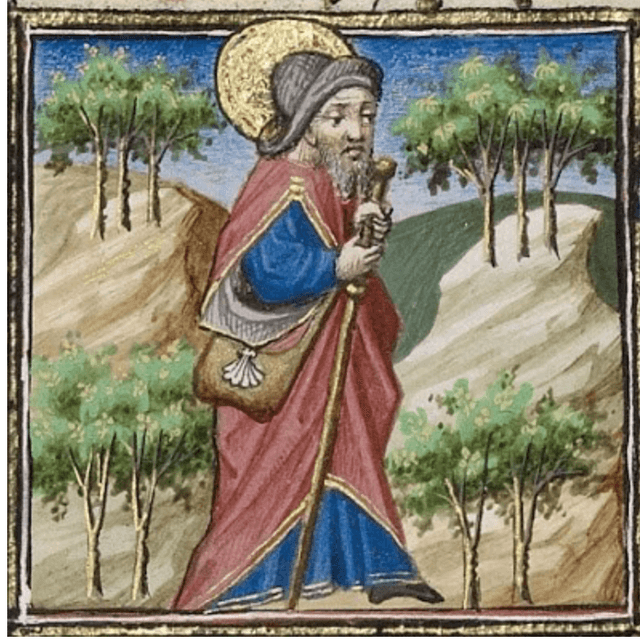
St. Bridget's journeys were governed by prayer, penance, obedience, and readiness for death. Holy places profit little when curiosity remains alive and self-will returns home unchanged. Ask whether your devotions are making you more faithful to duty, more patient beneath the Cross, and more obedient to God.
Thank the Father for giving His Son, adore the Word made flesh, and ask the Holy Ghost to form Mary's faithful consent in you.
Formation in True Devotion - Day 316: Review and Deepening: The Trinity's Order of Grace through Mary
“God the Father has not given His Only-begotten to the world except by Mary.”
The Father is the source of the mission of the Son, and the Son is the one Redeemer. Yet the Incarnation was accomplished in the virginal womb and with Mary's free consent. God entered His creation through the fiat of the humble Virgin He had prepared.
Do not separate Marian devotion from the mystery it serves. Every Hail Mary should deepen faith in the Incarnate Word; every Rosary should make His life, Passion, and glory more governing; every recourse to His Mother should end in more complete obedience to Him.
Ora — Begin with Prayer
Offer the day before spending it
Prayer gives the day its right beginning and its right end. Before work, conversation, news, or distraction claims the mind, adore the Blessed Trinity and offer every prayer, work, joy, suffering, and temptation to Jesus through Mary. Ask your Guardian Angel for help, and place the souls and needs entrusted to you beneath God's will.
Begin simply. Make the Morning Offering through the hands of Our Lady. Pray the Three Hail Marys for purity and final perseverance, ask your Guardian Angel to govern the senses and imagination, and name the soul or intention for which today's prayers and sacrifices will be offered. Do not rush these acts merely because they are familiar; let them place the whole day beneath God before the world begins to claim it.
O Lord, detach my heart from the city of comfort, applause, and self-rule. Order me toward Thy City, where truth, sacrifice, grace, and holiness reign.
Quote of the Day
“But to the called Jews and Greeks, Christ the power of God and the wisdom of God.”
Plain-language help for today - 1 unfamiliar term
18th Sunday after Pentecost is the principal observance today. The calendar also preserves St. Bridget, Widow on this date. The Breviary witness panel below comes from that secondary observance. That material adds another traditional lesson for the date; it does not replace the principal observance.
- Penance
- repentance expressed through prayer, self-denial, reparation, and a real turning away from sin.
Sunday Epistle and Gospel
The Church's two lessons form one rule of life.
18th Sunday after Pentecost - principal guide: St. Thomas Aquinas
The Epistle gives thanks for grace already received and directs hope toward final perseverance; the Gospel reveals the divine Physician who removes the soul's deeper paralysis and commands the restored man to rise. St. Paul teaches that every spiritual richness comes through Jesus Christ and must remain conformed to His testimony. Our Lord proves by a visible cure that He possesses the invisible authority to forgive sins. Grace is not given so that the pilgrim may remain where he fell, but so that he may be cleansed, strengthened, and found without mortal sin at the coming of Christ.
The Epistle
Enriched in Christ and confirmed unto the end
1 Corinthians 1:4-8
“Brethren, I give thanks to my God always for you, for the grace of God that is given you in Christ Jesus.”
“That in all things you are made rich in Him, in all utterance and in all knowledge, as the testimony of Christ was confirmed in you.”
“So that nothing is wanting to you in any grace, waiting for the manifestation of our Lord Jesus Christ, who also will confirm you unto the end without crime, in the day of the coming of our Lord Jesus Christ.”
St. Thomas begins with thanksgiving because the good found in the faithful is God's gift. St. Paul rejoices in their grace as in his own through the union of charity, yet he gives the glory to God, from whom it came through Jesus Christ. This also prepares the Corinthians to receive correction: their real gifts are acknowledged without allowing those gifts to conceal their disorders.
The faithful are made rich in Christ in utterance and knowledge, but neither eloquence nor learning is sound merely because it appears religious. St. Thomas insists that speech and knowledge are upright only when they agree with the testimony of Christ and when that testimony adheres firmly to the heart by faith. Every claimed insight, spiritual novelty, and persuasive voice must therefore be judged by the revealed Faith, never the Faith by them.
The abundance of gifts belongs to the Church as a body. Drawing upon St. Augustine, St. Thomas explains that the member who loves the unity to which he adheres possesses, without envy, the good given to another member; covetousness and envy separate, while charity joins. The Christian need not pretend to possess every office or gift personally. He must remain faithfully united to the Church in which Christ distributes what is necessary for the salvation of His members.
Present grace orders the soul toward the manifestation of Christ. St. Thomas explains that Christ confirms His faithful unto the end and that to be found 'without crime' means to be without mortal sin. This hope forbids both presumption and despair: divine assistance is abundant, yet the soul must persevere in grace, repent when it falls, go to confession, and remain ready for death and judgment.
The Gospel
The divine Physician forgives, restores, and commands
Matthew 9:1-8
“And behold they brought to Him one sick of the palsy lying in a bed: and Jesus seeing their faith, said to the man sick of the palsy: Be of good heart, son, thy sins are forgiven thee.”
“But that you may know that the Son of man hath power on earth to forgive sins (then said He to the man sick of the palsy): Arise, take up thy bed, and go into thy house.”
“And he arose, and went into his house. And the multitude seeing it, feared, and glorified God who had given such power to men.”
The paralytic cannot carry himself to Christ, but others bear him. St. Thomas sees in them those who carry a sinner toward God by prayer, admonition, instruction, and works of charity. Their faith does not make the sick man passive against his will; it places his misery before the Lord and teaches every Christian never to abandon another soul merely because that soul is presently weak or unable to advance alone.
The man seeks bodily healing, but Christ first gives the greater remedy: forgiveness of sins. The Gospel does not teach that every bodily illness is caused by a person's particular sin. It does teach that sin is the soul's true paralysis, depriving it of the life and movement of grace, and that spiritual healing must hold first place. Christ addresses the afflicted man tenderly as son and commands confidence before He commands movement.
The scribes reason correctly that God alone can forgive sins by His own authority, but they reason falsely because they see Christ's humanity and refuse His divinity. Our Lord answers both by knowing the hidden thoughts of their hearts and by making the paralytic rise at His word. The visible bodily cure proves the invisible spiritual act: the Son of man possesses on earth the divine authority to forgive sins.
The command is complete: arise, take up thy bed, and go into thy house. St. Thomas applies it to conversion: rise from sin by contrition, take up the bed through satisfaction and the disciplined bearing of what once mastered you, and return to the house of a guarded conscience and, finally, the eternal home. Forgiveness is not permission to resume the old captivity. The man once carried by his bed now carries it, because grace restores him for obedient action.
How the lessons belong together
The grace praised in the Epistle is displayed in the Gospel as Christ's effective gift. He does not merely encourage the paralytic; He forgives, commands, heals, and supplies the power by which the command is obeyed.
The testimony of Christ must be confirmed in the heart by faith. The scribes know a true doctrine—that God alone forgives sins—but reject the divine Person standing before them; Catholic formation requires both the revealed truth and obedient faith in Christ who reveals it.
To await Christ's manifestation without mortal sin is to live now beneath His judgment and mercy. The forgiven man rises immediately, while the faithful persevere through prayer, the sacraments, penance, duty, and renewed obedience after every fall.
The bearers and the paralytic reveal the communion of charity. Christians intercede, instruct, admonish, and help one another toward Christ, but Christ alone is the source of sanctifying grace and the divine authority by which sins are forgiven.
Sunday practice
Assist at Holy Mass and give thanks to God for every grace received through Jesus Christ. Examine whether your words, judgments, reading, and conduct agree with the testimony of Christ and the Catholic Faith. Renounce mortal sin, make a sincere act of contrition, go to confession, accept the satisfaction and amendment required by conversion, and fulfill every duty of your state in grace. Carry souls toward Christ through prayer, sound instruction, necessary admonition, patient assistance, and penance offered for their conversion. Ask for final perseverance, guard your conscience, and live prepared to meet Our Lord at death and at His judgment.
Today's Full Breviary Sermon or Proper Lesson
Christ takes weakness to make the weak strong.
Matins - Third Nocturn - 18th Sunday after Pentecost
The verified Breviary witness for this observance is identified below. A complete English transcription has not yet been admitted, so no excerpt or summary is presented as though it were the full appointed text.
St. Peter Chrysologus, Archbishop of Ravenna, Sermon 50
“Christ came to take our weakness upon Him, that He might make us partakers of His strength.”
- The Breviary reads the healing of the paralytic through the mystery of Christ's merciful condescension.
- St. Peter Chrysologus teaches that the Lord accepts human weakness, weariness, insults, and a true human home in order to heal men.
- The forgiveness of sins and the healing of infirmity are joined in the incarnate mercy of Christ.
Bring paralysis, shame, and weakness to Christ without bargaining. He does not heal from a distance of contempt, but by a mercy that entered our condition.
Walk with Holy Mother Church
Holy Mother Church has already begun praying. Enter her prayer.
Today the Roman year keeps 18th Sunday after Pentecost. Receive the observance from the Church's hands: first understand what is commemorated, then let its doctrine and worship shape the day.
Roman Martyrology
October 8
GT Bridget, widow, who, after visiting many holy places by the inspiration of the Holy Spirit, died at Rome on the 23d of July. Her body was taken to Sweden on the 7th of this month. — The same day, the birthday of the blessed Simeon, an aged man, who, as we read in the Gospel, took our Lord Jesus in his arms. — At Caesarea, in Palestine, in the reign of Decius, St. Reparata, virgin and martyr, who, refusing to sacrifice to idols, was subjected to various kinds of torments, and finally struck with the sword. Her soul was seen to leave her body in the shape of a dove, and ascend to heaven. — At Thessalonica, St. Demetrius, a proconsul, who, for having brought many to the faith of Christ, was pierced with spears by order of the emperor Maximian, and thus ended his martyrdom. — In the same place, St. Nestor, martyr. — At Seville, in Spain, St. Peter, martyr. — At Laodicea, in the time of Diocletian, St. Artemon, a priest, who gained the crown of martyrdom by fire. — In the diocese of Laon, St. Benedicta, virgin and martyr. — At Ancona, Saints Palatias and Laurentia, who were sent into exile in the persecution of Diocletian, under the governor Dion, and sank under the weight of toil and misery. — At Rouen, St. Evodius, bishop and confessor. — At Jerusalem, St. Pelagia, surnamed the Penitent.
Gospel of the Day
Thy sins are forgiven thee.
18th Sunday after Pentecost - Matthew 9:1-8
“That you may know that the Son of man hath power on earth to forgive sins.”
Let yourself be carried to Christ if you cannot walk strongly. He begins with the mercy the soul needs most.
Learn from Today's Saint or Feast
St. Bridget
Widow, pilgrim, and witness of holy counsel.
The Martyrology honors St. Bridget, widow, who visited many holy places by the inspiration of the Holy Ghost and died at Rome.
Her feast teaches that widowhood, pilgrimage, counsel, prayer, and penance can become a public witness when governed by obedience to God.
Let St. Bridget teach movement under obedience. A holy journey is not escape; it is the soul walking more directly toward God.
Breviary Witness for the Day
A widow led as pilgrim and witness.
Matins - St. Bridget
- The Breviary honors St. Bridget as widow and pilgrim, a woman of prayer whose life was turned toward holy places, counsel, and penance.
- Her witness teaches that revelations and devotion must remain ordered to conversion, obedience, and love of Christ.
Let pilgrimage become conversion. The point is not movement, novelty, or holy atmosphere, but a soul brought nearer to God.
Instruction from the Breviary
The Breviary witness for St. Bridget is part of the Church's daily teaching. It should not be read as a list of isolated facts. In the Divine Office, Scripture, the lives of the saints, doctrine, and the Church's prayer are placed together so that the mind learns what the Church remembers and the heart learns how a Catholic ought to judge and live.
Today's witness is gathered under A widow led as pilgrim and witness.. Its first point is this: The Breviary honors St. Bridget as widow and pilgrim, a woman of prayer whose life was turned toward holy places, counsel, and penance. Its next point develops the lesson: Her witness teaches that revelations and devotion must remain ordered to conversion, obedience, and love of Christ.
The practical instruction is: Let pilgrimage become conversion. The point is not movement, novelty, or holy atmosphere, but a soul brought nearer to God. Ask what truth is being guarded, what virtue is being praised, and what danger or forgetfulness is being corrected. In this way the Breviary becomes instruction for the present day rather than information that is quickly passed over.
- What truth does this Breviary witness teach or defend?
- What virtue does the Church place before me through it?
- What judgment or action should change because I have received this lesson?
The Pilgrim's Spiritual Conference
Truth and Charity Cannot Be Divided
Remain here for a little while. Receive today's Catholic truth as a child of Holy Mother Church; let it judge the heart, strengthen the will, and become an act offered to God.
The Church places this truth before you today: Charity loves the real good of the soul, and therefore cannot ask truth to be hidden, softened into falsehood, or traded for comfort. Do not hurry past it as though doctrine belonged only to books and controversies. A revealed truth is also a light by which the soul must judge its loyalties, its fears, its habits, and the duties immediately before it. The saints defended truth sharply when souls were endangered, yet their severity was ordered to salvation, not pride.
The grace to be practiced is Pilgrim obedience, drawn from today's saintly witness. Ask God for more than the natural appearance of this virtue. Temperament may make an action seem easy for a time, but supernatural virtue remains faithful because God is worthy of obedience, even when feeling offers no assistance and no one notices the cost. Practice faith in the Incarnation by treating the words, commandments, and mysteries of Jesus Christ as the words of God made man.
There is also an enemy to recognize: Resist the counterfeit charity that calls correction unkind while leaving souls in danger. Do not study this danger only in other people. Look quietly for the door by which it seeks entrance into your own soul - perhaps through delay, curiosity, resentment, human respect, attachment to comfort, or the desire to control the outcome. Dying to self today means choosing pilgrim obedience when pride, comfort, fear, resentment, or human respect asks for control.
Do the faithful act and entrust its fruit to divine Providence, God's wise and loving governance of all things. Place effort and outcome into Our Lady's hands so that the whole offering may be presented to her Divine Son. Confidence in God is not passivity: obey, pray, work, and accept that visible success, consolation, or immediate relief may not be given. God remains faithful when the duty is hidden and the outcome uncertain. Therefore, perform the duty that belongs to you, use the lawful means God has provided, and then surrender the fruit. Accept the humility of God's approach: He came in hiddenness and asks fidelity that may also remain hidden. Carry the mysteries of the Rosary through all your duties, returning often to the words and actions of the Incarnate Son.
The Church's witness
This truth manifests the Church's mark of holy. The witness placed beside it today is St. Bernard of Clairvaux.
Your resolution before God
Refuse every compromise with comfort when duty, prayer, or truth asks for fidelity.
The City of God and the city of man do not seek the same end.
Carry this word quietly. Return to it when distraction, temptation, or discouragement begins to scatter the soul.
The Little Rule of Fidelity
Keep the day within prayer.
These anchors do not change because the soul needs a stable rule more than a daily novelty. Open them when you are learning the rule or when your ordinary prayer has begun to loosen.
Show today's prayer and duty anchors
Begin with morning prayer
Adore the Blessed Trinity and offer the whole day to Jesus through Mary before other duties claim the mind.
Keep the Angelus
Pause morning, noon, and evening to remember the Incarnation.
Seek Our Lord in the Blessed Sacrament
Attend Holy Mass when duty permits; otherwise make a Spiritual Communion and renew desire for Jesus in the Blessed Sacrament.
Return to Jesus and Mary
Use frequent holy aspirations during work, waiting, suffering, and temptation.
Pray the Rosary
Keep the mysteries of Christ before the mind with Our Lady and learn to imitate what they contain.
End with night prayer and examen
Give thanks, confess faults, forgive injuries, make a practical amendment, and entrust the night to Our Lady.
The Pilgrim's Mirror
How shall I imitate Christ today?
“Regard not much who is with thee, nor who is against thee, but be this thy greatest study, that God may be with thee.”
Human approval is a poor compass. With Mary, seek first to be faithful to Jesus Christ and His Church, whether praise follows or not.
The desire to be supported can subtly alter judgment before you notice it. It softens a necessary word, delays a duty, or makes loneliness appear to be proof that fidelity was mistaken. Examine the act by Catholic truth and your real obligations; then leave the company or opposition of men in God's hands.
Today's Practice
Perform right acts without checking whether anyone noticed.
Before Night Falls
Return the completed day to God.
Give thanks before measuring the day by feeling or visible success. Ask light to see faults without discouragement, make an Act of Contrition, forgive injuries, and place tomorrow beneath divine Providence.
Ask whether devotion to Our Lady led you more deeply into adoration, obedience, and love of her Divine Son.
- For what grace or mercy should I thank God today?
- What sin, fault, neglected duty, or resistance to grace must I confess?
- What definite amendment will I carry into tomorrow?
Go Now, Pilgrim
Walk faithfully. Pray attentively. Bear your cross willingly. Love God above all things.
Holy Mother Church has gathered you around her prayer and truth; now carry what you have received into the duties of your state.
When this day is finished, may you have laid one more stone in the City of God.
You do not walk alone: remain beneath Our Lady's care as she leads you toward her Divine Son and the Heavenly Jerusalem.
God willing, we shall meet again at tomorrow's pilgrimage.
Source notes for this pilgrimage
Martyrology: The Roman Martyrology, Baltimore, 1916, John Murphy Company; local raw text lines 10588-10621.
- Gospel: Matthew 9:1-8, Douay-Rheims.
- Gospel: Traditional Roman Gospel for the 18th Sunday after Pentecost.
- Sunday Scripture conference: St. Andrew Daily Missal with Vespers for Sundays and Feasts, Dom Gaspar Lefebvre, O.S.B. (St. Paul, Minnesota: E. M. Lohmann Co., 1953), pp. 838-840: Eighteenth Sunday after Pentecost; Epistle, 1 Corinthians 1:4-8; Gospel, Matthew 9:1-8.
- Sunday Scripture conference: 1 Corinthians 1:4-8 and Matthew 9:1-8, Douay-Rheims, as printed in the 1953 St. Andrew Daily Missal.
- Sunday Scripture conference: St. Thomas Aquinas, Super I Epistolam B. Pauli ad Corinthios lectura, chapter 1, lecture 1; Turin text, 1953.
- Sunday Scripture conference: St. Thomas Aquinas, Super Evangelium S. Matthaei lectura, chapter 9, lecture 1; Turin text, 1951.
- Sunday Scripture conference: St. Thomas Aquinas, Catena aurea in Matthaeum, chapter 9, lecture 1; Turin text, 1953.
- Saint witness: St. Andrew Daily Missal, October 8.
- Saint witness: Roman Martyrology, 1916 Baltimore edition, October 8.
- Breviary witness: The Roman Breviary, translated by John, Marquess of Bute, 1908, vol. IV, Autumn, Matins for St. Bridget, printed pp. 635-636.
- Breviary witness: Roman Martyrology, 1916 Baltimore edition, October 8.
- Matins lesson: The Roman Breviary, translated by John, Marquess of Bute, 1908, vol. IV, Autumn, Third Nocturn for the 18th Sunday after Pentecost, lessons vii-ix.
- Matins lesson: Bute 1908 is used here as an accessible pre-Pius X Breviary witness and is cited distinctly from the 1936-1937 Benziger / Burns Oates edition.
Pilgrim's Mirror: Thomas à Kempis, The Imitation of Christ, translated by Richard Whitford, edited by Wilfrid Raynal, O.S.B. (Mount Vernon, N.Y.: Peter Pauper Press, c. 1947). Today's passage is at Book II, chapter 2, p. 55.
Marian formation: St. Louis-Marie de Montfort, True Devotion to the Blessed Virgin, translated by Fr. Frederick William Faber, 1941 Company of Mary edition, imprimatur September 26, 1949. Today's passage is at True Devotion to the Blessed Virgin, no. 16. The supplied 2010 PDF is used only as a digital transcription of that pre-1955 edition.
- Devotional rhythm: St. Andrew Daily Missal, Dom Gaspar Lefebvre, O.S.B., 1953 edition; proper Mass or devotion named in this entry.
- Devotional rhythm: Pope Leo XIII, Supremi Apostolatus Officio, September 1, 1883.
- Devotional rhythm: Matthew 28:19, Douay-Rheims.
- Faith point: Ephesians 4:15, Douay-Rheims.
- Faith point: St. Bernard of Clairvaux, sermons and letters on correction and charity.
- Marian atmosphere and imitation: Luke 1:38, 46-49; Luke 2:19; John 2:5; John 19:25-27; and John 3:30, Douay-Rheims.
- Authority and revolt: Exodus 5:2, Douay-Rheims.
- Daily examen: St. Ignatius of Loyola, Spiritual Exercises, Particular and Daily Examen.