The Daily Pilgrimage
“Now therefore, ye children, hear me: Blessed are they that keep my ways.” — Proverbs 8:32
Daily formation
2028-12-31
Receive the day as a child of Holy Mother Church. Beneath Our Lady's care, magnify Christ, obey God's commandments, fulfill the duties of your state in life, die to self, trust divine Providence, resist error, and return the whole day to God.
Holy Mother Church gathers her children around the Sacred Calendar, feeds them with truth, warns them against what wounds the soul, and teaches them to walk faithfully toward their heavenly home.
“Fear not, little flock, for it hath pleased your Father to give you a kingdom. […] For where your treasure is, there will your heart be also.”
Choose a date
Daily navigation
Sunday within the Octave of the Nativity
City of God in Exile
Sunday within the Octave of the Nativity
2028-12-31 - Christmastide - Semi-Double Sunday - white
Today
Sunday within the Octave of the Nativity
The Year Returned to God
Truth
The Sacrifice of the Mass Is the Heart of Catholic Worship
Catholic worship is centered on the true Sacrifice of the altar, offered by the priest in union with Christ the eternal High Priest.
Practice
Roman confession of Nicene faith.
Make a year-end examination, pray the Te Deum in thanksgiving, and write definite spiritual resolutions for the coming year.
Offering
To Jesus through Mary
Invite Our Lady to establish within you the dispositions of the predestinate and to drive out the habits of Esau.
The Pilgrim's Devotional Rhythm
Keep this month and this weekday in prayer.
The month's intention and the weekday remembrance gather the pilgrim's prayer into the devotional rhythm of the Church. In harmony with today's Mass, feast, and duties, they teach him to receive ordinary time from God and return it to Him in honor and intercession.
December intention
The Immaculate Conception of the Blessed Virgin Mary
As Advent prepares the Church for the Nativity, the Immaculate Conception displays God's victorious preparation of the Mother of the Redeemer. Ask for hatred of sin, purity of heart, and readiness to receive Christ.
Intention
For the preservation of baptismal innocence, the recovery of purity through repentance, and faithful preparation for the coming of Our Lord.
A faithful act
Remove voluntary occasions of sin and needless distractions as an Advent offering through Our Lady.
Prayer
O Mary, conceived without sin, pray for us who have recourse to thee, and prepare our souls for Jesus.
Sunday remembrance
The Most Holy Trinity
Sunday belongs first to the worship of God and the commemoration of the Resurrection. Adore the Father, the Son, and the Holy Ghost, from Whom every grace descends and to Whom the whole Christian life must return.
Intention
For the worthy worship of God, fidelity to Sunday Mass, and the restoration of Christian observance of the Lord's Day.
A faithful act
Protect the day from unnecessary servile work and give God an unhurried period of worship, doctrine, or spiritual reading.
Prayer
Glory be to the Father, and to the Son, and to the Holy Ghost, now and forever.
Good Morning, Pilgrim
Receive this day as a child of Holy Mother Church.
Pope St. Sylvester's feast recalls the Church emerging from persecution while still needing to confess the true divinity of Christ against Arian error. At year's end, gratitude must be joined to examination: graces received call for fidelity, sins forgiven call for amendment, and time spent calls the soul toward judgment. Return the whole year through Our Lady to Jesus Christ, and begin the next under His kingship.
Ask Our Lady to dwell in your soul and to order your memory, understanding, will, imagination, passions, senses, and works toward Jesus.
Formation in True Devotion - Day 29: Mary's Maternal Formation of Christ's Members
“God the Father wishes to have children by Mary till the consummation of the world; and He has said to her these words, In Jacob inhabita—‘Dwell in Jacob,’—that is to say, Make your dwelling and residence in My predestinated children, figured by Jacob, and not in the reprobate children of the devil, figured by Esau.”
The language of Jacob and Esau is a summons to conversion, not permission to presume that a devotional label guarantees salvation. A soul in which Mary dwells must welcome what she loves: Jesus Christ, the Catholic Faith, purity, humility, obedience, prayer, sacrifice, and perseverance.
Prepare an interior dwelling for her by expelling mortal sin, rejecting heresy, repairing scandal, and cleansing daily conduct of deliberate compromise. If you fall, return through contrition and the means appointed by Christ. Let the whole household of the soul come under her maternal order.
Ora — Begin with Prayer
Offer the day before spending it
Prayer gives the day its right beginning and its right end. Before work, conversation, news, or distraction claims the mind, adore the Blessed Trinity and offer every prayer, work, joy, suffering, and temptation to Jesus through Mary. Ask your Guardian Angel for help, and place the souls and needs entrusted to you beneath God's will.
Begin simply. Make the Morning Offering through the hands of Our Lady. Pray the Three Hail Marys for purity and final perseverance, ask your Guardian Angel to govern the senses and imagination, and name the soul or intention for which today's prayers and sacrifices will be offered. Do not rush these acts merely because they are familiar; let them place the whole day beneath God before the world begins to claim it.
O Lord, I thank Thee for every grace of this year, ask pardon for every sin and neglect, and place the year to come into Thy hands through Mary.
Quote of the Day
“Behold the handmaid of our Lord, be it done to me according to thy word.”
Plain-language help for today - 3 unfamiliar terms
Sunday within the Octave of the Nativity is the principal observance today. The calendar also preserves St. Sylvester I, Pope and Confessor on this date. The Breviary witness and Breviary sermon or lesson panels below come from that secondary observance. That material adds another traditional lesson for the date; it does not replace the principal observance.
- Octave
- an eight-day extension of a major feast, allowing the Church to continue praying over the same mystery.
- Clergy or cleric
- the Church's ordained ministers; a cleric is a deacon, priest, or bishop.
- Confessor
- in the traditional calendar, a male saint who openly professed the Faith by a holy life but was not killed as a martyr.
The full Breviary lessons preserve an older English translation. Read the modern explanation first; it identifies the people, event, and doctrine before the historical wording appears.
Today's Full Breviary Sermon or Proper Lesson
The Pope of peace, Nicea, and ordered Catholic life.
Matins - Second Nocturn - St. Sylvester I, Pope and Confessor
The complete appointed Breviary sermon or proper lessons verified for this observance are printed below. Where a Common supplies additional material, it is identified distinctly rather than presented as the proper text.
Roman Breviary, Proper lessons for St. Sylvester
“The holy and Catholic Faith was declared, and Arius and his followers condemned.”
- The Breviary remembers St. Sylvester as Pope after the peace granted to the Church under Constantine.
- His lessons connect the public building of churches, care for the Roman basilicas, the first Council of Nicea, and the condemnation of Arius.
- The office also recalls his ordinances for sacramental reverence, clerical order, the Lord's Day, and tenderness toward the poor.
Ask St. Sylvester for ordered Catholic strength: public worship, doctrinal clarity, reverence for the altar, care for the poor, and hatred of Arian confusion.
Complete Breviary Text
Fourth Lesson - Priest, Pope, and Defender of the Church
Silvester [I.] was a Roman by birth, and his father's name was Rufinus. He was brought up from a very early age under a Priest named Cyrinus, of whose teaching and example he was a diligent learner. In his thirtieth year he was ordained Priest of the Holy Roman Church by Pope Marcellinus. In the discharge of his duties he became a model for all the clergy, and, after the death of Melchiades, he succeeded him on the Papal throne, [in the year of our Lord 314,] during the reign of Constantine, who had already by public decree proclaimed peace to the Church of Christ. Hardly had he undertaken the government of the Church when he betook himself to stir up the Emperor to protect and propagate the religion of Christ. Constantine was fresh from his victory over his enemy Maxentius, on the Eve whereof the sign of the Cross had been revealed to him limned in light upon the sky; and there was an old story in the Church of Rome that it was Silvester who caused him to recognise the images of the Apostles, administered to him holy Baptism, and cleansed him from the leprosy of misbelief.
Fifth Lesson - Nicea, the Basilicas, and Sacred Order
The godly Emperor had already granted to Christ's faithful people permission to build public churches, and by the advice of Silvester he himself set them the example. He built many Basilicas, and magnificently adorned them with holy images, and gifted them with gifts and endowments. Among these there were, besides others, the Church of Christ the Saviour, hard by the Lateran Palace; that of St Peter, upon the Vatican Mount; that of St Paul, upon the road to Ostia; that of St Lawrence, in Verus' field; that of the Holy Cross at the Sessorian hall; that of St Peter and St Marcellinus, upon the Lavican Way; and that of St Agnes, upon the road to Mentana. Under this Pope was held the first Council of Nice, presided over by the Papal Legates, and in the Presence of Constantine, and three hundred and eighteen Bishops, where the holy and Catholic Faith was declared, and Arius and his followers condemned; which Council was finally confirmed by the Pope, at the request of all the assembled Fathers, in a synod held at Rome, where Arius was again condemned. This Pope issued many useful ordinances for the Church of God. He reserved to Bishops the right of consecrating the Holy Chrism; ordered Priests to anoint with Chrism the heads of the newly baptised; settled the officiating dress of Deacons as a dalmatic and a linen maniple; and forbade the consecration of the Sacrament of the Altar on anything but a linen corporal.
Sixth Lesson - Catholic Discipline and Tenderness toward the Poor
This Silvester is likewise said to have ordained that all persons taking Holy Orders should remain awhile in each grade before being promoted to a higher; that laymen should not go to law against the clergy; and that the clergy themselves were not to plead before civil tribunals. He decreed that the first and seventh days of the week should be called respectively the Lord's Day and the Sabbath, and the others, Second Day, Third Day, and so on. In this he confirmed the use of the word "Feria" for the weekdays, the which use had already begun in the Church. This word signifieth an "holiday," and pointeth to the duty of the clergy ever to lay aside all worldly labour, and leave themselves free to do continually the work of the Lord. The heavenly wisdom with which he ruled the Church of God, was joined in him to a singular holiness of life, and an inexhaustible tenderness towards the poor; in which matter he ordained that the wealthy clergy should each relieve a certain number of needy persons; and he also made arrangements for supplying the consecrated virgins with the necessaries of life. He lived as Pope twenty-one years, ten months and one day, and was buried in the cemetery of Priscilla on the Salarian Way, [in the year 335.] He held seven Advent ordinations, and made forty-two Priests, twenty-five Deacons, and sixty-five Bishops of various sees.
Walk with Holy Mother Church
Holy Mother Church has already begun praying. Enter her prayer.
Today the Roman year keeps Sunday within the Octave of the Nativity. Receive the observance from the Church's hands: first understand what is commemorated, then let its doctrine and worship shape the day.
Octave context
Within the Privileged Octave of the Nativity - Privileged Octave of the Third Order
Roman Martyrology
December 31
At Rome, the birthday of pope St. Silvester, who baptized the emperor Constantine the Great, and confirmed the Council of Nicaea. After performing many other holy deeds, he rested in peace. — Also, at Rome, on the Salarian road, in the cemetery of Priscilla, the holy martyrs Donata, Paulina, Rustica, Nominanda, Serotina, Hilaria and their companions. — At Sens, the blessed Sabinian, bishop, and Potentian, who being sent thither by the Roman Pontiff to preach, illustrated that metropolitan church by their confession and martyrdom. — In the same place, St. Columba, virgin and martyr, who after having triumphed over fire, was beheaded, in the persecution of the emperor Aurelian. — At Retiers, St. Hermes, exorcist. — At Catania, in Sicily, the martyrdom of the Saints Stephen, Pontian, Attains, Fabian, Cornelius, Sextus, Flos, Quinctian, Minervinus and Simplician. — The same day, St. Zoticus, Roman priest, who went to Constantinople, and took upon himself the care of orphans. — At Ravenna, St. Barbatian, priest and confessor. — The same day, St. Melania the Younger, who withdrew from Rome with her husband Pinian, and went to Jerusalem, where both embraced the religious life, she among the women consecrated to God, and he among the monks, and ended their career in peace. And in other places, many other holy martyrs, confessors, and virgins. Answer: Thanks be to God.
Gospel of the Day
A sign which shall be contradicted.
Sunday within the Octave of the Nativity - Luke 2:33-40
“This child is set for the fall, and for the resurrection of many in Israel, and for a sign which shall be contradicted.”
Hold the Child with Simeon's reverence. The same Jesus who consoles the heart also purifies it, and both are mercy.
Receive the Gospel with Holy Mother Church
The joy of Christmas already contains the prophecy of contradiction and the sword.
Holy Simeon and Anna show how faithful waiting recognizes Christ when He comes.
This Gospel corrects a danger that can quietly deform Catholic judgment: The sweet religion that wants Bethlehem without Calvary. Ask where that danger seeks your consent today, and answer it with the act Our Lord requires.
Learn from Today's Saint or Feast
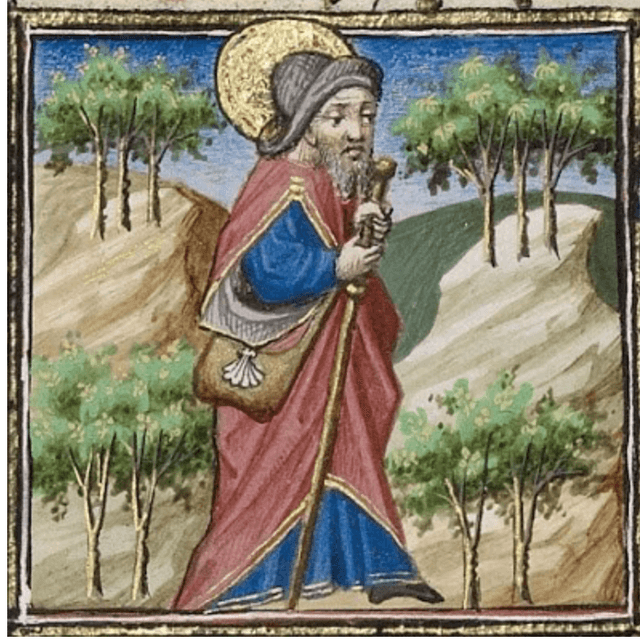
St. Sylvester I
Pope and confessor who confirmed Nicaea.
The Martyrology honors Pope St. Sylvester at Rome, remembering that he baptized the emperor Constantine the Great and confirmed the Council of Nicaea.
His feast closes the year with Roman confession of Christ's divinity, the public conversion of power, and the defense of orthodox doctrine against Arian denial.
Let St. Sylvester close the year with clarity. The passing of time matters less than whether Christ is confessed as true God and true King.
The Pilgrim's Spiritual Conference
The Sacrifice of the Mass Is the Heart of Catholic Worship
Remain here for a little while. Receive today's Catholic truth as a child of Holy Mother Church; let it judge the heart, strengthen the will, and become an act offered to God.
The Church places this truth before you today: Catholic worship is centered on the true Sacrifice of the altar, offered by the priest in union with Christ the eternal High Priest. Do not hurry past it as though doctrine belonged only to books and controversies. A revealed truth is also a light by which the soul must judge its loyalties, its fears, its habits, and the duties immediately before it. The same sacrificial worship belongs to the Church throughout the world; it is not a local invention or a merely human assembly rite.
The grace to be practiced is Roman confession of Nicene faith, drawn from today's saintly witness. Ask God for more than the natural appearance of this virtue. Temperament may make an action seem easy for a time, but supernatural virtue remains faithful because God is worthy of obedience, even when feeling offers no assistance and no one notices the cost. Practice interior order by rejecting every deliberate occasion of sin and governing the whole day according to faith and duty.
There is also an enemy to recognize: Resist every reduction of the Mass to a memorial meal, community symbol, or religious performance. Do not study this danger only in other people. Look quietly for the door by which it seeks entrance into your own soul - perhaps through delay, curiosity, resentment, human respect, attachment to comfort, or the desire to control the outcome. Dying to self today means choosing roman confession of Nicene faith when pride, comfort, fear, resentment, or human respect asks for control.
Do the faithful act and entrust its fruit to divine Providence, God's wise and loving governance of all things. Place effort and outcome into Our Lady's hands so that the whole offering may be presented to her Divine Son. Confidence in God is not passivity: obey, pray, work, and accept that visible success, consolation, or immediate relief may not be given. God remains faithful when the duty is hidden and the outcome uncertain. Therefore, perform the duty that belongs to you, use the lawful means God has provided, and then surrender the fruit. Permit the painful removal of attachments, habits, entertainments, and compromises that cannot remain in Mary's household. Make your home, speech, labor, recreation, prayer, and relationships fitting for the presence of the Mother of Jesus.
The Church's witness
This truth manifests the Church's mark of catholic. The witness placed beside it today is Council of Trent.
Your resolution before God
Make a year-end examination, pray the Te Deum in thanksgiving, and write definite spiritual resolutions for the coming year.
A Catholic ends the year with thanksgiving, contrition, and renewed fidelity to the true Christ.
Carry this word quietly. Return to it when distraction, temptation, or discouragement begins to scatter the soul.
The Little Rule of Fidelity
Keep the day within prayer.
These anchors do not change because the soul needs a stable rule more than a daily novelty. Open them when you are learning the rule or when your ordinary prayer has begun to loosen.
Show today's prayer and duty anchors
Begin with morning prayer
Adore the Blessed Trinity and offer the whole day to Jesus through Mary before other duties claim the mind.
Keep the Angelus
Pause morning, noon, and evening to remember the Incarnation.
Seek Our Lord in the Blessed Sacrament
Attend Holy Mass when duty permits; otherwise make a Spiritual Communion and renew desire for Jesus in the Blessed Sacrament.
Return to Jesus and Mary
Use frequent holy aspirations during work, waiting, suffering, and temptation.
Pray the Rosary
Keep the mysteries of Christ before the mind with Our Lady and learn to imitate what they contain.
End with night prayer and examen
Give thanks, confess faults, forgive injuries, make a practical amendment, and entrust the night to Our Lady.
The Pilgrim's Mirror
How shall I imitate Christ today?
“All that is in this world is vanity, but to love God and only to serve Him.”
Created things are good when they lead the soul to God and become dangerous when they claim the heart. Put the day's lesser goods beneath the one necessary end.
Vanity does not always announce itself through great ambition. It often appears as a small comfort you believe you cannot surrender, an opinion you must defend, or praise you continue to replay. Ask God to show you the attachment that is quietly asking to be treated as necessary.
Today's Practice
Renounce needless comforts whenever they compete with prayer, duty, or charity, and offer the sacrifices to God through Mary.
Before Night Falls
Return the completed day to God.
Give thanks before measuring the day by feeling or visible success. Ask light to see faults without discouragement, make an Act of Contrition, forgive injuries, and place tomorrow beneath divine Providence.
Examine what welcomed Our Lady's dispositions and what made the soul resemble Esau rather than Jacob.
- For what grace or mercy should I thank God today?
- What sin, fault, neglected duty, or resistance to grace must I confess?
- What definite amendment will I carry into tomorrow?
Go Now, Pilgrim
Walk faithfully. Pray attentively. Bear your cross willingly. Love God above all things.
Holy Mother Church has gathered you around her prayer and truth; now carry what you have received into the duties of your state.
When this day is finished, may you have laid one more stone in the City of God.
You do not walk alone: remain beneath Our Lady's care as she leads you toward her Divine Son and the Heavenly Jerusalem.
God willing, we shall meet again at tomorrow's pilgrimage.
Source notes for this pilgrimage
Martyrology: The Roman Martyrology, Baltimore, 1916, John Murphy Company; local raw text lines 13640-13676.
- Gospel: Luke 2:33-40, Douay-Rheims.
- Gospel: Traditional Roman Gospel for the Sunday within the Octave of the Nativity.
- Saint witness: St. Andrew Daily Missal, December 31.
- Saint witness: Roman Martyrology, 1916 Baltimore edition, December 31.
- Breviary witness: Roman Breviary, Matins lessons for December 31, St. Sylvester I.
- Breviary witness: Roman Martyrology, 1916 Baltimore edition, December 31.
- Matins lesson: The Roman Breviary, translated by John, Marquess of Bute, 1908, vol. I, Winter, Second Nocturn for St. Sylvester I, lessons iv-vi, printed pp. 307-308.
- Matins lesson: Bute 1908 is used here as an accessible pre-Pius X Breviary witness and is cited distinctly from the 1936-1937 Benziger / Burns Oates edition.
Pilgrim's Mirror: Thomas à Kempis, The Imitation of Christ, translated by Richard Whitford, edited by Wilfrid Raynal, O.S.B. (Mount Vernon, N.Y.: Peter Pauper Press, c. 1947). Today's passage is at Book I, chapter 1, p. 9.
Marian formation: St. Louis-Marie de Montfort, True Devotion to the Blessed Virgin, translated by Fr. Frederick William Faber, 1941 Company of Mary edition, imprimatur September 26, 1949. Today's passage is at True Devotion to the Blessed Virgin, no. 29. The supplied 2010 PDF is used only as a digital transcription of that pre-1955 edition.
- Octave context: St. Andrew Daily Missal, Division of the Ecclesiastical Year, p. ix.
- Devotional rhythm: St. Andrew Daily Missal, Dom Gaspar Lefebvre, O.S.B., 1953 edition; proper Mass or devotion named in this entry.
- Devotional rhythm: Genesis 3:15 and Luke 1:28, Douay-Rheims.
- Devotional rhythm: Matthew 28:19, Douay-Rheims.
- Faith point: Council of Trent, Session XXII, doctrine on the Sacrifice of the Mass.
- Faith point: Roman Catechism, treatment of the Holy Eucharist.
- Marian atmosphere and imitation: Luke 1:38, 46-49; Luke 2:19; John 2:5; John 19:25-27; and John 3:30, Douay-Rheims.
- Authority and revolt: Exodus 5:2, Douay-Rheims.
- Daily examen: St. Ignatius of Loyola, Spiritual Exercises, Particular and Daily Examen.