The Daily Pilgrimage
“Now therefore, ye children, hear me: Blessed are they that keep my ways.” — Proverbs 8:32
Daily formation
2030-02-07
Receive the day as a child of Holy Mother Church. Beneath Our Lady's care, magnify Christ, obey God's commandments, fulfill the duties of your state in life, die to self, trust divine Providence, resist error, and return the whole day to God.
Holy Mother Church gathers her children around the Sacred Calendar, feeds them with truth, warns them against what wounds the soul, and teaches them to walk faithfully toward their heavenly home.
“Fear not, little flock, for it hath pleased your Father to give you a kingdom. […] For where your treasure is, there will your heart be also.”
Choose a date
Daily navigation
St. Romuald, Abbot
City of God in Exile
St. Romuald, Abbot
2030-02-07 - Time after Epiphany - Double - white
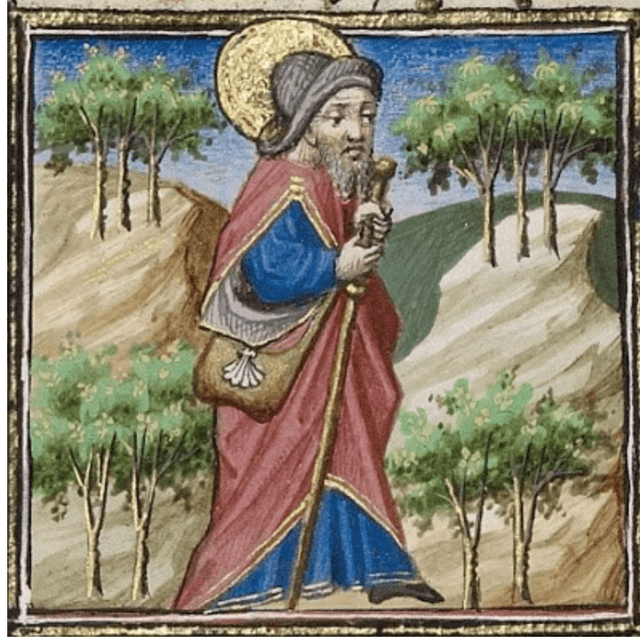
Today
St. Romuald, Abbot
The Coming of the King
Truth
The Faith Must Be Confessed Publicly
Catholic faith is not a private sentiment. It must be confessed, defended, and lived before men when duty requires it.
Practice
Recollected penance and monastic reform.
Obey God's commandments, fulfill your known duties, and receive just correction today as a direct answer to the temptation to say, 'I will not serve.'
Offering
To Jesus through Mary
Renew the total belonging established by Christ's Precious Blood and sealed in Baptism: you are not your own but entirely His.
The Pilgrim's Devotional Rhythm
Keep this month and this weekday in prayer.
The month's intention and the weekday remembrance gather the pilgrim's prayer into the devotional rhythm of the Church. In harmony with today's Mass, feast, and duties, they teach him to receive ordinary time from God and return it to Him in honor and intercession.
February intention
The Holy Family
At Nazareth, Jesus, Mary, and Joseph show how hidden duties become holy when they are performed in obedience and charity. This month asks the pilgrim to carry the order of Nazareth into his own home.
Intention
For Catholic homes, the preservation of marriage and family life, and families divided by sin, error, absence, or sorrow.
A faithful act
Perform your ordinary household duties promptly and without complaint for the good of those entrusted to you.
Prayer
Jesus, Mary, and Joseph, order our homes in truth, purity, obedience, and peace.
Thursday remembrance
The Most Blessed Sacrament
Thursday recalls the institution of the Holy Eucharist and the priesthood at the Last Supper. Adore Our Lord in the Blessed Sacrament and pray for priests, through whose consecrated ministry the Holy Sacrifice is offered.
Intention
For holy priests, worthy Communions, vocations, and reparation for neglect and sacrilege toward the Blessed Sacrament.
A faithful act
Make a visit or spiritual Communion and pray especially for priests by name.
Prayer
Jesus in the Most Blessed Sacrament, increase our faith, receive our reparation, and sanctify Thy priests.
Good Morning, Pilgrim
Receive this day as a child of Holy Mother Church.
The mystery of the coming of Christ teaches the pilgrim to wait without surrender, to recognize divine humility, and to adore the King where He truly appears. Sacred time trains hope, but hope must remain disciplined by doctrine and worship.
Renew your baptismal belonging to Jesus Christ and place body, soul, time, possessions, duties, suffering, life, and death beneath His ownership.
Formation in True Devotion - Day 68: Fundamental Truths of True Devotion
“We do not belong to ourselves, but, as the Apostle says, are entirely His, as His members and His slaves, whom He has bought at an infinitely dear price—the price of all His Blood.”
The Precious Blood establishes the measure of Christ's ownership and our value. Baptism transfers the soul from slavery under the devil into supernatural belonging to Jesus Christ, incorporating it into His Mystical Body and obliging it to glorify Him in body and soul. Redemption permits no autonomous province reserved for self.
Christ expects fruit: good works whose principle and end are in Him. Do not offer isolated religious moments while treating time, body, possessions, speech, labor, relationships, suffering, and death as private property. Everything bought by His Blood must bear fruit within His Church and for His glory.
Ora — Begin with Prayer
Offer the day before spending it
Prayer gives the day its right beginning and its right end. Before work, conversation, news, or distraction claims the mind, adore the Blessed Trinity and offer every prayer, work, joy, suffering, and temptation to Jesus through Mary. Ask your Guardian Angel for help, and place the souls and needs entrusted to you beneath God's will.
Begin simply. Make the Morning Offering through the hands of Our Lady. Pray the Three Hail Marys for purity and final perseverance, ask your Guardian Angel to govern the senses and imagination, and name the soul or intention for which today's prayers and sacrifices will be offered. Do not rush these acts merely because they are familiar; let them place the whole day beneath God before the world begins to claim it.
O Lord, keep me from Pharaoh's pride. When Moses delivered Thy command, Pharaoh asked, 'Who is the Lord, that I should hear his voice?' Do not let me answer Thy known will with the same refusal.
Quote of the Day
“We have an altar: whereof they have not power to eat which serve the tabernacle.”
Plain-language help for today - 3 unfamiliar terms
- Apparition
- a reported visible appearance of a heavenly person; the Church investigates such claims carefully, and approved private revelations never add to or replace God's public revelation in Scripture and Apostolic Tradition.
- Camaldolese
- a Benedictine monastic family founded by St. Romuald that joins common monastic life with a strong hermit tradition.
- Abbot
- the spiritual father and superior of a monastery.
Today's Full Breviary Sermon or Proper Lesson
The abbot whose bright countenance survived temptation and hardship.
Matins - Second Nocturn - St. Romuald, Abbot
The verified Breviary witness for this observance is identified below. A complete English transcription has not yet been admitted, so no excerpt or summary is presented as though it were the full appointed text.
Roman Breviary, Proper lessons for St. Romuald
“The more he was assailed by the wiles of Satan and the unkindness of men, the more did he exercise himself in lowliness.”
- The Breviary remembers a sermon and the apparition of St. Apollinaris awakening St. Romuald to monastic conversion and stricter discipline.
- Temptation and human unkindness did not make him bitter; they drove him further into humility, fasting, prayer, tears, and joyful contemplation of heaven.
- His ladder vision presents the Camaldolese vocation as ascent through ordered monastic life rather than escape into private spirituality.
Let opposition deepen prayer instead of hardening the face. St. Romuald teaches that austerity borne with heavenly joy can call others away from vanity and toward God.
Walk with Holy Mother Church
Holy Mother Church has already begun praying. Enter her prayer.
Today the Roman year keeps St. Romuald, Abbot. Receive the observance from the Church's hands: first understand what is commemorated, then let its doctrine and worship shape the day.
Roman Martyrology
February 7
The holy abbot Komuald, founder of the monks of -- Camaldoli, whose birthday is the 19th of June. — At London, in England, the birthday of the blessed bishop Augulus, who terminated his career by martyrdom, and deserved to receive an eternal recompense. — In Phrygia, St. Adaucus, martyr, an Italian of noble birth, who was honored by the emperors with almost every dignity. Whilst he was still discharging the office of quaestor, he was judged worthy of the crown of martyrdom for his defence of the faith. — Also, many holy martyrs, inhabitants of the same city, whose leader was Adaucus, just named. As they were all Christians, and persisted in the confession of the faith, they were burned to death by the emperor Galerius Maximian. — At Heracles, in the reign of Licinius, St. Theodore, a military officer, who was beheaded, after undergoing many torments, and went victoriously to heaven. — In Egypt, St. Moses, a venerable bishop, who first led a solitary life in the desert, and being afterwards made bishop, at the request of Mauvia, queen of the Saracens, converted to the faith the greater part of that barbarous people, and, rich in merits, passed peacefully to his reward. — At Lucca, in Tuscany, the demise of St. Eichard, king of England. — At Bologna, St. Juliana, widow.
Gospel of the Day
Every one that hath left house.
St. Romuald, Abbot - Matthew 19:27-29
“Every one that hath left house... for my name's sake, shall receive an hundredfold.”
Let St. Romuald make silence fruitful. Withdrawal from vanity is not wasted when the soul is seeking God.
Receive the Gospel with Holy Mother Church
Monastic renunciation bears witness that Christ is worth more than comfort, noise, and self-rule.
St. Romuald teaches that reform begins in a life recollected before God.
Silence is not emptiness when it is kept for God. It gives the soul room to hear, repent, and obey.
This Gospel corrects a danger that can quietly deform Catholic judgment: The activism that wants reform without silence, penance, or personal conversion. Ask where that danger seeks your consent today, and answer it with the act Our Lord requires.
Learn from Today's Saint or Feast
St. Romuald
Abbot and reformer of solitary discipline.
St. Romuald, founder of the Camaldolese, renewed monastic life by uniting solitude, penance, obedience, and praise of God.
His witness teaches that reform begins with the conversion of life: silence, discipline, and withdrawal from vanity are not flight from charity but preparation for pure love of God.
Ask St. Romuald for a reformed heart. The soul cannot repair much outside itself while refusing order within.
Breviary Witness for the Day
The solitude that reforms.
Matins - St. Romuald, Abbot
- The Breviary honors St. Romuald as abbot and reformer, father of the Camaldolese way of solitude, penance, and praise.
- His witness teaches that reform begins in personal conversion, where silence and discipline make room for God.
Let solitude become ordered prayer, not escape. A reformed life begins by allowing God to govern the hidden places.
Instruction from the Breviary
The Breviary witness for St. Romuald, Abbot is part of the Church's daily teaching. It should not be read as a list of isolated facts. In the Divine Office, Scripture, the lives of the saints, doctrine, and the Church's prayer are placed together so that the mind learns what the Church remembers and the heart learns how a Catholic ought to judge and live.
Today's witness is gathered under The solitude that reforms.. Its first point is this: The Breviary honors St. Romuald as abbot and reformer, father of the Camaldolese way of solitude, penance, and praise. Its next point develops the lesson: His witness teaches that reform begins in personal conversion, where silence and discipline make room for God.
The practical instruction is: Let solitude become ordered prayer, not escape. A reformed life begins by allowing God to govern the hidden places. Ask what truth is being guarded, what virtue is being praised, and what danger or forgetfulness is being corrected. In this way the Breviary becomes instruction for the present day rather than information that is quickly passed over.
- What truth does this Breviary witness teach or defend?
- What virtue does the Church place before me through it?
- What judgment or action should change because I have received this lesson?
The Pilgrim's Spiritual Conference
The Faith Must Be Confessed Publicly
A hidden prayer can be holy; a hidden faith chosen to avoid the cost of confession is another matter. Christ sends His Church to teach nations, not merely to console individuals who keep His name for private use. Public witness need not be loud, argumentative, or self-important. It must be truthful when silence would tell others that error is harmless.
Consider the next conversation in which you may be tempted to let a false claim pass for fear of being disliked. What can you say plainly, with charity and without exaggeration? Courage does not require knowing every answer. It requires refusing to make your fear the measure of the Faith.
Your resolution before God
Prepare one simple, accurate sentence about the Faith that you will not hide when duty calls for it.
The root of revolt is refusal to hear God.
The Little Rule of Fidelity
Keep the day within prayer.
These anchors do not change because the soul needs a stable rule more than a daily novelty. Open them when you are learning the rule or when your ordinary prayer has begun to loosen.
Show today's prayer and duty anchors
Begin with morning prayer
Adore the Blessed Trinity and offer the whole day to Jesus through Mary before other duties claim the mind.
Keep the Angelus
Pause morning, noon, and evening to remember the Incarnation.
Seek Our Lord in the Blessed Sacrament
Attend Holy Mass when duty permits; otherwise make a Spiritual Communion and renew desire for Jesus in the Blessed Sacrament.
Return to Jesus and Mary
Use frequent holy aspirations during work, waiting, suffering, and temptation.
Pray the Rosary
Keep the mysteries of Christ before the mind with Our Lady and learn to imitate what they contain.
End with night prayer and examen
Give thanks, confess faults, forgive injuries, make a practical amendment, and entrust the night to Our Lady.
The Pilgrim's Mirror
How shall I imitate Christ today?
“It is good that we have sometime griefs and adversities, for they drive a man to behold himself, and to see that he is here but as in an exile, and be learned thereby to know that he ought not to put his trust in any worldly thing.”
Adversity is not good because pain is pleasant or because every injustice should be left unopposed. It becomes profitable when Providence uses it to break an illusion: that earthly comfort is secure, that human approval can sustain the soul, or that personal strength is sufficient.
When something unsettles you today, do not look only for the quickest escape. Ask what false support has been exposed. Then fulfill the duty the situation requires and place the shaken part of the heart more firmly in God, who alone cannot be taken from you.
Today's Practice
When disappointments arrive, ask what earthly trusts they expose before seeking consolation.
Before Night Falls
Return the completed day to God.
Give thanks before measuring the day by feeling or visible success. Ask light to see faults without discouragement, make an Act of Contrition, forgive injuries, and place tomorrow beneath divine Providence.
Return all fruits to the Redeemer whose Blood purchased you and repent wherever you lived, worked, or chose as though you were your own.
- For what grace or mercy should I thank God today?
- What sin, fault, neglected duty, or resistance to grace must I confess?
- What definite amendment will I carry into tomorrow?
Go Now, Pilgrim
Walk faithfully. Pray attentively. Bear your cross willingly. Love God above all things.
Holy Mother Church has gathered you around her prayer and truth; now carry what you have received into the duties of your state.
When this day is finished, may you have laid one more stone in the City of God.
You do not walk alone: remain beneath Our Lady's care as she leads you toward her Divine Son and the Heavenly Jerusalem.
God willing, we shall meet again at tomorrow's pilgrimage.
Source notes for this pilgrimage
Martyrology: The Roman Martyrology, Baltimore, 1916, John Murphy Company; local raw text lines 1682-1715.
- Gospel: Matthew 19:27-29, Douay-Rheims.
- Gospel: Traditional Roman Gospel from the common of abbots.
- Saint witness: St. Andrew Daily Missal, February 7.
- Saint witness: Roman Martyrology, 1916 Baltimore edition, February 7.
- Breviary witness: Roman Breviary, Matins lessons for February 7, St. Romuald.
- Breviary witness: St. Andrew Daily Missal, February 7.
- Matins lesson: The Roman Breviary, translated by John, Marquess of Bute, 1908, vol. I, Winter, Second Nocturn for St. Romuald, lessons iv-vi, printed pp. 753-754.
- Matins lesson: Bute 1908 is used here as an accessible pre-Pius X Breviary witness and is cited distinctly from the 1936-1937 Benziger / Burns Oates edition.
Pilgrim's Mirror: Thomas à Kempis, The Imitation of Christ, translated by Richard Whitford, edited by Wilfrid Raynal, O.S.B. (Mount Vernon, N.Y.: Peter Pauper Press, c. 1947). Today's passage is at Book I, chapter 12, p. 20.
Marian formation: St. Louis-Marie de Montfort, True Devotion to the Blessed Virgin, translated by Fr. Frederick William Faber, 1941 Company of Mary edition, imprimatur September 26, 1949. Today's passage is at True Devotion to the Blessed Virgin, no. 68. The supplied 2010 PDF is used only as a digital transcription of that pre-1955 edition.
- Devotional rhythm: St. Andrew Daily Missal, Dom Gaspar Lefebvre, O.S.B., 1953 edition; proper Mass or devotion named in this entry.
- Devotional rhythm: Luke 2:51-52, Douay-Rheims.
- Devotional rhythm: 1 Corinthians 11:23-29, Douay-Rheims.
- Faith point: St. Athanasius, defense of Nicene faith.
- Faith point: Baltimore Catechism, lessons on faith and confession of faith.
- Marian atmosphere and imitation: Luke 1:38, 46-49; Luke 2:19; John 2:5; John 19:25-27; and John 3:30, Douay-Rheims.
- Authority and revolt: Exodus 5:2, Douay-Rheims.
- Daily examen: St. Ignatius of Loyola, Spiritual Exercises, Particular and Daily Examen.