The Daily Pilgrimage
“Now therefore, ye children, hear me: Blessed are they that keep my ways.” — Proverbs 8:32
Daily formation
2030-12-11
Receive the day as a child of Holy Mother Church. Beneath Our Lady's care, magnify Christ, obey God's commandments, fulfill the duties of your state in life, die to self, trust divine Providence, resist error, and return the whole day to God.
Holy Mother Church gathers her children around the Sacred Calendar, feeds them with truth, warns them against what wounds the soul, and teaches them to walk faithfully toward their heavenly home.
“Fear not, little flock, for it hath pleased your Father to give you a kingdom. […] For where your treasure is, there will your heart be also.”
Choose a date
Daily navigation
St. Damasus I, Pope and Confessor
City of God in Exile
St. Damasus I, Pope and Confessor
2030-12-11 - Advent - Semi-Double - white
Today
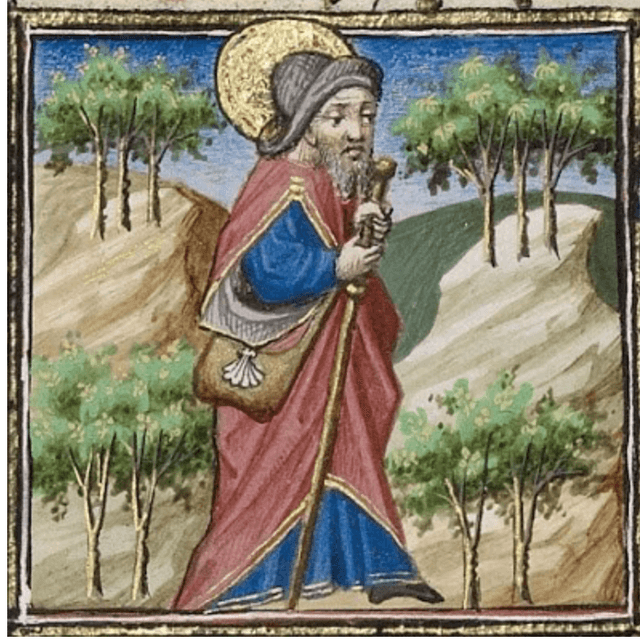
St. Damasus I, Pope and Confessor
The Memory of Martyrs and the Rule of Faith
Truth
Hold the Traditions
Apostolic tradition is not nostalgia. It is the handing down of what the Church received from Christ and the Apostles.
Practice
Roman fidelity to doctrine and martyrs.
Read a brief account of a Roman martyr and ask what truth or duty you must hold with greater courage.
Offering
To Jesus through Mary
With Mary, turn from outward display toward the hidden sanctuary where God judges the heart.
The Pilgrim's Devotional Rhythm
Keep this month and this weekday in prayer.
The month's intention and the weekday remembrance gather the pilgrim's prayer into the devotional rhythm of the Church. In harmony with today's Mass, feast, and duties, they teach him to receive ordinary time from God and return it to Him in honor and intercession.
December intention
The Immaculate Conception of the Blessed Virgin Mary
As Advent prepares the Church for the Nativity, the Immaculate Conception displays God's victorious preparation of the Mother of the Redeemer. Ask for hatred of sin, purity of heart, and readiness to receive Christ.
Intention
For the preservation of baptismal innocence, the recovery of purity through repentance, and faithful preparation for the coming of Our Lord.
A faithful act
Remove voluntary occasions of sin and needless distractions as an Advent offering through Our Lady.
Prayer
O Mary, conceived without sin, pray for us who have recourse to thee, and prepare our souls for Jesus.
Wednesday remembrance
St. Joseph
Midweek, turn to St. Joseph, whose hidden labor guarded Jesus and Mary. He teaches authority without self-importance, work without complaint, and silence joined to decisive obedience.
Intention
For fathers, laborers, families, the protection of the Church, and those approaching death.
A faithful act
Do necessary tasks thoroughly without seeking notice or praise.
Prayer
St. Joseph, patron of the universal Church, guard our homes and obtain for us purity, courage, and a holy death.
Good Morning, Pilgrim
Receive this day as a child of Holy Mother Church.
Pope St. Damasus honored the Roman martyrs and labored for the Church's fidelity amid doctrinal conflict. A Catholic memory is not nostalgia: it receives the testimony of those who died rather than alter the Faith. Pray that reverence for holy places, Scripture, and the saints may strengthen you against the rootlessness by which novelty gains power.
Ask Our Lady to guard the intention beneath today's prayer and labor.
Formation in True Devotion - Day 11: True Praise beneath the Majesty of God
“All the glory of the King's daughter is within.”
The world judges by what can be displayed, counted, and applauded. God sees the interior order from which a faithful act proceeds. Our Lady's glory is within because her faith, purity, charity, and consent belong wholly to Him before they become visible in any outward work.
Do not use the interior life as an excuse for neglecting outward Catholic duty; Mary obeyed in deed. But begin where the deed receives its worth. Purify the intentions of your prayers and works today. Let them be done because God is God, not because the acts will preserve an image of yourself.
Ora — Begin with Prayer
Offer the day before spending it
Prayer gives the day its right beginning and its right end. Before work, conversation, news, or distraction claims the mind, adore the Blessed Trinity and offer every prayer, work, joy, suffering, and temptation to Jesus through Mary. Ask your Guardian Angel for help, and place the souls and needs entrusted to you beneath God's will.
Begin simply. Make the Morning Offering through the hands of Our Lady. Pray the Three Hail Marys for purity and final perseverance, ask your Guardian Angel to govern the senses and imagination, and name the soul or intention for which today's prayers and sacrifices will be offered. Do not rush these acts merely because they are familiar; let them place the whole day beneath God before the world begins to claim it.
O Lord, through Pope St. Damasus, preserve the Apostolic See in the received Faith and make the witness of the martyrs fruitful in me.
Quote of the Day
“For I do not seek to understand that I may believe, but I believe in order to understand.”
Plain-language help for today - 3 unfamiliar terms
- Martyr
- a Christian who was killed rather than deny Christ or abandon the Faith.
- Confessor
- in the traditional calendar, a male saint who openly professed the Faith by a holy life but was not killed as a martyr.
- Apostolic
- belonging to the faith, mission, teaching, or authority handed down from Christ through the apostles.
The full Breviary lessons preserve an older English translation. Read the modern explanation first; it identifies the people, event, and doctrine before the historical wording appears.
Today's Full Breviary Sermon or Proper Lesson
The Roman keeper of Scripture, psalmody, and martyr memory.
Matins - Second Nocturn - St. Damasus I, Pope and Confessor
The complete appointed Breviary sermon or proper lessons verified for this observance are printed below. Where a Common supplies additional material, it is identified distinctly rather than presented as the proper text.
Roman Breviary, Proper lessons for St. Damasus I
“A man of eminence and of great learning in the Scriptures.”
- The Breviary remembers Pope St. Damasus as a Scriptural scholar who defended Nicaea and opposed the errors of Eunomius, Macedonius, and the assembly of Rimini.
- His Roman care joined doctrine to worship and memory: he adorned the resting places of the Apostles, honored martyrs in verse, and strengthened the singing of the Psalms by alternate choirs.
- His direction to St. Jerome concerning the New Testament shows that fidelity receives, guards, and transmits sacred texts rather than treating them as private possessions.
Let St. Damasus teach a Catholic memory nourished by Scripture, psalmody, and the martyrs. Error thrives where the faithful forget what they have received.
Complete Breviary Text
Fourth Lesson - Defender of Nicaea against Arian Error
Damasus was a Spaniard, a man of eminence and of great learning in the Scriptures, and was elected to the Chair of Peter in the year of our Lord, 366. In 381 he convoked the First Council of Constantinople, wherein he crushed the wicked heresy of Eunomius and Macedonius. He confirmed the condemnation of the Assembly, at Rimini, which condemnation had already been pronounced by Liberius. This Assembly of Rimini was that in which, to use the language of St Jerome, Valens and Ursacius brought it about through trickery that the Faith of Nice was abrogated by mob law, and the world afterwards groaned in amazement to find itself Arian.
Fifth Lesson - Churches, Martyrs, and Sacred Learning
This Pope built two Basilicas, first, St Lawrence's, near Pompey's Theatre, which he magnificently enriched, and endowed with houses and farms; and, secondly, another, over the Catacombs on the Road to Ardea. He also consecrated the Platonia, where the bodies of St Peter and St Paul lay for some time, and decorated it with elegant inscriptions in poetry composed by himself. He wrote on the subject of virginity both in prose and verse, and likewise many other poems on various subjects.
Sixth Lesson - Psalmody, Scripture, and Roman Order
He ordained that false accusers should be punished for the offences which they had falsely laid to the charge of their neighbours. He established the usage, which already prevailed in many churches, of singing the Psalms, both by day and by night, by alternate choirs, and of adding at the end of each Psalm the words, "Glory be to the Father, and to the Son, and to the Holy Ghost." It was at his command that St Jerome revised the translation of the New Testament to accord with the Greek text. He ruled the Church for seventeen years, two months, and twenty-six days. He held five Advent ordinations, wherein he ordained thirty-one Priests, eleven Deacons, and sixty-two Bishops for divers Sees. At length he fell asleep in the Lord, in the reign of Theodosius the Elder, upon the 10th day of December, in the year 384, being aged nearly eighty years, and full of righteousness, truth, and judgment. He was buried beside his mother and sister in the Church which he had himself founded on the Road to Ardea. His reliques were afterwards taken to the Basilica of St Lawrence, which is thence sometimes called "San Lorenzo in Damaso."
Walk with Holy Mother Church
Holy Mother Church has already begun praying. Enter her prayer.
Today the Roman year keeps St. Damasus I, Pope and Confessor. Receive the observance from the Church's hands: first understand what is commemorated, then let its doctrine and worship shape the day.
Octave context
Within the Common Octave of the Immaculate Conception - Common Octave
Roman Martyrology
December 11
At Rome, St. Damasus, pope and confessor, who condemned the heresiarch Apollinaris, and restored to his see Peter, bishop of Alexandria, who had been driven from it. He also discovered the bodies of many holy martyrs, and wrote verses in their honor. — Also, at Rome, St. Thrason, who was arrested by order of Maximian for devoting his wealth to the support of the Christians who labored in the baths and at other public works, or were confined in prison. He was crowned with martyrdom with two others, Pontian and Prsetextatus. — At Amiens, the holy martyrs Victoricus and Fuscian, under the same emperor. By order of the governor Bictiovarus, they had iron pins driven into their ears and nostrils, heated nails into their temples, and arrows into their whole bodies. Being beheaded with St. Gentian, their host, they went to our Lord. — In Persia, St. Barsabas, martyr. — In Spain, St. Eutychius, martyr. — At Piacenza, St. Sabinus, a bishop renowned for miracles. — At Constantinople, St. Daniel the Stylite.
Learn from Today's Saint or Feast
St. Damasus I
Pope and confessor who honored martyrs and condemned error.
The Martyrology honors Pope St. Damasus, who condemned the heresiarch Apollinaris, restored Peter of Alexandria to his see, discovered the bodies of many holy martyrs, and wrote verses in their honor.
His feast teaches Roman care for doctrine and memory. The Church guards the faith by condemning error and honoring those who shed blood for Christ.
Ask St. Damasus for a Catholic memory. A Church that remembers her martyrs will be less likely to make peace with error.
The Pilgrim's Spiritual Conference
Hold the Traditions
Remain here for a little while. Receive today's Catholic truth as a child of Holy Mother Church; let it judge the heart, strengthen the will, and become an act offered to God.
The Church places this truth before you today: Apostolic tradition is not nostalgia. It is the handing down of what the Church received from Christ and the Apostles. Do not hurry past it as though doctrine belonged only to books and controversies. A revealed truth is also a light by which the soul must judge its loyalties, its fears, its habits, and the duties immediately before it. Tradition protects the faithful from the tyranny of the present moment and from teachers who mistake novelty for life.
The grace to be practiced is Roman fidelity to doctrine and martyrs, drawn from today's saintly witness. Ask God for more than the natural appearance of this virtue. Temperament may make an action seem easy for a time, but supernatural virtue remains faithful because God is worthy of obedience, even when feeling offers no assistance and no one notices the cost. Practice purity of intention by choosing God's glory before praise, appearance, or self-satisfaction.
There is also an enemy to recognize: Resist innovation that claims continuity while contradicting what was handed down. Do not study this danger only in other people. Look quietly for the door by which it seeks entrance into your own soul - perhaps through delay, curiosity, resentment, human respect, attachment to comfort, or the desire to control the outcome. Dying to self today means choosing roman fidelity to doctrine and martyrs when pride, comfort, fear, resentment, or human respect asks for control.
Do the faithful act and entrust its fruit to divine Providence, God's wise and loving governance of all things. Place effort and outcome into Our Lady's hands so that the whole offering may be presented to her Divine Son. Confidence in God is not passivity: obey, pray, work, and accept that visible success, consolation, or immediate relief may not be given. God remains faithful when the duty is hidden and the outcome uncertain. Therefore, perform the duty that belongs to you, use the lawful means God has provided, and then surrender the fruit. Accept that the holiest part of an act may remain unseen and unrewarded by men. Before each important duty, name the intention plainly: for God's glory and the salvation or good of souls.
The Church's witness
This truth manifests the Church's mark of apostolic. The witness placed beside it today is St. Paul.
Your resolution before God
Read a brief account of a Roman martyr and ask what truth or duty you must hold with greater courage.
The Church remembers her martyrs in order to believe and persevere as they did.
Carry this word quietly. Return to it when distraction, temptation, or discouragement begins to scatter the soul.
The Little Rule of Fidelity
Keep the day within prayer.
These anchors do not change because the soul needs a stable rule more than a daily novelty. Open them when you are learning the rule or when your ordinary prayer has begun to loosen.
Show today's prayer and duty anchors
Begin with morning prayer
Adore the Blessed Trinity and offer the whole day to Jesus through Mary before other duties claim the mind.
Keep the Angelus
Pause morning, noon, and evening to remember the Incarnation.
Seek Our Lord in the Blessed Sacrament
Attend Holy Mass when duty permits; otherwise make a Spiritual Communion and renew desire for Jesus in the Blessed Sacrament.
Return to Jesus and Mary
Use frequent holy aspirations during work, waiting, suffering, and temptation.
Pray the Rosary
Keep the mysteries of Christ before the mind with Our Lady and learn to imitate what they contain.
End with night prayer and examen
Give thanks, confess faults, forgive injuries, make a practical amendment, and entrust the night to Our Lady.
The Pilgrim's Mirror
How shall I imitate Christ today?
Formation in The Imitation of Christ - Day 11: Book I - Amendment of Life
“If we would every year overcome one vice, we should anon come to perfection.”
Thomas à Kempis does not flatter the soul with the promise of instant perfection. He asks for patient warfare against a definite vice. Much spiritual discouragement comes from trying vaguely to become holy while refusing to name the repeated fault through which self-will governs ordinary life.
Choose the vice by its actual frequency, not by how dramatic its name appears. It may be complaint, delay, curiosity, harsh judgment, vanity, impurity of thought, or refusal of prayer. Place it before God without excuse, ask Our Lady for the contrary virtue, and begin with its next small occasion.
Today's Practice
Name your recurring vice and write down the contrary acts you will make whenever it appears.
Before Night Falls
Return the completed day to God.
Give thanks before measuring the day by feeling or visible success. Ask light to see faults without discouragement, make an Act of Contrition, forgive injuries, and place tomorrow beneath divine Providence.
Examine not only what you did, but why you desired to do it. Give every mixed intention to Our Lady for purification.
- For what grace or mercy should I thank God today?
- What sin, fault, neglected duty, or resistance to grace must I confess?
- What definite amendment will I carry into tomorrow?
Go Now, Pilgrim
Walk faithfully. Pray attentively. Bear your cross willingly. Love God above all things.
Holy Mother Church has gathered you around her prayer and truth; now carry what you have received into the duties of your state.
When this day is finished, may you have laid one more stone in the City of God.
You do not walk alone: remain beneath Our Lady's care as she leads you toward her Divine Son and the Heavenly Jerusalem.
God willing, we shall meet again at tomorrow's pilgrimage.
Source notes for this pilgrimage
Martyrology: The Roman Martyrology, Baltimore, 1916, John Murphy Company; local raw text lines 12930-12954.
- Saint witness: St. Andrew Daily Missal, December 11.
- Saint witness: Roman Martyrology, 1916 Baltimore edition, December 11.
- Breviary witness: Roman Breviary, Matins lessons for December 11, St. Damasus I.
- Breviary witness: Roman Martyrology, 1916 Baltimore edition, December 11.
- Matins lesson: The Roman Breviary, translated by John, Marquess of Bute, 1908, vol. I, Winter, Second Nocturn for St. Damasus I, lessons iv-vi, printed pp. 646-647.
- Matins lesson: Bute 1908 is used here as an accessible pre-Pius X Breviary witness and is cited distinctly from the 1936-1937 Benziger / Burns Oates edition.
Pilgrim's Mirror: Thomas à Kempis, The Imitation of Christ, translated by Richard Whitford, edited by Wilfrid Raynal, O.S.B. (Mount Vernon, N.Y.: Peter Pauper Press, c. 1947). Today's passage is at Book I, chapter 11, p. 20.
Marian formation: St. Louis-Marie de Montfort, True Devotion to the Blessed Virgin, translated by Fr. Frederick William Faber, 1941 Company of Mary edition, imprimatur September 26, 1949. Today's passage is at True Devotion to the Blessed Virgin, no. 11, citing Psalm 44:14. The supplied 2010 PDF is used only as a digital transcription of that pre-1955 edition.
- Octave context: St. Andrew Daily Missal, Liturgical Calendar, p. xxviii.
- Devotional rhythm: St. Andrew Daily Missal, Dom Gaspar Lefebvre, O.S.B., 1953 edition; proper Mass or devotion named in this entry.
- Devotional rhythm: Genesis 3:15 and Luke 1:28, Douay-Rheims.
- Devotional rhythm: Matthew 1:19-24, Douay-Rheims.
- Faith point: 2 Thessalonians 2:14-15, Douay-Rheims.
- Faith point: Council of Trent, Session IV.
- Marian atmosphere and imitation: Luke 1:38, 46-49; Luke 2:19; John 2:5; John 19:25-27; and John 3:30, Douay-Rheims.
- Authority and revolt: Exodus 5:2, Douay-Rheims.
- Daily examen: St. Ignatius of Loyola, Spiritual Exercises, Particular and Daily Examen.