The Daily Pilgrimage
“Now therefore, ye children, hear me: Blessed are they that keep my ways.” — Proverbs 8:32
Daily formation
2030-12-16
Receive the day as a child of Holy Mother Church. Beneath Our Lady's care, magnify Christ, obey God's commandments, fulfill the duties of your state in life, die to self, trust divine Providence, resist error, and return the whole day to God.
Holy Mother Church gathers her children around the Sacred Calendar, feeds them with truth, warns them against what wounds the soul, and teaches them to walk faithfully toward their heavenly home.
“Fear not, little flock, for it hath pleased your Father to give you a kingdom. […] For where your treasure is, there will your heart be also.”
Choose a date
Daily navigation
St. Eusebius, Bishop and Martyr
City of God in Exile
St. Eusebius, Bishop and Martyr
2030-12-16 - Advent - Semi-Double - red
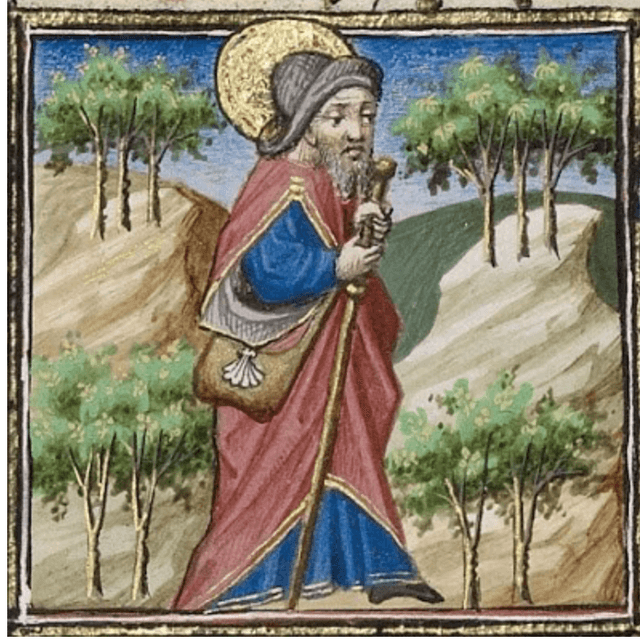
Today
St. Eusebius, Bishop and Martyr
A Bishop Exiled for the Divinity of Christ
Truth
The Faith Must Be Confessed Publicly
Catholic faith is not a private sentiment. It must be confessed, defended, and lived before men when duty requires it.
Practice
Episcopal fidelity to Christ's divinity.
Recite the Nicene Creed attentively for bishops, priests, and seminarians.
Offering
To Jesus through Mary
With Our Lady, contemplate the Eternal Son given to the world for our salvation.
The Pilgrim's Devotional Rhythm
Keep this month and this weekday in prayer.
The month's intention and the weekday remembrance gather the pilgrim's prayer into the devotional rhythm of the Church. In harmony with today's Mass, feast, and duties, they teach him to receive ordinary time from God and return it to Him in honor and intercession.
December intention
The Immaculate Conception of the Blessed Virgin Mary
As Advent prepares the Church for the Nativity, the Immaculate Conception displays God's victorious preparation of the Mother of the Redeemer. Ask for hatred of sin, purity of heart, and readiness to receive Christ.
Intention
For the preservation of baptismal innocence, the recovery of purity through repentance, and faithful preparation for the coming of Our Lord.
A faithful act
Remove voluntary occasions of sin and needless distractions as an Advent offering through Our Lady.
Prayer
O Mary, conceived without sin, pray for us who have recourse to thee, and prepare our souls for Jesus.
Monday remembrance
The Holy Souls in Purgatory
Begin the working week with an act of mercy toward the faithful departed. Their helplessness calls forth charity, while their purification reminds the living to repent before death.
Intention
For the most abandoned soul in Purgatory and for deceased relatives, benefactors, priests, and those who have no one to pray for them.
A faithful act
Offer the first difficulty of the week for the Holy Souls and pray the De profundis.
Prayer
Eternal rest give unto them, O Lord; and let perpetual light shine upon them.
Good Morning, Pilgrim
Receive this day as a child of Holy Mother Church.
St. Eusebius endured exile rather than join the Arian assault upon the true divinity of Jesus Christ. His firmness teaches that doctrinal language is not a quarrel over abstractions: if Christ is diminished, worship, salvation, and the whole Christian life are wounded. As the Ember Days approach, pray for clergy who will guard the mystery of Christ without ambiguous formulas.
Thank the Father for giving His Son, adore the Word made flesh, and ask the Holy Ghost to form Mary's faithful consent in you.
Formation in True Devotion - Day 16: The Trinity's Order of Grace through Mary
“God the Father has not given His Only-begotten to the world except by Mary.”
The Father is the source of the mission of the Son, and the Son is the one Redeemer. Yet the Incarnation was accomplished in the virginal womb and with Mary's free consent. God entered His creation through the fiat of the humble Virgin He had prepared.
Do not separate Marian devotion from the mystery it serves. Every Hail Mary should deepen faith in the Incarnate Word; every Rosary should make His life, Passion, and glory more governing; every recourse to His Mother should end in more complete obedience to Him.
Ora — Begin with Prayer
Offer the day before spending it
Prayer gives the day its right beginning and its right end. Before work, conversation, news, or distraction claims the mind, adore the Blessed Trinity and offer every prayer, work, joy, suffering, and temptation to Jesus through Mary. Ask your Guardian Angel for help, and place the souls and needs entrusted to you beneath God's will.
Begin simply. Make the Morning Offering through the hands of Our Lady. Pray the Three Hail Marys for purity and final perseverance, ask your Guardian Angel to govern the senses and imagination, and name the soul or intention for which today's prayers and sacrifices will be offered. Do not rush these acts merely because they are familiar; let them place the whole day beneath God before the world begins to claim it.
O Lord Jesus Christ, through St. Eusebius, preserve Thy priests in courage and keep me faithful to the full confession of Thy divinity.
Quote of the Day
“I have believed that thou art Christ the Son of the living God.”
Plain-language help for today - 3 unfamiliar terms
- Clergy or cleric
- the Church's ordained ministers; a cleric is a deacon, priest, or bishop.
- Ember Day
- one of the traditional seasonal fast days—Wednesday, Friday, and Saturday—offered in thanksgiving, penance, and prayer for the Church's ministers.
- Martyr
- a Christian who was killed rather than deny Christ or abandon the Faith.
The full Breviary lessons preserve an older English translation. Read the modern explanation first; it identifies the people, event, and doctrine before the historical wording appears.
Today's Full Breviary Sermon or Proper Lesson
The bishop who would not condemn St. Athanasius.
Matins - Second Nocturn - St. Eusebius of Vercelli, Bishop and Martyr
The complete appointed Breviary sermon or proper lessons verified for this observance are printed below. Where a Common supplies additional material, it is identified distinctly rather than presented as the proper text.
Roman Breviary, Proper lessons for St. Eusebius of Vercelli
“He proposed that everyone should first of all subscribe the Nicene Creed.”
- The Breviary remembers St. Eusebius as a bishop who joined the active and contemplative lives through an order of regular clergy.
- At Milan he refused the Arian demand to proceed against St. Athanasius before the assembled bishops had confessed the Nicene faith.
- Exile, hunger, thirst, violence, and repeated removal could not purchase his communion with heresy; after returning, he labored to heal wounded churches by strengthening Catholic doctrine.
Ask St. Eusebius for faith that cannot be hurried past the Creed. Unity without true confession is not peace, and exile with Christ is not defeat.
Complete Breviary Text
Fourth Lesson - The Bishop Who Fought Arian Blasphemy
Eusebius was a Sardinian by birth, first a Reader in the Roman Church, and then Bishop of Vercelli. It seemed specially designed by Providence that he should be called to govern that Church, for the electors, who had never before known him, passed over, with a strange unanimity, all their own fellow-citizens, and chose Eusebius, as soon as they had seen him. He was the first Bishop in the Western Church who established an Order of Regular Clergy, to combine the active with the contemplative life. At this time the storm of Arian blasphemy and sin was sweeping far and wide over the West, and Eusebius set himself to fight against it so manfully, that his unshaken faith brought back Liberius again to life and hope. This Pope, knowing that the Spirit of God was in him, sent him with his Legates to the Emperor Constantius, in the year 354, to plead the cause of the Catholic Faith. His earnestness prevailed with that Prince, so that he obtained all that was asked for, and, among other things, permission for a Council to be summoned.
Fifth Lesson - The Nicene Creed before Any Judgment
The year following, the Council met at Milan, and Eusebius, by the invitation of the Emperor, and the desire and command of the Papal Legates, attended. Here the Arians, assembled in a perfect synagogue of Satan, and all furiously raging together against holy Athanasius, found Eusebius one of the stoutest enemies of their faction. As soon as he entered the Council, he delivered a long harangue, wherein he remarked that, of those there gathered together, some were notoriously defiled with heresy, and therefore he proposed that everyone should first of all subscribe the Nicene Creed, before proceeding to any other business. The Arians, in a violent passion, refused, whereupon he on his part refused to subscribe any proceedings against Athanasius, and even skilfully procured the withdrawal of the signature of the holy martyr Denys, then Bishop of Milan, which they had lyingly procured by practising on his simplicity. The Arians were now entirely enraged, and, after many persecutions, procured a decree of banishment against Eusebius. The Saint shook off the dust of his feet against them, and, defying alike the threats of Caesar and the drawn swords of the soldiery, accepted the sentence as one of the dignities of his office. He was sent to Bethsan in the Holy Land, suffering hunger, thirst, stripes, and all manner of violence, but for the Faith's sake he despised this life, and feared not death, but freely delivered his body to the tormentors.
Sixth Lesson - Exile, Return, and Healing the Churches
He wrote a solemn letter from Bethsan, addressed to the clergy and people of Vercelli and that neighbourhood, full of constancy, devotion, and piety, describing the frightful cruelty and brazen impudence of the Arians. From this letter we know how completely they failed to scare him by their threats and their inhuman brutality, or to seduce him by their serpent-like cunning into receiving their communion. In consequence of his unshaken resolution, he was moved from Bethsan into Cappadocia, and then again, to the deserts of Upper Egypt. He suffered exile until the death of Constantius, after which he was allowed to return to his flock. First, however, he took care to attend the Council at Alexandria, called to heal the wounds of the Church, and, afterwards, like a skilful physician, he made a progress through all the provinces of the East, strengthening those that were weak in the Faith, and confirming them in the Christian doctrine. Then, with the same healthful results, he passed through Illyricum into Italy, who, at his coming, laid aside her garments of mourning. After his return, he published an expurgated edition of Origen's Commentary on the Psalms, and likewise of the works of Eusebius of Caesarea, both which he translated from Greek into Latin. At length, distinguished by all these great works, he passed to that crown of glory which fadeth not away, promised to them who suffer for the truth. He departed this present life at Vercelli, in 371, in the reign of Valentinian and Valens.
Walk with Holy Mother Church
Holy Mother Church has already begun praying. Enter her prayer.
Today the Roman year keeps St. Eusebius, Bishop and Martyr. Receive the observance from the Church's hands: first understand what is commemorated, then let its doctrine and worship shape the day.
Roman Martyrology
December 16
ST. EUSEBIUS, bishop of Vercelli and martyr, mentioned on the 1st of August, and also on the 15th of this month. — The young men, Ananias, Azarias and Misael, whose bodies were buried in a cavern at Babylon. — At Kavenna, the holy martyrs Valentine, military officer, Concordius, his son, Navalis, and Agricola, who suffered for Christ in the persecution of Maximian. — At Mola-di-Gaeta, in Campania, St. Albina, virgin and martyr, under the emperor Decius. — In Africa, many holy virgins, who reached a happy termination of their martyrdom in the persecution of the Vandals, under the Arian king Hunneric, by having heavy weights tied to them, and burning plates of metal applied to their bodies. — At Vienne, blessed Ado, bishop and confessor. — At Aberdeen, in Scotland, St. Beanus, bishop. — At Gaza, in Palestine, St. Irenian, bishop.
Learn from Today's Saint or Feast
St. Eusebius
Bishop and martyr of Vercelli.
The Roman calendar honors St. Eusebius, bishop of Vercelli and martyr, on this day.
His feast keeps before the faithful a bishop who suffered for Catholic truth in the age of Arian pressure, teaching that Christ's divinity must be confessed without compromise.
Ask St. Eusebius for Nicene courage. The Church survives storms by confessing Christ whole, not by trimming His glory for peace, safety, or approval.
The Pilgrim's Spiritual Conference
The Faith Must Be Confessed Publicly
Remain here for a little while. Receive today's Catholic truth as a child of Holy Mother Church; let it judge the heart, strengthen the will, and become an act offered to God.
The Church places this truth before you today: Catholic faith is not a private sentiment. It must be confessed, defended, and lived before men when duty requires it. Do not hurry past it as though doctrine belonged only to books and controversies. A revealed truth is also a light by which the soul must judge its loyalties, its fears, its habits, and the duties immediately before it. The Church is sent to all nations. Her public confession cannot be reduced to hidden feeling or private preference.
The grace to be practiced is Episcopal fidelity to Christ's divinity, drawn from today's saintly witness. Ask God for more than the natural appearance of this virtue. Temperament may make an action seem easy for a time, but supernatural virtue remains faithful because God is worthy of obedience, even when feeling offers no assistance and no one notices the cost. Practice faith in the Incarnation by treating the words, commandments, and mysteries of Jesus Christ as the words of God made man.
There is also an enemy to recognize: Resist cowardly peace when silence would imply consent to error. Do not study this danger only in other people. Look quietly for the door by which it seeks entrance into your own soul - perhaps through delay, curiosity, resentment, human respect, attachment to comfort, or the desire to control the outcome. Dying to self today means choosing episcopal fidelity to Christ's divinity when pride, comfort, fear, resentment, or human respect asks for control.
Do the faithful act and entrust its fruit to divine Providence, God's wise and loving governance of all things. Place effort and outcome into Our Lady's hands so that the whole offering may be presented to her Divine Son. Confidence in God is not passivity: obey, pray, work, and accept that visible success, consolation, or immediate relief may not be given. God remains faithful when the duty is hidden and the outcome uncertain. Therefore, perform the duty that belongs to you, use the lawful means God has provided, and then surrender the fruit. Accept the humility of God's approach: He came in hiddenness and asks fidelity that may also remain hidden. Carry the mysteries of the Rosary through all your duties, returning often to the words and actions of the Incarnate Son.
The Church's witness
This truth manifests the Church's mark of catholic. The witness placed beside it today is St. Athanasius.
Your resolution before God
Recite the Nicene Creed attentively for bishops, priests, and seminarians.
To defend true doctrine about Christ is to defend the Saviour whom souls must know and adore.
Carry this word quietly. Return to it when distraction, temptation, or discouragement begins to scatter the soul.
Novena in Progress
Prepare before the feast arrives.
The Church teaches souls to prepare. A novena trains desire, steadies intention, and prevents a feast from arriving as a mere date on the calendar.
Day 1 of 9
Preparing for Nativity of Our Lord Jesus Christ on
Christmas Novena
Petition
Prepare the soul and household to receive the King in humility, adoration, and Catholic faith.
A Faithful Act
Keep silence and simplicity wherever they prepare the soul and household for the Christ Child.
The Little Rule of Fidelity
Keep the day within prayer.
These anchors do not change because the soul needs a stable rule more than a daily novelty. Open them when you are learning the rule or when your ordinary prayer has begun to loosen.
Show today's prayer and duty anchors
Begin with morning prayer
Adore the Blessed Trinity and offer the whole day to Jesus through Mary before other duties claim the mind.
Keep the Angelus
Pause morning, noon, and evening to remember the Incarnation.
Seek Our Lord in the Blessed Sacrament
Attend Holy Mass when duty permits; otherwise make a Spiritual Communion and renew desire for Jesus in the Blessed Sacrament.
Return to Jesus and Mary
Use frequent holy aspirations during work, waiting, suffering, and temptation.
Pray the Rosary
Keep the mysteries of Christ before the mind with Our Lady and learn to imitate what they contain.
End with night prayer and examen
Give thanks, confess faults, forgive injuries, make a practical amendment, and entrust the night to Our Lady.
The Pilgrim's Mirror
How shall I imitate Christ today?
Formation in The Imitation of Christ - Day 16: Book I - Amendment of Life
“In silence and quietness of heart a devout soul profiteth much and learneth the hidden sentences of Scripture.”
Holy silence is not the absence of sound alone. A room may be quiet while the mind repeats injuries, imagines arguments, and pursues every rumor. Thomas à Kempis asks for quietness of heart: the recollection in which the soul stops scattering itself and becomes able to receive what God has already spoken.
Give Scripture a little protected ground today. Read a few verses slowly, preferably from the day's Gospel, and resist the urge to hurry toward commentary or novelty. Ask what God reveals, what He commands, and what response must be made before the words are allowed to pass.
Today's Practice
Keep ten quiet minutes with the day's Gospel, asking what truths it teaches and what commands require your obedience.
Before Night Falls
Return the completed day to God.
Give thanks before measuring the day by feeling or visible success. Ask light to see faults without discouragement, make an Act of Contrition, forgive injuries, and place tomorrow beneath divine Providence.
Ask whether devotion to Our Lady led you more deeply into adoration, obedience, and love of her Divine Son.
- For what grace or mercy should I thank God today?
- What sin, fault, neglected duty, or resistance to grace must I confess?
- What definite amendment will I carry into tomorrow?
Go Now, Pilgrim
Walk faithfully. Pray attentively. Bear your cross willingly. Love God above all things.
Holy Mother Church has gathered you around her prayer and truth; now carry what you have received into the duties of your state.
When this day is finished, may you have laid one more stone in the City of God.
You do not walk alone: remain beneath Our Lady's care as she leads you toward her Divine Son and the Heavenly Jerusalem.
God willing, we shall meet again at tomorrow's pilgrimage.
Source notes for this pilgrimage
Martyrology: The Roman Martyrology, Baltimore, 1916, John Murphy Company; local raw text lines 13119-13143.
- Saint witness: St. Andrew Daily Missal, December 16.
- Saint witness: Roman Martyrology, 1916 Baltimore edition, December 16.
- Breviary witness: Roman Breviary, Matins lessons for December 16, St. Eusebius.
- Breviary witness: Roman Martyrology, 1916 Baltimore edition, December 16.
- Matins lesson: The Roman Breviary, translated by John, Marquess of Bute, 1908, vol. I, Winter, Second Nocturn for St. Eusebius of Vercelli, lessons iv-vi, printed pp. 662-664.
- Matins lesson: Bute 1908 is used here as an accessible pre-Pius X Breviary witness and is cited distinctly from the 1936-1937 Benziger / Burns Oates edition.
Pilgrim's Mirror: Thomas à Kempis, The Imitation of Christ, translated by Richard Whitford, edited by Wilfrid Raynal, O.S.B. (Mount Vernon, N.Y.: Peter Pauper Press, c. 1947). Today's passage is at Book I, chapter 20, p. 33.
Marian formation: St. Louis-Marie de Montfort, True Devotion to the Blessed Virgin, translated by Fr. Frederick William Faber, 1941 Company of Mary edition, imprimatur September 26, 1949. Today's passage is at True Devotion to the Blessed Virgin, no. 16. The supplied 2010 PDF is used only as a digital transcription of that pre-1955 edition.
- Devotional rhythm: St. Andrew Daily Missal, Dom Gaspar Lefebvre, O.S.B., 1953 edition; proper Mass or devotion named in this entry.
- Devotional rhythm: Genesis 3:15 and Luke 1:28, Douay-Rheims.
- Devotional rhythm: Psalm 129 and 2 Machabees 12:43-46, Douay-Rheims.
- Faith point: St. Athanasius, defense of Nicene faith.
- Faith point: Baltimore Catechism, lessons on faith and confession of faith.
- Marian atmosphere and imitation: Luke 1:38, 46-49; Luke 2:19; John 2:5; John 19:25-27; and John 3:30, Douay-Rheims.
- Authority and revolt: Exodus 5:2, Douay-Rheims.
- Daily examen: St. Ignatius of Loyola, Spiritual Exercises, Particular and Daily Examen.