The Daily Pilgrimage
“Now therefore, ye children, hear me: Blessed are they that keep my ways.” — Proverbs 8:32
Daily formation
2026-05-15
Receive the day as a child of Holy Mother Church. Beneath Our Lady's care, magnify Christ, obey God's commandments, fulfill the duties of your state in life, die to self, trust divine Providence, resist error, and return the whole day to God.
Holy Mother Church gathers her children around the Sacred Calendar, feeds them with truth, warns them against what wounds the soul, and teaches them to walk faithfully toward their heavenly home.
“Fear not, little flock, for it hath pleased your Father to give you a kingdom. […] For where your treasure is, there will your heart be also.”
Choose a date
Daily navigation
St. John Baptist de la Salle, Confessor
City of God in Exile
St. John Baptist de la Salle, Confessor
2026-05-15 - Eastertide - Double - white
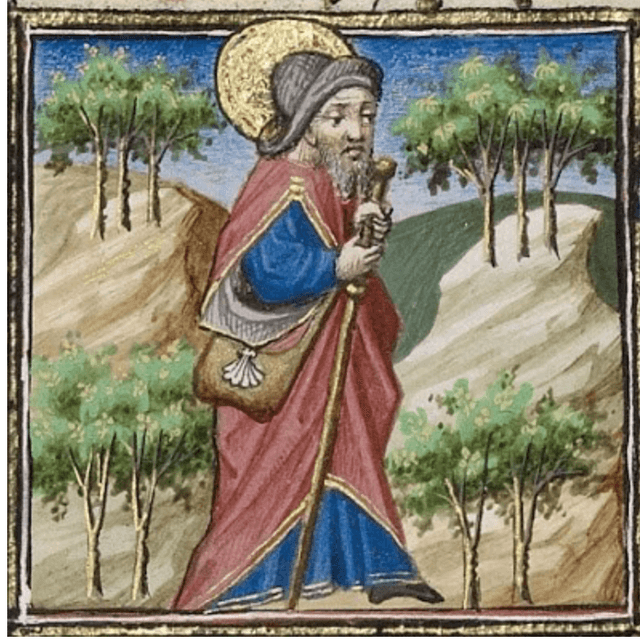
Today
St. John Baptist de la Salle, Confessor
Victory Seen in Christ
Truth
Christ Is King Over Public Life
Our Lord's kingship is not confined to private devotion. Men, families, laws, and nations are subject to His authority.
Practice
Patient Catholic formation of the young.
Teach Catholic truth patiently to the children or beginners entrusted to you, explaining every unfamiliar word.
Offering
To Jesus through Mary
Ask the Father to make you a living member of Christ beneath the maternal care of Mary.
The Pilgrim's Devotional Rhythm
Keep this month and this weekday in prayer.
The month's intention and the weekday remembrance gather the pilgrim's prayer into the devotional rhythm of the Church. In harmony with today's Mass, feast, and duties, they teach him to receive ordinary time from God and return it to Him in honor and intercession.
May intention
The Blessed Virgin Mary
The month of Mary should not pass in affection alone. Place yourself under her mantle and learn her humility, purity, recollection, and obedience, so that she may form Christ more perfectly in you.
Intention
For growth in true devotion to Our Lady, the protection of innocence, and the return of wandering souls to her Divine Son.
A faithful act
Offer the Rosary, or a carefully prayed decade when the full Rosary is not possible, for souls in danger of losing the Faith.
Prayer
O Mary, conceived without sin, lead me to Jesus and teach me to do whatsoever He shall say.
Friday remembrance
The Passion and Sacred Heart of Jesus
Friday keeps Calvary before the Christian soul. Unite the day's labor and suffering to the Passion of Christ, remembering that His Sacred Heart was opened for sinners and that love proves itself by sacrifice and obedience.
Intention
In reparation for sin; for the conversion of sinners; and for those who suffer, are persecuted, or will die this day.
A faithful act
Keep the Church's Friday abstinence and add hidden self-denial in memory of the Passion.
Prayer
Most Sacred Heart of Jesus, through Thy bitter Passion, have mercy on us and on poor sinners.
Good Morning, Pilgrim
Receive this day as a child of Holy Mother Church.
Christ is risen, has ascended in His glorified humanity, and reigns in Heaven. The Church and her members still suffer on earth, but their trials do not overturn His victory. Christian hope is therefore more than an encouraging feeling: it trusts Christ's promise of resurrection and eternal life and gives the faithful a reason to persevere in obedience today.
Renew your baptismal renunciation of Satan and your belonging to Jesus Christ, asking His Mother to guard that supernatural life.
Formation in True Devotion - Day 167: Review and Deepening: The Trinity's Order of Grace through Mary
“God the Father has communicated to Mary His fruitfulness, as far as a mere creature was capable of it, in order that He might give her the power to produce His Son, and all the members of His mystical Body.”
Our Lady's divine maternity is unique: she is Mother of the Incarnate Head according to His human nature. Her maternal office toward His members belongs to the order of grace. She does not replace baptism, faith, or the sacraments; she serves the supernatural life by which Christ forms His members.
To live as her child is therefore to live as a member of Christ. Refuse every devotion that leaves conduct unchanged. Ask Mary to protect the life of grace, obtain repentance after sin, and form in you the likeness of the Head to whom the whole Mystical Body belongs.
Ora — Begin with Prayer
Offer the day before spending it
Prayer gives the day its right beginning and its right end. Before work, conversation, news, or distraction claims the mind, adore the Blessed Trinity and offer every prayer, work, joy, suffering, and temptation to Jesus through Mary. Ask your Guardian Angel for help, and place the souls and needs entrusted to you beneath God's will.
Begin simply. Make the Morning Offering through the hands of Our Lady. Pray the Three Hail Marys for purity and final perseverance, ask your Guardian Angel to govern the senses and imagination, and name the soul or intention for which today's prayers and sacrifices will be offered. Do not rush these acts merely because they are familiar; let them place the whole day beneath God before the world begins to claim it.
O God, through St. John Baptist de la Salle, bless parents and teachers. Give them patience to instruct the young clearly and courage to protect them from error.
Quote of the Day
“The word of the cross, to them indeed that perish, is foolishness; but to them that are saved, it is the power of God.”
Plain-language help for today - 3 unfamiliar terms
- Mortification
- the deliberate restraint of a desire or comfort so that disordered habits weaken and love of God becomes freer.
- Confessor
- in the traditional calendar, a male saint who openly professed the Faith by a holy life but was not killed as a martyr.
- Apostolic
- belonging to the faith, mission, teaching, or authority handed down from Christ through the apostles.
Today's Full Breviary Sermon or Proper Lesson
The salvation of children treated as a permanent work of the Church.
Matins - Second Nocturn - St. John Baptist de la Salle, Confessor
The verified Breviary witness for this observance is identified below. A complete English transcription has not yet been admitted, so no excerpt or summary is presented as though it were the full appointed text.
Roman Breviary and St. John Chrysostom, Proper lessons and homily on the care of little ones
“What is greater than to govern souls and form the character of the young?”
- The Breviary presents St. John Baptist de la Salle as a priest providentially raised up to establish enduring Catholic schools, especially for poor boys, and to found the Brothers of the Christian Schools.
- He fulfilled this work through contradiction and severe trials, formed his brothers by wise rules confirmed by Pope Benedict XIII, renounced his canonry, distributed his goods to the poor, and eventually laid down governance through humility.
- His fidelity joined obedience, mortification, prayer, devotion to the Apostolic See, and zeal for souls; education was not worldly advancement but formation in religion, good morals, and the way of truth.
- St. John Chrysostom's homily makes care for children a grave work of charity: the Christian must not be content with his own virtue while neglecting the salvation and moral formation of the young.
Treat Catholic formation as a duty that cannot be postponed. Teach doctrine and morals to the young, give special care to those without privilege, support faithful teachers, and build habits and institutions capable of outlasting personal enthusiasm.
Walk with Holy Mother Church
Holy Mother Church has already begun praying. Enter her prayer.
Today the Roman year keeps St. John Baptist de la Salle, Confessor. Receive the observance from the Church's hands: first understand what is commemorated, then let its doctrine and worship shape the day.
Octave context
Within the Privileged Octave of the Ascension - Privileged Octave of the Third Order
Roman Martyrology
May 15
At Rouen, St. John Baptist de la Salle, confessor, -" who deserved well both of religion and society by his labors for the education of youth, especially of the poor, and by the founding of the Society of the Brothers of the Christian Schools. — In Spain, the Saints Torquatus, Ctesiphon, Secundus, Indaletius, Caecilius, Hesychius, and Euphrasius, who were consecrated bishops at Rome by the holy apostles, and sent to Spain to preach the word of God. When they had evangelized various cities, and brought innumerable multitudes under the yoke of Christ, they rested in peace in various parts of that country: Torquatus at Cadiz, Ctesiphon at Vierco, Secundus at Avila, Indaletius at Portilla, Caecilius at Elvira, Hesychius at Gibraltar, and Euphrasius at Anduxar. — At Evora, in Portugal, St. Mancius, martyr. — In the island of Chio, the birthday of blessed Isidore, martyr, in whose church is a well into which he is said to have been thrown. By drinking of the water from this well, the sick are frequently cured. — At Lampsacum, in Hellespont, the martyrdom of the Saints Peter, Andrew, Paul, 'and Dionysja. — At Fausina, in Sardinia, in the time of Diocletian and the governor Barbarus, St. Simplicius, a bishop, who consummated his martyrdom by being tanspierced with a lance. — At Clermont, in Auvergne, the holy martyrs Cassius, Victorinus, Maximus, and their companions. — In Brabant, St. Dympna, virgin and martyr, daughter of an Irish king. By order of her father, she was beheaded for the faith of Christ and the preservation of her virginity.
Gospel of the Day
Blessed are those servants whom the Lord shall find watching.
St. John Baptist de la Salle, Confessor - Luke 12:35-40
“Let your loins be girt, and lamps burning in your hands.”
Ask St. John Baptist de la Salle for patient vigilance. A child taught for God is being prepared for eternity.
Receive the Gospel with Holy Mother Church
The faithful teacher keeps watch over the young by forming them for God.
St. John Baptist de la Salle teaches that Catholic education must prepare souls for judgment, not merely usefulness in the world.
Parents and teachers should remember that a child's mind is not neutral ground. It will be formed either for Christ or away from Him.
This Gospel corrects a danger that can quietly deform Catholic judgment: The worldly education that trains skill while leaving the soul unguarded. Ask where that danger seeks your consent today, and answer it with the act Our Lord requires.
Learn from Today's Saint or Feast
St. John Baptist de la Salle
Confessor and educator of poor youth.
St. John Baptist de la Salle labored for the education of youth, especially the poor, and founded the Society of the Brothers of the Christian Schools.
His witness teaches that Catholic education is not social improvement alone, but the formation of souls in truth, discipline, prayer, and Christian duty.
Ask St. John Baptist de la Salle for patient zeal. A child formed in truth receives more than instruction; he receives a road toward God.
Breviary Witness for the Day
The teacher of poor youth.
Matins - St. John Baptist de la Salle, Confessor
- The Breviary honors St. John Baptist de la Salle as confessor and founder, devoted to the Christian education of youth, especially the poor.
- His witness teaches that education must form souls in truth, discipline, prayer, and duty before God.
Do not treat education as neutral. St. John Baptist de la Salle teaches that the young need Catholic formation, not mere training for the world.
Instruction from the Breviary
The Breviary witness for St. John Baptist de la Salle, Confessor is part of the Church's daily teaching. It should not be read as a list of isolated facts. In the Divine Office, Scripture, the lives of the saints, doctrine, and the Church's prayer are placed together so that the mind learns what the Church remembers and the heart learns how a Catholic ought to judge and live.
Today's witness is gathered under The teacher of poor youth.. Its first point is this: The Breviary honors St. John Baptist de la Salle as confessor and founder, devoted to the Christian education of youth, especially the poor. Its next point develops the lesson: His witness teaches that education must form souls in truth, discipline, prayer, and duty before God.
The practical instruction is: Do not treat education as neutral. St. John Baptist de la Salle teaches that the young need Catholic formation, not mere training for the world. Ask what truth is being guarded, what virtue is being praised, and what danger or forgetfulness is being corrected. In this way the Breviary becomes instruction for the present day rather than information that is quickly passed over.
- What truth does this Breviary witness teach or defend?
- What virtue does the Church place before me through it?
- What judgment or action should change because I have received this lesson?
The Pilgrim's Spiritual Conference
Christ Is King Over Public Life
Remain here for a little while. Receive today's Catholic truth as a child of Holy Mother Church; let it judge the heart, strengthen the will, and become an act offered to God.
The Church places this truth before you today: Our Lord's kingship is not confined to private devotion. Men, families, laws, and nations are subject to His authority. Do not hurry past it as though doctrine belonged only to books and controversies. A revealed truth is also a light by which the soul must judge its loyalties, its fears, its habits, and the duties immediately before it. The Church's Catholicity includes the public claim of Christ over all peoples, not merely the private consolation of believers.
The grace to be practiced is Patient Catholic formation of the young, drawn from today's saintly witness. Ask God for more than the natural appearance of this virtue. Temperament may make an action seem easy for a time, but supernatural virtue remains faithful because God is worthy of obedience, even when feeling offers no assistance and no one notices the cost. Practice fidelity to grace by resisting every mortal sin and promptly correcting deliberate venial sin.
There is also an enemy to recognize: Resist secular liberalism, which treats society as though it could be rightly ordered without Christ. Do not study this danger only in other people. Look quietly for the door by which it seeks entrance into your own soul - perhaps through delay, curiosity, resentment, human respect, attachment to comfort, or the desire to control the outcome. Dying to self today means choosing patient Catholic formation of the young when pride, comfort, fear, resentment, or human respect asks for control.
Do the faithful act and entrust its fruit to divine Providence, God's wise and loving governance of all things. Place effort and outcome into Our Lady's hands so that the whole offering may be presented to her Divine Son. Confidence in God is not passivity: obey, pray, work, and accept that visible success, consolation, or immediate relief may not be given. God remains faithful when the duty is hidden and the outcome uncertain. Therefore, perform the duty that belongs to you, use the lawful means God has provided, and then surrender the fruit. Accept the discipline by which Christ conforms His members to the crucified Head. Fulfill all the duties of your state as a member of Christ whose conduct must honor the whole Mystical Body.
The Church's witness
This truth manifests the Church's mark of catholic. The witness placed beside it today is Pope Pius XI.
Your resolution before God
Teach Catholic truth patiently to the children or beginners entrusted to you, explaining every unfamiliar word.
Catholic education forms the child's soul for truth, prayer, virtue, duty, and eternal life.
Carry this word quietly. Return to it when distraction, temptation, or discouragement begins to scatter the soul.
Novena in Progress
Prepare before the feast arrives.
The Church teaches souls to prepare. A novena trains desire, steadies intention, and prevents a feast from arriving as a mere date on the calendar.
Day 1 of 9
Preparing for Pentecost on
Novena to the Holy Ghost
Petition
Ask the Holy Ghost for truth, fortitude, docility, and zeal without novelty or disorder.
A Faithful Act
Pray for light to obey the truth already known and for courage to confess the Faith publicly.
The Little Rule of Fidelity
Keep the day within prayer.
These anchors do not change because the soul needs a stable rule more than a daily novelty. Open them when you are learning the rule or when your ordinary prayer has begun to loosen.
Show today's prayer and duty anchors
Begin with morning prayer
Adore the Blessed Trinity and offer the whole day to Jesus through Mary before other duties claim the mind.
Keep the Angelus
Pause morning, noon, and evening to remember the Incarnation.
Seek Our Lord in the Blessed Sacrament
Attend Holy Mass when duty permits; otherwise make a Spiritual Communion and renew desire for Jesus in the Blessed Sacrament.
Return to Jesus and Mary
Use frequent holy aspirations during work, waiting, suffering, and temptation.
Pray the Rosary
Keep the mysteries of Christ before the mind with Our Lady and learn to imitate what they contain.
End with night prayer and examen
Give thanks, confess faults, forgive injuries, make a practical amendment, and entrust the night to Our Lady.
The Pilgrim's Mirror
How shall I imitate Christ today?
“Who hath a stronger battle than he that laboureth to overcome himself?”
The decisive field of combat is within. Heresy must be hated, and so must the pride, curiosity, compromise, and self-will by which falsehood finds lodging in the soul.
Many souls desire victory in the Church while making peace with the tyrant within. Begin the restoration where grace has placed authority in your hands: over your next thought, word, appetite, and decision. A hidden victory over self-will is no small service to the City of God.
Today's Practice
Refuse the demands of self-will promptly and without complaint.
Before Night Falls
Return the completed day to God.
Give thanks before measuring the day by feeling or visible success. Ask light to see faults without discouragement, make an Act of Contrition, forgive injuries, and place tomorrow beneath divine Providence.
Examine whether your conduct preserved the likeness of Christ or wounded His members, and seek contrition and amendment through Mary.
- For what grace or mercy should I thank God today?
- What sin, fault, neglected duty, or resistance to grace must I confess?
- What definite amendment will I carry into tomorrow?
Go Now, Pilgrim
Walk faithfully. Pray attentively. Bear your cross willingly. Love God above all things.
Holy Mother Church has gathered you around her prayer and truth; now carry what you have received into the duties of your state.
When this day is finished, may you have laid one more stone in the City of God.
You do not walk alone: remain beneath Our Lady's care as she leads you toward her Divine Son and the Heavenly Jerusalem.
God willing, we shall meet again at tomorrow's pilgrimage.
Source notes for this pilgrimage
Martyrology: The Roman Martyrology, Baltimore, 1916, John Murphy Company; local raw text lines 4961-4999.
- Gospel: Luke 12:35-40, Douay-Rheims.
- Gospel: Traditional Roman Gospel from the common of confessors.
- Saint witness: St. Andrew Daily Missal, May 15.
- Saint witness: Roman Martyrology, 1916 Baltimore edition, May 15.
- Breviary witness: Roman Breviary, Matins lessons for May 15, St. John Baptist de la Salle.
- Breviary witness: Roman Martyrology, 1916 Baltimore edition, May 15.
- Matins lesson: Breviarium Romanum, Pii Papae X auctoritate reformatum, Desclee & Socii, 1942, Pars Verna, May 15, St. John Baptist de la Salle, lessons iv-ix, printed pp. 974-978.
- Matins lesson: The excerpt above is a faithful editorial English translation prepared directly from the visually checked Latin text; it is not presented as an edition-issued English Breviary translation.
Pilgrim's Mirror: Thomas à Kempis, The Imitation of Christ, translated by Richard Whitford, edited by Wilfrid Raynal, O.S.B. (Mount Vernon, N.Y.: Peter Pauper Press, c. 1947). Today's passage is at Book I, chapter 3, p. 12.
Marian formation: St. Louis-Marie de Montfort, True Devotion to the Blessed Virgin, translated by Fr. Frederick William Faber, 1941 Company of Mary edition, imprimatur September 26, 1949. Today's passage is at True Devotion to the Blessed Virgin, no. 17. The supplied 2010 PDF is used only as a digital transcription of that pre-1955 edition.
- Octave context: St. Andrew Daily Missal, Division of the Ecclesiastical Year, p. ix.
- Devotional rhythm: St. Andrew Daily Missal, Dom Gaspar Lefebvre, O.S.B., 1953 edition; proper Mass or devotion named in this entry.
- Devotional rhythm: John 2:5, Douay-Rheims.
- Devotional rhythm: John 19:30-37, Douay-Rheims.
- Faith point: Pope Pius XI, Quas Primas.
- Faith point: Psalm 2, Douay-Rheims.
- Marian atmosphere and imitation: Luke 1:38, 46-49; Luke 2:19; John 2:5; John 19:25-27; and John 3:30, Douay-Rheims.
- Authority and revolt: Exodus 5:2, Douay-Rheims.
- Daily examen: St. Ignatius of Loyola, Spiritual Exercises, Particular and Daily Examen.