The Daily Pilgrimage
“Now therefore, ye children, hear me: Blessed are they that keep my ways.” — Proverbs 8:32
Daily formation
2026-05-16
Receive the day as a child of Holy Mother Church. Beneath Our Lady's care, magnify Christ, obey God's commandments, fulfill the duties of your state in life, die to self, trust divine Providence, resist error, and return the whole day to God.
Holy Mother Church gathers her children around the Sacred Calendar, feeds them with truth, warns them against what wounds the soul, and teaches them to walk faithfully toward their heavenly home.
“Fear not, little flock, for it hath pleased your Father to give you a kingdom. […] For where your treasure is, there will your heart be also.”
Choose a date
Daily navigation
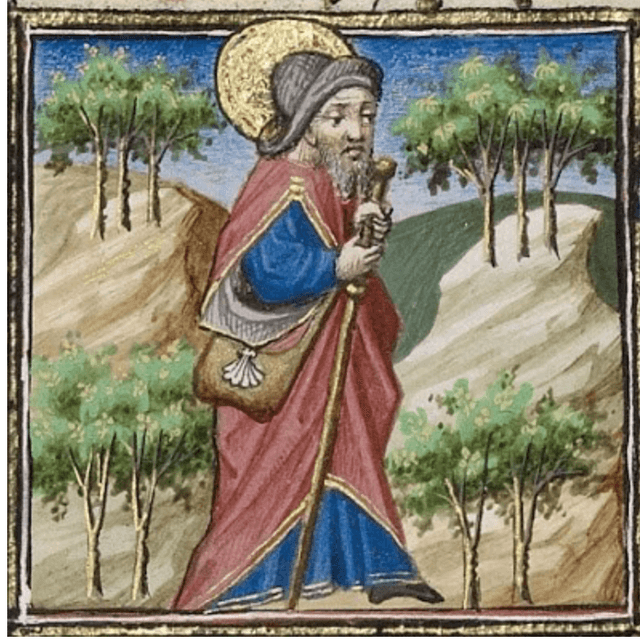
St. Ubaldus, Bishop and Confessor
City of God in Exile
St. Ubaldus, Bishop and Confessor
2026-05-16 - Eastertide - Semi-Double - white
Today
St. Ubaldus, Bishop and Confessor
Victory Seen in Christ
Truth
Obedience Serves Truth
Catholic obedience is a virtue ordered to God and His truth. It is not servility before contradiction or unlawful command.
Practice
Pastoral holiness and confidence in grace.
Pray for the sanctity of bishops and choose holiness over efficiency throughout your own duties.
Offering
To Jesus through Mary
Enter with reverence into the hidden life of Jesus in the virginal sanctuary of His Mother.
The Pilgrim's Devotional Rhythm
Keep this month and this weekday in prayer.
The month's intention and the weekday remembrance gather the pilgrim's prayer into the devotional rhythm of the Church. In harmony with today's Mass, feast, and duties, they teach him to receive ordinary time from God and return it to Him in honor and intercession.
May intention
The Blessed Virgin Mary
The month of Mary should not pass in affection alone. Place yourself under her mantle and learn her humility, purity, recollection, and obedience, so that she may form Christ more perfectly in you.
Intention
For growth in true devotion to Our Lady, the protection of innocence, and the return of wandering souls to her Divine Son.
A faithful act
Offer the Rosary, or a carefully prayed decade when the full Rosary is not possible, for souls in danger of losing the Faith.
Prayer
O Mary, conceived without sin, lead me to Jesus and teach me to do whatsoever He shall say.
Saturday remembrance
The Blessed Virgin Mary
Saturday is kept in filial remembrance of Our Lady, who remained faithful when Our Lord lay hidden in the tomb. Walk with Mary toward Jesus by imitating her faith, purity, recollection, and perseverance.
Intention
For growth in true devotion to Mary, the conversion of sinners, the protection of purity, and perseverance in the Catholic Faith.
A faithful act
Set the goal of praying the complete traditional Rosary today: all fifteen decades of the Joyful, Sorrowful, and Glorious Mysteries. Offer it for a definite intention, especially for the conversion and salvation of sinners. If the duties of your state require it, pray its three parts at different hours, but persevere toward completing the whole Rosary. Souls are in need: at Fatima, Our Lady warned that many souls go to hell because there is no one to make sacrifices and pray for them.
Prayer — The Magnificat
My soul doth magnify the Lord. And my spirit hath rejoiced in God my Saviour. Because he hath regarded the humility of his handmaid; for behold from henceforth all generations shall call me blessed. Because he that is mighty, hath done great things to me; and holy is his name. And his mercy is from generation unto generations, to them that fear him. He hath shewed might in his arm: he hath scattered the proud in the conceit of their heart. He hath put down the mighty from their seat, and hath exalted the humble. He hath filled the hungry with good things; and the rich he hath sent empty away. He hath received Israel his servant, being mindful of his mercy: As he spoke to our fathers, to Abraham and to his seed for ever.
Indulgences
The faithful who devoutly recite the Magnificat may gain an indulgence of three years; an indulgence of five years when it is recited on the feast of the Visitation of the Blessed Virgin Mary or on any Saturday of the year; and a plenary indulgence, under the usual conditions, when it is devoutly recited daily for an entire month.
Good Morning, Pilgrim
Receive this day as a child of Holy Mother Church.
Christ is risen, has ascended in His glorified humanity, and reigns in Heaven. The Church and her members still suffer on earth, but their trials do not overturn His victory. Christian hope is therefore more than an encouraging feeling: it trusts Christ's promise of resurrection and eternal life and gives the faithful a reason to persevere in obedience today.
Place the unseen hours of this day within the hidden life of Jesus and Mary.
Formation in True Devotion - Day 168: Review and Deepening: The Trinity's Order of Grace through Mary
“God the Son has descended into her virginal womb, as the new Adam into the terrestrial paradise, to take His pleasure there, and to work in secret the marvels of His grace.”
The Eternal Son chose enclosure, dependence, silence, and obscurity. His hidden life overturns the demand of self-love to be seen, consulted, praised, and immediately effective. The greatest work of God began where the world could neither observe nor applaud it.
Let Jesus living in Mary judge your impatience with hidden duties. Grace may be working most deeply where there is little sensible reward. Remain exact in prayer, family obligations, honest labor, purity, and sacrifice when only God sees their cost.
Ora — Begin with Prayer
Offer the day before spending it
Prayer gives the day its right beginning and its right end. Before work, conversation, news, or distraction claims the mind, adore the Blessed Trinity and offer every prayer, work, joy, suffering, and temptation to Jesus through Mary. Ask your Guardian Angel for help, and place the souls and needs entrusted to you beneath God's will.
Begin simply. Make the Morning Offering through the hands of Our Lady. Pray the Three Hail Marys for purity and final perseverance, ask your Guardian Angel to govern the senses and imagination, and name the soul or intention for which today's prayers and sacrifices will be offered. Do not rush these acts merely because they are familiar; let them place the whole day beneath God before the world begins to claim it.
O God, through St. Ubaldus, make bishops holy. Keep them from trusting management more than grace, and make their conduct a clear witness to Thee.
Quote of the Day
“Stand fast; and hold the traditions which you have learned.”
Plain-language help for today - 3 unfamiliar terms
- Mortification
- the deliberate restraint of a desire or comfort so that disordered habits weaken and love of God becomes freer.
- Confessor
- in the traditional calendar, a male saint who openly professed the Faith by a holy life but was not killed as a martyr.
- Virgin
- in a saint's title, a woman honored for consecrating her chastity and whole life to Christ.
Today's Full Breviary Sermon or Proper Lesson
A bishop formed by virginity, common life, austerity, prayer, and mercy toward persecutors.
Matins - Second Nocturn - St. Ubaldus, Bishop and Confessor
The verified Breviary witness for this observance is identified below. A complete English transcription has not yet been admitted, so no excerpt or summary is presented as though it were the full appointed text.
Roman Breviary, Proper lessons for St. Ubaldus
“He became from the heart a pattern of the flock.”
- The Breviary remembers St. Ubaldus preserving virginity, distributing his inheritance to churches and the poor, embracing the Rule of St. Augustine, and restoring canonical common life in his homeland.
- Raised unwillingly to the See of Gubbio, he changed nothing of his austere life: scant food, modest clothing, a hard bed, mortification, and insatiable prayer sustained his care for souls by word and example.
- His meekness was not weakness. He endured grave insults with equanimity and answered persecutors with extraordinary charity while governing the flock faithfully.
- During long and bitter illness he gave thanks to God without ceasing; the office also remembers his intercession against unclean spirits and the preservation of his incorrupt body.
Let authority grow from chastity, common discipline, prayer, mortification, and mercy. Bear injury without surrendering duty, repay hostility with supernatural charity, and give thanks to God even when suffering is prolonged.
Walk with Holy Mother Church
Holy Mother Church has already begun praying. Enter her prayer.
Today the Roman year keeps St. Ubaldus, Bishop and Confessor. Receive the observance from the Church's hands: first understand what is commemorated, then let its doctrine and worship shape the day.
Octave context
Within the Privileged Octave of the Ascension - Privileged Octave of the Third Order
Roman Martyrology
May 16
At Gubbio, St. Ubaldus, a bishop renowned for miracles. — In Isauria, the birthday of the holy martyrs Aquillinus and Victorian. — At Auxerre, the passion of St. Peregrinus, first bishop of that city. He was sent into Gaul with other clerics by the blessed pope Xystus, and having accomplished his work of preaching the Gospel, he merited an ever lasting crown by being condemned to capital punishment. — At Uzalis, in Africa, the holy martyrs Felix and Gennadius. — In Palestine, the martyrdom of the holy monks massacred by the Saracens in the monastery of St. Sabas. — In Persia, the holy martyrs Audas, a bishop, seven priests, nine deacons and seven virgins, who endured various kinds of tormen ts under king Isdegerdes, and thus gloriously consummated their martyrdom. — At Prague, in Bohemia, St. John Nepomucen, a canon of the metropolitan church, who, being tempted in vain to betray the secret of confession, was cast into the river Moldau, and thus won the palm of martyrdom. — At Amiens, in France, the bishop St. Honoratus. — At Le Mans, St. Domnolus, bishop. — At Mirandola, in Emilia, St. Possidius, bishop of Calamae, discple of St. Augustine, and the writer of his glorious life. — At Troyes, St. Fidolus, confessor. — In Ireland, St. Brendan, abbot. — At Frejus, St. Maxima, virgin, who rested in peace with a reputation for many virtues.
Gospel of the Day
Let your lamps be burning.
St. Ubaldus, Bishop and Confessor - Luke 12:35-40
“And you yourselves like to men who wait for their lord.”
Ask St. Ubaldus for shepherds whose lamps are burning. A holy pastor gives more light than a clever functionary.
Receive the Gospel with Holy Mother Church
The holy bishop keeps watch as a servant awaiting the Lord, not as an owner of souls.
St. Ubaldus teaches that pastoral work must be lit by sanctity and confidence in grace.
The Church is harmed when shepherding becomes management without prayer. Souls need holiness before efficiency.
This Gospel corrects a danger that can quietly deform Catholic judgment: The managerial religion that trusts technique more than grace. Ask where that danger seeks your consent today, and answer it with the act Our Lord requires.
Learn from Today's Saint or Feast
St. Ubaldus
Bishop and confessor renowned for miracles.
St. Ubaldus, bishop of Gubbio, is honored by the Martyrology as a bishop renowned for miracles.
His witness teaches that episcopal holiness is not administration alone, but prayer, pastoral charity, purity of life, and confidence in God's power.
Ask St. Ubaldus for shepherds whose holiness becomes a sign of God. The Church is helped most by saints, not mere functionaries.
Breviary Witness for the Day
The bishop renowned for miracles.
Matins - St. Ubaldus, Bishop and Confessor
- The Breviary honors St. Ubaldus as bishop and confessor, remembered at Gubbio and renowned for miracles.
- His witness teaches pastoral holiness: prayer, virtue, and confidence in grace before every outward work.
Pray for holy shepherds. St. Ubaldus teaches that the Church needs sanctity more than clever administration.
Instruction from the Breviary
The Breviary witness for St. Ubaldus, Bishop and Confessor is part of the Church's daily teaching. It should not be read as a list of isolated facts. In the Divine Office, Scripture, the lives of the saints, doctrine, and the Church's prayer are placed together so that the mind learns what the Church remembers and the heart learns how a Catholic ought to judge and live.
Today's witness is gathered under The bishop renowned for miracles.. Its first point is this: The Breviary honors St. Ubaldus as bishop and confessor, remembered at Gubbio and renowned for miracles. Its next point develops the lesson: His witness teaches pastoral holiness: prayer, virtue, and confidence in grace before every outward work.
The practical instruction is: Pray for holy shepherds. St. Ubaldus teaches that the Church needs sanctity more than clever administration. Ask what truth is being guarded, what virtue is being praised, and what danger or forgetfulness is being corrected. In this way the Breviary becomes instruction for the present day rather than information that is quickly passed over.
- What truth does this Breviary witness teach or defend?
- What virtue does the Church place before me through it?
- What judgment or action should change because I have received this lesson?
The Pilgrim's Spiritual Conference
Obedience Serves Truth
Remain here for a little while. Receive today's Catholic truth as a child of Holy Mother Church; let it judge the heart, strengthen the will, and become an act offered to God.
The Church places this truth before you today: Catholic obedience is a virtue ordered to God and His truth. It is not servility before contradiction or unlawful command. Do not hurry past it as though doctrine belonged only to books and controversies. A revealed truth is also a light by which the soul must judge its loyalties, its fears, its habits, and the duties immediately before it. Authority is real because it comes from God, but it remains ministerial. It cannot command against the faith it exists to guard.
The grace to be practiced is Pastoral holiness and confidence in grace, drawn from today's saintly witness. Ask God for more than the natural appearance of this virtue. Temperament may make an action seem easy for a time, but supernatural virtue remains faithful because God is worthy of obedience, even when feeling offers no assistance and no one notices the cost. Practice hidden fidelity by doing every duty well without requiring recognition or visible fruit.
There is also an enemy to recognize: Resist both rebellion against true authority and false obedience to commands that betray doctrine. Do not study this danger only in other people. Look quietly for the door by which it seeks entrance into your own soul - perhaps through delay, curiosity, resentment, human respect, attachment to comfort, or the desire to control the outcome. Dying to self today means choosing pastoral holiness and confidence in grace when pride, comfort, fear, resentment, or human respect asks for control.
Do the faithful act and entrust its fruit to divine Providence, God's wise and loving governance of all things. Place effort and outcome into Our Lady's hands so that the whole offering may be presented to her Divine Son. Confidence in God is not passivity: obey, pray, work, and accept that visible success, consolation, or immediate relief may not be given. God remains faithful when the duty is hidden and the outcome uncertain. Therefore, perform the duty that belongs to you, use the lawful means God has provided, and then surrender the fruit. Receive obscurity, delay, and enclosure as occasions for union with the hidden Jesus rather than reasons for complaint. Perform all unnoticed duties with recollection, care, and purity of intention beneath the eyes of Jesus and Mary.
The Church's witness
This truth manifests the Church's mark of apostolic. The witness placed beside it today is St. Thomas Aquinas.
Your resolution before God
Pray for the sanctity of bishops and choose holiness over efficiency throughout your own duties.
The Church needs shepherds whose administration is governed by prayer, holiness, and care for souls.
Carry this word quietly. Return to it when distraction, temptation, or discouragement begins to scatter the soul.
Novena in Progress
Prepare before the feast arrives.
The Church teaches souls to prepare. A novena trains desire, steadies intention, and prevents a feast from arriving as a mere date on the calendar.
Day 2 of 9
Preparing for Pentecost on
Novena to the Holy Ghost
Petition
Ask the Holy Ghost for truth, fortitude, docility, and zeal without novelty or disorder.
A Faithful Act
Pray for light to obey the truth already known and for courage to confess the Faith publicly.
The Little Rule of Fidelity
Keep the day within prayer.
These anchors do not change because the soul needs a stable rule more than a daily novelty. Open them when you are learning the rule or when your ordinary prayer has begun to loosen.
Show today's prayer and duty anchors
Begin with morning prayer
Adore the Blessed Trinity and offer the whole day to Jesus through Mary before other duties claim the mind.
Keep the Angelus
Pause morning, noon, and evening to remember the Incarnation.
Seek Our Lord in the Blessed Sacrament
Attend Holy Mass when duty permits; otherwise make a Spiritual Communion and renew desire for Jesus in the Blessed Sacrament.
Return to Jesus and Mary
Use frequent holy aspirations during work, waiting, suffering, and temptation.
Pray the Rosary
Keep the mysteries of Christ before the mind with Our Lady and learn to imitate what they contain.
End with night prayer and examen
Give thanks, confess faults, forgive injuries, make a practical amendment, and entrust the night to Our Lady.
The Pilgrim's Mirror
How shall I imitate Christ today?
“A meek knowing of ourself is a surer way to God than is the searching for highness of cunning.”
Learning serves holiness only when it makes the soul humbler before God. Receive truth as a disciple of Christ, not as material for self-display.
Do not measure profit by how much you can repeat. Ask whether what you have learned has made prayer more reverent, judgment more Catholic, speech more restrained, and duty more exact. Knowledge that never kneels easily becomes another possession of pride.
Today's Practice
Keep good insights hidden when charity does not require speech, and turn them into prayer and amendment.
Before Night Falls
Return the completed day to God.
Give thanks before measuring the day by feeling or visible success. Ask light to see faults without discouragement, make an Act of Contrition, forgive injuries, and place tomorrow beneath divine Providence.
Return the hidden work of the day to God without measuring its worth by human notice or immediate results.
- For what grace or mercy should I thank God today?
- What sin, fault, neglected duty, or resistance to grace must I confess?
- What definite amendment will I carry into tomorrow?
Go Now, Pilgrim
Walk faithfully. Pray attentively. Bear your cross willingly. Love God above all things.
Holy Mother Church has gathered you around her prayer and truth; now carry what you have received into the duties of your state.
When this day is finished, may you have laid one more stone in the City of God.
You do not walk alone: remain beneath Our Lady's care as she leads you toward her Divine Son and the Heavenly Jerusalem.
God willing, we shall meet again at tomorrow's pilgrimage.
Source notes for this pilgrimage
Martyrology: The Roman Martyrology, Baltimore, 1916, John Murphy Company; local raw text lines 5000-5038.
- Gospel: Luke 12:35-40, Douay-Rheims.
- Gospel: Traditional Roman Gospel from the common of confessors.
- Saint witness: St. Andrew Daily Missal, May 16.
- Saint witness: Roman Martyrology, 1916 Baltimore edition, May 16.
- Breviary witness: Roman Breviary, Matins lessons for May 16, St. Ubaldus.
- Breviary witness: Roman Martyrology, 1916 Baltimore edition, May 16.
- Matins lesson: Breviarium Romanum, Pii Papae X auctoritate reformatum, Desclee & Socii, 1942, Pars Verna, May 16, St. Ubaldus, lessons iv-vi, printed pp. 978-980.
- Matins lesson: The excerpt above is a faithful editorial English translation prepared directly from the visually checked Latin text; it is not presented as an edition-issued English Breviary translation.
Pilgrim's Mirror: Thomas à Kempis, The Imitation of Christ, translated by Richard Whitford, edited by Wilfrid Raynal, O.S.B. (Mount Vernon, N.Y.: Peter Pauper Press, c. 1947). Today's passage is at Book I, chapter 3, p. 12.
Marian formation: St. Louis-Marie de Montfort, True Devotion to the Blessed Virgin, translated by Fr. Frederick William Faber, 1941 Company of Mary edition, imprimatur September 26, 1949. Today's passage is at True Devotion to the Blessed Virgin, no. 18. The supplied 2010 PDF is used only as a digital transcription of that pre-1955 edition.
- Octave context: St. Andrew Daily Missal, Division of the Ecclesiastical Year, p. ix.
- Devotional rhythm: St. Andrew Daily Missal, Dom Gaspar Lefebvre, O.S.B., 1953 edition; proper Mass or devotion named in this entry.
- Devotional rhythm: John 2:5, Douay-Rheims.
- Devotional rhythm: Luke 2:19 and John 19:25-27, Douay-Rheims.
- Devotional rhythm: The Holy Bible, Douay-Rheims, Luke 1:46-55 (the Magnificat).
- Devotional rhythm: Enchiridion indulgentiarum: preces et pia opera in favorem omnium christifidelium vel quorumdam coetuum personarum, Vatican Polyglot Press, 1952, no. 320, printed pp. 203-204 (grants of the Sacred Congregation of Indulgences, September 20, 1879, and February 22, 1888; Sacred Penitentiary, February 18, 1936, and April 12, 1940).
- Devotional rhythm: Sister Lucia dos Santos, Fourth Memoir, December 8, 1941, account of the apparition of August 19, 1917.
- Faith point: St. Thomas Aquinas, Summa Theologiae, on obedience.
- Faith point: Acts 5:29, Douay-Rheims.
- Marian atmosphere and imitation: Luke 1:38, 46-49; Luke 2:19; John 2:5; John 19:25-27; and John 3:30, Douay-Rheims.
- Authority and revolt: Exodus 5:2, Douay-Rheims.
- Daily examen: St. Ignatius of Loyola, Spiritual Exercises, Particular and Daily Examen.