The Daily Pilgrimage
“Now therefore, ye children, hear me: Blessed are they that keep my ways.” — Proverbs 8:32
Daily formation
2027-09-30
Receive the day as a child of Holy Mother Church. Beneath Our Lady's care, magnify Christ, obey God's commandments, fulfill the duties of your state in life, die to self, trust divine Providence, resist error, and return the whole day to God.
Holy Mother Church gathers her children around the Sacred Calendar, feeds them with truth, warns them against what wounds the soul, and teaches them to walk faithfully toward their heavenly home.
“Fear not, little flock, for it hath pleased your Father to give you a kingdom. […] For where your treasure is, there will your heart be also.”
Choose a date
Daily navigation
St. Jerome, Priest, Confessor, and Doctor
City of God in Exile
St. Jerome, Priest, Confessor, and Doctor
2027-09-30 - Time after Pentecost - Double - white
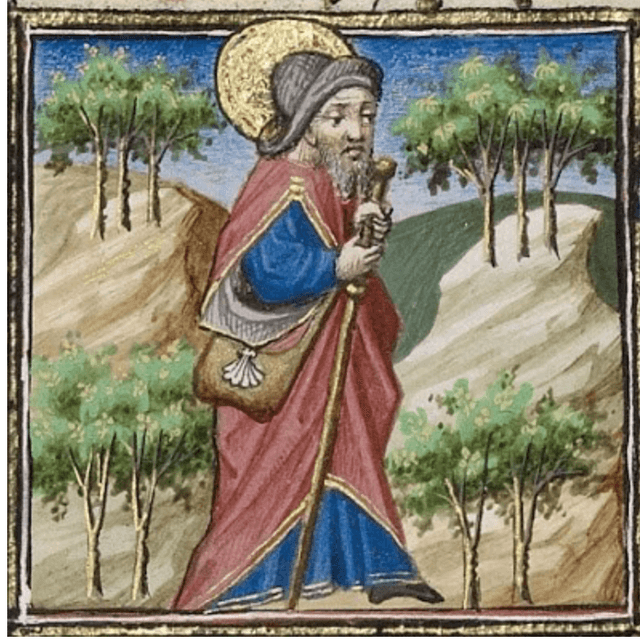
Today
St. Jerome, Priest, Confessor, and Doctor
Growth After Pentecost
Truth
Hold the Traditions
Apostolic tradition is not nostalgia. It is the handing down of what the Church received from Christ and the Apostles.
Practice
Penitential love of Scripture.
Fulfill all known duties in their proper order, without deliberate delay or complaint.
Offering
To Jesus through Mary
With Mary, let the hidden mysteries of Christ become more precious than the passing noise of the world.
The Pilgrim's Devotional Rhythm
Keep this month and this weekday in prayer.
The month's intention and the weekday remembrance gather the pilgrim's prayer into the devotional rhythm of the Church. In harmony with today's Mass, feast, and duties, they teach him to receive ordinary time from God and return it to Him in honor and intercession.
September intention
The Seven Sorrows of the Blessed Virgin Mary
Our Lady did not flee the Cross. By remembering her sorrows, the pilgrim learns compassion for the Passion of Christ, patience in affliction, and fidelity when consolation is withdrawn.
Intention
For those crushed by grief, for sinners at the hour of death, and for the grace to carry every cross without abandoning Christ.
A faithful act
Accept sorrows without murmuring and offer them with Our Lady for dying souls.
Prayer
Sorrowful and Immaculate Heart of Mary, keep us faithful beside the Cross of Jesus.
Thursday remembrance
The Most Blessed Sacrament
Thursday recalls the institution of the Holy Eucharist and the priesthood at the Last Supper. Adore Our Lord in the Blessed Sacrament and pray for priests, through whose consecrated ministry the Holy Sacrifice is offered.
Intention
For holy priests, worthy Communions, vocations, and reparation for neglect and sacrilege toward the Blessed Sacrament.
A faithful act
Make a visit or spiritual Communion and pray especially for priests by name.
Prayer
Jesus in the Most Blessed Sacrament, increase our faith, receive our reparation, and sanctify Thy priests.
Good Morning, Pilgrim
Receive this day as a child of Holy Mother Church.
The Time after Pentecost is the long school of the Holy Ghost. The fire given at Pentecost must become doctrine believed, worship guarded, commandments kept, homes ordered, tongues governed, and charity practiced without novelty or disorder.
Make a quiet Magnificat by naming God's graces and returning all praise to Him through Mary.
Formation in True Devotion - Day 306: Review and Deepening: Hiddenness and Humility
“He that is mighty hath done great things to me.”
Our Lady names the greatness of what has been done in her without taking possession of the glory. This is the balance humility preserves. It neither denies grace nor converts grace into self-importance. It sees clearly that God is mighty, that His works are great, and that the creature remains a grateful receiver.
Recall God's mercies today, especially those that have become ordinary through familiarity. Thank Him for them with Mary. Then ask whether you have used His gifts for His service or treated them as personal property. Gratitude becomes fruitful when it returns every gift, with interest, to the purpose of the Giver.
Ora — Begin with Prayer
Offer the day before spending it
Prayer gives the day its right beginning and its right end. Before work, conversation, news, or distraction claims the mind, adore the Blessed Trinity and offer every prayer, work, joy, suffering, and temptation to Jesus through Mary. Ask your Guardian Angel for help, and place the souls and needs entrusted to you beneath God's will.
Begin simply. Make the Morning Offering through the hands of Our Lady. Pray the Three Hail Marys for purity and final perseverance, ask your Guardian Angel to govern the senses and imagination, and name the soul or intention for which today's prayers and sacrifices will be offered. Do not rush these acts merely because they are familiar; let them place the whole day beneath God before the world begins to claim it.
O Lord, do not permit me to admire truth without submitting to it. Give me the courage to obey what Thou hast already made known.
Quote of the Day
“When the stomach is full it is easy to talk of fasting.”
Plain-language help for today - 3 unfamiliar terms
- Ecclesiastical or ecclesial
- belonging or relating to the Church; the words refer to her life, law, worship, ministers, or common mission.
- Confessor
- in the traditional calendar, a male saint who openly professed the Faith by a holy life but was not killed as a martyr.
- Doctor of the Church
- a saint formally recognized for teaching the Catholic Faith with exceptional depth and lasting value.
The full Breviary lessons preserve an older English translation. Read the modern explanation first; it identifies the people, event, and doctrine before the historical wording appears.
Today's Full Breviary Sermon or Proper Lesson
The Doctor of Scripture and the sword against confusion.
Matins - Second Nocturn - St. Jerome, Priest, Confessor, and Doctor of the Church
The complete appointed Breviary sermon or proper lessons verified for this observance are printed below. Where a Common supplies additional material, it is identified distinctly rather than presented as the proper text.
Roman Breviary, Proper lessons for St. Jerome
“He attacked heretics with keen publications.”
- The Breviary honors St. Jerome as priest, Doctor, ascetic, pilgrim to the holy places, and tireless servant of Holy Scripture.
- His lessons remember his study under great teachers, his learning in sacred languages, his translation of the Old Testament from Hebrew into Latin, and his correction of the Latin New Testament from the Greek at the command of Pope St. Damasus.
- The Breviary also presents him as a defender of the godly and Catholic, using learning as a weapon against heresy rather than as an ornament for pride.
Let St. Jerome discipline study. Sacred learning must serve Scripture, the Church, humility, ascetic seriousness, and the defense of truth.
Complete Breviary Text
Fourth Lesson - Sacred Learning Pursued across Christendom
Jerome was the son of one Eusebius, and was born at Sdrigni, [a small town upon the confines] of Dalmatia, in the reign of the Emperor Constantius. He was baptized at Rome when a lad, and studied there, under the instruction of Donatus and other very learned personages. He travelled in Gaul for the sake of improving his mind, and there sought the friendship of divers godly men learned in the Scriptures, and made with his own hand many copies of the holy books. He afterwards betook himself to Greece, where he attained eminence as a philosopher and orator, in the following of the most famous theologians. At Constantinople, in especial, he sat at the feet of Gregory of Nazianzus, from whom he professeth himself to have learnt his theology. Then, for godliness' sake, he went to see the home of the Lord Christ, and so throughout all Palestine. He witnesseth that this pilgrimage, wherein he got the help of the most learned of the Jews for the understanding of the Holy Scriptures, did him much good.
Fifth Lesson - Scripture Studied through Ascetic Discipline
He withdrew himself into the wild deserts of Syria, where he passed four years in studying the Holy Scriptures and in considering the blessedness of heaven, afflicting his body by alway denying himself, by bitter tears, and by chastisement of the flesh. He was ordained Priest by Paulinus, Patriarch of Antioch. He went to Rome on account of the quarrelling of certain Bishops with Paulinus and Epiphanius, and there helped Pope Damasus in the writing of his letters upon Church affairs. But the longing for his old solitude came upon him, and he went back to Palestine, where, in the monastery at Bethlehem, built beside the cradle of the Lord Christ by the Lady Paula of Rome, he set himself to enter on earth upon the life of heaven, serving God in reading and writing without ceasing, regardless of the sufferings of a body tormented by divers diseases and pains.
Sixth Lesson - Scripture Defended against Heresy
Hard questions upon the interpretation of the Holy Scripture were sent to him from all parts of the earth, as to an oracle. He was oftentimes consulted by Pope Damasus and by the holy Augustine upon the meaning of the most obscure passages of the Scripture, because of his extraordinary learning, and that he knew not the Latin and Greek tongues only, but also the Hebrew and Chaldee, and, as the same Augustine testifieth, had read nearly all writers. He attacked heretics with keen publications, and ever undertook the defence of the godly and Catholic. He translated the Old Testament from Hebrew into Latin, and, at the command of Damasus, reformed, according to the original Greek, the existing version of the New. Upon great part of the Scriptures he wrote commentaries. He translated likewise into Latin the works of many learned men, and himself contributed to the Christian life many monuments of his own wit. He lived to an extreme old age, and passed away to heaven, famous for learning and holiness, in the reign of the Emperor Honorius, [upon the 30th day of September, in the year of our Lord 420.] His body was buried at Bethlehem, but hath since been brought to Rome, where it lieth in the Church of St Mary-at-the-Manger.
Walk with Holy Mother Church
Holy Mother Church has already begun praying. Enter her prayer.
Today the Roman year keeps St. Jerome, Priest, Confessor, and Doctor. Receive the observance from the Church's hands: first understand what is commemorated, then let its doctrine and worship shape the day.
Roman Martyrology
September 30
In Bethlehem of Juda, the decease of St. Jerome, priest and Doctor of the Church, who, excelling in all kinds of learning, imitated the life of the most approved monks, and disposed of many monstrous heresies with the sword of his doctrine. Having at length reached a very advanced age, he rested in peace, and was buried near the manger of our Lord. His body was afterwards conveyed to Rome, and deposited in the basilica of St. Mary the Greater. — The same day, the holy martyr Leopardus, of the household of Julian the Apostate. He was beheaded at Rome, and his body was subsequently taken to Aix-la-Chapelle. — At Soleure, in Switzerland, in the time of the emperor Maximian, the passion of the holy martyrs Victor and Ursus, of the glorius Theban legion, who were subjected to horrid tortures; but a heavenly light shining over them, and causing the executioners to fall to the ground, they were delivered. Being then cast into the fire without sustaining any injury, they finally perished by the sword. — At Piacenza, the holy martyr Antoninus, soldier of the same legion. — The same day, St. Gregory, bishop of Greater Armenia, who after many sufferings under Diocletian, rested in peace. — At Canterbury, in England, St. Honorius, bishop and confessor. — At Rome, the birthday of St. Francis Borgia, of the Society of Jesus. His feast is celebrated on the 10th of October. — In the same city, St. Sophia, widow, mother of the holy virgins Faith, Hope, and Charity.
Learn from Today's Saint or Feast
St. Jerome
Priest, Doctor, ascetic, and servant of Holy Scripture.
St. Jerome served the Church through study of Holy Scripture, ascetic discipline, and defense of Catholic truth.
His witness teaches that love for Scripture must be ecclesial, penitential, and obedient. The sacred text is not a playground for private novelty, but the word of God entrusted to the Church.
Let St. Jerome put a bridle on curiosity and a fire in study. Scripture belongs to the Church, and it should make the reader humbler. Read the appointed passage today as a disciple, then obey every divine command you find there.
The Pilgrim's Spiritual Conference
Hold the Traditions
Remain here for a little while. Receive today's Catholic truth as a child of Holy Mother Church; let it judge the heart, strengthen the will, and become an act offered to God.
The Church places this truth before you today: Apostolic tradition is not nostalgia. It is the handing down of what the Church received from Christ and the Apostles. Do not hurry past it as though doctrine belonged only to books and controversies. A revealed truth is also a light by which the soul must judge its loyalties, its fears, its habits, and the duties immediately before it. Tradition protects the faithful from the tyranny of the present moment and from teachers who mistake novelty for life.
The grace to be practiced is Penitential love of Scripture, drawn from today's saintly witness. Ask God for more than the natural appearance of this virtue. Temperament may make an action seem easy for a time, but supernatural virtue remains faithful because God is worthy of obedience, even when feeling offers no assistance and no one notices the cost. Practice gratitude without self-congratulation: acknowledge the gift and glorify the Giver.
There is also an enemy to recognize: Resist innovation that claims continuity while contradicting what was handed down. Do not study this danger only in other people. Look quietly for the door by which it seeks entrance into your own soul - perhaps through delay, curiosity, resentment, human respect, attachment to comfort, or the desire to control the outcome. Dying to self today means choosing penitential love of Scripture when pride, comfort, fear, resentment, or human respect asks for control.
Do the faithful act and entrust its fruit to divine Providence, God's wise and loving governance of all things. Place effort and outcome into Our Lady's hands so that the whole offering may be presented to her Divine Son. Confidence in God is not passivity: obey, pray, work, and accept that visible success, consolation, or immediate relief may not be given. God remains faithful when the duty is hidden and the outcome uncertain. Therefore, perform the duty that belongs to you, use the lawful means God has provided, and then surrender the fruit. When a gift is absent or withdrawn, trust the same divine wisdom that first bestowed it. Use your abilities, possessions, and opportunities deliberately for God's service today.
The Church's witness
This truth manifests the Church's mark of apostolic. The witness placed beside it today is St. Paul.
Your resolution before God
Fulfill all known duties in their proper order, without deliberate delay or complaint.
Truth becomes fruitful when it is obeyed.
Carry this word quietly. Return to it when distraction, temptation, or discouragement begins to scatter the soul.
Novena in Progress
Prepare before the feast arrives.
The Church teaches souls to prepare. A novena trains desire, steadies intention, and prevents a feast from arriving as a mere date on the calendar.
Day 7 of 9
Preparing for St. Thérèse of the Child Jesus on
Novena to St. Thérèse of the Child Jesus
Today's Mystery
Fidelity in the Little Virtues
Preparatory Prayer
O glorious Teresa of the Infant Jesus, through whose unshaken confidence God was so glorified, obtain for me the same filial trust and love which animated thy innocent heart and soul. Grant that I may practice self-abnegation, patience and confidence, and that my confidence may be a fountain of blessings which God pours out upon me. As confidence was for thee the key to the greatest treasures of God, so it may induce me to throw myself into my Saviour’s arms and say with David: ‘In Thee, O my God, I put my trust, let me not be confounded.’ Amen.
Meditation
St. Thérèse shows that holiness is built through grace-filled fidelity in hidden duties. What appears too small to impress the world can become great before God when it is done humbly and with love.
Petition
O my dear Jesus, give me grace to practise little virtues. It is sometimes difficult, but I trust in Thy goodness and love for little souls. I am too little and weak to climb the steep ladder of perfection, but I know that as much as I hope I shall obtain from Thee. I join then Thy Little Flower and implore Thee with her to make me one of the many little, humble victims, worthy of Thy love. Amen.
A Faithful Act
Identify the smallest neglected duty of your state in life and complete it carefully, punctually, and for love of God.
Conclusion
Pray one Our Father, one Hail Mary, and one Glory Be. Then pray the Act of Oblation of Saint Teresa of the Infant Jesus: My Lord and my God! O Most Blessed Trinity! I desire to love Thee and to make Thee loved by mankind. Since Thou hast loved me so much as to give me the only begotten Son for my Saviour and my Spouse, the infinite treasures of His merits are mine. These merits I offer to Thee with joy, beseeching Thee to behold me only as in the Face of Jesus, and in His Sacred Heart burning with love. Moreover, I offer Thee all the merits of the saints—in heaven and on earth—together with their acts of love, and those of the holy Angels. Lastly, I offer Thee, O Blessed Trinity, the love and merits of the Blessed Virgin, my dearest Mother. To her I entrust this oblation, begging her to present it to Thee. Amen. Holy Child Jesus, have mercy on us. Our Lady of Victories, pray for us. Saint Teresa of the Infant Jesus, pray for us. Little Flower of Jesus, pray for us. Amen.
Day 3 of 9
Preparing for Holy Rosary of the Blessed Virgin Mary on
Novena to Our Lady of the Rosary
Petition
Ask for perseverance in the Rosary, victory over error, and Marian protection of the faithful in exile.
A Faithful Act
Pray the Rosary with attention and offer it for souls deceived by false religion.
The Little Rule of Fidelity
Keep the day within prayer.
These anchors do not change because the soul needs a stable rule more than a daily novelty. Open them when you are learning the rule or when your ordinary prayer has begun to loosen.
Show today's prayer and duty anchors
Begin with morning prayer
Adore the Blessed Trinity and offer the whole day to Jesus through Mary before other duties claim the mind.
Keep the Angelus
Pause morning, noon, and evening to remember the Incarnation.
Seek Our Lord in the Blessed Sacrament
Attend Holy Mass when duty permits; otherwise make a Spiritual Communion and renew desire for Jesus in the Blessed Sacrament.
Return to Jesus and Mary
Use frequent holy aspirations during work, waiting, suffering, and temptation.
Pray the Rosary
Keep the mysteries of Christ before the mind with Our Lady and learn to imitate what they contain.
End with night prayer and examen
Give thanks, confess faults, forgive injuries, make a practical amendment, and entrust the night to Our Lady.
The Pilgrim's Mirror
How shall I imitate Christ today?
“As long as we live in this world we may not be fully without temptation.”
The presence of temptation does not itself prove that you have consented or that prayer has failed. The Christian remains in warfare. Temptation humbles presumption, reveals the need for grace, and gives the will an occasion to prefer God in deed rather than merely in desire.
Do not converse needlessly with the temptation. Call upon Jesus and Mary, leave the occasion when you can, turn the imagination toward something lawful, and perform the nearest duty. If you fall, repent promptly; do not let wounded pride delay your return to mercy.
Today's Practice
Prepare a firm response for today's habitual temptation: an aspiration, departure from the occasion, and prompt return to duty.
Before Night Falls
Return the completed day to God.
Give thanks before measuring the day by feeling or visible success. Ask light to see faults without discouragement, make an Act of Contrition, forgive injuries, and place tomorrow beneath divine Providence.
Thank God before counting disappointments, and entrust every received grace to Our Lady.
- For what grace or mercy should I thank God today?
- What sin, fault, neglected duty, or resistance to grace must I confess?
- What definite amendment will I carry into tomorrow?
Go Now, Pilgrim
Walk faithfully. Pray attentively. Bear your cross willingly. Love God above all things.
Holy Mother Church has gathered you around her prayer and truth; now carry what you have received into the duties of your state.
When this day is finished, may you have laid one more stone in the City of God.
You do not walk alone: remain beneath Our Lady's care as she leads you toward her Divine Son and the Heavenly Jerusalem.
God willing, we shall meet again at tomorrow's pilgrimage.
Source notes for this pilgrimage
Martyrology: The Roman Martyrology, Baltimore, 1916, John Murphy Company; local raw text lines 10303-10342.
- Saint witness: St. Andrew Daily Missal, September 30.
- Saint witness: Roman Martyrology, 1916 Baltimore edition, September 30.
- Breviary witness: Roman Breviary, Matins lessons for September 30, St. Jerome.
- Breviary witness: Roman Martyrology, 1916 Baltimore edition, September 30.
- Matins lesson: The Roman Breviary, translated by John, Marquess of Bute, 1908, vol. IV, Autumn, Second Nocturn for St. Jerome, lessons iv-vi, printed pp. 601-602.
- Matins lesson: Bute 1908 is used here as an accessible pre-Pius X Breviary witness and is cited distinctly from the 1936-1937 Benziger / Burns Oates edition.
Pilgrim's Mirror: Thomas à Kempis, The Imitation of Christ, translated by Richard Whitford, edited by Wilfrid Raynal, O.S.B. (Mount Vernon, N.Y.: Peter Pauper Press, c. 1947). Today's passage is at Book I, chapter 13, p. 21.
Marian formation: St. Louis-Marie de Montfort, True Devotion to the Blessed Virgin, translated by Fr. Frederick William Faber, 1941 Company of Mary edition, imprimatur September 26, 1949. Today's passage is at True Devotion to the Blessed Virgin, no. 6, citing Luke 1:49. The supplied 2010 PDF is used only as a digital transcription of that pre-1955 edition.
- Devotional rhythm: St. Andrew Daily Missal, Dom Gaspar Lefebvre, O.S.B., 1953 edition; proper Mass or devotion named in this entry.
- Devotional rhythm: Luke 2:34-35 and John 19:25-27, Douay-Rheims.
- Devotional rhythm: 1 Corinthians 11:23-29, Douay-Rheims.
- Novena prayer: Very Rev. Charles J. Callan, O.P., and Very Rev. John A. McHugh, O.P., Blessed Be God: A Complete Catholic Prayer Book (New York: P. J. Kenedy & Sons, 1925), ‘Novena to Saint Teresa of the Infant Jesus: The Little Flower of Jesus’; Nihil Obstat and Imprimatur of Patrick Cardinal Hayes, Archbishop of New York, March 19, 1925. The common prayer, daily prayers, Act of Oblation, and invocations are reproduced from this source; the meditation and faithful act supplied for each day are concise editorial applications of its proper prayer.
- Faith point: 2 Thessalonians 2:14-15, Douay-Rheims.
- Faith point: Council of Trent, Session IV.
- Marian atmosphere and imitation: Luke 1:38, 46-49; Luke 2:19; John 2:5; John 19:25-27; and John 3:30, Douay-Rheims.
- Authority and revolt: Exodus 5:2, Douay-Rheims.
- Daily examen: St. Ignatius of Loyola, Spiritual Exercises, Particular and Daily Examen.