The Daily Pilgrimage
“Now therefore, ye children, hear me: Blessed are they that keep my ways.” — Proverbs 8:32
Daily formation
2027-11-04
Receive the day as a child of Holy Mother Church. Beneath Our Lady's care, magnify Christ, obey God's commandments, fulfill the duties of your state in life, die to self, trust divine Providence, resist error, and return the whole day to God.
Holy Mother Church gathers her children around the Sacred Calendar, feeds them with truth, warns them against what wounds the soul, and teaches them to walk faithfully toward their heavenly home.
“Fear not, little flock, for it hath pleased your Father to give you a kingdom. […] For where your treasure is, there will your heart be also.”
Choose a date
Daily navigation
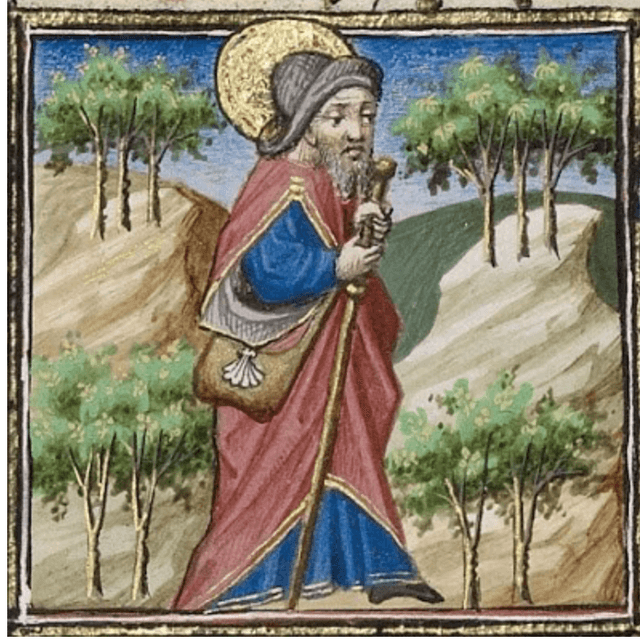
St. Charles Borromeo, Bishop and Confessor
City of God in Exile
St. Charles Borromeo, Bishop and Confessor
2027-11-04 - Time after Pentecost - Double - white
Today
St. Charles Borromeo, Bishop and Confessor
Reform Beginning with the Shepherd
Truth
Valid Sacraments Are a Grave Priority
The faithful must seek valid sacraments with prudence, sacrifice, and holy seriousness, without inventing sacraments or despising them.
Practice
Pastoral reform through holiness.
Correct your neglected spiritual duties before criticizing the failures of another.
Offering
To Jesus through Mary
Receive the testimony of Scripture, the Saints, reason, and experience with a teachable Catholic mind.
The Pilgrim's Devotional Rhythm
Keep this month and this weekday in prayer.
The month's intention and the weekday remembrance gather the pilgrim's prayer into the devotional rhythm of the Church. In harmony with today's Mass, feast, and duties, they teach him to receive ordinary time from God and return it to Him in honor and intercession.
November intention
The Holy Souls in Purgatory
Christian charity crosses the boundary of death. Remember the faithful departed who can no longer merit for themselves, and let prayer for them keep judgment, mercy, and eternity before your own soul.
Intention
For the relief of the Holy Souls, especially the most forgotten, and for the grace of final perseverance for the living.
A faithful act
Offer a prayer, indulgenced work under the Church's conditions, or sacrifice for a forgotten soul in Purgatory.
Prayer
Eternal rest give unto them, O Lord; and let perpetual light shine upon them. May they rest in peace. Amen.
Thursday remembrance
The Most Blessed Sacrament
Thursday recalls the institution of the Holy Eucharist and the priesthood at the Last Supper. Adore Our Lord in the Blessed Sacrament and pray for priests, through whose consecrated ministry the Holy Sacrifice is offered.
Intention
For holy priests, worthy Communions, vocations, and reparation for neglect and sacrilege toward the Blessed Sacrament.
A faithful act
Make a visit or spiritual Communion and pray especially for priests by name.
Prayer
Jesus in the Most Blessed Sacrament, increase our faith, receive our reparation, and sanctify Thy priests.
Good Morning, Pilgrim
Receive this day as a child of Holy Mother Church.
St. Charles Borromeo answered corruption not by weakening discipline, but by becoming more prayerful, penitential, learned, and fatherly. He reformed seminaries, clergy, worship, and care of souls because doctrine must become ordered Catholic life. Before demanding reform elsewhere, place every known disorder in your own soul beneath God's law.
Ask for the Catholic mind that receives Scripture within Tradition and turns sound doctrine into prayer, virtue, and obedience.
Formation in True Devotion - Day 341: Review and Deepening: Mary's Spiritual Reign and Necessity in God's Order
“The figures and words of the Old and New Testaments prove this. The sentiments and examples of the Saints confirm it. Reason and experience teach and demonstrate it.”
Catholic devotion is not constructed from private feeling. St. Louis de Montfort appeals to the two Testaments as read within Tradition, to the witness of the Saints, and to reason and experience. These witnesses belong together beneath the judgment of the teaching Church; none licenses selective quotation or a doctrine invented from an isolated phrase.
Study should lead to worship and obedience. Read the Marian figures and words of Scripture with the Fathers; learn the Saints' doctrine and imitate their virtues; reason without pride; and test experience by revealed truth rather than testing revealed truth by experience. Then devotion acquires roots deeper than mood or novelty.
Ora — Begin with Prayer
Offer the day before spending it
Prayer gives the day its right beginning and its right end. Before work, conversation, news, or distraction claims the mind, adore the Blessed Trinity and offer every prayer, work, joy, suffering, and temptation to Jesus through Mary. Ask your Guardian Angel for help, and place the souls and needs entrusted to you beneath God's will.
Begin simply. Make the Morning Offering through the hands of Our Lady. Pray the Three Hail Marys for purity and final perseverance, ask your Guardian Angel to govern the senses and imagination, and name the soul or intention for which today's prayers and sacrifices will be offered. Do not rush these acts merely because they are familiar; let them place the whole day beneath God before the world begins to claim it.
O Lord, through St. Charles Borromeo, sanctify Thy priests and make me begin every necessary reform with repentance, prayer, and obedience.
Quote of the Day
“He can no longer have God for his Father, who has not the Church for his mother.”
Plain-language help for today - 3 unfamiliar terms
- Cardinal
- a senior cleric of the Roman Church who advises the pope and, under the Church's law, ordinarily helps elect a successor.
- Ecclesiastical or ecclesial
- belonging or relating to the Church; the words refer to her life, law, worship, ministers, or common mission.
- Clergy or cleric
- the Church's ordained ministers; a cleric is a deacon, priest, or bishop.
The full Breviary lessons preserve an older English translation. Read the modern explanation first; it identifies the people, event, and doctrine before the historical wording appears.
Today's Full Breviary Sermon or Proper Lesson
Pastoral reform carried through plague, penance, and charity.
Matins - Second Nocturn - St. Charles Borromeo, Bishop and Confessor
The complete appointed Breviary sermon or proper lessons verified for this observance are printed below. Where a Common supplies additional material, it is identified distinctly rather than presented as the proper text.
Roman Breviary, Proper lessons for St. Charles Borromeo
“Charity was the brightest mark of his life.”
- The Breviary presents St. Charles as a reforming bishop who began with personal purity, prayer, preaching, discipline, and obedience to the Church's received doctrine.
- During the plague of Milan he gave money, furniture, bedding, sacramental care, and his own bodily service to the sick poor.
- His defense of ecclesiastical discipline survived violence because reform was not an administrative pose, but a life of fasting, meekness, catechesis, and self-offering beneath the Cross.
Reform what has actually been entrusted to you, beginning with yourself. St. Charles teaches that doctrine, discipline, catechesis, public penance, and costly mercy belong together.
Complete Breviary Text
Fourth Lesson - A Bishop Formed for Reform
Charles, of the noble family of Borromeo, was born on the 2nd day of October, in the year of our Lord 1538, at the Castle of Arona, fourteen miles from Milan. In foretoken of his holy life, God caused a bright light to shine by night over the chamber where his mother lay in travail. As soon as his age would allow him, he received the tonsure. When he was twelve years old, he was made Abbat of the rich Benedictine Abbey of St Gratian and St Felin, but reminded his father that the revenues thereof were not to be used as mere family property. His father, to whom the administration of these revenues fell during his son's non-age, still gave them forthwith over to him, and whatever was left over, he gave to the poor. While he was young he studied letters at Pavia. He kept his purity thoroughly, so that he scared away the unclean women, of whom many were set upon him, to overthrow his self-control. In the twenty-third year of his age, his uncle, Pius IV, made him a Cardinal, in which dignity he was a burning and shining light of godliness and all graces before the whole of the Sacred College. About forty days afterwards the same Pope created him Archbishop of Milan. As such it was his great desire to order the Church committed to his charge in accordance with the requirements of the most holy Council of Trent, which was in great part by his labours brought to a conclusion. To raise up the degraded lives of the people, he oftentimes held Synods, but himself set an example of deep godliness. He worked earnestly to purge the parts about the Alps and borders of Switzerland of heresy, and brought many of the heretics to the Christian faith.
Fifth Lesson - Charity during the Plague
Charity was the brightest mark of his life. His principality of Oria, in the kingdom of Naples, he sold for forty thousand crowns, and gave the whole sum to the poor in one day. Twenty thousand crowns being left him as a legacy by Virginia, widow of Count Frederick Borromeo, he gave the whole to the poor. The incomes of the benefices wherewith he had been loaded by his uncle, he spent upon the needs of the poor, except what he used for himself. When the plague grievously raged in Milan, he gave up to the sick poor the furniture of his own house, even to his own bedding, and thenceforward slept upon the boards. He constantly visited the sick, cheered them by his fatherly kindness, and wonderfully comforted them, ministering to them with his own hands the Sacraments of the Church. At the same time he drew near to plead for them with God in lowly entreaty, and ordered a public Procession wherein he walked himself carrying a Cross, with a rope halter round his neck, and his bare feet bleeding from the stones, and himself fain to turn away the Divine anger by offering himself as a scapegoat for the sins of his people. He was a stout defender of the freedom of the Church. But in the Church he was an earnest reformer of discipline, and once, when he was engaged in prayer, the paid agent of some conspirators took a shot at him with a blunderbuss, but, though the ball struck him, the power of God kept him unharmed.
Sixth Lesson - Penance, Catechesis, and a Holy Death
He was remarkable for his abstinence. He very often fasted upon nothing but bread and water, and sometimes nothing but lupines. He tamed his body by depriving himself of sleep, by very rough haircloth, and by constant scourging. He was an earnest practiser of lowliness and meekness. However much he was taken up with business, he never gave himself relaxation from prayer and from preaching the word of God. He built many Churches, convents, and schools. He wrote much matter, useful more especially for the good of Bishops. The publication of the "Parish Priests' Catechism" was due to his care. In October, 1584, he withdrew himself, for the purpose of making a retreat, to what is called the "Sacro Monte" of Varallo, an hill whereon many sacred subjects and especially the incidents of the Lord's sufferings are represented in life-size groups of coloured figures. On October 24 he was taken ill of a tertian ague, but concealed it, and lived there for some days a life of torture by voluntary suffering, but of sweetness by thoughts of Christ's woes. After his return to Milan, which he reached in a litter upon All Souls' Day, his sickness became hopeless, and early in the night between the 3rd and 4th days of November, in the 47th year of his own age, and in that of our Lord 1584, covered with ashes and sackcloth, and with his eyes fixed upon the image of Christ crucified, he exchanged earth for heaven. He was famous for miracles, and Pope Paul V numbered him among the Saints.
Walk with Holy Mother Church
Holy Mother Church has already begun praying. Enter her prayer.
Today the Roman year keeps St. Charles Borromeo, Bishop and Confessor. Receive the observance from the Church's hands: first understand what is commemorated, then let its doctrine and worship shape the day.
Octave context
Within the Common Octave of All Saints - Common Octave
Roman Martyrology
November 4
At Milan, St. Charles Borromeo, cardinal, and bishop of that city, who was ranked among the Saints by Paul V. on account of the holiness of his life and his renown for miracles. — At Bologna, the holy martyrs Vitalis and Agricola. The former was first the servant of the latter, and afterwards his partner and colleague in martyrdom. He was subjected by the persecutors to all kinds of torments, so that there was no part of his body without wounds. After having suffered with constancy, he yielded up his soul to God in prayer. Agricola was put to death by being fastened to a cross with many nails. St. Ambrose relates that being present at their translation, he took the martyr's nails, his glorious blood, and the wood of his cross, and deposited them under the consecrated altars. — The same day, the birthday of the Saints Philologus and Patrobas, disciples of the apostle St. Paul. — At Autun, St. Proculus, martyr. — In Vexin (in the North of France), St. Clarus, priest and martyr. — At Ephesus, St. Porphyry, martyr, under the emperor Aurelian. — At Myra, in Lycia, the holy martyrs Nicander, bishop, and Hermas, priest, under the governor Libanius. — The same day, the birthday of St. Pierius, priest of Alexandria, who, being deeply versed in the sacred Scriptures, leading a very pure life, and freed from all impediments in order to apply to Christian philosophy, taught the people with great renown, and published various treatises, under the emperors Carus and Diocletian, when Theonas governed the church of Alexandria. After the persecution, he spent the remainder of his life at Rome, where he rested in peace. — At Bhodez, in France, blessed Amantius, bishop, whose life was resplendent with sanctity and miracles. — In Bithynia, St. Joannicius, abbot. — In Hungary, at AlbaBegale, the demise of St. Emeric, confessor, son of St. Stephen, king of Hungary. — In the monastery of Cerfroid, in the diocese of Meaux, St. Felix de Valois, founder of the Order of the Most Holy Trinity for the Bedemption of Captives. His feast is celebrated on the 20th of this month by order of Innocent XI. — At Treves, St. Modesta, virgin.
Learn from Today's Saint or Feast
St. Charles Borromeo
Cardinal, bishop, reformer, and shepherd of Milan.
The Martyrology honors St. Charles Borromeo, cardinal and bishop of Milan, for holiness of life and miracles.
His feast teaches episcopal reform as personal sacrifice: a shepherd must defend doctrine, restore discipline, care for souls, and spend himself for the flock rather than merely administer religion.
Let St. Charles teach serious charity. The Church is renewed by doctrine, discipline, prayer, penance, and shepherds willing to be spent. Today, begin repairing the neglected duties already known to you instead of merely wishing things were better.
The Pilgrim's Spiritual Conference
Valid Sacraments Are a Grave Priority
Remain here for a little while. Receive today's Catholic truth as a child of Holy Mother Church; let it judge the heart, strengthen the will, and become an act offered to God.
The Church places this truth before you today: The faithful must seek valid sacraments with prudence, sacrifice, and holy seriousness, without inventing sacraments or despising them. Do not hurry past it as though doctrine belonged only to books and controversies. A revealed truth is also a light by which the soul must judge its loyalties, its fears, its habits, and the duties immediately before it. Families often move for work, schools, or safety. The sacraments are a higher good, and should weigh heavily in practical decisions when God makes such a move possible.
The grace to be practiced is Pastoral reform through holiness, drawn from today's saintly witness. Ask God for more than the natural appearance of this virtue. Temperament may make an action seem easy for a time, but supernatural virtue remains faithful because God is worthy of obedience, even when feeling offers no assistance and no one notices the cost. Practice docility to truth by studying carefully, judging sources honestly, and correcting any opinion contrary to the Faith.
There is also an enemy to recognize: Resist home-alone despair when it becomes settled indifference to seeking valid sacraments. Do not study this danger only in other people. Look quietly for the door by which it seeks entrance into your own soul - perhaps through delay, curiosity, resentment, human respect, attachment to comfort, or the desire to control the outcome. Dying to self today means choosing pastoral reform through holiness when pride, comfort, fear, resentment, or human respect asks for control.
Do the faithful act and entrust its fruit to divine Providence, God's wise and loving governance of all things. Place effort and outcome into Our Lady's hands so that the whole offering may be presented to her Divine Son. Confidence in God is not passivity: obey, pray, work, and accept that visible success, consolation, or immediate relief may not be given. God remains faithful when the duty is hidden and the outcome uncertain. Therefore, perform the duty that belongs to you, use the lawful means God has provided, and then surrender the fruit. Surrender cherished assumptions when Scripture and the perennial teaching of the Church expose them as false or incomplete. Read Scripture, pray its Marian words, imitate the Saints, reason from Catholic principles, and conform experience to revealed truth.
The Church's witness
This truth manifests the Church's mark of holy. The witness placed beside it today is St. Charles Borromeo.
Your resolution before God
Correct your neglected spiritual duties before criticizing the failures of another.
The reformer must first consent to be reformed by grace.
Carry this word quietly. Return to it when distraction, temptation, or discouragement begins to scatter the soul.
The Little Rule of Fidelity
Keep the day within prayer.
These anchors do not change because the soul needs a stable rule more than a daily novelty. Open them when you are learning the rule or when your ordinary prayer has begun to loosen.
Show today's prayer and duty anchors
Begin with morning prayer
Adore the Blessed Trinity and offer the whole day to Jesus through Mary before other duties claim the mind.
Keep the Angelus
Pause morning, noon, and evening to remember the Incarnation.
Seek Our Lord in the Blessed Sacrament
Attend Holy Mass when duty permits; otherwise make a Spiritual Communion and renew desire for Jesus in the Blessed Sacrament.
Return to Jesus and Mary
Use frequent holy aspirations during work, waiting, suffering, and temptation.
Pray the Rosary
Keep the mysteries of Christ before the mind with Our Lady and learn to imitate what they contain.
End with night prayer and examen
Give thanks, confess faults, forgive injuries, make a practical amendment, and entrust the night to Our Lady.
The Pilgrim's Mirror
How shall I imitate Christ today?
“Regard not much who is with thee, nor who is against thee, but be this thy greatest study, that God may be with thee.”
Human approval is a poor compass. With Mary, seek first to be faithful to Jesus Christ and His Church, whether praise follows or not.
The desire to be supported can subtly alter judgment before you notice it. It softens a necessary word, delays a duty, or makes loneliness appear to be proof that fidelity was mistaken. Examine the act by Catholic truth and your real obligations; then leave the company or opposition of men in God's hands.
Today's Practice
Perform right acts without checking whether anyone noticed.
Before Night Falls
Return the completed day to God.
Give thanks before measuring the day by feeling or visible success. Ask light to see faults without discouragement, make an Act of Contrition, forgive injuries, and place tomorrow beneath divine Providence.
Examine whether you sought truth in order to obey God or collected arguments merely to defend preference and pride.
- For what grace or mercy should I thank God today?
- What sin, fault, neglected duty, or resistance to grace must I confess?
- What definite amendment will I carry into tomorrow?
Go Now, Pilgrim
Walk faithfully. Pray attentively. Bear your cross willingly. Love God above all things.
Holy Mother Church has gathered you around her prayer and truth; now carry what you have received into the duties of your state.
When this day is finished, may you have laid one more stone in the City of God.
You do not walk alone: remain beneath Our Lady's care as she leads you toward her Divine Son and the Heavenly Jerusalem.
God willing, we shall meet again at tomorrow's pilgrimage.
Source notes for this pilgrimage
Martyrology: The Roman Martyrology, Baltimore, 1916, John Murphy Company; local raw text lines 11567-11620.
- Saint witness: St. Andrew Daily Missal, November 4.
- Saint witness: Roman Martyrology, 1916 Baltimore edition, November 4.
- Breviary witness: Roman Breviary, Matins lessons for November 4, St. Charles Borromeo.
- Breviary witness: Roman Martyrology, 1916 Baltimore edition, November 4.
- Matins lesson: The Roman Breviary, translated by John, Marquess of Bute, 1908, vol. IV, Autumn, Second Nocturn for St. Charles Borromeo, lessons iv-vi, printed pp. 713-715.
- Matins lesson: Bute 1908 is used here as an accessible pre-Pius X Breviary witness and is cited distinctly from the 1936-1937 Benziger / Burns Oates edition.
Pilgrim's Mirror: Thomas à Kempis, The Imitation of Christ, translated by Richard Whitford, edited by Wilfrid Raynal, O.S.B. (Mount Vernon, N.Y.: Peter Pauper Press, c. 1947). Today's passage is at Book II, chapter 2, p. 55.
Marian formation: St. Louis-Marie de Montfort, True Devotion to the Blessed Virgin, translated by Fr. Frederick William Faber, 1941 Company of Mary edition, imprimatur September 26, 1949. Today's passage is at True Devotion to the Blessed Virgin, no. 41. The supplied 2010 PDF is used only as a digital transcription of that pre-1955 edition.
- Octave context: St. Andrew Daily Missal, Liturgical Calendar, p. xxv.
- Devotional rhythm: St. Andrew Daily Missal, Dom Gaspar Lefebvre, O.S.B., 1953 edition; proper Mass or devotion named in this entry.
- Devotional rhythm: 2 Machabees 12:43-46, Douay-Rheims.
- Devotional rhythm: 1 Corinthians 11:23-29, Douay-Rheims.
- Faith point: Roman Catechism, treatment of the sacraments.
- Faith point: Council of Trent, canons on the sacraments.
- Marian atmosphere and imitation: Luke 1:38, 46-49; Luke 2:19; John 2:5; John 19:25-27; and John 3:30, Douay-Rheims.
- Authority and revolt: Exodus 5:2, Douay-Rheims.
- Daily examen: St. Ignatius of Loyola, Spiritual Exercises, Particular and Daily Examen.