The Daily Pilgrimage
“Now therefore, ye children, hear me: Blessed are they that keep my ways.” — Proverbs 8:32
Daily formation
2028-10-18
Receive the day as a child of Holy Mother Church. Beneath Our Lady's care, magnify Christ, obey God's commandments, fulfill the duties of your state in life, die to self, trust divine Providence, resist error, and return the whole day to God.
Holy Mother Church gathers her children around the Sacred Calendar, feeds them with truth, warns them against what wounds the soul, and teaches them to walk faithfully toward their heavenly home.
“Fear not, little flock, for it hath pleased your Father to give you a kingdom. […] For where your treasure is, there will your heart be also.”
Choose a date
Daily navigation
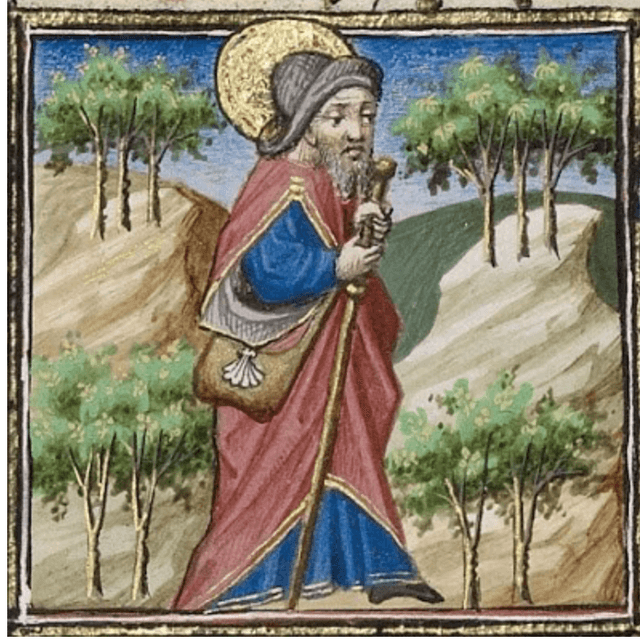
St. Luke, Evangelist
City of God in Exile
St. Luke, Evangelist
2028-10-18 - Time after Pentecost - Double of the Second Class - red
Today
St. Luke, Evangelist
The Physician Who Handed On the Gospel
Truth
Grace Heals and Elevates Nature
Man is not saved by natural goodness, sentiment, or progress. He needs sanctifying grace, the merits of Christ, and persevering conversion.
Practice
Evangelical truth with physicianly charity.
Stand with difficult Catholic truths today even when silence would be easier.
Offering
To Jesus through Mary
Ask for the childlike faith that receives Catholic truth humbly while remaining ready to learn its foundations in Scripture and Tradition.
The Pilgrim's Devotional Rhythm
Keep this month and this weekday in prayer.
The month's intention and the weekday remembrance gather the pilgrim's prayer into the devotional rhythm of the Church. In harmony with today's Mass, feast, and duties, they teach him to receive ordinary time from God and return it to Him in honor and intercession.
October intention
The Most Holy Rosary
The Rosary places the mysteries of Jesus Christ before the soul in the company of His Mother. Pray it as a school of faith and contemplation, not as hurried words.
Intention
For the defense of the Catholic Faith, peace in Christian homes, the conversion of sinners, and perseverance in mental prayer.
A faithful act
Pray five decades with attention, pausing briefly to place yourself within each mystery before beginning it.
Prayer
Queen of the Most Holy Rosary, keep the mysteries of thy Divine Son living in our minds and fruitful in our conduct.
Wednesday remembrance
St. Joseph
Midweek, turn to St. Joseph, whose hidden labor guarded Jesus and Mary. He teaches authority without self-importance, work without complaint, and silence joined to decisive obedience.
Intention
For fathers, laborers, families, the protection of the Church, and those approaching death.
A faithful act
Do necessary tasks thoroughly without seeking notice or praise.
Prayer
St. Joseph, patron of the universal Church, guard our homes and obtain for us purity, courage, and a holy death.
Good Morning, Pilgrim
Receive this day as a child of Holy Mother Church.
St. Luke served souls by preserving faithfully what Christ did and taught and what the Apostles handed down. The written Gospel is not religious imagination; it is testimony received by the Church and proclaimed for conversion. Read a few verses slowly today, asking not for novelty but for the grace to obey.
Ask for a docile mind that loves Catholic truth, learns it faithfully, and never uses complexity to evade obedience.
Formation in True Devotion - Day 326: Review and Deepening: Mary's Maternal Formation of Christ's Members
“But as I speak particularly to the poor and simple, who being of good-will, and having more faith than the common run of scholars, believe more simply and so more meritoriously, I content myself with putting out the truth quite simply, without stopping to quote the original passages, which they would not understand.”
St. Louis de Montfort is not praising ignorance, credulity, or contempt for sacred learning. In this very paragraph he explains that his teaching can be confirmed from Holy Scripture and the Fathers. He adapts the manner of instruction so that souls of good will may receive substantial truth without an academic obstacle.
Simplicity of faith is the opposite of self-sufficient cleverness, but it must never become indifference to doctrine. Receive what the Church teaches, seek sound reasons according to your capacity and duties, refuse novelty and private invention, and submit every conclusion to the revealed Faith handed down by the Church.
Ora — Begin with Prayer
Offer the day before spending it
Prayer gives the day its right beginning and its right end. Before work, conversation, news, or distraction claims the mind, adore the Blessed Trinity and offer every prayer, work, joy, suffering, and temptation to Jesus through Mary. Ask your Guardian Angel for help, and place the souls and needs entrusted to you beneath God's will.
Begin simply. Make the Morning Offering through the hands of Our Lady. Pray the Three Hail Marys for purity and final perseverance, ask your Guardian Angel to govern the senses and imagination, and name the soul or intention for which today's prayers and sacrifices will be offered. Do not rush these acts merely because they are familiar; let them place the whole day beneath God before the world begins to claim it.
O Lord, keep me near Thy Cross when comfort, acceptance, and ease invite me elsewhere. Let fidelity be stronger than the desire to belong.
Quote of the Day
“The Lord appointed also other seventy-two.”
Plain-language help for today - 3 unfamiliar terms
- Ecclesiastical or ecclesial
- belonging or relating to the Church; the words refer to her life, law, worship, ministers, or common mission.
- Apostolic
- belonging to the faith, mission, teaching, or authority handed down from Christ through the apostles.
- Evangelist
- one of the four inspired authors of the Gospels: Matthew, Mark, Luke, or John.
The full Breviary lessons preserve an older English translation. Read the modern explanation first; it identifies the people, event, and doctrine before the historical wording appears.
Today's Full Breviary Sermon or Proper Lesson
The Evangelist, the physician, and the careful witness.
Matins - Second Nocturn - St. Luke, Evangelist
The complete appointed Breviary sermon or proper lessons verified for this observance are printed below. Where a Common supplies additional material, it is identified distinctly rather than presented as the proper text.
St. Jerome, Priest, Book on Ecclesiastical Writers
“Only Luke is with me.”
- The Breviary honors St. Luke as physician, companion of St. Paul, evangelist, and author of the Acts of the Apostles.
- St. Jerome explains that Luke wrote using the testimony handed down by those who had seen Christ's deeds and then served as preachers of His word.
- The lesson also rejects apocryphal inventions, teaching that Catholic memory receives true apostolic testimony and refuses attractive fabrications.
Ask St. Luke for truthful charity. Souls need careful witness, not pious invention; the physician of souls must love accuracy because he loves salvation.
Complete Breviary Text
Fourth Lesson - Physician, Companion, and Evangelist
The Lesson is taken from the Book on Ecclesiastical Writers, written by St Jerome, Priest [at Bethlehem.] Luke was a physician of Antioch, who, as appeareth from his writings, knew the Greek language. He was a follower of the Apostle Paul, and his fellow-traveller in all his wanderings. He wrote a Gospel, whereof the same Paul saith: "We have sent with him the brother, whose praise is in the Gospel throughout all the Churches" (2 Cor. viii. 18.) Of him, he writeth unto the Colossians, (iv. 14): "Luke, the beloved physician, greeteth you." And again, unto Timothy, (II. iv. 11): "Only Luke is with me." He also published another excellent book intituled "The Acts of the Apostles," wherein the history is brought down to Paul's two-years sojourn at Rome, that is to say, until the fourth year of Nero, from which we gather that it was at Rome that the said book was composed.
Fifth Lesson - Apocryphal Inventions Rejected
The silence of Luke is one of the reasons why we reckon among Apocryphal books "The Acts of Paul and Thekla," and the whole story about the baptism of Leo. For why should the fellow-traveller of the Apostle, who knew other things, be ignorant only of this? At the same time there is against these documents the statement of Tertullian, almost a contemporary writer, that the Apostle John convicted a certain Priest in Asia, who was a great admirer of the Apostle Paul, of having written them, and that the said Priest owned that he had been induced to compose them through his admiration for Paul, and that he was deposed in consequence. There are some persons who suspect that when Paul in his Epistles useth the phrase, "According to my Gospel" (Rom. ii. 16, 2 Tim. ii. 8,) he meaneth the Gospel written by Luke.
Sixth Lesson - Apostolic Testimony Carefully Handed Down
Howbeit, Luke learned his Gospel not from the Apostle Paul only, who had not companied with the Lord in the flesh, but also from other Apostles, as himself declareth at the beginning of his work, where he saith: "They delivered them unto us, which from the beginning were eye-witnesses and ministers of the word," (i. 2.) According to what he had heard, therefore, did he write his Gospel. As to the "Acts of the Apostles," he composed them from his own personal knowledge. He was never married. He lived eighty-four years. He is buried at Constantinople, whither his bones were brought from Achaia in the twentieth year of Constantine, together with the reliques of the Apostle Andrew.
Walk with Holy Mother Church
Holy Mother Church has already begun praying. Enter her prayer.
Today the Roman year keeps St. Luke, Evangelist. Receive the observance from the Church's hands: first understand what is commemorated, then let its doctrine and worship shape the day.
Roman Martyrology
October 18
The birthday of blessed Luke, evangelist, who, after having suffered much for the name of Christ, died in Bithynia, filled with the Holy Ghost. His relics were taken to Constantinople, and thence conveyed to Padua. — At Antioch, St. Asclepiades, bishop, one of the celebrated troop of martyrs who suffered gloriously under Macrinus. — In the diocese of Beauvais, St. Justus, martyr, who, being but a boy, was put to death in the persecution of Diocletian, under the governor Kictiovarus. — At Neocaesarea, in Pontus, the holy and learned bishop Athenodorus, brother of St. Gregory Thaumaturgus, who underwent martyrdom in the persecution of Aurelian. — In Mesopotamia, on the bank of the Euphrates, St. Julian, hermit. — At Koine, the birthday of St. Paul of the Cross, confessor, founder of the Congregation of the Cross and Passion of Our Lord Jesus Christ, whom Pius IX. canonized on account of his remarkable innocence of life and his penitential spirit, assigning the 28th of April as the day of his festival. — At Rome, St. Tryphonia, at one time wife of the Caesar Decius. She was buried in a crypt, near St. Hippolytus.
Gospel of the Day
The Lord appointed also other seventy-two.
St. Luke, Evangelist - Luke 10:1-9
“The harvest indeed is great, but the labourers are few.”
Ask St. Luke for the physician's charity: careful, truthful, and tender toward wounded souls.
Receive the Gospel with Holy Mother Church
The apostolic mission is sent in poverty, peace, and dependence on God.
The evangelist records the mercy of Christ so that souls may know the Physician.
This Gospel corrects a danger that can quietly deform Catholic judgment: The mission that trusts technique more than grace. Ask where that danger seeks your consent today, and answer it with the act Our Lord requires.
Learn from Today's Saint or Feast
St. Luke
Evangelist of mercy, prayer, and apostolic history.
St. Luke served the Church by writing the Gospel and the Acts of the Apostles, preserving the works and words of Christ and the public life of the early Church.
His witness teaches that faith is not myth or mood. The Church remembers, records, preaches, and lives what God has done in history.
Let St. Luke teach careful mercy. Souls need truth recorded faithfully and applied tenderly, like medicine.
The Pilgrim's Spiritual Conference
Grace Heals and Elevates Nature
Remain here for a little while. Receive today's Catholic truth as a child of Holy Mother Church; let it judge the heart, strengthen the will, and become an act offered to God.
The Church places this truth before you today: Man is not saved by natural goodness, sentiment, or progress. He needs sanctifying grace, the merits of Christ, and persevering conversion. Do not hurry past it as though doctrine belonged only to books and controversies. A revealed truth is also a light by which the soul must judge its loyalties, its fears, its habits, and the duties immediately before it. The Church is holy because Christ is holy, because she possesses holy doctrine and sacraments, and because she forms saints by grace.
The grace to be practiced is Evangelical truth with physicianly charity, drawn from today's saintly witness. Ask God for more than the natural appearance of this virtue. Temperament may make an action seem easy for a time, but supernatural virtue remains faithful because God is worthy of obedience, even when feeling offers no assistance and no one notices the cost. Practice teachability by receiving sound correction, studying what your duties require, and refusing both intellectual pride and careless credulity.
There is also an enemy to recognize: Resist naturalism, which treats human improvement as though it could take the place of supernatural life. Do not study this danger only in other people. Look quietly for the door by which it seeks entrance into your own soul - perhaps through delay, curiosity, resentment, human respect, attachment to comfort, or the desire to control the outcome. Dying to self today means choosing evangelical truth with physicianly charity when pride, comfort, fear, resentment, or human respect asks for control.
Do the faithful act and entrust its fruit to divine Providence, God's wise and loving governance of all things. Place effort and outcome into Our Lady's hands so that the whole offering may be presented to her Divine Son. Confidence in God is not passivity: obey, pray, work, and accept that visible success, consolation, or immediate relief may not be given. God remains faithful when the duty is hidden and the outcome uncertain. Therefore, perform the duty that belongs to you, use the lawful means God has provided, and then surrender the fruit. Accept the labor of learning, the humility of admitting ignorance, and the duty of abandoning opinions contrary to the Faith. Read, speak, and judge according to sound Catholic sources, explaining truth plainly without weakening or disguising it.
The Church's witness
This truth manifests the Church's mark of holy. The witness placed beside it today is St. Thomas Aquinas.
Your resolution before God
Stand with difficult Catholic truths today even when silence would be easier.
The faithful remain at the Cross when the multitude walks past it.
Carry this word quietly. Return to it when distraction, temptation, or discouragement begins to scatter the soul.
The Little Rule of Fidelity
Keep the day within prayer.
These anchors do not change because the soul needs a stable rule more than a daily novelty. Open them when you are learning the rule or when your ordinary prayer has begun to loosen.
Show today's prayer and duty anchors
Begin with morning prayer
Adore the Blessed Trinity and offer the whole day to Jesus through Mary before other duties claim the mind.
Keep the Angelus
Pause morning, noon, and evening to remember the Incarnation.
Seek Our Lord in the Blessed Sacrament
Attend Holy Mass when duty permits; otherwise make a Spiritual Communion and renew desire for Jesus in the Blessed Sacrament.
Return to Jesus and Mary
Use frequent holy aspirations during work, waiting, suffering, and temptation.
Pray the Rosary
Keep the mysteries of Christ before the mind with Our Lady and learn to imitate what they contain.
End with night prayer and examen
Give thanks, confess faults, forgive injuries, make a practical amendment, and entrust the night to Our Lady.
The Pilgrim's Mirror
How shall I imitate Christ today?
“A meek knowing of ourself is a surer way to God than is the searching for highness of cunning.”
Learning serves holiness only when it makes the soul humbler before God. Receive truth as a disciple of Christ, not as material for self-display.
Do not measure profit by how much you can repeat. Ask whether what you have learned has made prayer more reverent, judgment more Catholic, speech more restrained, and duty more exact. Knowledge that never kneels easily becomes another possession of pride.
Today's Practice
Keep good insights hidden when charity does not require speech, and turn them into prayer and amendment.
Before Night Falls
Return the completed day to God.
Give thanks before measuring the day by feeling or visible success. Ask light to see faults without discouragement, make an Act of Contrition, forgive injuries, and place tomorrow beneath divine Providence.
Examine whether pride rejected simple truth or laziness refused the study needed to understand and defend it.
- For what grace or mercy should I thank God today?
- What sin, fault, neglected duty, or resistance to grace must I confess?
- What definite amendment will I carry into tomorrow?
Go Now, Pilgrim
Walk faithfully. Pray attentively. Bear your cross willingly. Love God above all things.
Holy Mother Church has gathered you around her prayer and truth; now carry what you have received into the duties of your state.
When this day is finished, may you have laid one more stone in the City of God.
You do not walk alone: remain beneath Our Lady's care as she leads you toward her Divine Son and the Heavenly Jerusalem.
God willing, we shall meet again at tomorrow's pilgrimage.
Source notes for this pilgrimage
Martyrology: The Roman Martyrology, Baltimore, 1916, John Murphy Company; local raw text lines 10962-10996.
- Gospel: Luke 10:1-9, Douay-Rheims.
- Gospel: Traditional Roman Gospel for St. Luke.
- Saint witness: Luke 1:1-4; Acts 1:1-2, Douay-Rheims.
- Saint witness: Roman Martyrology, 1916 Baltimore edition, October 18.
- Breviary witness: The Roman Breviary, translated by John, Marquess of Bute, 1908, vol. IV, Autumn, Matins for St. Luke, printed pp. 661-662.
- Breviary witness: Luke 1:1-4; Acts 1:1-2, Douay-Rheims.
- Matins lesson: The Roman Breviary, translated by John, Marquess of Bute, 1908, vol. IV, Autumn, Second Nocturn for St. Luke, lessons iv-vi, printed pp. 661-662.
- Matins lesson: Bute 1908 is used here as an accessible pre-Pius X Breviary witness and is cited distinctly from the 1936-1937 Benziger / Burns Oates edition.
Pilgrim's Mirror: Thomas à Kempis, The Imitation of Christ, translated by Richard Whitford, edited by Wilfrid Raynal, O.S.B. (Mount Vernon, N.Y.: Peter Pauper Press, c. 1947). Today's passage is at Book I, chapter 3, p. 12.
Marian formation: St. Louis-Marie de Montfort, True Devotion to the Blessed Virgin, translated by Fr. Frederick William Faber, 1941 Company of Mary edition, imprimatur September 26, 1949. Today's passage is at True Devotion to the Blessed Virgin, no. 26. The supplied 2010 PDF is used only as a digital transcription of that pre-1955 edition.
- Devotional rhythm: St. Andrew Daily Missal, Dom Gaspar Lefebvre, O.S.B., 1953 edition; proper Mass or devotion named in this entry.
- Devotional rhythm: Pope Leo XIII, Supremi Apostolatus Officio, September 1, 1883.
- Devotional rhythm: Matthew 1:19-24, Douay-Rheims.
- Faith point: St. Thomas Aquinas, Summa Theologiae, on grace.
- Faith point: Council of Trent, Decree on Justification.
- Marian atmosphere and imitation: Luke 1:38, 46-49; Luke 2:19; John 2:5; John 19:25-27; and John 3:30, Douay-Rheims.
- Authority and revolt: Exodus 5:2, Douay-Rheims.
- Daily examen: St. Ignatius of Loyola, Spiritual Exercises, Particular and Daily Examen.