The Daily Pilgrimage
Today in the City of God: calendar, Martyrology, Gospel, witness, prayer, and Catholic formation held together.
Daily formation
2030-06-10
Receive the day before spending it. Magnify Christ with Our Lady, obey God's commandments, fulfill the duties of your state in life, die to self, trust divine Providence, practice the virtues those duties require, resist error, and close the whole day beneath truth and mercy.
This page is meant to be read slowly and faithfully, so that every part of the present day may be ordered to God.
Choose a date
Daily navigation
Monday within the Octave of Pentecost
City of God in Exile
Monday within the Octave of Pentecost
2030-06-10 - Eastertide - Double of the First Class - red
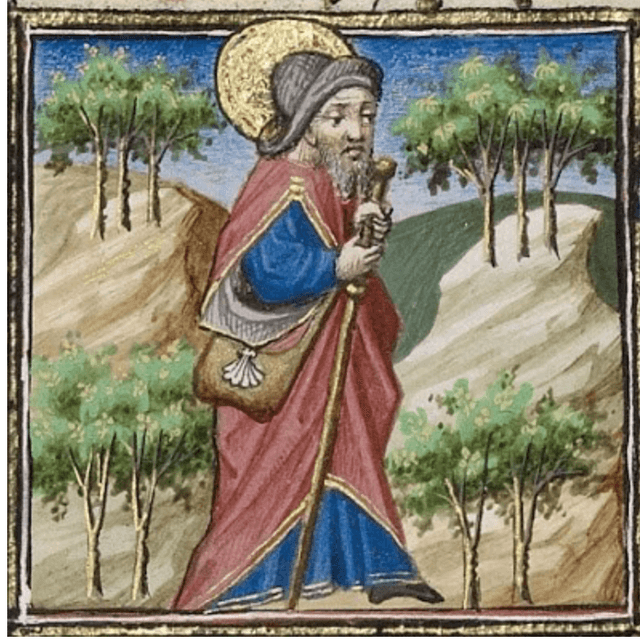
Today
Monday within the Octave of Pentecost
A Household Ruled Beneath Christ
Truth
Modernism Is the Synthesis of Heresies
Modernism corrodes the faith from within by subjecting revelation, dogma, worship, and authority to religious experience and historical change.
Practice
Grateful life in divine light.
Pray with or for your household and use your influence to strengthen prayer, mercy, and Catholic truth.
Offering
To Jesus through Mary
Receive the testimony of Scripture, the Saints, reason, and experience with a teachable Catholic mind.
The Pilgrim's Devotional Rhythm
Keep this month and this weekday in prayer.
The month's intention and the weekday remembrance gather the pilgrim's prayer into the devotional rhythm of the Church. In harmony with today's Mass, feast, and duties, they teach him to receive ordinary time from God and return it to Him in honor and intercession.
June intention
The Most Sacred Heart of Jesus
The Sacred Heart reveals the human love of the Incarnate Word, burning for His Father's glory and the salvation of souls. Draw near in reparation, obedience, and confidence rather than sentiment alone.
Intention
For reparation to the Sacred Heart, the conversion of sinners, and hearts made meek, humble, and faithful to the commandments of Christ.
A faithful act
Accept contradictions without resentment and offer them in reparation for coldness toward Our Lord.
Prayer
Most Sacred Heart of Jesus, have mercy on us and make our hearts like unto Thine.
Monday remembrance
The Holy Souls in Purgatory
Begin the working week with an act of mercy toward the faithful departed. Their helplessness calls forth charity, while their purification reminds the living to repent before death.
Intention
For the most abandoned soul in Purgatory and for deceased relatives, benefactors, priests, and those who have no one to pray for them.
A faithful act
Offer the first difficulty of the week for the Holy Souls and pray the De profundis.
Prayer
Eternal rest give unto them, O Lord; and let perpetual light shine upon them.
Good Morning, Pilgrim
Receive this day from God.
The Eucharistic octave keeps the household of faith near Christ's altar, while St. Margaret shows how prayer and mercy can govern a family and a realm. Authority becomes holy when it serves God, forms souls, relieves the poor, and refuses to make comfort or reputation its final law.
Ask for the Catholic mind that receives Scripture within Tradition and turns sound doctrine into prayer, virtue, and obedience.
Formation in True Devotion - Day 191: Review and Deepening: Mary's Spiritual Reign and Necessity in God's Order
“The figures and words of the Old and New Testaments prove this. The sentiments and examples of the Saints confirm it. Reason and experience teach and demonstrate it.”
Catholic devotion is not constructed from private feeling. St. Louis de Montfort appeals to the two Testaments as read within Tradition, to the witness of the Saints, and to reason and experience. These witnesses belong together beneath the judgment of the teaching Church; none licenses selective quotation or a doctrine invented from an isolated phrase.
Study should lead to worship and obedience. Read the Marian figures and words of Scripture with the Fathers; learn the Saints' doctrine and imitate their virtues; reason without pride; and test experience by revealed truth rather than testing revealed truth by experience. Then devotion acquires roots deeper than mood or novelty.
Ora — Begin with Prayer
Offer the day before spending it
Prayer gives the day its right beginning and its right end. Before work, conversation, news, or distraction claims the mind, adore the Blessed Trinity and offer every prayer, work, joy, suffering, and temptation to Jesus through Mary. Ask your Guardian Angel for help, and place the souls and needs entrusted to you beneath God's will.
Begin simply. Make the Morning Offering through the hands of Our Lady. Pray the Three Hail Marys for purity and final perseverance, ask your Guardian Angel to govern the senses and imagination, and name the soul or intention for which today's prayers and sacrifices will be offered. Do not rush these acts merely because they are familiar; let them place the whole day beneath God before the world begins to claim it.
O Lord, through St. Margaret, bring every influence in my home beneath Thy truth and charity. Make authority merciful, prayerful, disciplined, and courageous against error.
Quote of the Day
“I have fought a good fight, I have finished my course, I have kept the faith.”
Plain-language help for today - 2 unfamiliar terms
Monday within the Octave of Pentecost is the principal observance today. The calendar also preserves St. Margaret, Queen and Widow on this date. The secondary saint and Breviary sermon or lesson panels below come from that secondary observance. That material adds another traditional lesson for the date; it does not replace the principal observance.
- Octave
- an eight-day extension of a major feast, allowing the Church to continue praying over the same mystery.
- Redemption
- Christ's saving work by which He paid the price of sin through His obedient suffering and death and frees sinners for life with God.
The full Breviary lessons preserve an older English translation. Read the modern explanation first; it identifies the people, event, and doctrine before the historical wording appears.
Today's Full Breviary Sermon or Proper Lesson
Royal authority purified by prayer, fasting, household formation, and mercy.
Matins - Second Nocturn - St. Margaret, Queen and Widow
The complete appointed Breviary sermon or proper lessons verified for this observance are printed below. Where a Common supplies additional material, it is identified distinctly rather than presented as the proper text.
Roman Breviary, Proper lessons for St. Margaret of Scotland
“She wonderfully benefited the whole kingdom by works of holiness and piety.”
- The Breviary presents St. Margaret's queenship as a vocation under God: for thirty years she governed her influence through holiness, piety, reform, and the Christian formation of her husband, children, and kingdom.
- Her interior rule was severe and ordered. She practiced vigils, prayer, fasting even through suffering, and generous care for churches and monasteries before exercising reform over others.
- Her charity was bodily and humble, not ornamental. She fed three hundred poor persons daily, served them on her knees, washed their feet, tended their sores, and spent royal treasure for their relief.
Consecrate every influence of home, wealth, education, or public duty to Christ. Reform yourself through prayer and fasting, form those entrusted to you in the Faith, correct corrupt customs, and serve the poor with personal humility rather than distant sentiment.
Complete Breviary Text
Fourth Lesson - A Queen More Illustrious by Christian Virtue
Margaret, Queen of the Scots, most illustrious through the blood of the kings of England on her father's side and of the Caesars on her mother's, was still more illustrious by Christian virtue. She was born in Hungary, where her father was then living in exile. After spending her childhood in the greatest piety, she came to England with her father, who was being called by his uncle St. Edward, King of the English, to the throne of his fathers. Soon afterwards, when the fortune of her parents changed again, she sailed from England and was driven by a storm - or rather led by divine Providence - to the coast of Scotland. There, at her mother's command, she married Malcolm III, King of the Scots, who had been captivated by her excellent gifts. During the thirty years of her reign she wonderfully benefited the whole kingdom by works of holiness and piety.
Fifth Lesson - Prayer and Reform within the Royal Household
Amid royal comforts she mortified her body by afflictions and vigils and spent a great part of the night in holy prayer. Besides other fasts which she frequently observed, she was accustomed to fast for forty entire days before Christmas with such strictness that she would not omit it even in the gravest sufferings. Most devoted to divine worship, she built many churches and monasteries from their foundations, restored others, and enriched them with sacred furnishings and ample revenues. By her saving example she led her husband the king to a better life and to works like her own. She educated all her children so holily and happily that many of them, as also her mother Agatha and her sister Christina, embraced a most holy manner of life. Finally, providing for the welfare of the whole kingdom, she cleansed the people from the vices that had secretly crept in and restored customs worthy of Christian piety.
Sixth Lesson - A Queen Kneeling before the Poor
Nothing in her was more wonderful than her ardent charity toward her neighbors, especially the needy. She not only supplied abundant alms to their numerous companies, but every day with maternal kindness provided meals for three hundred. On her knees like a servant she waited upon them, washed their feet with royal hands, and even kissed and tended their sores. For these and other pious expenses she sold not only royal garments and precious jewels but more than once exhausted the treasury itself. At last, after bearing most bitter sufferings with exemplary patience and being purified by six months of bodily illness, she returned her soul to her Creator on the sixteenth day before the Kalends of December. At that very moment her face, disfigured by the wasting and pallor of long sickness, flowered again with an extraordinary beauty. Renowned also after death by wonderful signs, and appointed patroness of Scotland by the authority of Pope Clement X, she is most devoutly honored throughout the world.
Walk with the Church
The Church has already begun praying. Enter her prayer.
Today the Roman year keeps Monday within the Octave of Pentecost. Receive the observance as the Church gives it: first understand what is commemorated, then let its doctrine and worship shape the day.
Octave context
Within the Privileged Octave of Pentecost - Privileged Octave of the First Order
Roman Martyrology
June 10
N Scotland, St. Margaret, queen, celebrated for her love of the poor and of voluntary poverty. — At Rome, on the Salarian road, the martyrdom of blessed Getulius, a noble and very learned man, and of his companions Caerealis, Ainantius, and Primitivus. By order of the emperor Adrian, they were arrested by the ex-consul Licinius, scourged, thrown into prison, and then delivered to the flames. But as the fire did not injure them, their heads were crushed with clubs, and they thus terminated their martyrdom. Their bodies were taken up by Symphorosa, wife of blessed Getulius, and reverently interred in a sandpit on her own estate. — Also, at Rome, on the Aurelian way, the birthday of the Saints Basilides, Tripos, Mandales, and twenty other martyrs, under the emperor Aurelian, and Plato, governor of the city. — At Nicomedia, St. Zachary, martyr. — At Prusias, in Bithynia, St. Timothy, bishop and martyr, under Julian the Apostate. — In Spain, the holy martyrs Crispulus and Restitutus. — In Africa, the holy martyrs Aresius, Rogatus, and fifteen others. — At Cologne, St. Maurinus, abbot and martyr. — At Petra, in Arabia, St. Asterius, a bishop, who suffered much from the Ariahs for the Catholic faith. By the emperor Constantius he was banished to Africa, where he died a glorious confessor. — At Naples, in Campania, St. Maximus, bishop and martyr. For having vigorously defended the Nicene Creed, he was sent by the same emperor Constantius into exile, where he died worn out by his trials. — At Auxerre, St. Censurius, bishop.
Gospel of the Day
God so loved the world.
Monday within the Octave of Pentecost - John 3:16-21
“God so loved the world, as to give his only begotten Son.”
Let Pentecost make you honest before God. The light is not given to shame the repentant soul, but to heal it.
Receive the Church's lesson
The gift of the Holy Ghost is inseparable from the Father's charity and the Son's saving mission.
Light has come into the world, and men are judged by whether they come to the light or love darkness.
This Gospel corrects a danger that can quietly deform Catholic judgment: The false spirituality that speaks of love while hiding from truth. Ask where that danger seeks your consent today, and answer it with the act Our Lord requires.
Learn from Today's Saint or Feast
Monday within the Octave of Pentecost
God so loved the world.
Monday within the Octave of Pentecost keeps the faithful within the fire of Pentecost while the Gospel proclaims the Father's love in sending His only-begotten Son.
The octave teaches that the Holy Ghost applies the redemption of Christ, drawing souls from darkness into belief, baptismal life, and the light of grace.
Remain inside Pentecost. The Spirit draws souls to the Son sent by the Father, and light must be chosen when it exposes darkness.
Secondary Saint or Commemoration
St. Margaret of Scotland
Queen and widow, mother of mercy and reform.
St. Margaret, queen and widow, is honored for holiness in royal and domestic life, care for the poor, and influence toward Christian reform.
Her feast teaches that family, court, wealth, and public duty must be governed by Christ. A Catholic ruler or mother serves best when prayer and mercy shape authority.
Ask St. Margaret to make influence holy. The home is not too small, and public duty is not too large, to be ruled by Christ.
The Pilgrim's Spiritual Conference
Modernism Is the Synthesis of Heresies
Remain here for a little while. The purpose is not to gather another fact, but to allow today's Catholic truth to judge the heart, strengthen the will, and become an act offered to God.
The Church places this truth before you today: Modernism corrodes the faith from within by subjecting revelation, dogma, worship, and authority to religious experience and historical change. Do not hurry past it as though doctrine belonged only to books and controversies. A revealed truth is also a light by which the soul must judge its loyalties, its fears, its habits, and the duties immediately before it. The Catholic answer is not panic but firm adherence to objective revelation, defined dogma, apostolic tradition, and the anti-modernist judgments of the Church.
The grace to be practiced is Grateful life in divine light, drawn from today's saintly witness. Ask God for more than the natural appearance of this virtue. Temperament may make an action seem easy for a time, but supernatural virtue remains faithful because God is worthy of obedience, even when feeling offers no assistance and no one notices the cost. Practice docility to truth by studying carefully, judging sources honestly, and correcting any opinion contrary to the Faith.
There is also an enemy to recognize: Resist the language of continuity when it is used to smuggle contradiction into Catholic words. Do not study this danger only in other people. Look quietly for the door by which it seeks entrance into your own soul - perhaps through delay, curiosity, resentment, human respect, attachment to comfort, or the desire to control the outcome. Dying to self today means choosing grateful life in divine light when pride, comfort, fear, resentment, or human respect asks for control.
Do the faithful act and entrust its fruit to divine Providence, God's wise and loving governance of all things. Place effort and outcome into Our Lady's hands so that the whole offering may be presented to her Divine Son. Confidence in God is not passivity: obey, pray, work, and accept that visible success, consolation, or immediate relief may not be given. God remains faithful when the duty is hidden and the outcome uncertain. Therefore, perform the duty that belongs to you, use the lawful means God has provided, and then surrender the fruit. Surrender cherished assumptions when Scripture and the perennial teaching of the Church expose them as false or incomplete. Read Scripture, pray its Marian words, imitate the Saints, reason from Catholic principles, and conform experience to revealed truth.
The Church's witness
This truth manifests the Church's mark of one. The witness placed beside it today is Pope St. Pius X.
Your resolution before God
Pray with or for your household and use your influence to strengthen prayer, mercy, and Catholic truth.
The home becomes a little church when its influence is ruled by Christ.
Carry this word quietly. Return to it when distraction, temptation, or discouragement begins to scatter the soul.
The Little Rule of Fidelity
Keep the day within prayer.
These anchors do not change because the soul needs a stable rule more than a daily novelty. Open them when you are learning the rule or when your ordinary prayer has begun to loosen.
Show today's prayer and duty anchors
Begin with morning prayer
Adore the Blessed Trinity and offer the whole day to Jesus through Mary before other duties claim the mind.
Keep the Angelus
Pause morning, noon, and evening to remember the Incarnation.
Seek Our Lord in the Blessed Sacrament
Attend Holy Mass when duty permits; otherwise make a Spiritual Communion and renew desire for Jesus in the Blessed Sacrament.
Return to Jesus and Mary
Use frequent holy aspirations during work, waiting, suffering, and temptation.
Pray the Rosary
Keep the mysteries of Christ before the mind with Our Lady and learn to imitate what they contain.
End with night prayer and examen
Give thanks, confess faults, forgive injuries, make a practical amendment, and entrust the night to Our Lady.
The Pilgrim's Mirror
How shall I imitate Christ today?
“Who hath a stronger battle than he that laboureth to overcome himself?”
The decisive field of combat is within. Heresy must be hated, and so must the pride, curiosity, compromise, and self-will by which falsehood finds lodging in the soul.
Many souls desire victory in the Church while making peace with the tyrant within. Begin the restoration where grace has placed authority in your hands: over your next thought, word, appetite, and decision. A hidden victory over self-will is no small service to the City of God.
Today's Practice
Refuse the demands of self-will promptly and without complaint.
Before Night Falls
Return the completed day to God.
Give thanks before measuring the day by feeling or visible success. Ask light to see faults without discouragement, make an Act of Contrition, forgive injuries, and place tomorrow beneath divine Providence.
Examine whether you sought truth in order to obey God or collected arguments merely to defend preference and pride.
- For what grace or mercy should I thank God today?
- What sin, fault, neglected duty, or resistance to grace must I confess?
- What definite amendment will I carry into tomorrow?
Go Now, Pilgrim
Walk faithfully. Pray attentively. Bear your cross willingly. Love God above all things.
When this day is finished, may you have laid one more stone in the City of God.
You do not walk alone: remain beside the Blessed Virgin as she leads you toward her Divine Son and the Heavenly Jerusalem.
God willing, we shall meet again at tomorrow's pilgrimage.
Source notes for this pilgrimage
Martyrology: The Roman Martyrology, Baltimore, 1916, John Murphy Company; local raw text lines 5889-5933.
- Gospel: John 3:16-21, Douay-Rheims.
- Gospel: Traditional Roman Gospel for Monday within the Octave of Pentecost.
- Saint witness: John 3:16-21, Douay-Rheims.
- Saint witness: St. Andrew Daily Missal, Monday within the Octave of Pentecost.
- Breviary witness: Roman Breviary, Matins lessons for Monday within the Octave of Pentecost.
- Breviary witness: John 3:16-21, Douay-Rheims.
- Matins lesson: Breviarium Romanum, Pii Papae X auctoritate reformatum, Desclee & Socii, 1942, Pars Aestiva, June 10, St. Margaret, lessons iv-vi, printed pp. 604-606.
- Matins lesson: The complete lessons above are faithful editorial English translations prepared directly from the visually checked Latin text; they are not presented as an edition-issued English Breviary translation.
Pilgrim's Mirror: Thomas à Kempis, The Imitation of Christ, translated by Richard Whitford, edited by Wilfrid Raynal, O.S.B. (Mount Vernon, N.Y.: Peter Pauper Press, c. 1947). Today's passage is at Book I, chapter 3, p. 12.
Marian formation: St. Louis-Marie de Montfort, True Devotion to the Blessed Virgin, translated by Fr. Frederick William Faber, 1941 Company of Mary edition, imprimatur September 26, 1949. Today's passage is at True Devotion to the Blessed Virgin, no. 41. The supplied 2010 PDF is used only as a digital transcription of that pre-1955 edition.
- Octave context: St. Andrew Daily Missal, Division of the Ecclesiastical Year, p. ix.
- Devotional rhythm: St. Andrew Daily Missal, Dom Gaspar Lefebvre, O.S.B., 1953 edition; proper Mass or devotion named in this entry.
- Devotional rhythm: Matthew 11:29, Douay-Rheims.
- Devotional rhythm: Psalm 129 and 2 Machabees 12:43-46, Douay-Rheims.
- Faith point: Pope St. Pius X, Pascendi Dominici Gregis.
- Faith point: Oath Against Modernism.
- Marian atmosphere and imitation: Luke 1:38, 46-49; Luke 2:19; John 2:5; John 19:25-27; and John 3:30, Douay-Rheims.
- Authority and revolt: Exodus 5:2, Douay-Rheims.
- Daily examen: St. Ignatius of Loyola, Spiritual Exercises, Particular and Daily Examen.