The Daily Pilgrimage
“Now therefore, ye children, hear me: Blessed are they that keep my ways.” — Proverbs 8:32
Daily formation
2030-12-29
Receive the day as a child of Holy Mother Church. Beneath Our Lady's care, magnify Christ, obey God's commandments, fulfill the duties of your state in life, die to self, trust divine Providence, resist error, and return the whole day to God.
Holy Mother Church gathers her children around the Sacred Calendar, feeds them with truth, warns them against what wounds the soul, and teaches them to walk faithfully toward their heavenly home.
“Fear not, little flock, for it hath pleased your Father to give you a kingdom. […] For where your treasure is, there will your heart be also.”
Choose a date
Daily navigation
Sunday within the Octave of the Nativity
City of God in Exile
Sunday within the Octave of the Nativity
2030-12-29 - Christmastide - Semi-Double Sunday - white
Today
Sunday within the Octave of the Nativity
The Liberty of the Church Sealed in Blood
Truth
Dogma Binds the Mind Because God Has Spoken
A Catholic dogma is not something the Church says for a while and later replaces. It is a truth revealed by God and taught by the Church. Because God cannot lie, the Church cannot later teach the opposite.
Practice
Courage for ecclesiastical liberty.
Pray for a bishop facing worldly pressure and perform your public or household Catholic duties without human respect.
Offering
To Jesus through Mary
Invite Our Lady to establish within you the dispositions of the predestinate and to drive out the habits of Esau.
The Pilgrim's Devotional Rhythm
Keep this month and this weekday in prayer.
The month's intention and the weekday remembrance gather the pilgrim's prayer into the devotional rhythm of the Church. In harmony with today's Mass, feast, and duties, they teach him to receive ordinary time from God and return it to Him in honor and intercession.
December intention
The Immaculate Conception of the Blessed Virgin Mary
As Advent prepares the Church for the Nativity, the Immaculate Conception displays God's victorious preparation of the Mother of the Redeemer. Ask for hatred of sin, purity of heart, and readiness to receive Christ.
Intention
For the preservation of baptismal innocence, the recovery of purity through repentance, and faithful preparation for the coming of Our Lord.
A faithful act
Remove voluntary occasions of sin and needless distractions as an Advent offering through Our Lady.
Prayer
O Mary, conceived without sin, pray for us who have recourse to thee, and prepare our souls for Jesus.
Sunday remembrance
The Most Holy Trinity
Sunday belongs first to the worship of God and the commemoration of the Resurrection. Adore the Father, the Son, and the Holy Ghost, from Whom every grace descends and to Whom the whole Christian life must return.
Intention
For the worthy worship of God, fidelity to Sunday Mass, and the restoration of Christian observance of the Lord's Day.
A faithful act
Protect the day from unnecessary servile work and give God an unhurried period of worship, doctrine, or spiritual reading.
Prayer
Glory be to the Father, and to the Son, and to the Holy Ghost, now and forever.
Good Morning, Pilgrim
Receive this day as a child of Holy Mother Church.
St. Thomas of Canterbury resisted royal demands that would subject the Church's sacred office to earthly power, and he died in his cathedral. His martyrdom warns that peace purchased by betraying the Church's rights is not peace. Pray for bishops who fear God more than rulers and examine where convenience has made you surrender a rightful Catholic duty.
Ask Our Lady to dwell in your soul and to order your memory, understanding, will, imagination, passions, senses, and works toward Jesus.
Formation in True Devotion - Day 29: Mary's Maternal Formation of Christ's Members
“God the Father wishes to have children by Mary till the consummation of the world; and He has said to her these words, In Jacob inhabita—‘Dwell in Jacob,’—that is to say, Make your dwelling and residence in My predestinated children, figured by Jacob, and not in the reprobate children of the devil, figured by Esau.”
The language of Jacob and Esau is a summons to conversion, not permission to presume that a devotional label guarantees salvation. A soul in which Mary dwells must welcome what she loves: Jesus Christ, the Catholic Faith, purity, humility, obedience, prayer, sacrifice, and perseverance.
Prepare an interior dwelling for her by expelling mortal sin, rejecting heresy, repairing scandal, and cleansing daily conduct of deliberate compromise. If you fall, return through contrition and the means appointed by Christ. Let the whole household of the soul come under her maternal order.
Ora — Begin with Prayer
Offer the day before spending it
Prayer gives the day its right beginning and its right end. Before work, conversation, news, or distraction claims the mind, adore the Blessed Trinity and offer every prayer, work, joy, suffering, and temptation to Jesus through Mary. Ask your Guardian Angel for help, and place the souls and needs entrusted to you beneath God's will.
Begin simply. Make the Morning Offering through the hands of Our Lady. Pray the Three Hail Marys for purity and final perseverance, ask your Guardian Angel to govern the senses and imagination, and name the soul or intention for which today's prayers and sacrifices will be offered. Do not rush these acts merely because they are familiar; let them place the whole day beneath God before the world begins to claim it.
O Lord, through St. Thomas of Canterbury, defend the liberty of Thy Church and strengthen her shepherds against threats, favors, and compromise.
Quote of the Day
“And we know that to them that love God, all things cooperate unto good, to such as according to purpose are called to be saints.”
Plain-language help for today - 3 unfamiliar terms
Sunday within the Octave of the Nativity is the principal observance today. The calendar also preserves St. Thomas of Canterbury, Bishop and Martyr on this date. The Breviary witness and Breviary sermon or lesson panels below come from that secondary observance. That material adds another traditional lesson for the date; it does not replace the principal observance.
- Octave
- an eight-day extension of a major feast, allowing the Church to continue praying over the same mystery.
- Ecclesiastical or ecclesial
- belonging or relating to the Church; the words refer to her life, law, worship, ministers, or common mission.
- Martyr
- a Christian who was killed rather than deny Christ or abandon the Faith.
The full Breviary lessons preserve an older English translation. Read the modern explanation first; it identifies the people, event, and doctrine before the historical wording appears.
Today's Full Breviary Sermon or Proper Lesson
The shepherd who would not make the Church a castle.
Matins - Second Nocturn - St. Thomas of Canterbury, Bishop and Martyr
The complete appointed Breviary sermon or proper lessons verified for this observance are printed below. Where a Common supplies additional material, it is identified distinctly rather than presented as the proper text.
Roman Breviary, Proper lessons for St. Thomas of Canterbury
“For the cause of God's Church I am willing to die.”
- The Breviary presents St. Thomas as a primate who resisted laws injurious to the dignity and freedom of the Church despite threats, exile, and suffering imposed upon those near him.
- His return to pastoral work did not end political hostility, yet he refused to turn the cathedral into a fortress or expose his people to protect himself.
- At martyrdom he joined defense of ecclesiastical liberty to the Good Shepherd's pattern: sacred authority serves the flock and accepts suffering rather than surrender its duty.
Ask St. Thomas for courage without self-protection. The Church's liberty is guarded so that worship, doctrine, and souls remain answerable to Christ rather than worldly command.
Complete Breviary Text
Fourth Lesson - The Primate Who Resisted Injurious Laws
Thomas was born in London, [in the year of our Lord 1117,] and succeeded Theobald in the Archbishopric of Canterbury [in 1162]. He had previously filled with great distinction the office of Lord Chancellor, and showed an indomitable firmness in his duty as Primate. When Henry II., King of England, in an assembly of the Bishops and great men of his realm, endeavoured to pass laws detrimental to the advantage and dignity of the Church, he opposed himself so steadily to the king's wishes, that, neither promises, nor threats availing to shake him, he was about to be cast into prison, had he not made good his escape in time. The whole of his kinsfolk without regard to age or sex, his friends, and his advisers, were then banished the kingdom, and those who were able, were bound by an oath to make their way to the presence of Thomas, in the hope that though careless of his own sufferings, he might yield at the sight of their misery. But neither flesh and blood, nor the pleadings of natural affection could make him swerve from the line of his pastoral duty.
Fifth Lesson - Exile and Return to the Flock
He betook himself to Pope Alexander III., by whom he was graciously received, and who committed him to the care of the Cistercians at Pontigni. As soon as this came to the knowledge of King Henry, he sent threatening letters to the monks, in order to drive Thomas from this shelter. The saint was unwilling that the Cistercian Order should suffer on his account, and therefore voluntarily withdrew from Pontigni, and accepted the invitation of Lewis VII., King of France, to go to his court. He remained here, until his banishment was recalled at the intercession of the Pope and of the King of France, and he returned to England amid great public joy. He was quietly continuing the work of a faithful shepherd of souls, when certain calumniators denounced him to the king as a plotter against the crown and the public peace. Henry, deceived by these libels, cried out that it was hard that one priest should never let him have quiet in his kingdom.
Sixth Lesson - The Church of God Is Not to Be Made a Castle
Some wicked servants of the king, hearing his words, and thinking to do him pleasure, betook themselves to Canterbury to rid him of the Archbishop. They entered the cathedral in the evening as Thomas was proceeding to assist at Evensong. The clergy in attendance on him, conscious of the attempt about to be made, wished to bolt the doors. But the saint caused them to be again opened, saying, "The Church of God is not to be made a castle of, and for the cause of God's Church I am willing to die." He then said to his murderers, "I charge you in the name of the Almighty God to hurt none of my people." With these words he fell on his knees, and commended himself to God, to the Blessed Virgin Mary, to St Denis, and to the other holy Patrons of the Church of Canterbury. He presently offered his sacred head for the stroke of death, and received it from the swords of those wicked men with the same constancy with which he had withstood the commands of the unrighteous king. The murderers pulled out his brains and strewed them all about the floor of the Church. He testified on the 29th day of December, in the [53rd] year of [his own age and of] our Lord 1170, and, being afterwards honoured with many miracles, was canonised by Pope Alexander III. [in 1173].
Walk with Holy Mother Church
Holy Mother Church has already begun praying. Enter her prayer.
Today the Roman year keeps Sunday within the Octave of the Nativity. Receive the observance from the Church's hands: first understand what is commemorated, then let its doctrine and worship shape the day.
Octave context
Within the Privileged Octave of the Nativity - Privileged Octave of the Third Order
Roman Martyrology
December 29
At Canterbury, in England, the birthday of St. Thomas, bishop and martyr, who, for the defence of justice and ecclesiastical immunities, was struck with the sword in his own basilica by a faction of impious men, and thus went to Christ. — At Jerusalem, holy David, king and prophet. — At Aries, the birthday of St. Trophimus, mentioned by St. Paul in his epistle to Timothy. Being consecrated bishop by that apostle, he was the first sent to preach the gospel of Christ in that city. From his preaching as from a fountain, according to the expression of pope St. Zosimus, all Gaul received the waters of salvation. — At Rome, the holy martyrs Callistus, Felix and Boniface. — In Africa, the holy martyrs Dominic, Victor, Primian, Lybosus, Saturninus, Crescentius, Secundus and Honoratus. — At Vienne, in France, St. Crescens, disciple of the blessed apostle Paul, and first bishop of that city. — At Constantinople, St. Marcellus, abbot. — In Normandy, St. Ebrnlphus, abbot and confessor, in the time of king Childebert.
Gospel of the Day
A sign which shall be contradicted.
Sunday within the Octave of the Nativity - Luke 2:33-40
“This child is set for the fall, and for the resurrection of many in Israel, and for a sign which shall be contradicted.”
Hold the Child with Simeon's reverence. The same Jesus who consoles the heart also purifies it, and both are mercy.
Receive the Gospel with Holy Mother Church
The joy of Christmas already contains the prophecy of contradiction and the sword.
Holy Simeon and Anna show how faithful waiting recognizes Christ when He comes.
This Gospel corrects a danger that can quietly deform Catholic judgment: The sweet religion that wants Bethlehem without Calvary. Ask where that danger seeks your consent today, and answer it with the act Our Lord requires.
Learn from Today's Saint or Feast
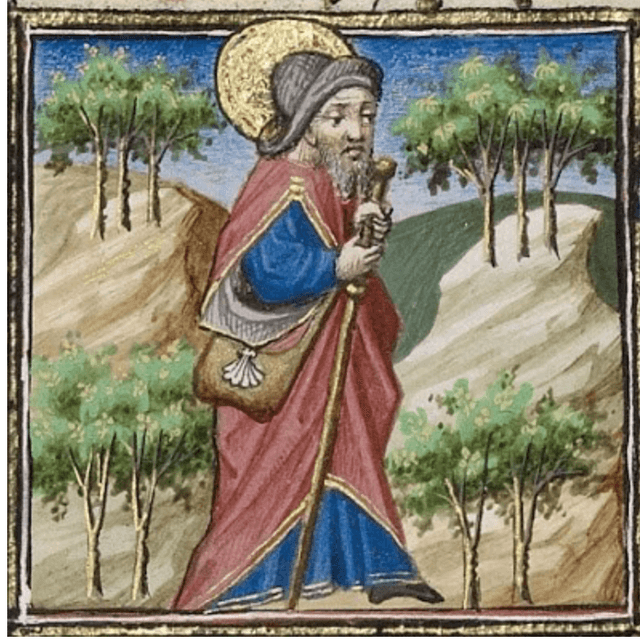
St. Thomas of Canterbury
Bishop and martyr slain in his own basilica.
The Martyrology honors St. Thomas, bishop and martyr of Canterbury, who for the defence of justice and ecclesiastical immunities was struck with the sword in his own basilica by impious men.
His feast teaches that the liberties of the Church are not privileges of pride, but protections for divine worship, sacred office, and the salvation of souls.
Ask St. Thomas of Canterbury for courage where sacred things are pressured by power. The altar does not belong to the state, and conscience must not be trained to think it does.
The Pilgrim's Spiritual Conference
Dogma Binds the Mind Because God Has Spoken
Remain here for a little while. Receive today's Catholic truth as a child of Holy Mother Church; let it judge the heart, strengthen the will, and become an act offered to God.
The Church places this truth before you today: A Catholic dogma is not something the Church says for a while and later replaces. It is a truth revealed by God and taught by the Church. Because God cannot lie, the Church cannot later teach the opposite. Do not hurry past it as though doctrine belonged only to books and controversies. A revealed truth is also a light by which the soul must judge its loyalties, its fears, its habits, and the duties immediately before it. The binding force of dogma protects souls from private invention and keeps charity rooted in truth rather than mood.
The grace to be practiced is Courage for ecclesiastical liberty, drawn from today's saintly witness. Ask God for more than the natural appearance of this virtue. Temperament may make an action seem easy for a time, but supernatural virtue remains faithful because God is worthy of obedience, even when feeling offers no assistance and no one notices the cost. Practice interior order by rejecting every deliberate occasion of sin and governing the whole day according to faith and duty.
There is also an enemy to recognize: Resist the modernist habit of treating dogma as a symbol whose meaning may be revised by later experience. Do not study this danger only in other people. Look quietly for the door by which it seeks entrance into your own soul - perhaps through delay, curiosity, resentment, human respect, attachment to comfort, or the desire to control the outcome. Dying to self today means choosing courage for ecclesiastical liberty when pride, comfort, fear, resentment, or human respect asks for control.
Do the faithful act and entrust its fruit to divine Providence, God's wise and loving governance of all things. Place effort and outcome into Our Lady's hands so that the whole offering may be presented to her Divine Son. Confidence in God is not passivity: obey, pray, work, and accept that visible success, consolation, or immediate relief may not be given. God remains faithful when the duty is hidden and the outcome uncertain. Therefore, perform the duty that belongs to you, use the lawful means God has provided, and then surrender the fruit. Permit the painful removal of attachments, habits, entertainments, and compromises that cannot remain in Mary's household. Make your home, speech, labor, recreation, prayer, and relationships fitting for the presence of the Mother of Jesus.
The Church's witness
This truth manifests the Church's mark of one. The witness placed beside it today is Pope St. Pius X.
Your resolution before God
Pray for a bishop facing worldly pressure and perform your public or household Catholic duties without human respect.
The Church serves every nation best when she remains free to obey her Divine Founder.
Carry this word quietly. Return to it when distraction, temptation, or discouragement begins to scatter the soul.
The Little Rule of Fidelity
Keep the day within prayer.
These anchors do not change because the soul needs a stable rule more than a daily novelty. Open them when you are learning the rule or when your ordinary prayer has begun to loosen.
Show today's prayer and duty anchors
Begin with morning prayer
Adore the Blessed Trinity and offer the whole day to Jesus through Mary before other duties claim the mind.
Keep the Angelus
Pause morning, noon, and evening to remember the Incarnation.
Seek Our Lord in the Blessed Sacrament
Attend Holy Mass when duty permits; otherwise make a Spiritual Communion and renew desire for Jesus in the Blessed Sacrament.
Return to Jesus and Mary
Use frequent holy aspirations during work, waiting, suffering, and temptation.
Pray the Rosary
Keep the mysteries of Christ before the mind with Our Lady and learn to imitate what they contain.
End with night prayer and examen
Give thanks, confess faults, forgive injuries, make a practical amendment, and entrust the night to Our Lady.
The Pilgrim's Mirror
How shall I imitate Christ today?
“I had liefer be poor with Thee, than rich without Thee.”
Older English: “liefer” means “rather.”
No created success compensates for separation from Christ. Prefer His friendship, His truth, and His Cross to every advantage gained by compromise.
Temptation often presents the price first and hides the loss. It tells you what obedience may cost in comfort, reputation, companionship, or opportunity, while concealing the poverty of possessing these things without peace with God. Look beyond the immediate bargain and choose with eternity in view.
Today's Practice
Refuse every compromise made for comfort, gain, or human respect.
Before Night Falls
Return the completed day to God.
Give thanks before measuring the day by feeling or visible success. Ask light to see faults without discouragement, make an Act of Contrition, forgive injuries, and place tomorrow beneath divine Providence.
Examine what welcomed Our Lady's dispositions and what made the soul resemble Esau rather than Jacob.
- For what grace or mercy should I thank God today?
- What sin, fault, neglected duty, or resistance to grace must I confess?
- What definite amendment will I carry into tomorrow?
Go Now, Pilgrim
Walk faithfully. Pray attentively. Bear your cross willingly. Love God above all things.
Holy Mother Church has gathered you around her prayer and truth; now carry what you have received into the duties of your state.
When this day is finished, may you have laid one more stone in the City of God.
You do not walk alone: remain beneath Our Lady's care as she leads you toward her Divine Son and the Heavenly Jerusalem.
God willing, we shall meet again at tomorrow's pilgrimage.
Source notes for this pilgrimage
Martyrology: The Roman Martyrology, Baltimore, 1916, John Murphy Company; local raw text lines 13583-13611.
- Gospel: Luke 2:33-40, Douay-Rheims.
- Gospel: Traditional Roman Gospel for the Sunday within the Octave of the Nativity.
- Saint witness: St. Andrew Daily Missal, December 29.
- Saint witness: Roman Martyrology, 1916 Baltimore edition, December 29.
- Breviary witness: Roman Breviary, Matins lessons for December 29, St. Thomas of Canterbury.
- Breviary witness: Roman Martyrology, 1916 Baltimore edition, December 29.
- Matins lesson: The Roman Breviary, translated by John, Marquess of Bute, 1908, vol. I, Winter, Second Nocturn for St. Thomas of Canterbury, lessons iv-vi, printed pp. 298-299.
- Matins lesson: Bute 1908 is used here as an accessible pre-Pius X Breviary witness and is cited distinctly from the 1936-1937 Benziger / Burns Oates edition.
Pilgrim's Mirror: Thomas à Kempis, The Imitation of Christ, translated by Richard Whitford, edited by Wilfrid Raynal, O.S.B. (Mount Vernon, N.Y.: Peter Pauper Press, c. 1947). Today's passage is at Book III, chapter 59, p. 173.
Marian formation: St. Louis-Marie de Montfort, True Devotion to the Blessed Virgin, translated by Fr. Frederick William Faber, 1941 Company of Mary edition, imprimatur September 26, 1949. Today's passage is at True Devotion to the Blessed Virgin, no. 29. The supplied 2010 PDF is used only as a digital transcription of that pre-1955 edition.
- Octave context: St. Andrew Daily Missal, Division of the Ecclesiastical Year, p. ix.
- Devotional rhythm: St. Andrew Daily Missal, Dom Gaspar Lefebvre, O.S.B., 1953 edition; proper Mass or devotion named in this entry.
- Devotional rhythm: Genesis 3:15 and Luke 1:28, Douay-Rheims.
- Devotional rhythm: Matthew 28:19, Douay-Rheims.
- Faith point: Pope St. Pius X, Pascendi Dominici Gregis.
- Faith point: Oath Against Modernism.
- Marian atmosphere and imitation: Luke 1:38, 46-49; Luke 2:19; John 2:5; John 19:25-27; and John 3:30, Douay-Rheims.
- Authority and revolt: Exodus 5:2, Douay-Rheims.
- Daily examen: St. Ignatius of Loyola, Spiritual Exercises, Particular and Daily Examen.