The Daily Pilgrimage
“Now therefore, ye children, hear me: Blessed are they that keep my ways.” — Proverbs 8:32
Daily formation
2026-08-07
Receive the day as a child of Holy Mother Church. Beneath Our Lady's care, magnify Christ, obey God's commandments, fulfill the duties of your state in life, die to self, trust divine Providence, resist error, and return the whole day to God.
Holy Mother Church gathers her children around the Sacred Calendar, feeds them with truth, warns them against what wounds the soul, and teaches them to walk faithfully toward their heavenly home.
“Fear not, little flock, for it hath pleased your Father to give you a kingdom. […] For where your treasure is, there will your heart be also.”
Choose a date
Daily navigation
St. Cajetan, Confessor
City of God in Exile
St. Cajetan, Confessor
2026-08-07 - Time after Pentecost - Double - white
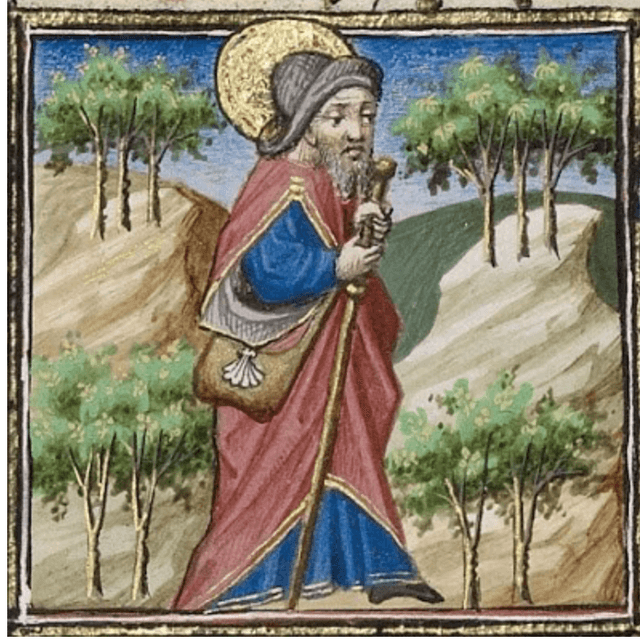
Today
St. Cajetan, Confessor
Growth After Pentecost
Truth
Dogma Binds the Mind Because God Has Spoken
A Catholic dogma is not something the Church says for a while and later replaces. It is a truth revealed by God and taught by the Church. Because God cannot lie, the Church cannot later teach the opposite.
Practice
Trust in Providence joined to reform.
Examine religious claims by asking whether they agree with the Catholic Church identified by her four marks, rather than judging by impression or preference.
Offering
To Jesus through Mary
Ask the faithful Virgin for constancy that survives changing feelings, temptations, dryness, opposition, and the passing fervor of beginnings.
A privileged call to reparation
First Friday: Reparation to the Most Sacred Heart of Jesus
The first Friday of the month is a privileged invitation to answer the love of the Sacred Heart of Jesus with worthy Holy Communion, gratitude, perseverance, and reparation for coldness, sacrilege, and ingratitude toward Our Lord in the Holy Eucharist. Our Lord entrusted this school of reparative love to St. Margaret Mary Alacoque, and the Church has fostered it as a powerful means of drawing souls back to His Heart.
The Great Promise of the Sacred Heart
In the canonization record of St. Margaret Mary, Pope Benedict XV recounts Our Lord's promise that those who receive Holy Communion on the first Friday for nine consecutive months will be granted the benefit of final repentance: they will not die in His displeasure or without the sacraments, and His Heart will be their secure refuge in the last hour. This promise should awaken confidence, perseverance, and a more faithful sacramental life.
Pope Benedict XV, canonization record of St. Margaret Mary Alacoque, Acta Apostolicae Sedis 12 (1920), pp. 501-503, especially p. 503.
The intention
For worthy Holy Communions, reparation for offenses against the Blessed Sacrament, the conversion of sinners, and a heart made meek, humble, pure, and obedient after the Heart of Jesus.
Answer the invitation today
When keeping the Nine First Fridays, prepare for worthy Holy Communion in the state of grace and offer it in reparation to the Sacred Heart. Let the nine months establish a continuing First Friday habit rather than mark an endpoint: after completing them, continue this reparative devotion whenever possible, answering the injuries of sin with lifelong gratitude, penance, and love. Whether or not Communion is possible today, make a reverent visit or spiritual Communion and offer hidden sacrifices in reparation.
Most Sacred Heart of Jesus, have mercy on us. Receive the prayer, sacrifice, and duty of this day in reparation for sin. Draw cold and wandering souls back to Thy truth, Thy altar, and Thy love, and make my heart obedient to Thine.
The Pilgrim's Devotional Rhythm
Keep this month and this weekday in prayer.
The month's intention and the weekday remembrance gather the pilgrim's prayer into the devotional rhythm of the Church. In harmony with today's Mass, feast, and duties, they teach him to receive ordinary time from God and return it to Him in honor and intercession.
August intention
The Immaculate Heart of Mary
The Immaculate Heart of Mary is wholly ordered to God: pure, recollected, obedient, and steadfast beneath the Cross. Entrust this month to Our Lady and ask her to teach you to keep the words of Christ, hate sin, and remain faithful when fidelity costs you.
Intention
In reparation for offenses against Our Lady; for the conversion of sinners; and for purity, recollection, fidelity to Catholic truth, and perseverance beneath the Cross.
A faithful act
Offer all your daily duties to God through Mary before beginning them, and guard a short period of silence in imitation of her recollection.
Prayer
Immaculate Heart of Mary, take this month's prayer, work, and suffering into thy hands and lead us faithfully to Jesus.
Friday remembrance
The Passion and Sacred Heart of Jesus
Friday keeps Calvary before the Christian soul. Unite the day's labor and suffering to the Passion of Christ, remembering that His Sacred Heart was opened for sinners and that love proves itself by sacrifice and obedience.
Intention
In reparation for sin; for the conversion of sinners; and for those who suffer, are persecuted, or will die this day.
A faithful act
Keep the Church's Friday abstinence and add hidden self-denial in memory of the Passion.
Prayer
Most Sacred Heart of Jesus, through Thy bitter Passion, have mercy on us and on poor sinners.
Good Morning, Pilgrim
Receive this day as a child of Holy Mother Church.
After Pentecost the Church teaches the soul how grace matures. Consolation is not enough. The Spirit of truth forms endurance, obedience, hatred of heresy, reverence for true worship, and courage to confess Christ when the world calls fidelity narrow.
Ask Our Lady for fidelity to all commandments, duties, required worship, and wisely undertaken devotions regardless of mood or difficulty.
Formation in True Devotion - Day 251: Review and Deepening: Discernment of False Devotion
“The inconstant devotees are those who are devout to our Blessed Lady by intervals and whims.”
Inconstancy mistakes enthusiasm for fidelity. It eagerly adopts numerous practices, promises, memberships, and disciplines, then abandons their rules when novelty fades or temptation comes. Mary is the faithful Virgin; her clients must learn steady love rather than devotion governed by mood.
St. Louis de Montfort says fewer practices faithfully fulfilled are better than a self-imposed load soon neglected. This never reduces commandments, duties of state, required worship, or the pursuit of complete virtue. It orders voluntary practices prudently so they can be performed with attention, love, and lifelong constancy.
Ora — Begin with Prayer
Offer the day before spending it
Prayer gives the day its right beginning and its right end. Before work, conversation, news, or distraction claims the mind, adore the Blessed Trinity and offer every prayer, work, joy, suffering, and temptation to Jesus through Mary. Ask your Guardian Angel for help, and place the souls and needs entrusted to you beneath God's will.
Begin simply. Make the Morning Offering through the hands of Our Lady. Pray the Three Hail Marys for purity and final perseverance, ask your Guardian Angel to govern the senses and imagination, and name the soul or intention for which today's prayers and sacrifices will be offered. Do not rush these acts merely because they are familiar; let them place the whole day beneath God before the world begins to claim it.
O Lord, keep my mind beneath the Church that is one, holy, Catholic, and apostolic. Do not let feeling, family custom, fear, or numbers replace Thy marks.
Quote of the Day
“He can no longer have God for his Father, who has not the Church for his mother.”
Plain-language help for today - 3 unfamiliar terms
- Eucharist
- the sacrament in which, after the consecration at Mass, Jesus Christ is truly present—Body, Blood, Soul, and Divinity—under the appearances of bread and wine.
- Clergy or cleric
- the Church's ordained ministers; a cleric is a deacon, priest, or bishop.
- Commemoration
- a shorter liturgical remembrance of another saint or observance occurring on the same day.
The full Breviary lessons preserve an older English translation. Read the modern explanation first; it identifies the people, event, and doctrine before the historical wording appears.
Today's Full Breviary Sermon or Proper Lesson
The hunter of souls who trusted Providence.
Matins - Second Nocturn - St. Cajetan, Confessor
The complete appointed Breviary sermon or proper lessons verified for this observance are printed below. Where a Common supplies additional material, it is identified distinctly rather than presented as the proper text.
Roman Breviary, Proper lessons for St. Cajetan
“He gained the name of the Hunter of souls.”
- The Breviary presents St. Cajetan as a priest who joined learning and noble birth to hospital service, care of the sick, preaching, and the reform of clergy.
- The Clerks Regular were founded in poverty and confidence in divine Providence, seeking the salvation of souls without making possessions their security.
- His zeal for careful worship, frequent reception of the Holy Eucharist, prayer, penance, and resistance to heresy shows reform beginning at the altar and in the interior life.
Trust Providence in a form that reforms life. St. Cajetan joins poverty of spirit to priestly reverence, care for the suffering, Eucharistic devotion, and exact resistance to error.
Complete Breviary Text
Fourth Lesson - Complete Proper Lesson
Gaetan was born at Vicenza, [in the year 1480,] of the noble family of the lords of Tiene, and was forthwith dedicated by his mother to the Virgin Mother of God. From his childhood such wonderful innocence shone in him that all called him "the Saint." He took the degree of Doctor in Civil and Canon Law at Padua, and afterwards went to Rome, where Julius II. gave him a place among the Prelates. Having taken Priest's Orders, he became so full of the fire of the love of God, that he left the Court, that he might be free to work entirely for God. He founded hospitals at his own expense, and nursed the sick, even such as were suffering from the plague, with his own hands. He laboured with such constant earnestness for the salvation of his neighbours that he got the name of the "Hunter of souls."
Fifth Lesson - Complete Proper Lesson
With a desire to restore the corrupted discipline of the clergy to the mould of the Apostolic life, he founded, [in 1524,] a Congregation of Clerks Regular, who should give up all care of earthly things, neither keeping any income, nor begging the needful things of life from the faithful, but living only on such alms as might be given them unasked. For this end, and with the approval of Clement VII., Gaetan himself, together with John Peter Carafa, Archbishop of Chieti, (afterwards Pope Paul IV.,) and two other men of eminent godliness, took solemn vows at the High Altar of St Peter's Church on the Vatican. When the city of Rome was sacked by the troops [of the Constable de Bourbon, in 1527,] Gaetan was most cruelly ill-used to make him reveal his wealth, which had long before been laid up for him in heaven by the hands of the poor, and he endured with unconquered patience stripes, torture, and imprisonment. He held on bravely in the way of life he had taken up, trusting altogether to the Providence of God, Whose unfailing care of him was sometimes attested by miracles.
Sixth Lesson - Complete Proper Lesson
He was a great advancer of care in the worship of God, of splendour in the house of God, of exactness in the holy ceremonies, and of the often receiving of the most holy Eucharist. The hideous forms and dark convolutions of heresy he more than once unmasked and abolished. He would remain in prayer with abundance of tears as much as eight hours at a time. He was often thrown into trances, and was celebrated for the gift of prophecy. One Christmas night at Rome, when he was praying before the Lord's manger, he was deemed worthy that the Mother of God should lay the Child JESUS in his arms. He sometimes spent the whole night in whipping himself, nor could he ever be persuaded to soften the hardness of his life, but witnessed that he was fain to die in sackcloth and ashes. In the end he fell ill with grief at the offence against God, which the people of Naples committed by rebelling [against the establishment of the Inquisition.] Refreshed by a vision from heaven, he departed thither [on the 7th day of August, 1547.] His body lieth at Naples in the Church of St Paul, where it is held in great reverence. Pope Clement X., finding him to have been illustrious for miracles, both during his life and after his death, enrolled his name among those of the Saints.
Walk with Holy Mother Church
Holy Mother Church has already begun praying. Enter her prayer.
Today the Roman year keeps St. Cajetan, Confessor. Receive the observance from the Church's hands: first understand what is commemorated, then let its doctrine and worship shape the day.
Roman Martyrology
August 7
At Naples, in Campania, St. Cajetan of Tiene, confessor, founder of the Theatines, who, through singular confidence in God, made his disciples practise the primitive mode of life of the Apostles. Being renowned for miracles, he was ranked among the saints by Clement X. — At Arezzo, in Tuscany, the birthday of St. Donatus, bishop and martyr, who among other miraculous deeds, made whole again by his prayers (as is related by the blessed pope Gregory), a sacred chalice which had been broken by Pagans. Being apprehended by the imperial officer Quadratian, in the persecution of Julian the Apostate, and refusing to sacrifice to idols, he was struck with the sword, and thus consummated his martyrdom. With him suffered also the blessed monk Hilarinus, whose feast is celebrated on the 16th of July, when his body was taken to Ostia. — At Rome, the holy martyrs Peter and Julian, with eighteen others. — At Milan, St. Faustus, a soldier, who obtained the palm of martyrdom after many combats, in the time of Aurelius Commodus. — At Coino, the passion of the holy martyrs Carpophorus, Exanthus, Cassius, Severinus, Secundus and Licinius, who were beheaded for the confession of Christ. — At Nisibis, in Mesopotamia, St.Dometius, a Persian monk, who was stoned to death with two of his disciples, under Julian the Apostate. — At Kouen, the holy bishop St. Victricius. Whilst he was yet a soldier under Julian, he threw away his military belt for Christ, and after being subjected by the tribune to many torments, was condemned to capital punishment. But the executioner who had been sent to put him to death being struck blind, and the confessor's chains being loosened, he made his escape. Afterwards being made bishop, by preaching the word of God, he brought to the faith of Christ the barbarous people of Belgic Gaul, and finally died a confessor in peace. — At Chalons, in France, St. Donation, bishop. — At Messina, in Sicily, St. Albert, confessor, of the Order of Carmelites, renowned for miracles.
Learn from Today's Saint or Feast
St. Cajetan
Confessor of providence, reform, and priestly poverty.
St. Cajetan was a priest and reformer who helped found the Clerks Regular, commonly called Theatines, for the restoration of priestly life, reverent worship, and apostolic discipline.
He trusted Providence while laboring for reform and works of charity. His witness teaches confidence in God without indolence: the Catholic trusts Providence while serving souls, correcting disorder, and refusing worldly security as an idol.
Ask St. Cajetan for a steady heart. Providence is not an excuse for laziness; it is the courage to work without making worldly security your god.
The Pilgrim's Spiritual Conference
Dogma Binds the Mind Because God Has Spoken
Remain here for a little while. Receive today's Catholic truth as a child of Holy Mother Church; let it judge the heart, strengthen the will, and become an act offered to God.
The Church places this truth before you today: A Catholic dogma is not something the Church says for a while and later replaces. It is a truth revealed by God and taught by the Church. Because God cannot lie, the Church cannot later teach the opposite. Do not hurry past it as though doctrine belonged only to books and controversies. A revealed truth is also a light by which the soul must judge its loyalties, its fears, its habits, and the duties immediately before it. The binding force of dogma protects souls from private invention and keeps charity rooted in truth rather than mood.
The grace to be practiced is Trust in Providence joined to reform, drawn from today's saintly witness. Ask God for more than the natural appearance of this virtue. Temperament may make an action seem easy for a time, but supernatural virtue remains faithful because God is worthy of obedience, even when feeling offers no assistance and no one notices the cost. Practice constancy by fulfilling the entire rule of life with faithful love through fervor, dryness, temptation, interruption, and fatigue.
There is also an enemy to recognize: Resist the modernist habit of treating dogma as a symbol whose meaning may be revised by later experience. Do not study this danger only in other people. Look quietly for the door by which it seeks entrance into your own soul - perhaps through delay, curiosity, resentment, human respect, attachment to comfort, or the desire to control the outcome. Dying to self today means choosing trust in Providence joined to reform when pride, comfort, fear, resentment, or human respect asks for control.
Do the faithful act and entrust its fruit to divine Providence, God's wise and loving governance of all things. Place effort and outcome into Our Lady's hands so that the whole offering may be presented to her Divine Son. Confidence in God is not passivity: obey, pray, work, and accept that visible success, consolation, or immediate relief may not be given. God remains faithful when the duty is hidden and the outcome uncertain. Therefore, perform the duty that belongs to you, use the lawful means God has provided, and then surrender the fruit. Remain steady when sensible devotion disappears, resisting both impulsive multiplication and careless abandonment of holy practices. Complete every required duty and each prudently adopted devotion with attention, fidelity, and love against the world, flesh, and devil.
The Church's witness
This truth manifests the Church's mark of one. The witness placed beside it today is Pope St. Pius X.
Your resolution before God
Examine religious claims by asking whether they agree with the Catholic Church identified by her four marks, rather than judging by impression or preference.
Christ's true Church is known by four identifying marks: she is one, holy, Catholic, and apostolic. These marks protect the pilgrim from counterfeit religion.
Carry this word quietly. Return to it when distraction, temptation, or discouragement begins to scatter the soul.
Novena in Progress
Prepare before the feast arrives.
The Church teaches souls to prepare. A novena trains desire, steadies intention, and prevents a feast from arriving as a mere date on the calendar.
Day 2 of 9
Preparing for Assumption of the Blessed Virgin Mary on
Novena for the Assumption
Petition
Ask Our Lady to detach the soul from earth and order hope toward Heaven.
Novena Prayer
O Lord, we beseech Thee, forgive the transgressions of Thy servants, and, forasmuch as by our own deeds we cannot please Thee, may we find safety through the prayers of the Mother of Thy Son and our Lord. Through the Same our Lord Jesus Christ, Thy Son, Who liveth and reigneth with Thee, in the unity of the Holy Ghost, one God, world without end. Amen.
A Faithful Act
Renounce every earthly attachment that weakens prayer or purity, beginning with the attachment that most often draws the heart from God.
The Little Rule of Fidelity
Keep the day within prayer.
These anchors do not change because the soul needs a stable rule more than a daily novelty. Open them when you are learning the rule or when your ordinary prayer has begun to loosen.
Show today's prayer and duty anchors
Begin with morning prayer
Adore the Blessed Trinity and offer the whole day to Jesus through Mary before other duties claim the mind.
Keep the Angelus
Pause morning, noon, and evening to remember the Incarnation.
Seek Our Lord in the Blessed Sacrament
Attend Holy Mass when duty permits; otherwise make a Spiritual Communion and renew desire for Jesus in the Blessed Sacrament.
Return to Jesus and Mary
Use frequent holy aspirations during work, waiting, suffering, and temptation.
Pray the Rosary
Keep the mysteries of Christ before the mind with Our Lady and learn to imitate what they contain.
End with night prayer and examen
Give thanks, confess faults, forgive injuries, make a practical amendment, and entrust the night to Our Lady.
The Pilgrim's Mirror
How shall I imitate Christ today?
“If we would every year overcome one vice, we should anon come to perfection.”
Thomas à Kempis does not flatter the soul with the promise of instant perfection. He asks for patient warfare against a definite vice. Much spiritual discouragement comes from trying vaguely to become holy while refusing to name the repeated fault through which self-will governs ordinary life.
Choose the vice by its actual frequency, not by how dramatic its name appears. It may be complaint, delay, curiosity, harsh judgment, vanity, impurity of thought, or refusal of prayer. Place it before God without excuse, ask Our Lady for the contrary virtue, and begin with its next small occasion.
Today's Practice
Name your recurring vice and write down the contrary acts you will make whenever it appears.
Before Night Falls
Return the completed day to God.
Give thanks before measuring the day by feeling or visible success. Ask light to see faults without discouragement, make an Act of Contrition, forgive injuries, and place tomorrow beneath divine Providence.
Examine beginnings abandoned through whim, restore rightful commitments, and order voluntary practices toward sustainable lifelong fidelity.
- For what grace or mercy should I thank God today?
- What sin, fault, neglected duty, or resistance to grace must I confess?
- What definite amendment will I carry into tomorrow?
Go Now, Pilgrim
Walk faithfully. Pray attentively. Bear your cross willingly. Love God above all things.
Holy Mother Church has gathered you around her prayer and truth; now carry what you have received into the duties of your state.
When this day is finished, may you have laid one more stone in the City of God.
You do not walk alone: remain beneath Our Lady's care as she leads you toward her Divine Son and the Heavenly Jerusalem.
God willing, we shall meet again at tomorrow's pilgrimage.
Source notes for this pilgrimage
Martyrology: The Roman Martyrology, Baltimore, 1916, John Murphy Company; local raw text lines 8078-8126.
- Saint witness: St. Andrew Daily Missal, August 7.
- Saint witness: Roman Martyrology, 1916 Baltimore edition, August 7.
- Breviary witness: Roman Breviary, Matins lessons for August 7, St. Cajetan.
- Breviary witness: St. Andrew Daily Missal, August 7.
- Matins lesson: The Roman Breviary, translated by John, Marquess of Bute, 1908, vol. III, Summer, Second Nocturn for St. Cajetan, lessons iv-vi, printed pp. 799-800.
- Matins lesson: Bute 1908 is used here as an accessible pre-Pius X Breviary witness and is cited distinctly from the 1936-1937 Benziger / Burns Oates edition.
Pilgrim's Mirror: Thomas à Kempis, The Imitation of Christ, translated by Richard Whitford, edited by Wilfrid Raynal, O.S.B. (Mount Vernon, N.Y.: Peter Pauper Press, c. 1947). Today's passage is at Book I, chapter 11, p. 20.
Marian formation: St. Louis-Marie de Montfort, True Devotion to the Blessed Virgin, translated by Fr. Frederick William Faber, 1941 Company of Mary edition, imprimatur September 26, 1949. Today's passage is at True Devotion to the Blessed Virgin, no. 101. The supplied 2010 PDF is used only as a digital transcription of that pre-1955 edition.
- Devotional rhythm: St. Andrew Daily Missal, Dom Gaspar Lefebvre, O.S.B., 1953 edition, Mass of the Immaculate Heart of the Blessed Virgin Mary, pp. 1520-1524.
- Devotional rhythm: Luke 2:19 and 2:35, Douay-Rheims.
- Devotional rhythm: St. Andrew Daily Missal, Dom Gaspar Lefebvre, O.S.B., 1953 edition; proper Mass or devotion named in this entry.
- Devotional rhythm: John 19:30-37, Douay-Rheims.
- First Friday or First Saturday: Pope Benedict XV, canonization record of St. Margaret Mary Alacoque, Acta Apostolicae Sedis 12 (1920), pp. 501-503, especially p. 503.
- First Friday or First Saturday: Father John Croiset, S.J., The Devotion to the Sacred Heart of Our Lord Jesus Christ, English translation, Burns & Lambert, 1863, Part III, chapter VII, section I: Practice of devotion to the Sacred Heart of Jesus for the first Friday in every month.
- First Friday or First Saturday: St. Andrew Daily Missal, 1953, Most Sacred Heart of Jesus, pp. 732-740; Litany of the Sacred Heart, pp. [73]-[75].
- First Friday or First Saturday: Matthew 11:29, Douay-Rheims.
- Novena prayer: The Roman Breviary, translated by John, Marquess of Bute, 1908, vol. III, Summer, Assumption of the Blessed Virgin Mary, Prayer throughout the Office, printed p. 827.
- Faith point: Pope St. Pius X, Pascendi Dominici Gregis.
- Faith point: Oath Against Modernism.
- Marian atmosphere and imitation: Luke 1:38, 46-49; Luke 2:19; John 2:5; John 19:25-27; and John 3:30, Douay-Rheims.
- Authority and revolt: Exodus 5:2, Douay-Rheims.
- Daily examen: St. Ignatius of Loyola, Spiritual Exercises, Particular and Daily Examen.