City of God in Exile

Return to Entrance

The City of God is not entered by chance. It is not discovered through curiosity, nor possessed through sentiment. It is entered through truth.

Before every lesser gate stands Our Lord Himself. “I am the door. By me, if any man enter in, he shall be saved” (John 10:9). The Sacred Heart of Jesus is the living gate: wounded, opened, and still reigning. Every passage below has meaning only because souls enter the City through Christ, through His truth, through His sacrifice, and through the Church He founded.

The governing maxim of the City

“Where there is no hatred of heresy, there is no holiness.”

— Fr. Frederick William Faber, C.O., The Precious Blood, chapter VI, p. 316 (1860)

Hatred of heresy means an uncompromising rejection of falsehood for love of God and souls. It never means hatred, contempt, or cruelty toward persons. It begins within: the pilgrim must hate sin, pride, compromise, and self-will in his own soul, cling to the Catholic Faith, and follow Christ through the gate of His truth.

If trust has been wounded, you are not asked to pretend that it has not. The Pilgrim Paths begin with the fear, question, duty, or wound actually before the soul, then lead it patiently toward truth, Catholic faith, and sanctification. Choose first the door nearest to your need. The full map remains below, but the pilgrimage begins best when the soul receives one clear duty and follows it with fidelity.

Begin hereStart HereThe first faithful steps for a soul approaching the City: warning, recognition, doctrine, and the duty to enter by truth.Start hereFor the soul learning to trustChoose a Pilgrim PathIf scandal, suffering, confusion, or a false religious voice has made trust difficult, begin with the guided road that names your present wound or question. You will not be asked to carry the whole City at once.Find the road nearest to youReading orderHow to Use This SiteA short guide for moving through a large Catholic work without losing the thread or trying to carry every page at once.Learn the orderFirst recognitionThe ThresholdBegin here if the whole map feels too large. Learn to recognize the obstacle before trying to carry every gate at once.Begin at the thresholdFormationFormationReceive the truth, live by grace, establish a Catholic rule, and persevere faithfully unto salvation.Enter formationThe LibraryUse the shelvesConsult the library and dictionary when one doctrine, error, saint, feast, or term needs fuller attention.Enter the library
Threshold ImagesThe Meaning of the Entrance Images

For the City of God is not an idea, nor a symbol, nor a hidden abstraction. It is real. It is ordered. It is structured according to what God has revealed, and it stands in opposition to all that contradicts Him.

Thus, it has gates. These gates are not barriers for the sake of exclusion. They are thresholds of reality. Each one marks a passage from confusion to clarity, from disorder to order, from self to God. They do not prevent entry. They define it.

For no one enters the City of God without passing through truth. Truth is not constructed. It is not shaped by preference, nor altered by time. It proceeds from God, who is Truth itself, and it remains whether accepted or rejected. To enter the City, one must conform to it.

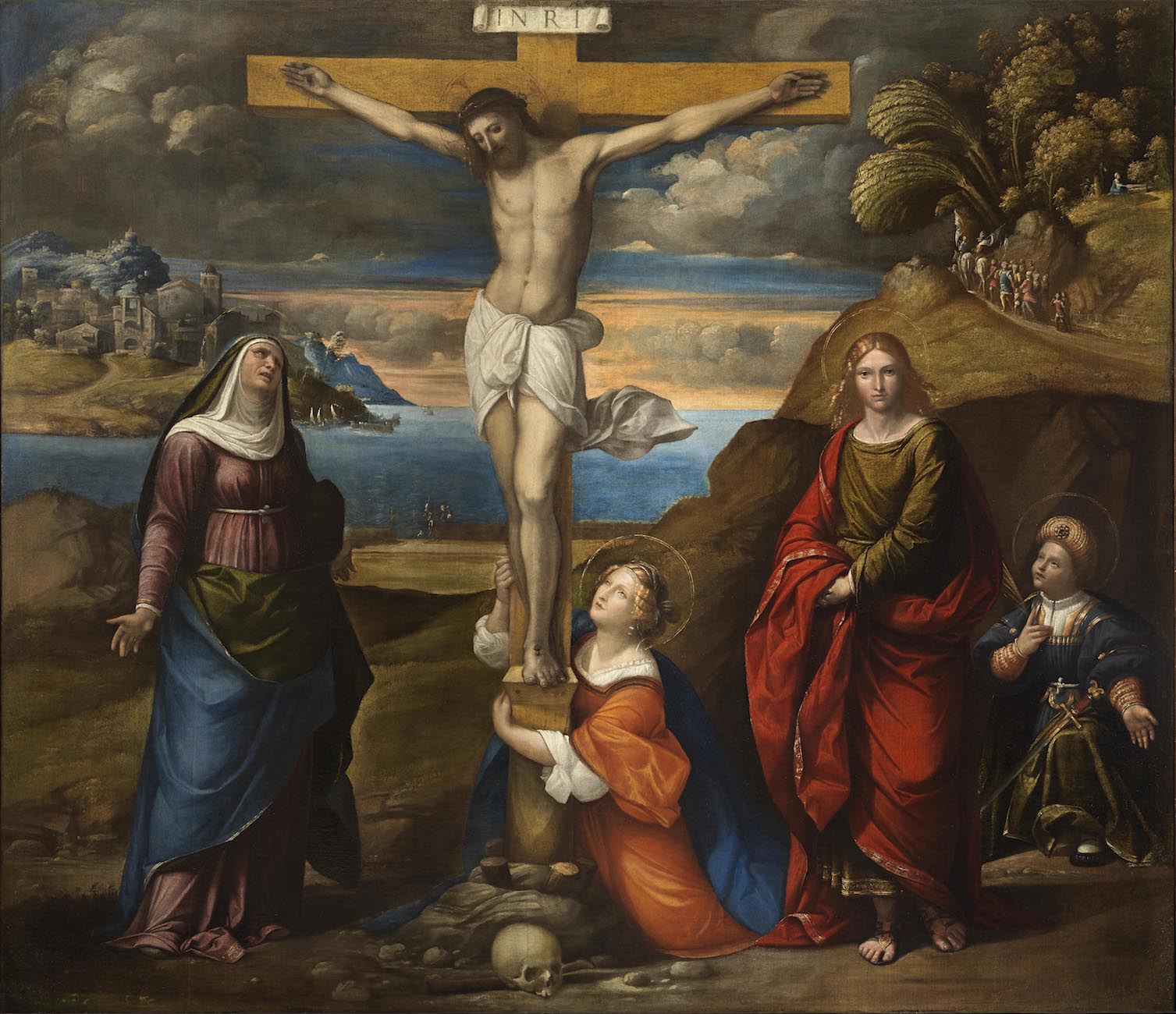
Ichabod stands before the threshold because Scripture teaches the soul to recognize judgment: the glory can depart while outward forms remain. But the Cross remains. Beneath it stand Our Lady, the faithful priesthood, and repentant souls who keep watch with Christ when public glory has been withdrawn.

Thus the gates stand. They remain fixed even when the world around them shifts. Each one represents not a topic only, but a necessary passage by which the soul is formed into a citizen of the City rather than a spectator standing outside.

These gates are not optional. They are the path. To attempt to enter the City without passing through them is to remain outside, even if one believes himself within. For the City of God is not entered by assumption. It is entered by conformity.

Thus the soul that approaches must choose: to remain where it is, or to pass through. And those who pass through do not merely enter a place. They are formed into its citizens, ordered not by the world but by God. And within this order they find not only truth, but life.

The first entrance shows the sanctuary clothed in its proper beauty: flowers, lit candles, an adorned altar, and the visible signs of worship offered to God. That beauty is not empty. It teaches the soul what sacred order is meant to be when the house of God is honored in truth.

Then the image gives way to a deserted and ruined sanctuary beneath smoke and silence, with the scriptural cry of Ichabod: “The glory is departed from Israel” (1 Kings 4:21). This does not mean Christ has abandoned His Church. It means the soul must learn that outward religious form can remain after divine favor has been withdrawn from a false or emptied sanctuary.

The main gate answers that sorrow with the Cross. The Cross stands, and the remnant remains. Beneath Our Lord stand Our Lady, the faithful priesthood, and the repentant soul restored by love. The image therefore does not end in ruin. It leads the soul from Ichabod to fidelity: from the recognition that glory has departed in one place to the search for where Christ still reigns in truth, sacrifice, doctrine, and grace.

The multitudes do not disappear because the Cross is absent. They walk past the Cross and go where comfort, acceptance, and easier belonging are offered. The faithful remain where salvation was purchased: beneath Our Lord, beside His Mother, keeping watch when the many have chosen the road that costs less.

The Pilgrim's Companion

Welcome, pilgrim.

Today the Church keeps St. Louis, King of France and Confessor.

Lord, what wilt thou have me to do?

St. Paul, Acts 9:6, Douay-Rheims

Correction must be medicinal, not vain.

Open Today's Pilgrimage

Act of Fidelity

Stand against the error that dissolves doctrine.

Pope St. Pius X gave the Church a solemn oath against Modernism: a profession of revelation, dogma, Scripture, tradition, and the visible Church against the spirit that turns faith into religious sentiment.

Take the Oath Against Modernism
Full MapOpen the Twelve Gates directory